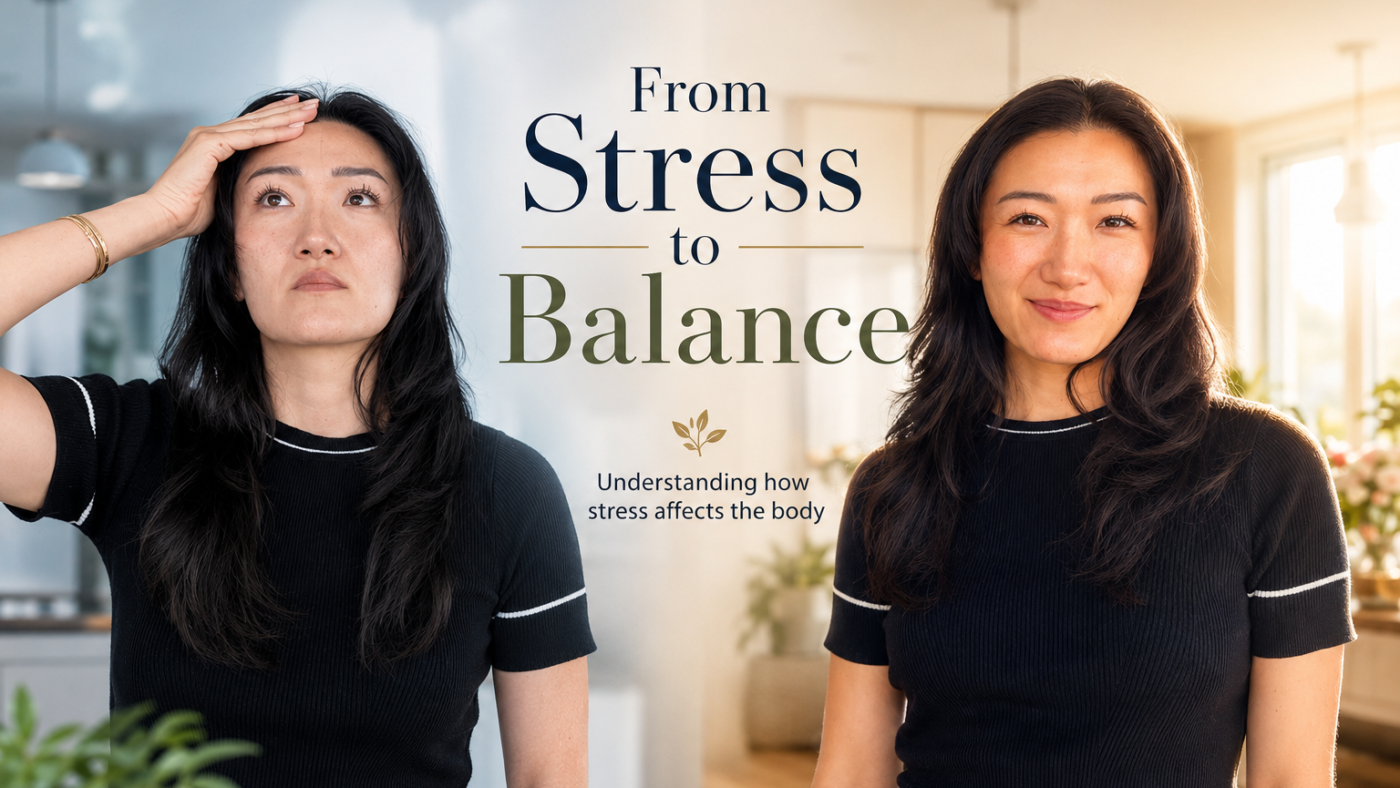
Stress is often described as a mental state involving too many deadlines, too many responsibilities and too little time. But anyone who has experienced prolonged stress knows that it can feel intensely physical.
The shoulders tighten. The jaw clenches. Sleep becomes lighter or more fragmented. Digestion may change. The stomach can feel unsettled or bloated. Some people become irritable or emotionally reactive while simultaneously feeling exhausted.
Modern medicine recognizes many of these mind-body connections. Stress activates physiological systems involving the brain, autonomic nervous system and stress hormones. Over time, this can influence muscle tension, sleep, appetite, gastrointestinal function, mood and other aspects of health.
Traditional Chinese medicine, or TCM, developed a very different framework for describing some of these experiences. One of its best-known concepts is Liver Qi Stagnation.
Understanding this traditional idea can be fascinating and potentially useful as a wellness framework, provided that we make one distinction clear from the beginning. Liver Qi Stagnation is a traditional Chinese medicine pattern. It is not the same thing as liver disease, and it is not a diagnosis recognized by modern biomedicine.
What Is Liver Qi Stagnation?
In traditional Chinese medicine, Qi is a foundational concept used to describe functional activity and patterns within the body. Qi should not be interpreted literally as a scientifically measured form of physical energy.
Within the TCM system, the Liver is traditionally associated with the smooth movement of Qi throughout the body. The word Liver in this context also represents a broader functional system and should not be confused directly with the anatomical liver studied in modern medicine.
When this movement is believed to become constrained or disrupted, the pattern may be described as Liver Qi Stagnation.
Traditionally associated signs can include irritability or frustration, mood changes, a feeling of emotional constraint, frequent sighing, neck and shoulder tension, jaw tightness, a sensation of tightness in the chest, abdominal bloating or digestive discomfort, sleep disturbances and premenstrual discomfort in some women.
The important phrase here is traditionally associated.
These symptoms are extremely common and can have many different causes. Neck tension may result from posture. Bloating may be related to diet, irritable bowel syndrome, food intolerance or another gastrointestinal condition. Sleep problems can arise from stress, caffeine, sleep apnea, medications or numerous other causes.
Experiencing these symptoms does not mean that someone has Liver Qi Stagnation in a medical sense.
Why Stress Can Feel So Physical
Although TCM and modern physiology use very different language, there is one area where the two perspectives overlap conceptually. Psychological stress can influence the body.
When we perceive a threat or significant demand, the nervous system changes how the body operates. Heart rate may rise. Muscles may tense. Digestion may temporarily change. Attention becomes more focused on potential threats. Stress hormones and signaling molecules can affect numerous tissues throughout the body.
This is useful in short bursts because it helps us respond to emergencies and difficult situations. Problems may arise when this state becomes persistent.
Someone may begin to feel wired but tired, mentally alert or unable to switch off, yet physically exhausted. The jaw stays tight. The shoulders remain elevated. Sleep becomes interrupted. Digestion becomes unpredictable.
None of this means stress is the only possible explanation. But it illustrates an important point. Mental stress and physical health are not separate systems.
The Gut-Brain Connection
Digestive symptoms are particularly common during stressful periods.
The gastrointestinal tract has an extensive nervous system and communicates continuously with the brain through what is often called the gut-brain axis.
Stress can influence gut motility, sensitivity, appetite and digestive symptoms. Some people experience diarrhea during stressful periods, while others experience constipation, abdominal discomfort or bloating.
This is one reason that statements such as stress is all in your head are misleading.
The stress begins with perception and brain processing, but its physiological consequences can occur throughout the body.
TCM traditionally interprets this relationship through concepts such as Qi movement and interactions between different functional systems. Modern medicine explains it through neural, hormonal, immune and gastrointestinal pathways.
They are not identical explanations, but they are both attempts to describe the very real experience that emotional states can affect physical function.
What Is Xiao Yao San?
One of the most famous traditional Chinese herbal formulas associated with Liver Qi Stagnation is Xiao Yao San, written in Chinese as 逍遥散.
Its name is often translated poetically as Free and Easy Wanderer Powder.
The name reflects the traditional goal of restoring a sense of ease and harmonious movement rather than simply making someone sleepy.
Xiao Yao San has a long history in Chinese herbal medicine and is traditionally used for patterns involving emotional constraint, digestive discomfort and certain menstrual complaints.
The classical formula contains a combination of herbs rather than relying on one miracle ingredient.
Common ingredients include Bupleurum root, known as Chai Hu; Chinese angelica root, known as Dang Gui; white peony root, known as Bai Shao; Atractylodes rhizome, known as Bai Zhu; Poria, known as Fu Ling; licorice root, known as Gan Cao; fresh ginger, known as Sheng Jiang; and mint, known as Bo He.
The logic of traditional Chinese herbal formulas is based on combining ingredients with different roles so that the formula acts as a coordinated whole.
That is very different from modern supplement marketing, where a single ingredient is often promoted as the hero.
Bupleurum: The Traditional Lead Herb
Bupleurum, known in Chinese as Chai Hu, plays a central role in Xiao Yao San.
In traditional terminology, it is said to help spread Liver Qi and restore smoother movement.
Modern researchers have investigated compounds naturally present in Bupleurum, particularly a group known as saikosaponins.
Laboratory and animal research has explored their possible effects on inflammatory signaling, stress-related pathways and the nervous system.
However, an important scientific distinction must be maintained.
A compound showing biological activity in a laboratory does not automatically mean that taking the herb will produce the same effect in humans.
Preclinical research is useful for generating hypotheses, but well-designed human trials are needed before strong clinical conclusions can be made.
Dang Gui and White Peony
Xiao Yao San also traditionally contains Dang Gui, often called Chinese angelica, and Bai Shao, or white peony root.
In TCM theory, these herbs are associated with nourishing Blood and supporting balance within the formula.
Traditional Chinese medicine uses the word Blood in a broader theoretical sense than modern hematology, so nourishing Blood should not be interpreted as scientifically proven treatment for anemia or low blood counts.
Modern researchers have studied compounds found in both plants for potential effects involving circulation, inflammation and nervous-system signaling.
Again, much of this research remains preliminary.
These herbs should not be considered substitutes for medical evaluation of menstrual disorders, anemia, persistent fatigue or abnormal bleeding.
Atractylodes and Poria: The Digestive Component
Traditional Chinese medicine gives digestion an unusually central role in health.
The reasoning is intuitive. Food provides the raw materials needed to maintain the body.
Xiao Yao San contains Atractylodes, known as Bai Zhu, and Poria, known as Fu Ling.
Within TCM, they are used to support digestive function and what practitioners describe as Spleen Qi.
Here again, Spleen in TCM does not correspond exactly to the anatomical spleen.
Modern research has explored components of Atractylodes and Poria in relation to gastrointestinal function, metabolism, immune signaling and inflammation.
Poria is a fungus used extensively in East Asian herbal traditions. Its polysaccharides have attracted particular scientific interest.
But these studies should be viewed as areas of active investigation rather than proof that the herbs treat stress-related digestive disease.
Ginger, Mint and Licorice
The remaining ingredients help complete the traditional formula.
Ginger has perhaps the strongest modern evidence base of the group for certain applications, particularly nausea. It is also widely used as a culinary ingredient.
Mint has a long history of use for digestive comfort, although different species and preparations can have very different effects.
Licorice root is traditionally used in many Chinese herbal formulas to harmonize combinations of herbs.
Licorice deserves particular caution.
Some licorice products contain glycyrrhizin, a compound that can affect blood pressure, potassium levels and heart rhythm when consumed in significant quantities or for prolonged periods.
This risk can be especially important for people with hypertension, heart disease or kidney disease, as well as those taking certain medications.
Natural does not mean risk-free.
Does Xiao Yao San Really Treat Stress?
This is where the discussion must separate tradition from scientific evidence.
Xiao Yao San has been studied in clinical research involving anxiety, depression-related symptoms, digestive disorders and women’s health conditions.
Some studies and systematic reviews have reported promising results. However, much of the research has limitations.
These limitations may include small sample sizes, inconsistent formulations, differences in dosage, limited blinding, methodological weaknesses, publication bias, short follow-up periods and the use of herbal formulas together with conventional treatment.
For this reason, it would be premature to say that Xiao Yao San has been proven to treat chronic stress, anxiety or depression.
A more accurate conclusion is that Xiao Yao San is a historically important traditional formula with emerging scientific research, but higher-quality clinical evidence is still needed to establish its effectiveness and safety for specific modern medical conditions.
Why Thousands of Years of Use Is Not Proof
Traditional use matters.
It tells us that a remedy has cultural significance and provides researchers with valuable clues about what may be worth studying.
But history alone cannot prove efficacy.
Something may have been used for centuries because people believed it helped, because alternatives were limited or because its effects were difficult to measure objectively.
Modern clinical research asks different questions.
Does the treatment work better than placebo? How large is the benefit? Which patients benefit? What dose is appropriate? What are the side effects? How does it interact with other medications?
These questions do not diminish traditional knowledge. They help us understand where tradition and evidence genuinely intersect.
Stress Is Not One Single Condition
One of the most valuable ideas in traditional Chinese medicine is that two people with the same general complaint may experience it very differently.
Modern medicine also increasingly recognizes this variability.
One person under chronic stress may develop headaches. Another may experience digestive problems. Another may struggle with insomnia. Another may become emotionally reactive. Another may feel profoundly fatigued.
This does not mean everyone needs a different herbal formula.
It means that stress management should consider the whole person rather than focusing on one symptom in isolation.
Evidence-Based Ways to Reduce the Physical Burden of Stress
Herbal medicine is only one possible part of a broader wellness strategy.
Several lifestyle approaches have considerably stronger evidence and lower risk for most people.
Regular Physical Activity
Exercise can reduce stress, improve sleep, support cardiovascular health and help release chronic muscle tension.
You do not need an extreme workout.
Walking, strength training, swimming, cycling, yoga, tai chi and other forms of movement can all contribute.
Consistent Sleep
Poor sleep increases emotional reactivity and can make everyday stress feel significantly harder to manage.
Regular sleep and wake times, reduced late-night light exposure and limiting excessive caffeine can support healthier sleep.
Relax the Areas Where You Hold Stress
Many people unconsciously hold tension in the jaw, shoulders, neck and abdomen.
Periodically check these areas. Drop your shoulders. Unclench your teeth. Take several slow breaths. Move after sitting for long periods.
Simple awareness can interrupt hours of unnecessary muscular tension.
Eat Regular, Balanced Meals
Stress can disrupt appetite in both directions.
Some people barely eat, while others rely heavily on highly palatable snack foods.
Regular meals containing protein, vegetables, fruit, whole grains and healthy fats can support stable energy without requiring a complicated anti-stress diet.
Reduce Excessive Stimulants
Caffeine affects people differently.
Moderate amounts may be perfectly comfortable for some people, while others experience jitteriness, heart palpitations or worsened sleep.
If you already feel constantly wired, consider whether high caffeine intake is amplifying the problem.
Try Slow Breathing
Slow, controlled breathing is one of the simplest ways of influencing autonomic arousal.
A practical exercise is to breathe gently and allow the exhalation to become slightly longer than the inhalation.
There is no need to force enormous breaths.
Comfort and regularity matter more than intensity.
When Stress Needs Professional Help
Stress is a normal part of life.
Persistent symptoms, however, deserve attention.
Seek professional evaluation if you experience ongoing insomnia, severe anxiety, persistent low mood, panic attacks, significant gastrointestinal symptoms, unexplained weight changes, chest pain or other symptoms that interfere with daily life.
Swollen lymph nodes, unusual bleeding, persistent abdominal pain or severe menstrual symptoms should also not automatically be attributed to stress or a traditional pattern.
Traditional medicine can be explored as complementary care, but potentially serious symptoms still require appropriate medical assessment.
Should You Take Xiao Yao San on Your Own?
Self-prescribing a complex Chinese herbal formula based on an online list of symptoms is not ideal.
People may use the same words such as fatigue, irritability, bloating or poor sleep while having completely different underlying causes.
Herbal formulas can also interact with prescription medications, blood thinners, blood pressure medicines, hormonal treatments and other supplements.
Pregnancy and breastfeeding require additional caution.
People with liver, kidney, heart or blood-pressure conditions should be particularly careful with unsupervised herbal use.
If you are considering a traditional Chinese herbal formula, consult a qualified practitioner and tell your physician or pharmacist about all herbs and supplements you use.
Traditional Wisdom and Modern Science Can Coexist
There is no need to choose between believing that every traditional practice is scientifically proven and dismissing thousands of years of medical history entirely.
A better approach is curiosity with appropriate skepticism.
Traditional Chinese medicine offers a sophisticated historical framework for thinking about patterns, body awareness, digestion, emotions and lifestyle.
Modern medicine provides powerful tools for understanding physiology, measuring outcomes and identifying risks.
The most useful question is not which system is right.
A better question is what each system helps us understand and what the evidence actually supports.
Stress is a perfect example.
TCM may describe someone as experiencing constrained Qi.
Modern physiology may discuss autonomic arousal, muscle tension, sleep disruption and gut-brain signaling.
The language is different.
But both perspectives remind us of something important.
Stress is not merely an abstract thought. It can become a whole-body experience.
Managing it effectively often requires caring for both mind and body.
FAQ
What is Liver Qi Stagnation?
Liver Qi Stagnation is a traditional Chinese medicine pattern associated with symptoms such as irritability, emotional constraint, muscle tension and digestive discomfort. It is not the same as liver disease and is not a biomedical diagnosis.
Can stress really cause physical symptoms?
Yes. Chronic stress can influence muscle tension, sleep, digestion, cardiovascular activity and mood through nervous-system and hormonal pathways.
Is Xiao Yao San an anti-anxiety medicine?
Xiao Yao San is a traditional Chinese herbal formula, not an approved conventional anti-anxiety medication. Some research has investigated its potential effects on anxiety and related symptoms, but stronger clinical evidence is still needed.
What does Qi mean scientifically?
Qi is a traditional conceptual framework and does not have a direct equivalent that can currently be measured as a specific form of energy in modern physiology.
Can I buy Bupleurum and make tea for stress?
Self-treating stress with individual medicinal herbs is not recommended simply because an herb appears in a traditional formula. Dose, preparation, interactions and individual health conditions all matter.
Is licorice root safe?
Licorice can cause significant side effects in some circumstances, particularly when products containing glycyrrhizin are consumed in large amounts or over prolonged periods. People with high blood pressure, heart or kidney conditions and people taking certain medications should be particularly cautious.
Does Xiao Yao San help PMS?
Xiao Yao San has traditionally been used for patterns involving menstrual and emotional symptoms, and clinical research has explored these uses. However, persistent or severe PMS, painful periods or abnormal bleeding should be evaluated medically.
What is the safest way to manage chronic stress?
A combination of regular exercise, sufficient sleep, balanced nutrition, supportive relationships, stress-management techniques and professional care when necessary has a much stronger evidence base than relying on a single supplement or herb.
Medical Disclaimer
This article is for educational purposes only and does not provide medical diagnosis or treatment. Traditional Chinese medicine concepts such as Qi, Liver Qi Stagnation, Blood deficiency and Spleen Qi represent traditional theoretical frameworks and should not be interpreted as equivalent to modern biomedical diagnoses. Herbal medicines can cause adverse effects and interact with medications. Consult a qualified healthcare professional before beginning any herbal formula, particularly if you are pregnant, breastfeeding, taking prescription medications or have a chronic medical condition.
This article is for general education and does not replace individualized care from a qualified health professional. Seek appropriate advice for persistent, severe, or concerning symptoms.
Read the full medical disclaimer