Traditional Chinese medicine explained begins with understanding its foundational concepts: Yin and Yang, Qi, meridians, and the Five Elements. Developed through centuries of Chinese medical philosophy and practice, TCM offers a historical framework for interpreting health and illness. Today, researchers are investigating specific treatments such as acupuncture, tai chi, and herbal medicine. This evidence-based guide explores traditional theories, scientific findings, treatment limitations, and essential safety considerations.Explore the ancient philosophy of Traditional Chinese Medicine, how its major practices work, what modern research reveals, and how traditional wellness approaches can be integrated safely with evidence-based healthcare.
Traditional Chinese Medicine (TCM) is one of the world’s oldest continuously practiced systems of healing. Rooted in centuries of Chinese medical knowledge and philosophy, it approaches human health through concepts such as Yin and Yang, Qi, meridians, and the Five Elements.
Unlike medical models that primarily explain disease through anatomy, physiology, pathology, and measurable biological processes, traditional Chinese medicine historically developed a framework for understanding relationships among bodily functions, environmental conditions, emotions, and everyday habits.
Its central idea is that health involves maintaining a dynamic state of balance.
For generations, practitioners have used acupuncture, herbal formulas, massage, breathing exercises, and movement practices to address illness and support well-being.
Today, some of these approaches are studied in universities, hospitals, and research institutions around the world.
But an important question remains: How can we understand traditional Chinese medical theories while distinguishing their historical significance from what modern science has actually demonstrated?
The answer requires both cultural understanding and scientific scrutiny.
Traditional theories can provide insight into how earlier physicians understood health and illness. Modern research, meanwhile, helps determine which interventions offer measurable benefits, which remain uncertain, and which may carry risks.
This guide explores the foundations of TCM, explains its major philosophical concepts, examines the evidence behind its most familiar practices, and shows how traditional wellness approaches can fit responsibly into contemporary healthcare.
1. What Is Traditional Chinese Medicine?
Traditional Chinese Medicine refers to a collection of medical theories and practices that developed over many centuries in China.
Its historical foundations include classical medical writings, philosophical traditions, clinical observations, and evolving methods of diagnosis and treatment.
One of the most influential texts is the Huangdi Neijing, commonly translated as The Yellow Emperor’s Inner Classic.
This classical work helped establish concepts concerning health, disease, bodily functions, environmental influences, and the relationships among different aspects of human experience.
Other important developments involved herbal medicine, acupuncture, moxibustion, massage, and therapeutic movement.
Rather than emerging as one completely fixed system, Chinese medicine evolved through different schools of thought, historical periods, and regional traditions.
Modern TCM is partly the result of efforts to organize and standardize elements of these traditions.
A Different Historical Framework for Understanding Health
In contemporary biomedicine, healthcare professionals investigate disease using concepts such as cellular biology, organ function, genetics, microbiology, and measurable physiological changes.
Traditional Chinese medicine describes illness using categories such as Yin–Yang imbalance, Qi deficiency, blood stasis, and patterns associated with the traditional organ systems.
These two sets of explanations should not be treated as scientifically interchangeable.
Traditional classifications reflect a historical medical framework, while biomedical diagnoses depend on different concepts and methods of validation.
Understanding the distinction is essential for interpreting TCM accurately.
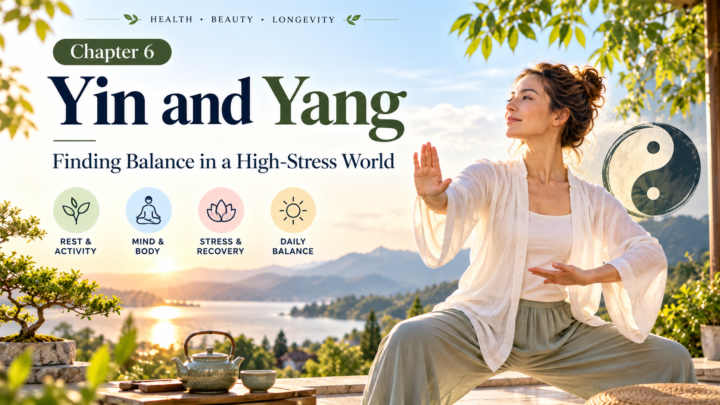
2. Yin and Yang: The Traditional Philosophy of Dynamic Balance

Among the most recognizable concepts in Chinese philosophy are Yin and Yang.
They represent complementary and interacting aspects of phenomena rather than two entirely separate substances.
Traditionally, Yin has been associated with qualities such as coolness, stillness, darkness, and inward movement.
Yang has been associated with warmth, activity, brightness, and outward movement.
These associations are relative, not absolute.
Day changes into night, activity alternates with rest, and seasons move through recurring patterns of growth and decline.
Within traditional Chinese medical theory, health is understood partly through the changing relationships between Yin and Yang.
What Does Yin–Yang Balance Mean?
Traditional practitioners may describe certain patterns of symptoms as reflecting an excess or deficiency of Yin or Yang.
For example, sensations of heat, restlessness, and dryness may be interpreted differently from symptoms involving coldness, low activity, and fatigue.
However, Yin and Yang are traditional explanatory categories—not independently established physiological substances.
There is no validated clinical test that directly measures a person’s total Yin or Yang.
Nor can traditional Yin–Yang classifications be automatically equated with hormone levels, immune activity, or autonomic nervous system function.
Such comparisons may sometimes serve as metaphors, but they should not be presented as scientifically demonstrated identities.
A Useful Lesson Without Overstating the Science
The broad idea that healthy living requires balancing activity and recovery remains intuitively useful.
Adequate sleep, physical activity, nutrition, and stress management all contribute to health.
But the benefits of these behaviors are supported by modern physiological research, not proof that the traditional Yin–Yang framework is biologically measurable.
The philosophy can be appreciated without confusing it with established biomedical mechanisms.
3. Qi: Understanding the Concept of Vital Energy
Qi, often pronounced approximately as “chee,” is another central concept in traditional Chinese medicine.
It is commonly translated as vital energy, although this English expression does not fully capture its historical meanings.
Within classical Chinese thought, Qi has been used to describe aspects of vitality, movement, transformation, and the functioning of living systems.
TCM theory frequently explains health problems through patterns involving the movement, deficiency, or stagnation of Qi.
Fatigue, for example, may be interpreted within certain traditional frameworks as a form of Qi deficiency.
Is Qi the Same as Biological Energy?
Not in a scientifically established sense.
Modern physiology explains cellular energy production through measurable biochemical processes, including the metabolism of nutrients and the production and use of adenosine triphosphate (ATP).
Although ATP is sometimes called the cell’s energy currency, it should not be equated with Qi.
Qi has not been established as a separately measurable biological energy field corresponding to its traditional descriptions.
Similarly, a feeling of improved vitality after exercise, massage, or relaxation does not demonstrate that Qi has been physically increased.
These experiences may have explanations involving physical conditioning, perceived stress, nervous system activity, sleep, or other factors.
Why the Distinction Matters
People often use the word energy to describe several different experiences.
They may mean physical stamina, mental alertness, motivation, reduced fatigue, or general well-being.
These experiences overlap but are not identical.
When someone reports low energy, identifying possible causes is more useful than assuming that one traditional explanation must be correct.
Persistent fatigue may involve sleep problems, anemia, thyroid disease, diabetes, depression, medication effects, or other conditions.
Traditional interpretations may offer a cultural perspective, but they should not replace medical evaluation when symptoms are persistent or concerning.
4. Meridians: Traditional Pathways of Qi

Meridians, sometimes called channels, are traditionally described as pathways through which Qi circulates.
Classical acupuncture theory associates particular points on the body’s surface with these channels.
TCM uses the meridian framework to organize the locations and traditional functions of acupuncture points.
Different channels are traditionally connected with named organ systems, including the Lung, Heart, Liver, Spleen, and Kidney.
However, these traditional organ systems are broader theoretical categories and should not be interpreted as identical to the corresponding anatomical organs.
Have Meridians Been Scientifically Proven?
The meridian network described in classical texts has not been established as a distinct anatomical system comparable to blood vessels, peripheral nerves, or lymphatic vessels.
Research has investigated whether acupuncture points show particular electrical, connective-tissue, or neurological characteristics.
Some findings suggest that needle stimulation can influence nerves and local tissues.
However, these observations do not independently validate the classical meridian system as a literal network carrying Qi.
This distinction does not mean that every intervention associated with meridians is ineffective.
It means that treatment outcomes must be evaluated separately from traditional explanations of how the treatment supposedly works.
5. The Five Elements: A Traditional Model of Relationships
Another influential framework in Chinese medicine is the Five Elements, also known as the Five Phases or Wu Xing.
The five phases are Wood, Fire, Earth, Metal, and Water.
Rather than representing only physical materials, they traditionally describe patterns of transformation and relationships.
In TCM, the Five Phases are associated with traditional organ systems, sensory experiences, seasons, and other categories.
The Five Phases in Classical Chinese MedicineTraditional generating cycle, shown for historical and educational understanding—not as a validated biomedical mechanism.
| Phase | Traditional associated organ systems | Common symbolic season |
|---|---|---|
| Wood | Liver and Gallbladder | Spring |
| Fire | Heart and Small Intestine | Summer |
| Earth | Spleen and Stomach | Late summer |
| Metal | Lung and Large Intestine | Autumn |
| Water | Kidney and Bladder | Winter |
These associations have historical and philosophical importance.
However, they are not established causal explanations for modern medical diseases.
For example, a traditional diagnosis of Liver Qi stagnation does not necessarily indicate a disorder of the anatomical liver.
Understanding the language of the system helps avoid confusing traditional diagnostic descriptions with modern laboratory or imaging findings.
6. Traditional Chinese Diagnosis: Looking for Patterns
Traditional Chinese medicine often uses the concept of pattern differentiation, sometimes translated as bian zheng.
Rather than classifying symptoms solely under a named disease, practitioners may examine combinations of signs and reported experiences.
Traditional assessment methods can include questioning, observation of the tongue, pulse examination, and other forms of assessment.
These practices aim to identify a traditional pattern that informs treatment selection.
However, traditional pattern categories may not have the same diagnostic reliability or validation as established biomedical tests.
Research has also raised questions about agreement between practitioners using some traditional diagnostic techniques.
Why Medical Diagnosis Still Matters
A person with recurring headaches might be described in TCM using a particular pattern involving Qi, blood, or traditional organ systems.
Yet modern medical evaluation may reveal migraine, medication-overuse headache, sleep-related issues, or another cause.
These classifications are not interchangeable.
Symptoms that appear relatively ordinary can occasionally indicate a serious condition.
A responsible approach does not assume that a traditional pattern diagnosis rules out a neurological, cardiovascular, endocrine, or other medical disorder.
The first priority is to identify conditions requiring appropriate treatment.
7. Acupuncture: What Modern Science Has Discovered
Acupuncture is one of the most extensively researched TCM-associated interventions.
It involves stimulating specific locations on the body, usually by inserting thin needles through the skin.
The NCCIH reports that acupuncture may help some chronic pain conditions and may also reduce the frequency of tension-type headaches or migraines in certain patients.
Possible mechanisms under investigation include effects on nervous system signaling, local tissues, and pain processing.
However, the precise mechanisms are not fully established.
Why Sham-Controlled Research Is Important
Some clinical trials compare acupuncture with sham procedures intended to resemble treatment without using the same needle placement or penetration.
Benefits sometimes appear smaller when real acupuncture is compared with sham acupuncture than when it is compared with no additional treatment.
This suggests that contextual and nonspecific treatment effects may contribute to reported benefits.
It does not mean that patients’ improvements are imaginary.
It means that researchers must carefully distinguish treatment-specific effects from other influences.
Acupuncture Safety
Acupuncture should be performed by an appropriately trained practitioner using sterile, single-use needles.
Although serious adverse events are uncommon, improper procedures can cause infections, punctured organs, or other complications.
Acupuncture should never delay urgent medical care or replace necessary treatment for serious conditions.
8. Chinese Herbal Medicine: Tradition, Pharmacology, and Safety
Chinese herbal medicine uses plant materials and, in some traditions, other substances in formulas intended to address particular traditional patterns.
Some formulations contain multiple ingredients, with combinations selected according to traditional principles.
The scientific evaluation of these products is challenging because formulas may differ in composition, manufacturing quality, dosage, and preparation.
Clinical studies have produced mixed results, and many have methodological limitations.
Natural Does Not Automatically Mean Safe
Herbal products contain biologically active substances.
Some may interact with medications, affect liver or kidney function, or cause allergic reactions.
Quality-control problems can include misidentified plants, contamination with heavy metals, pesticides, or undeclared pharmaceutical ingredients.
These risks are particularly important for people who are pregnant, breastfeeding, managing chronic illnesses, or taking prescription medicines.
The Role of Modern Research
Traditional herbal knowledge can help identify promising compounds for investigation.
But a scientifically reliable treatment requires more than historical use.
Researchers must establish product identity, standardized composition, appropriate dosing, safety, and clinically meaningful benefits.
A plant-derived medicine that successfully passes scientific evaluation becomes part of evidence-based healthcare regardless of its historical origin.
This is a productive way to approach traditional knowledge: neither dismiss it automatically nor accept its claims without testing.
9. Tai Chi and Qigong: Gentle Movement With Growing Scientific Interest

Tai chi and qigong are traditional Chinese mind–body practices combining movement, attention, posture, and breathing.
Tai chi developed from Chinese martial arts and is now widely practiced for exercise and well-being.
Qigong includes a broad range of practices involving controlled movement, focused attention, and breathing techniques.
What Does Research Suggest?
Evidence indicates that tai chi may improve balance and stability in some older adults and may reduce fall risk in certain populations.
Research also suggests possible benefits for symptoms of knee osteoarthritis and selected chronic pain conditions.
However, results vary by population, exercise program, and study quality.
Studies of qigong suggest possible benefits for some health outcomes, but evidence remains inconsistent or limited in several areas.
Are These Practices Safe?
Tai chi and gentle qigong are generally low-impact activities.
Minor muscle soreness or discomfort can occur, especially when movements are unfamiliar.
People with significant balance problems, joint conditions, or other health limitations may need modified exercises.
Pregnant individuals and people recovering from surgery or serious illness should seek appropriate guidance before beginning a new activity.
These practices can be valuable forms of gentle movement without requiring acceptance of every traditional explanation involving Qi.
10. Moxibustion, Cupping, Gua Sha, and Tui Na
Traditional Chinese medicine includes several other practices beyond acupuncture and herbs.
Each should be assessed according to its specific methods, proposed benefits, and risks.
Moxibustion
Moxibustion involves applying heat near or at traditional acupuncture points, often through the burning of processed mugwort.
It has been used historically for a variety of conditions.
Potential risks include burns, smoke exposure, skin irritation, and allergic reactions.
Evidence is insufficient to establish broad effectiveness across the many conditions for which it is promoted.
Cupping
Cupping involves creating suction against the skin using cups.
It is commonly promoted for muscular discomfort and other symptoms.
Research into pain relief has limitations, and high-quality evidence remains insufficient for many claims.
Possible adverse effects include bruising, burns, skin injuries, and infections.
Wet cupping carries additional risks because it involves skin puncture or blood exposure.
Gua Sha
Gua sha typically involves repeated scraping or pressure applied to the skin with a smooth-edged tool.
It may cause temporary redness, bruising, or petechiae.
Some small studies have investigated its effects on musculoskeletal discomfort, but evidence is not sufficient to support broad treatment claims.
It should not be used over damaged or infected skin, and people taking anticoagulants may require particular caution.
Tui Na
Tui na is a traditional Chinese manual therapy involving techniques such as pressing, kneading, and mobilization.
Some people find manual therapies relaxing or helpful for selected musculoskeletal symptoms.
However, the safety and effectiveness of a particular technique depend on the condition, intensity, practitioner training, and individual risk factors.
Forceful neck manipulation should not be regarded as harmless, particularly when a person has unexplained headache, neurological symptoms, or other warning signs.
11. Can TCM Help With Chronic Fatigue?
Fatigue is a common symptom with many possible causes.
It may result from inadequate sleep, anemia, thyroid disorders, infections, medication effects, mood disorders, or other medical problems.
Some traditional practitioners describe fatigue through categories such as Qi deficiency or other patterns.
These traditional labels, however, do not establish the underlying biomedical cause.
Why Evaluation Comes First
Persistent fatigue should not automatically be attributed to stress, poor habits, or a traditional imbalance.
A medical evaluation may identify treatable conditions.
For people whose fatigue is associated with insufficient sleep, low physical activity, or chronic stress, improvements in lifestyle may help.
Gentle movement and relaxation practices may also improve perceived well-being for some individuals.
But there is insufficient evidence to claim that acupuncture, herbs, or qigong can reliably cure otherwise unexplained chronic fatigue.
Chronic fatigue syndrome—also called myalgic encephalomyelitis/chronic fatigue syndrome (ME/CFS)—is a complex medical condition that requires particular care. Exercise advice must account for post-exertional malaise, and pushing through symptoms can worsen the condition.
The goal should be appropriate diagnosis and individualized management, not applying a single traditional explanation to every case of exhaustion.
12. The Mind–Body Connection: Where Traditional and Modern Perspectives Meet
Health is influenced by interactions among biological processes, behavior, psychological experiences, and social circumstances.
Chronic stress, for example, can affect sleep, appetite, attention, and the perception of pain.
Social support may influence emotional well-being and coping.
Physical activity can support cardiovascular health, mobility, and mental health.
These relationships are recognized within modern health research.
Traditional medical systems have also emphasized relationships among daily habits, emotional experiences, and physical symptoms.
But similarities in broad philosophy should not be mistaken for proof that different explanatory theories are identical.
Modern whole-person healthcare seeks to understand interacting influences using scientifically testable methods.
Practical Ways to Support Well-Being
Maintaining a consistent sleep schedule, eating a nutritious diet, engaging in appropriate physical activity, and managing stress can support general health.
Gentle tai chi, mindfulness, or relaxation exercises may be helpful additions for some people.
These interventions should complement appropriate medical care when illness is present.
No wellness routine can guarantee freedom from disease.
And illness should never automatically be blamed on negative thinking, poor attitude, or personal failure.
13. How to Use Traditional Chinese Medicine Safely and Responsibly
People interested in TCM should approach it with curiosity and appropriate caution.
The following principles can help guide decisions.
First, obtain a proper medical diagnosis. New, severe, or persistent symptoms deserve medical assessment, especially when they interfere with normal activities.
Second, evaluate specific treatments rather than treating TCM as one uniform intervention. Evidence supporting tai chi for balance does not automatically establish the effectiveness of herbal formulas or cupping.
Third, verify practitioner qualifications. Training, professional standards, and legal requirements vary by country and region.
Fourth, discuss herbal medicines and supplements with healthcare professionals. Potential interactions and quality-control issues should be considered.
Fifth, do not replace effective treatments with unproven alternatives. Delaying necessary care can increase the risk of preventable complications.
Sixth, use gentle movement and relaxation practices according to individual ability. Adapt exercises for mobility limitations, illness, and other health circumstances.
Finally, remain open to new research. Scientific conclusions can change as better studies become available.
The most useful approach combines respect for cultural traditions with the same standards of safety, clinical evidence, and informed decision-making expected throughout healthcare.
14. Frequently Asked Questions About Traditional Chinese Medicine
What is the main principle of Traditional Chinese Medicine?
TCM traditionally interprets health through patterns involving Yin and Yang, Qi, meridians, and relationships among traditional organ systems. These form a historical explanatory framework rather than a fully validated biomedical model.
Is Qi a scientifically proven form of energy?
No distinct measurable biological energy corresponding to traditional descriptions of Qi has been established. Qi remains an important historical and philosophical concept in Chinese medicine.
Are acupuncture meridians real anatomical structures?
The traditional meridian network has not been established as a distinct anatomical system. Acupuncture may nevertheless affect nerves, local tissues, and pain processing through mechanisms under scientific investigation.
Does acupuncture really work?
Research suggests that acupuncture may provide benefits for certain chronic pain conditions and headache disorders. Results vary, and nonspecific treatment effects may contribute to some outcomes.
Is Chinese herbal medicine safe?
Safety depends on the specific product, dose, manufacturing quality, interactions, and personal health conditions. Herbal preparations may cause adverse effects or contain contaminants.
Can tai chi improve health?
Tai chi may help improve balance, mobility, and certain symptoms in selected populations. Benefits depend on the individual, practice routine, and health condition.
Can TCM treat chronic fatigue?
Some practices may help selected aspects of well-being, but evidence is insufficient to recommend TCM as a general cure for chronic fatigue. Persistent fatigue should receive appropriate medical evaluation.
Can traditional medicine and modern medicine be used together?
Yes, selected complementary approaches can sometimes be integrated with conventional treatment when their safety, effectiveness, and interactions have been considered. They should not replace necessary medical care.
Conclusion: Understanding TCM Through Tradition and Science
Traditional Chinese Medicine represents a complex intellectual and medical tradition shaped by centuries of observation, clinical practice, and philosophical development.
Concepts such as Yin and Yang, Qi, meridians, and the Five Elements provide insight into how traditional practitioners understood the human body and its relationship with the surrounding world.
These concepts remain historically and culturally significant.
Modern research has also identified potential benefits from certain practices associated with TCM, including acupuncture for selected pain conditions and tai chi for balance and mobility.
At the same time, scientific uncertainty remains substantial in other areas.
Traditional theoretical models have not been established as direct descriptions of anatomy or physiology, and the effectiveness of one intervention cannot be generalized to an entire medical tradition.
Herbal products, manual therapies, and invasive procedures also require careful attention to safety.
The most constructive path forward is not to frame traditional Chinese medicine and modern biomedicine as enemies.
It is to ask clear questions, test specific claims, recognize uncertainty, and put patient safety first.
The real value of understanding traditional Chinese medicine lies in combining historical knowledge, cultural respect, scientific evidence, and responsible healthcare decisions.
Scientific References and Further Reading
- National Institutes of Health, NCCIH. Traditional Chinese Medicine: What You Need To Know.
- National Institutes of Health, NCCIH. Acupuncture: Effectiveness and Safety.
- National Institutes of Health, NCCIH. Tai Chi: What You Need To Know.
- National Institutes of Health, NCCIH. Qigong: What You Need To Know.
- National Institutes of Health, NCCIH. Chronic Pain and Complementary Health Approaches: Usefulness and Safety.
- National Institutes of Health, NCCIH. Mind and Body Practices.
Educational content only. Not medical advice. This article provides general information about traditional medical concepts, wellness practices, and available research. It does not replace professional medical diagnosis or treatment.

This article is for general education and does not replace individualized care from a qualified health professional. Seek appropriate advice for persistent, severe, or concerning symptoms.
Read the full medical disclaimer