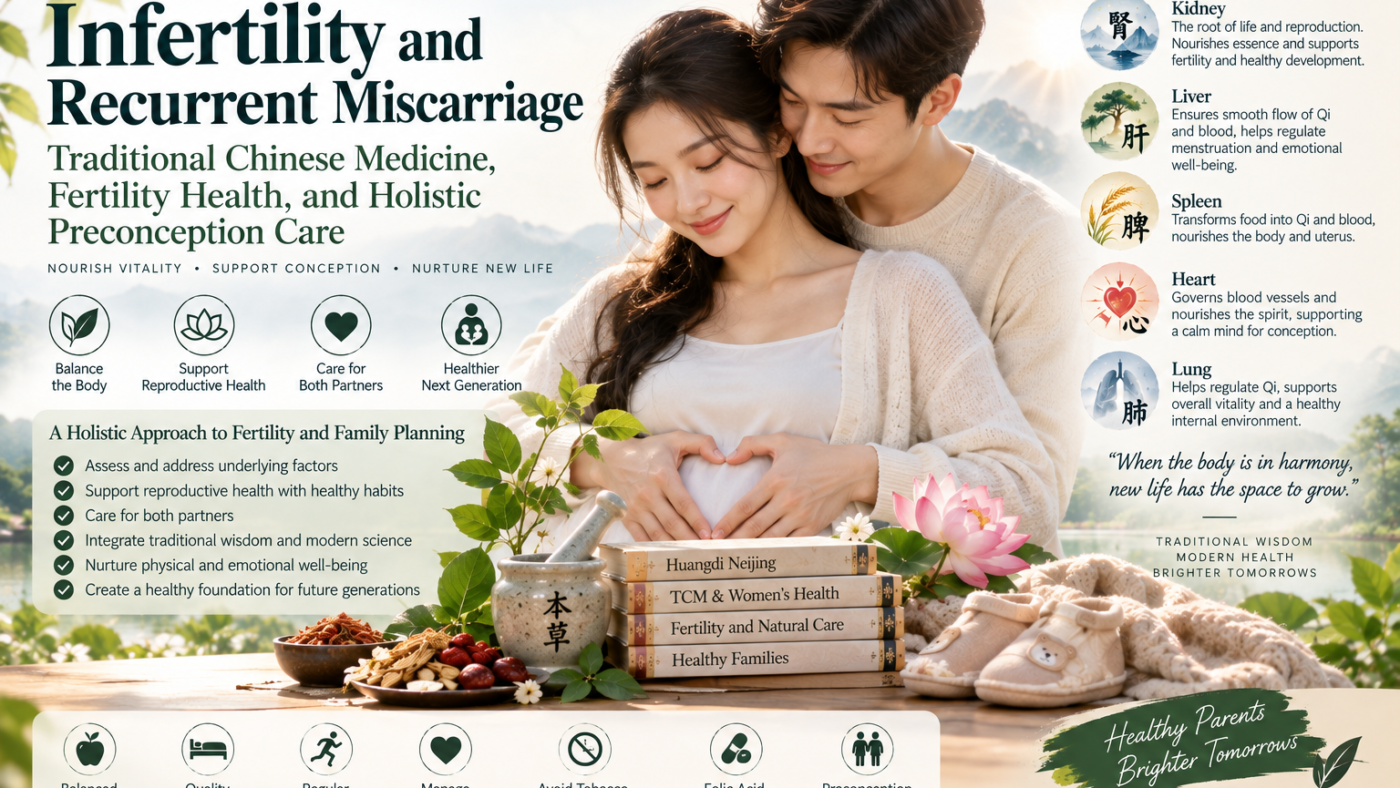
Infertility and Recurrent Miscarriage: Understanding Reproductive Health
Infertility and recurrent miscarriage are reproductive health concerns that can affect individuals and couples physically, emotionally, and socially. While some people experience difficulty achieving pregnancy, others conceive but experience repeated pregnancy loss. These conditions have different potential causes and require individualized medical evaluation.
Understanding infertility and recurrent miscarriage involves examining female and male reproductive health, ovulation, sperm quality, embryo development, uterine conditions, genetics, and other factors that influence conception and pregnancy.
Traditional Chinese Medicine offers a historical perspective through Kidney Essence, Qi and blood, the Chong and Ren meridians, and the nourishment of reproductive vitality. Modern reproductive medicine provides an evidence-based understanding of fertility, pregnancy loss, and available treatment options.
A comprehensive approach combines appropriate medical care, balanced nutrition, adequate sleep, reproductive health assessment, and sustainable lifestyle habits to support informed preconception planning.Infertility and recurrent miscarriage are deeply personal reproductive health concerns that can affect individuals and couples physically, emotionally, and socially.
For some people, the challenge is difficulty achieving pregnancy despite months or years of trying. For others, pregnancy occurs but ends unexpectedly, sometimes more than once.
These experiences can raise difficult questions about reproductive health, age, lifestyle, fertility potential, and the possibility of having a child in the future.
Traditional Chinese Medicine (TCM) approaches reproductive wellness through the historical concepts of Kidney Essence, Qi and blood, the Chong and Ren meridians, and the nourishment of the uterus.
Within this traditional framework, conception and pregnancy are associated with the harmonious interaction of several functional systems rather than the reproductive organs alone.
Modern reproductive medicine provides a different understanding based on ovulation, sperm production, fertilization, embryo development, implantation, uterine health, genetics, hormones, and other measurable biological processes.
A comprehensive approach to fertility health recognizes the importance of both partners, the complexity of reproductive conditions, and the value of individualized medical care.
The purpose of preconception wellness is not to promise pregnancy through a particular lifestyle routine or traditional formula.
It is to support overall health, identify treatable conditions, reduce avoidable risks, and help individuals make informed decisions about their reproductive future.
The Traditional Chinese Medicine Philosophy of Fertility and Vitality
Classical Chinese Medicine describes the Kidney as the foundation of inherited vitality and an important system associated with reproduction, growth, and development.
Within this historical framework, Kidney Essence is considered foundational to reproductive maturity and the capacity to conceive.
Traditional Chinese Medicine also emphasizes the movement and nourishment of Qi and blood.
The Chong and Ren meridians occupy important positions in classical discussions of menstruation, reproductive function, and pregnancy.
The Chong meridian is traditionally associated with the Sea of Blood, while the Ren meridian is associated with the regulation and nourishment of reproductive functions.
Together, these concepts form part of the traditional understanding of how the body prepares for conception and supports pregnancy.
Classical practitioners may interpret reproductive difficulties through patterns involving Kidney Yang deficiency, Kidney Yin deficiency, blood deficiency, blood stasis, or disturbances in the movement of Qi.
These patterns belong to the traditional diagnostic framework.
They are not equivalent to modern diagnoses such as diminished ovarian reserve, blocked fallopian tubes, endometriosis, sperm abnormalities, or hormonal disorders.
A traditional pattern may provide cultural context for discussions of reproductive wellness, but it cannot independently establish the cause of infertility.
Modern fertility evaluation remains essential when pregnancy does not occur as expected.
What Is Infertility?
Infertility is a reproductive health condition involving difficulty achieving a successful pregnancy.
In heterosexual couples having regular, unprotected intercourse, fertility evaluation is generally recommended after 12 months when the female partner is younger than 35.
When the female partner is 35 or older, evaluation is generally recommended after six months.
For women older than 40, or when there is a known condition that may affect fertility, earlier assessment may be appropriate.
Individuals or couples who require medical assistance to reproduce may also seek fertility care without waiting for these time periods.
The causes of infertility vary widely.
Some involve ovulation or ovarian function.
Others affect the fallopian tubes, uterus, sperm production, sperm transport, or fertilization.
In certain cases, more than one factor contributes.
Sometimes standard investigations do not identify a clear explanation.
This is known as unexplained infertility.
The absence of an identified cause does not mean the condition is imaginary or necessarily attributable to stress, constitutional weakness, or an imbalance in traditional vitality.
A systematic fertility assessment can help determine which investigations or treatments may be appropriate.
Female Infertility: Understanding Common Causes
Female fertility depends on several coordinated biological processes.
An egg must develop and be released from an ovary.
The fallopian tubes must allow appropriate transport of the egg and sperm.
Fertilization must occur, and the resulting embryo must be able to develop and implant within a receptive uterine environment.
Disruption at different stages may contribute to infertility.
Ovulation Disorders
Irregular or absent ovulation can make conception more difficult.
Possible contributing conditions include polycystic ovary syndrome (PCOS), certain thyroid disorders, hormonal disturbances, and other medical conditions.
Irregular menstrual cycles may be an important reason to seek earlier fertility evaluation.
However, regular menstruation does not guarantee that every other aspect of reproductive function is normal.
Fallopian Tube Conditions
Damage or obstruction involving the fallopian tubes may interfere with the movement of eggs and sperm.
Previous pelvic infections, certain surgical procedures, endometriosis, and other conditions can contribute to tubal problems.
Endometriosis
Endometriosis occurs when tissue resembling the uterine lining grows outside the uterus.
It may be associated with pelvic pain, painful menstruation, and fertility difficulties.
However, symptom severity and fertility effects vary considerably.
Uterine Conditions
Certain abnormalities of the uterine cavity can affect reproductive outcomes.
Fibroids, polyps, adhesions, and congenital uterine differences may sometimes contribute to fertility difficulties or pregnancy loss.
Not every uterine abnormality requires treatment.
The significance of a finding depends on its location, size, symptoms, and reproductive history.
Age-Related Reproductive Changes
Female fertility changes with age, particularly because of changes in egg quantity and quality.
Age is one of several important factors in reproductive planning.
Lifestyle improvements may support general health, but they cannot reliably reverse age-related changes in egg biology.
This is why prolonged attempts at self-treatment should not delay appropriate fertility assessment.
Kidney Yang Deficiency and Female Reproductive Wellness
Traditional Chinese Medicine sometimes interprets certain reproductive complaints through the concept of Kidney Yang deficiency.
Within this framework, Kidney Yang represents the warming and activating aspect of foundational vitality.
Traditional practitioners may associate this pattern with cold sensitivity, fatigue, reduced vitality, lower back discomfort, or certain menstrual symptoms.
However, cold hands and feet do not establish a diagnosis of infertility.
They also do not demonstrate that the uterus is too cold to support pregnancy.
Cold extremities can occur for many reasons, including normal individual variation, environmental temperature, circulation changes, anemia, and certain medical conditions.
Similarly, a person’s fertility cannot be reliably judged from facial appearance, body size, or whether the hands feel warm.
The traditional idea of nurturing Kidney Yang can be discussed as part of Chinese reproductive health philosophy.
It should not be presented as proof that warming the body or taking a particular herbal formula will restore ovulation, open blocked fallopian tubes, or reliably establish pregnancy.
The appropriate approach is to investigate the cause of infertility while supporting general physical and emotional well-being.
Male Infertility: Why Both Partners Matter
Male reproductive health is an essential part of fertility assessment.
Pregnancy requires sperm capable of participating in fertilization, and problems involving sperm production, movement, or delivery may contribute to difficulty conceiving.
Male infertility can involve several factors.
These may include reduced sperm concentration, impaired sperm movement, abnormal sperm function, hormonal conditions, reproductive tract obstruction, genetic factors, or testicular disorders.
A condition known as varicocele, involving enlargement of veins around the testicle, may also contribute to fertility problems in selected individuals.
Medical history, medication use, previous infections, surgery, and environmental exposures may be relevant.
When a male partner is contributing to a pregnancy, fertility evaluation should generally include an assessment of both partners rather than assuming that reproductive difficulties originate with the woman.
A semen analysis is commonly part of the initial male fertility investigation.
It evaluates several characteristics of the semen and sperm, including concentration, movement, and morphology.
Additional testing may be appropriate depending on the results and clinical history.
The Traditional Relationship Between Kidney Essence and Male Fertility
Traditional Chinese Medicine associates male reproductive vitality with Kidney Essence.
Within the classical framework, Kidney Essence is linked to growth, development, reproductive maturity, and the maintenance of vitality throughout life.
Traditional practitioners may interpret reduced libido, fatigue, or certain reproductive complaints through patterns involving Kidney deficiency.
However, these concepts should not be equated directly with testosterone concentration, sperm count, or sperm DNA integrity.
A person can have normal sexual desire and still experience impaired sperm production.
Likewise, someone with erectile difficulties may have otherwise normal sperm parameters.
Sexual function and fertility are related but distinct aspects of reproductive health.
An appropriate medical assessment should therefore identify the specific concern rather than assume that all male reproductive difficulties share one underlying cause.
Sleep, Sperm Health, and Reproductive Wellness
Traditional Chinese health preservation emphasizes maintaining a consistent daily rhythm.
Within this philosophy, adequate rest supports the conservation of vitality and the harmonious interaction between activity and recovery.
Modern reproductive research has also investigated relationships among sleep, hormonal function, semen parameters, and fertility.
Some observational studies have reported associations between sleep disturbances and reproductive health measures.
However, these findings do not establish that staying awake after a particular hour directly causes infertility or miscarriage.
There is no recognized medical mechanism in which sleeping after 11 p.m. causes a fertilized egg to lose its ability to implant because of insufficient Wood Qi.
A man’s bedtime, facial appearance, or perceived vitality cannot establish the cause of a partner’s pregnancy loss.
Nevertheless, adequate sleep is an appropriate component of general preconception care.
Most adults can benefit from maintaining a reasonably consistent sleep schedule and obtaining sufficient rest.
The objective is to support general health and daily functioning rather than treat a particular bedtime as a guaranteed method of improving fertility.
Understanding Recurrent Miscarriage
Pregnancy loss can occur for several reasons, and many individual miscarriages happen without an identifiable preventable cause.
Recurrent pregnancy loss, sometimes called recurrent miscarriage, is defined by the American Society for Reproductive Medicine as two or more spontaneous pregnancy losses, excluding confirmed ectopic and molar pregnancies.
The 2026 ASRM guidance recognizes pregnancy losses confirmed through urine or blood pregnancy testing, even when ultrasound confirmation was not available.
This definition allows evaluation to begin without requiring someone to experience three or more losses before receiving appropriate attention.
Different professional organizations and healthcare systems may use somewhat different terminology and referral criteria.
The important practical point is that repeated pregnancy loss deserves individualized medical assessment.
Why Do Miscarriages Happen?
Miscarriage can occur through several biological mechanisms.
One of the most common causes of early pregnancy loss is an abnormal number of chromosomes in the developing embryo.
Such abnormalities may arise by chance during egg or sperm formation or early embryo development.
The likelihood of certain chromosomal abnormalities increases with reproductive age.
Other contributing factors may include uterine abnormalities, specific endocrine conditions, autoimmune disorders, and selected genetic factors.
However, a clear cause is not identified in every case.
Even after repeated miscarriage, some individuals go on to have a successful pregnancy without a specific treatment directed at a confirmed cause.
Pregnancy loss should not automatically be attributed to insufficient nourishment, emotional weakness, sexual activity, a particular sleeping position, or a failure to follow traditional health practices.
It is also inappropriate to conclude that a miscarriage occurred because either partner failed to prepare responsibly for conception.
A compassionate, evidence-informed approach focuses on identifying relevant medical factors and providing appropriate care.
The Chong and Ren Meridians in Traditional Pregnancy Theory
Traditional Chinese Medicine describes the Chong and Ren meridians as important functional systems associated with menstruation, conception, and pregnancy.
The Chong meridian is traditionally linked with blood and reproductive nourishment.
The Ren meridian is associated with the regulation of reproductive functions and the support of pregnancy.
Classical discussions may describe recurrent pregnancy loss through concepts involving Kidney deficiency, insufficient Qi and blood, or disturbances in the Chong and Ren meridians.
These interpretations reflect the historical Chinese medical framework.
They are not equivalent to established causes of pregnancy loss such as embryo chromosomal abnormalities, antiphospholipid syndrome, or uterine malformations.
The traditional concept of nourishing the reproductive system can be appreciated as part of cultural history.
However, it should not be used to determine whether a pregnancy is viable or whether an individual requires medical treatment.
Ultrasound, appropriate laboratory testing, reproductive history, and other clinical investigations provide the foundation for modern pregnancy assessment.
Chromosomal Abnormalities and Embryo Development
Successful pregnancy depends partly on normal embryo development.
Chromosomes carry genetic information, and the developing embryo normally receives genetic material from both the egg and sperm.
Occasionally, an embryo develops with an abnormal number of chromosomes.
Many such abnormalities are incompatible with continued development.
This is one reason early miscarriage can occur even when both partners appear healthy and follow appropriate lifestyle habits.
In selected cases of recurrent pregnancy loss, genetic evaluation may help clarify whether a chromosomal abnormality contributed.
The 2026 ASRM guidance recommends offering genetic testing of miscarriage tissue after a second miscarriage or in those with a history of recurrent pregnancy loss.
The results may help guide subsequent evaluation and reproductive counseling.
Genetic testing should be discussed with an appropriate healthcare professional because the significance of results depends on the individual clinical situation.
Uterine Health and Recurrent Pregnancy Loss
The uterus provides the environment in which an embryo implants and pregnancy develops.
Certain structural abnormalities may contribute to recurrent pregnancy loss.
A uterine septum, for example, is a congenital difference in which tissue partially divides the uterine cavity.
Other possible findings include adhesions, selected fibroids, or polyps.
Not every abnormality necessarily causes miscarriage.
The relationship between a specific finding and reproductive outcomes requires careful assessment.
Modern investigations may include ultrasound, saline infusion sonography, hysterosalpingography, or hysteroscopy.
The choice depends on clinical circumstances and the type of abnormality being investigated.
If a treatable structural cause is identified, a healthcare professional may discuss appropriate options.
Traditional concepts of uterine nourishment should not replace anatomical evaluation when recurrent miscarriage is present.
Hormonal and Metabolic Conditions
Some endocrine and metabolic conditions can influence fertility and pregnancy outcomes.
Poorly controlled diabetes may increase pregnancy-related risks.
Certain thyroid disorders can also contribute to reproductive problems.
Polycystic ovary syndrome may affect ovulation and can coexist with other metabolic concerns.
The relationship between these conditions and miscarriage varies according to diagnosis, severity, and treatment.
Appropriate preconception care may include reviewing medical history and evaluating relevant conditions.
When a specific medical disorder is identified, management should be tailored to that condition.
It is not necessary or appropriate for every person with recurrent miscarriage to undergo every available hormone, immune, or metabolic test.
The value of testing depends on individual risk factors and reproductive history.
Antiphospholipid Syndrome and Pregnancy Loss
Antiphospholipid syndrome, commonly abbreviated as APS, is an autoimmune condition associated with abnormal blood clotting and certain pregnancy complications.
It is one of the recognized treatable causes considered during the evaluation of recurrent pregnancy loss.
Testing may be appropriate when an individual’s clinical history meets relevant criteria.
When APS is confirmed in an appropriate reproductive context, a specialist may recommend treatment involving low-dose aspirin and heparin.
These medications should not be started independently as a general method of preventing miscarriage.
The potential benefits and risks depend on the diagnosis and clinical circumstances.
Similarly, extensive testing for inherited thrombophilia is not routinely recommended for every person with recurrent pregnancy loss.
A targeted approach helps avoid unnecessary investigations and treatments.
Can Male Factors Contribute to Recurrent Miscarriage?
Male reproductive health may be relevant not only to fertilization but also to certain pregnancy outcomes.
Sperm carry genetic material that contributes to embryo development.
Research has examined whether abnormalities involving sperm DNA integrity may be associated with recurrent pregnancy loss.
One measure used in selected reproductive investigations is sperm DNA fragmentation.
Elevated sperm DNA fragmentation has been associated with pregnancy loss in observational studies.
Potential contributing factors may include age, smoking, environmental exposures, certain medical conditions, and other influences.
However, an association does not establish that an individual man’s sleep habits caused a specific miscarriage.
Standard semen analysis results also do not reliably predict every aspect of embryo development or pregnancy outcome.
According to the 2026 ASRM guidance, sperm DNA fragmentation testing may be considered in selected cases of otherwise unexplained recurrent miscarriage or when recurrent miscarriage occurs alongside infertility.
It is not a universal test for every couple attempting pregnancy.
Why Preconception Care Matters for Both Partners
Preparing for pregnancy can provide an opportunity to identify and address health concerns before conception.
Traditional Chinese Medicine emphasizes the importance of nurturing vitality before attempting to conceive.
Modern preconception medicine similarly encourages individuals to review their health, lifestyle habits, medications, and reproductive history.
However, preparation should not become a source of rigid rules or unrealistic expectations.
There is no requirement that every person must complete exactly 100 days of a specific routine before attempting pregnancy.
A period of approximately three months may provide a practical planning window for some couples, particularly when making lifestyle changes or completing medical evaluations.
The appropriate timeline depends on age, fertility history, medical conditions, and personal circumstances.
For someone facing age-related fertility concerns, delaying specialist assessment solely to complete a traditional preparation period may be counterproductive.
Preconception care should be individualized and medically informed.
7 Healthy Habits for Preconception and Fertility Wellness
Supporting reproductive health involves practical habits that benefit general well-being while addressing individual medical needs.
1. Schedule a Preconception Health Review
A preconception appointment can help identify medical conditions, medication considerations, vaccination needs, and relevant family or reproductive history.
Both partners may benefit from discussing their health before attempting pregnancy.
People with previous pregnancy losses or known fertility concerns should seek individualized guidance.
2. Maintain Balanced Nutrition
A varied diet provides nutrients needed for reproductive health and normal bodily functions.
Include appropriate sources of protein, vegetables, fruits, whole grains, and healthy fats.
Avoid extreme dieting or unnecessary food restrictions.
People with specific nutritional deficiencies may require individualized supplementation.
3. Begin Appropriate Folic Acid Supplementation
For people who may become pregnant, folic acid is an important component of preconception care.
The CDC recommends 400 micrograms of folic acid daily, beginning at least one month before pregnancy and continuing during early pregnancy to help prevent neural tube defects.
Some individuals require a different dose because of their medical history or medications.
A healthcare professional can provide individualized recommendations.
4. Avoid Tobacco and Harmful Substances
Smoking and secondhand smoke are associated with adverse reproductive and pregnancy outcomes.
People planning pregnancy should seek help to stop smoking when necessary.
Alcohol, recreational drugs, and potentially harmful environmental exposures should also be addressed.
Medication and supplement use should be reviewed before conception.
5. Maintain Consistent Sleep and Manage Stress
Adequate sleep and stress management support overall well-being.
A reasonably consistent sleep schedule can help maintain a sustainable daily routine.
Gentle movement, walking, Tai Chi, Qigong, and relaxation practices may provide opportunities for emotional recovery.
However, stress management should not be presented as a substitute for fertility evaluation or as a guarantee against miscarriage.
6. Support Healthy Physical Activity
Regular movement supports cardiovascular, metabolic, and general health.
Walking, swimming, comfortable strength training, and other suitable activities may be incorporated into a preconception routine.
Exercise should be adapted to individual circumstances.
People with specific fertility treatments, pregnancy complications, or medical conditions may require individualized guidance.
7. Address Reproductive Concerns Early
Do not wait indefinitely when fertility problems or repeated pregnancy losses are present.
Early assessment may identify conditions that benefit from timely treatment.
When a male partner is involved, both partners should be considered during fertility evaluation.
A reproductive specialist can help determine whether natural conception support, medication, surgery, intrauterine insemination, in vitro fertilization, or another option is appropriate.
Should Couples Abstain From Sexual Activity During Preconception Preparation?
Traditional health literature sometimes recommends restricting sexual activity during reproductive preparation.
However, there is no established medical basis for universal abstinence as a method of improving fertility.
For couples attempting pregnancy through intercourse, appropriate timing is important.
The fertile window includes the days leading up to ovulation and the day of ovulation itself.
Regular intercourse during this period can improve the opportunity for conception.
The American Society for Reproductive Medicine describes the fertile window as the six-day interval ending on the day of ovulation.
Sexual frequency should also account for comfort, consent, individual reproductive health, and any medical recommendations.
Prolonged abstinence should not be assumed to improve sperm quality or increase the likelihood of pregnancy.
The appropriate approach depends on the couple’s situation and whether specific fertility investigations or treatments are underway.
Traditional Chinese Medicine and Fertility Support
Traditional Chinese Medicine has a long history of addressing reproductive concerns through individualized pattern differentiation.
Traditional approaches may involve concepts such as nourishing Kidney Essence, supporting Qi and blood, regulating the Chong and Ren meridians, or addressing patterns described as cold, heat, or stagnation.
Some individuals also seek acupuncture, herbal medicine, or mind-body practices during fertility treatment.
However, traditional theories alone do not establish the effectiveness of a specific intervention.
Evidence for complementary fertility approaches varies according to the treatment, population, and outcomes studied.
For example, research on acupuncture around embryo transfer has not consistently demonstrated an improvement in live-birth rates.
Traditional herbal products also require particular caution during preconception and pregnancy.
Some herbs may interact with prescribed medications or have uncertain reproductive safety.
A product described as natural should not automatically be considered safe during early pregnancy.
Anyone considering complementary therapies should discuss them with an appropriate healthcare professional, particularly when receiving fertility medication or assisted reproductive treatment.
Emotional Well-Being After Pregnancy Loss
Pregnancy loss can affect emotional well-being in different ways.
Some individuals experience sadness, anxiety, frustration, anger, or uncertainty about future pregnancy attempts.
Others may have difficulty discussing their experiences with family members or friends.
Partners may respond differently to the same pregnancy loss.
One person may want to discuss the experience frequently, while another may prefer privacy or require more time before expressing their emotions.
There is no single correct way to experience grief.
Supportive reproductive care should recognize the emotional impact of pregnancy loss without assigning blame.
When repeated pregnancy loss occurs, psychological support may be an important component of comprehensive care.
The 2026 ASRM guidance emphasizes offering psychological support to individuals and couples experiencing recurrent miscarriage.
Emotional recovery and medical evaluation can proceed together according to individual needs.
When to Seek Professional Fertility Care
Individuals and couples may benefit from fertility assessment when pregnancy has not occurred within the recommended time frame or when a known reproductive condition is present.
Earlier evaluation may be appropriate for irregular menstrual cycles, suspected endometriosis, known tubal problems, previous reproductive surgery, or suspected male infertility.
After two pregnancy losses, discussing recurrent pregnancy loss evaluation with a qualified healthcare professional is appropriate.
Anyone experiencing vaginal bleeding during pregnancy should seek medical advice, particularly when symptoms are accompanied by pain.
Severe one-sided abdominal pain, shoulder-tip pain, fainting, or significant dizziness during a possible pregnancy may indicate an emergency such as ectopic pregnancy and require immediate medical assessment.
Early evaluation does not necessarily mean that invasive treatment will be required.
It allows individuals to understand their reproductive health and make informed decisions about available options.
Infertility and Recurrent Miscarriage: Supporting Reproductive Wellness
Traditional Chinese Medicine offers a historical philosophy in which reproductive health is associated with foundational vitality, nourishment, and the harmonious relationships among the body’s functional systems.
The classical concepts of Kidney Essence, Qi and blood, and the Chong and Ren meridians reflect a longstanding interest in preparing the body for conception and supporting pregnancy.
Modern reproductive medicine provides a scientific understanding of ovulation, sperm production, fertilization, embryo development, implantation, genetics, and pregnancy loss.
These perspectives can coexist when their different purposes and limitations are clearly understood.
Healthy preconception preparation may include balanced nutrition, adequate sleep, physical activity, folic acid supplementation, appropriate medical screening, and attention to emotional well-being.
However, no lifestyle routine can guarantee conception or prevent every miscarriage.
Reproductive difficulties should not be judged through appearance, perceived constitutional strength, or adherence to a particular traditional schedule.
For individuals facing infertility, appropriate evaluation can identify potential causes and guide treatment.
For those experiencing recurrent pregnancy loss, a comprehensive assessment may provide explanations, identify treatable conditions, and inform future reproductive decisions.
The deeper purpose of reproductive health preservation is not simply to follow an elaborate preparation ritual.
It is to support both partners, protect health, encourage informed choices, and provide compassionate care throughout the reproductive journey.
FAQ
What is the difference between infertility and recurrent miscarriage?
Infertility involves difficulty achieving a successful pregnancy, while recurrent miscarriage refers to repeated pregnancy loss. These conditions can share certain contributing factors but require different clinical considerations and individualized evaluation.
What causes female infertility?
Female infertility may be associated with ovulation disorders, fallopian tube conditions, endometriosis, uterine abnormalities, age-related reproductive changes, hormonal disorders, or other medical factors. Sometimes no clear cause is identified.
Can male infertility contribute to recurrent miscarriage?
Certain male reproductive factors may contribute to pregnancy loss. Sperm DNA fragmentation has been associated with recurrent miscarriage, although testing is generally considered in selected clinical circumstances rather than routinely for every couple.
What is recurrent pregnancy loss?
The American Society for Reproductive Medicine defines recurrent pregnancy loss as two or more spontaneous pregnancy losses, excluding confirmed ectopic and molar pregnancies. A pregnancy confirmed by urine or blood pregnancy testing can count toward this definition.
Can Traditional Chinese Medicine cure infertility?
Traditional Chinese Medicine offers historical concepts of reproductive vitality, Kidney Essence, and Qi and blood nourishment. However, traditional pattern-based approaches have not been established as universal cures for infertility or recurrent miscarriage. Complementary practices should not replace appropriate reproductive healthcare.
How long should couples prepare before pregnancy?
There is no universal requirement to complete exactly 100 days of preparation. A preconception health review, balanced nutrition, appropriate folic acid supplementation, medication assessment, and healthy lifestyle habits can be valuable before pregnancy. The timeline should reflect individual reproductive and medical circumstances.
How much folic acid is recommended before pregnancy?
The CDC recommends that people who could become pregnant obtain 400 micrograms of folic acid daily. Beginning at least one month before conception can help reduce the risk of neural tube defects. Some individuals may require a different dose based on their medical history.
When should someone seek fertility evaluation?
Fertility evaluation is generally recommended after 12 months of regular unprotected intercourse when the female partner is younger than 35, or after six months when she is 35 or older. Earlier evaluation may be appropriate after age 40 or when known fertility-related conditions are present. Repeated pregnancy loss also warrants appropriate assessment.
Medical Disclaimer
This article is intended for educational and informational purposes only and does not constitute medical advice, diagnosis, or treatment. Traditional Chinese Medicine concepts are presented for historical and educational understanding and should not be considered equivalent to established medical diagnoses. Infertility, recurrent pregnancy loss, hormonal disorders, sperm abnormalities, and pregnancy complications require individualized medical assessment. Do not discontinue prescribed fertility medications, use herbal products during pregnancy, or replace necessary reproductive healthcare with complementary practices without professional guidance. Anyone experiencing severe abdominal pain, fainting, or significant bleeding during pregnancy should seek urgent medical care.
This article is for general education and does not replace individualized care from a qualified health professional. Seek appropriate advice for persistent, severe, or concerning symptoms.
Read the full medical disclaimer