A tired, disappointed, or downward-looking expression does not always reflect how you actually feel. Sometimes the appearance of the lower face is influenced by the way facial muscles are being used, especially around the corners of the mouth, jaw, and neck.
One small muscle that often attracts attention in facial exercise and massage routines is the depressor anguli oris, commonly shortened to the DAO. This triangular facial muscle helps pull the corners of the mouth downward. It plays an important role in expressions associated with sadness, concern, or displeasure.
That does not mean the DAO is responsible for facial aging. Aging is far more complex. Changes in collagen and elastin, facial fat distribution, bone structure, connective tissues, sun exposure, genetics, and lifestyle all influence how the face changes over time. However, muscle tension and habitual facial expressions can affect how those changes appear.
What Is the Depressor Anguli Oris?
The depressor anguli oris sits on each side of the lower mouth. It extends upward from the lower jaw and attaches near the corners of the lips.
When it contracts, it draws the corners of the mouth downward.
This movement is completely normal. The problem is not that the muscle exists or that it should somehow be permanently weakened. Instead, some people may habitually hold tension in the lower face, jaw, lips, or neck.
Over time, a consistently downward resting expression can make existing marionette lines and lower-face folds appear more noticeable.
The DAO Does Not Work Alone
The lower face is part of a connected muscular system.
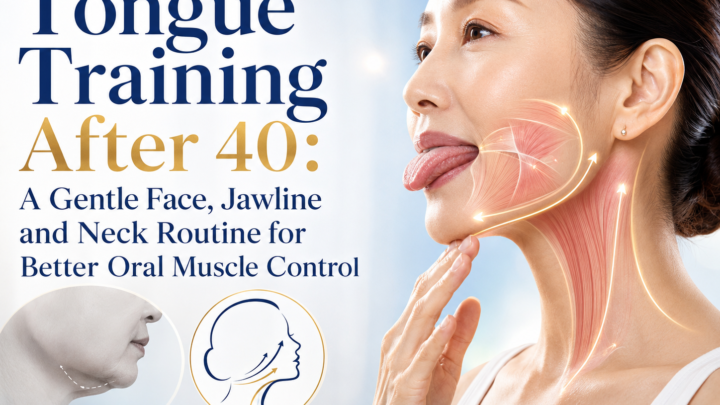
The platysma, a broad superficial muscle extending from the upper chest and collarbone region toward the jaw and lower face, also participates in facial expression and neck movement.
Jaw muscles, lip muscles, cheek muscles, neck posture, and head position all interact.
This is why repeatedly working on one tiny area of the face may not produce the result someone expects. A more sensible self-care routine considers the jaw, neck, shoulders, breathing, and facial expression together.
Why Facial Tension Can Change Your Appearance
Think about what happens when you clench your jaw during a stressful day.
The jaw becomes rigid. The lips may tighten. The shoulders rise. The head may move forward. The muscles around the mouth can become more active without you consciously noticing.
None of this suddenly ages your face, but chronic tension can make the face appear harder, more fatigued, or less relaxed.
Releasing unnecessary muscular tension may therefore make the face look softer and more open even though the underlying anatomy has not dramatically changed.
This distinction matters.
A temporary improvement in facial expression or puffiness is not the same thing as reversing structural aging.
Can Facial Massage Help?
Gentle facial massage may temporarily increase local blood flow, reduce the sensation of muscle tightness, and encourage relaxation.
Some people also notice that their face appears slightly less puffy afterward.
However, facial massage should not be described as a permanent facelift. It cannot restore lost bone, replace facial fat, rebuild stretched ligaments, or permanently reposition tissues.
Its strongest role is as a comfort, relaxation, and self-care practice.
A Gentle Lower-Face Relaxation Routine
You can experiment with a simple routine without aggressively pulling the skin.
Begin by relaxing your shoulders and allowing your jaw to loosen. Keep your teeth slightly separated rather than clenched.
Place your fingertips gently near the sides of the jaw and make small, slow circular movements. Avoid pressing directly into painful areas.
Next, lightly massage around the corners of the mouth without stretching the skin aggressively.
Move toward the jawline and then the upper neck using comfortable pressure.
Finish by taking several slow breaths while deliberately relaxing your forehead, jaw, lips, and shoulders.
The goal should be relaxation rather than forcing your face into a different shape.
What About Facial Exercises?
Facial exercise has become increasingly popular as a non-invasive beauty practice.
Small studies have explored whether repeated facial exercises may affect facial muscle tone or perceived appearance, but the evidence remains limited. More research is needed before claims such as “natural facelift” or “10 years younger” can be considered scientifically established.
There is also no reason to aggressively train every facial muscle.
More contraction is not automatically better.
For someone who already clenches the jaw or holds strong tension around the mouth, learning to relax may be more useful than repeatedly adding resistance.
The Importance of Neck and Jaw Mobility
The neck deserves attention because posture can change the way the lower face is visually presented.
Forward-head posture, elevated shoulders, and a constantly clenched jaw may contribute to an overall appearance of tension.
Gentle neck mobility, shoulder movement, walking, resistance training, adequate sleep, and stress management may therefore contribute to looking more refreshed—not because they literally lift facial tissues, but because they support healthier posture, movement, and overall well-being.
Facial Expression and Mood
There is also an interesting connection between facial expression and emotion.
Research into the facial-feedback hypothesis suggests that facial movements may have small effects on emotional experience in certain situations.
That does not mean a tense DAO muscle causes anxiety, sadness, or “survival mode.”
It simply reinforces something most people already recognize intuitively: the face and emotional state influence one another.
Relaxing your jaw, breathing more slowly, and softening an unnecessarily tense expression may therefore feel calming as well as cosmetically pleasant.
What Actually Helps the Face Age Well?
No single massage technique controls facial aging.
The strongest long-term strategies remain much less glamorous:
protecting the skin from excessive ultraviolet exposure, avoiding smoking, getting adequate sleep, maintaining balanced nutrition, exercising regularly, managing chronic stress, and following a skincare routine appropriate for your skin.
Facial massage can fit into that routine, but it should be viewed as one small component rather than a replacement for evidence-based skin care or medical treatment.
When to Avoid Facial Massage
Stop if massage produces significant pain, bruising, dizziness, numbness, swelling, or worsening symptoms.
People recovering from facial surgery, dental procedures, injections, infection, trauma, or certain medical conditions should ask an appropriate healthcare professional before performing intensive facial or neck massage.
Persistent facial weakness, new asymmetry, difficulty swallowing, numbness, or sudden changes in facial movement require medical evaluation rather than facial exercise.
The Bottom Line
The depressor anguli oris really does help pull the mouth corners downward, but it is only one small piece of facial anatomy.
Relaxing the lower face, jaw, neck, and shoulders may make your expression feel softer and more comfortable. Gentle massage may also provide temporary improvements in tension or puffiness.
But facial aging cannot be reduced to a single “problem muscle.”
A healthier approach is to combine gentle facial self-care with good skin protection, movement, sleep, nutrition, and realistic expectations.
The goal does not have to be forcing your face to look younger.
Sometimes simply helping it look less tense, more rested, and more expressive is already worthwhile.
FAQ
Can the DAO muscle cause marionette lines?
The DAO contributes to downward movement of the mouth corners, but marionette lines are influenced by multiple age-related changes including skin, fat, bone and connective tissue.
Can massage permanently lift the lower face?
Massage may temporarily improve relaxation, puffiness and the appearance of tension, but it does not permanently reposition facial tissues.
Should I exercise or relax the DAO muscle?
There is no universal answer. For people who habitually tense the lower face, relaxation may be more appropriate than aggressive strengthening.
Can jaw tension make my face look older?
Jaw and facial tension can make an expression appear more strained or tired, although they are not primary causes of biological facial aging.
How often can I perform gentle facial massage?
Light, comfortable massage can generally be incorporated into a regular self-care routine, provided it does not cause pain, irritation or bruising.
Medical Disclaimer: This article is for educational purposes only and does not provide medical diagnosis or treatment. Facial weakness, sudden asymmetry, persistent pain, numbness, swelling or difficulty swallowing should be evaluated by a qualified healthcare professional.
This article is for general education and does not replace individualized care from a qualified health professional. Seek appropriate advice for persistent, severe, or concerning symptoms.
Read the full medical disclaimer