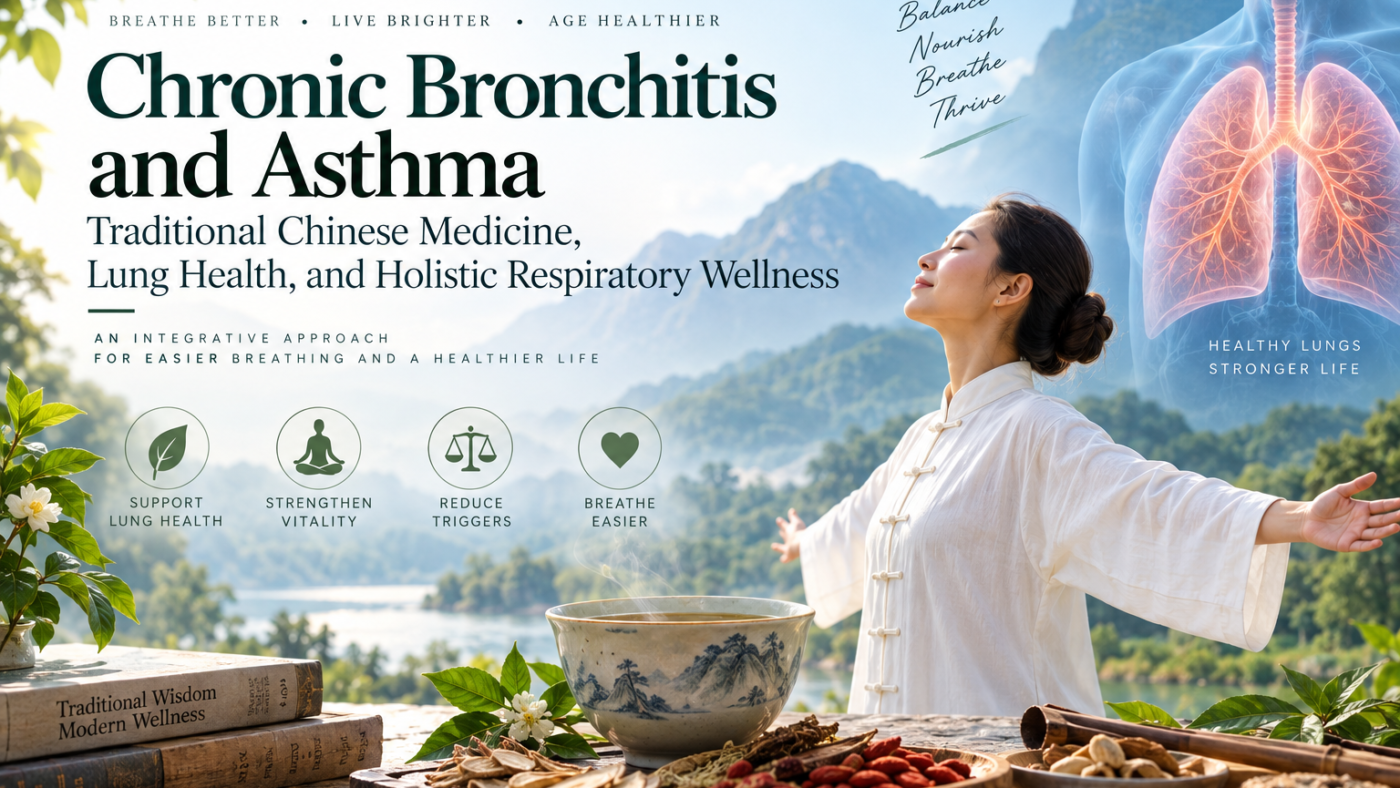
Understanding Chronic Respiratory Conditions Beyond the Lungs
Chronic bronchitis and asthma are respiratory conditions that can affect breathing comfort, physical endurance, sleep quality, and everyday well-being. Although these conditions differ in their underlying causes and treatment, both highlight the importance of protecting lung health and understanding the factors that influence respiratory function.
Traditional Chinese Medicine offers a historical perspective on respiratory wellness through the functional relationships among the Lung, Spleen, and Kidney systems. Modern respiratory medicine provides the scientific foundation for identifying airway inflammation, airflow obstruction, and other respiratory disorders. Together, these perspectives can inform a balanced approach to health education, preventive habits, and responsible long-term self-care.Breathing is one of the body’s most essential functions. Every breath brings oxygen into the lungs and allows carbon dioxide to leave the body, supporting the energy production and cellular processes necessary for life.
When the respiratory system becomes affected by chronic inflammation, airway narrowing, or structural damage, even ordinary activities may become physically demanding.
Walking upstairs, carrying groceries, exercising, or sleeping comfortably can become difficult for individuals experiencing persistent coughing, wheezing, chest tightness, or shortness of breath.
Chronic bronchitis, asthma, emphysema, and chronic obstructive pulmonary disease (COPD) are respiratory conditions that may share certain symptoms but differ in their underlying mechanisms, progression, and treatment.
Traditional Chinese Medicine (TCM) approaches respiratory wellness through a broader conceptual framework. In addition to considering the lungs, it examines the traditional functional relationships among the Lung, Spleen, and Kidney systems.
This perspective emphasizes the importance of nourishment, vitality, emotional balance, and sustainable daily habits.
Modern respiratory medicine provides the scientific foundation for identifying specific lung conditions, evaluating airway function, and selecting appropriate treatment.
A comprehensive approach to respiratory wellness can bring these perspectives together while maintaining a clear distinction between traditional health philosophy and evidence-based medical care.
Chronic Bronchitis, Asthma, and COPD: Understanding the Differences
Although chronic bronchitis and asthma may both cause coughing and breathing difficulties, they should not be regarded as identical diseases.
Chronic bronchitis is characterized by persistent inflammation of the bronchial tubes and excessive mucus production.
Individuals may experience a productive cough, chest discomfort, fatigue, and reduced exercise tolerance.
Long-term exposure to cigarette smoke, secondhand smoke, occupational dust, chemical fumes, and other airborne irritants can contribute to respiratory injury.
Asthma is a chronic inflammatory airway condition associated with episodes of variable airway narrowing and respiratory symptoms.
Wheezing, nighttime coughing, shortness of breath, and chest tightness may occur in response to allergens, respiratory infections, exercise, cold air, or environmental irritants.
Emphysema involves damage to the tiny air sacs within the lungs, reducing their ability to support efficient gas exchange.
COPD is characterized by persistent airflow obstruction and may involve emphysema, chronic bronchitis, or both. However, a person with chronic bronchitis does not necessarily have COPD.
Because these conditions can overlap in their symptoms, appropriate diagnosis is essential.
Spirometry, a lung function test, is commonly used to evaluate airflow obstruction and assist in distinguishing respiratory conditions.
The Lung, Spleen, and Kidney in Traditional Chinese Medicine
Traditional Chinese Medicine describes respiratory health through relationships among several functional systems.
A classical principle states:
“The Lung governs Qi, while the Kidney is the root of receiving Qi.”
Within this traditional framework, the Lung is associated with respiration and the distribution of Qi throughout the body.
The Kidney is associated with the reception and anchoring of Qi, while the Spleen is traditionally responsible for transforming food and fluids into substances that nourish the body.
These concepts represent a historical system of medical interpretation rather than direct descriptions of modern anatomical or physiological processes.
In traditional Chinese medicine, a person experiencing persistent coughing and shortness of breath may be assessed through patterns involving more than one functional system.
For example, one individual may present with cough, abundant phlegm, and a sensation of heaviness, while another may experience breathlessness, fatigue, and reduced physical endurance.
A traditional practitioner might interpret these presentations differently according to the person’s broader symptom pattern.
This individualized approach is one of the defining characteristics of traditional Chinese health philosophy.
However, traditional patterns should not be used as substitutes for diagnosing asthma, COPD, infection, or cardiovascular disease.
The Traditional Principle of Nourishing the Spleen to Support the Lung
One of the classical concepts associated with respiratory wellness is Pei Tu Sheng Jin (培土生金), commonly translated as “nourishing Earth to generate Metal.”
In the traditional Five Elements framework, the Spleen corresponds to Earth, while the Lung corresponds to Metal.
The relationship between these systems expresses the idea that nourishment and vitality contribute to respiratory well-being.
From a practical perspective, this traditional concept encourages attention to nutrition and overall physical condition.
People living with chronic respiratory disease may experience fatigue, reduced appetite, weight changes, and loss of physical strength.
Adequate nutrition is therefore an important component of comprehensive respiratory care.
A varied diet containing suitable sources of protein, vegetables, fruits, whole grains, and healthy fats can help support the body’s normal functions.
For individuals with advanced respiratory disease, nutrition may require additional attention because breathing difficulties and reduced activity can affect energy requirements, appetite, and muscle strength.
Dietary recommendations should be individualized according to medical condition, nutritional status, and personal tolerance.
Traditional concepts of nourishment may encourage sustainable eating habits, but no particular food or herbal formula has been established as a cure for chronic bronchitis, asthma, or COPD.
Understanding Phlegm and Mucus in Respiratory Health
Traditional Chinese Medicine gives considerable attention to the role of Tan (痰), often translated as phlegm.
In classical medical theory, Tan is understood as a pathological accumulation associated with disturbances in the movement and transformation of bodily fluids.
Traditional explanations describe the Lung, Spleen, and Kidney as participating in this process.
A frequently cited classical expression states:
“The Kidney is the root of phlegm formation, the Spleen is its source, and the Lung is its container.”
This saying reflects the traditional understanding that persistent respiratory symptoms may involve relationships among several functional systems.
Modern medicine explains respiratory mucus through different physiological mechanisms.
Mucus normally helps protect the respiratory tract by trapping inhaled particles and microorganisms.
However, chronic airway inflammation can increase mucus production and interfere with its normal clearance.
In chronic bronchitis and COPD, excessive mucus may contribute to coughing, airway obstruction, and respiratory discomfort.
Changes in mucus production can also accompany respiratory infections or worsening airway inflammation.
The amount, consistency, and appearance of sputum may provide useful information, although they cannot independently establish a diagnosis.
Persistent or worsening sputum production should be discussed with a healthcare professional, particularly when accompanied by fever, increased breathlessness, chest pain, or blood in the sputum.
Why Respiratory Health Affects Energy and Physical Endurance
The respiratory system works continuously with the cardiovascular system to deliver oxygen to tissues throughout the body.
When airflow becomes restricted or gas exchange becomes impaired, physical activity may require greater effort.
Individuals with chronic respiratory disease may experience reduced stamina, fatigue, or breathlessness during activities that previously felt comfortable.
In traditional Chinese medicine, this pattern may be interpreted through concepts involving Lung Qi deficiency or reduced foundational vitality.
Modern medicine evaluates these symptoms through measurable factors such as airflow limitation, oxygenation, exercise capacity, cardiovascular function, and overall physical conditioning.
Not every person who experiences breathlessness has low blood oxygen levels.
Similarly, tiredness alone does not establish a diagnosis of respiratory disease.
A comprehensive assessment may be necessary to identify whether symptoms arise from a lung condition, cardiovascular problem, anemia, physical deconditioning, or another cause.
Maintaining appropriate physical activity is often an important part of long-term respiratory management.
For people with COPD and certain other lung conditions, supervised pulmonary rehabilitation can improve physical functioning and quality of life.
The Relationship Between Lung Health and Cardiovascular Wellness
The lungs and heart function together to maintain circulation and oxygen delivery.
Long-standing respiratory disease can sometimes place additional demands on the cardiovascular system.
In some people with advanced chronic lung disease, changes in the pulmonary circulation may increase the workload on the right side of the heart.
A condition known as cor pulmonale refers to changes in right-heart structure or function associated with pulmonary hypertension caused by disease affecting the lungs or pulmonary circulation.
However, chronic bronchitis and asthma do not inevitably progress to this condition.
The risk depends on the underlying disease, its severity, and other medical factors.
Symptoms such as worsening shortness of breath, swelling of the legs, reduced exercise tolerance, or unexplained fatigue deserve medical attention.
Early evaluation and appropriate management of chronic respiratory conditions are important for preserving both pulmonary and cardiovascular health.
Traditional Chinese Medicine and the Concept of Supporting Vitality
Traditional Chinese Medicine places considerable emphasis on Fu Zheng (扶正), commonly interpreted as supporting the body’s foundational vitality.
Within this framework, Fu Zheng Tiao Ping (扶正调平) expresses the principle of supporting vitality while encouraging a return toward functional balance.
For chronic respiratory discomfort, traditional approaches may emphasize nourishing the Lung, supporting the Spleen, and maintaining Kidney vitality.
Other traditional concepts include regulating Qi, transforming phlegm, and supporting the body’s capacity to adapt to environmental and seasonal changes.
These ideas can be discussed as part of traditional wellness education.
However, their terminology should not be confused with modern measurements of immune function, lung capacity, blood oxygen levels, or organ performance.
Clinical evidence does not establish that traditional herbal preparations can reliably reverse structural lung damage or eliminate established COPD.
There is also no reliable basis for promising that respiratory herbal treatments will reverse gray hair, restore loose teeth, remove facial wrinkles, or reverse biological aging.
Herbal products may cause adverse effects or interact with prescribed medications, and some products have been found to contain contaminants or undeclared substances.
Individuals considering traditional herbal approaches should discuss their use with an appropriately qualified healthcare professional, particularly when taking asthma or COPD medication.
Gentle Movement, Tai Chi, and Breathing Awareness


6
A balanced respiratory wellness routine may include gentle movement, breathing awareness, and activities that support physical and emotional well-being.
Tai Chi and Qigong are traditional Chinese mind-body practices combining controlled movement, coordinated breathing, attention, and relaxation.
For some individuals living with chronic health conditions, appropriately adapted movement practices may help maintain confidence, balance, and enjoyment of physical activity.
Breathing exercises may also be used as part of certain respiratory rehabilitation programs.
However, their benefits depend on the individual, the underlying condition, and the specific technique being practiced.
For people with asthma, breathing exercises may support quality of life and aspects of breathing control, but they should not replace prescribed medication or an asthma action plan.
People with severe breathlessness, unstable cardiovascular disease, or poorly controlled respiratory symptoms should seek medical guidance before beginning a new exercise program.
The goal is comfortable, sustainable movement rather than forcing deep breathing or attempting to overcome significant respiratory symptoms through willpower.
Seven Daily Habits That Support Respiratory Wellness
Long-term respiratory health is influenced by environmental exposures, medical care, and everyday habits.
The following practices can form part of a responsible respiratory wellness routine.
1. Avoid Tobacco Smoke
Smoking is a major preventable cause of chronic lung damage.
Stopping smoking and avoiding secondhand smoke are important steps toward protecting respiratory health.
Individuals who need assistance quitting can benefit from professional smoking cessation support.
2. Reduce Exposure to Airborne Irritants
Air pollution, dust, fumes, and certain workplace exposures can aggravate respiratory symptoms.
Improving indoor ventilation when outdoor air is clean, reducing exposure to known irritants, and following appropriate workplace protection measures may help.
3. Follow an Individualized Treatment Plan
People with asthma or COPD should use prescribed medications according to their healthcare professional’s instructions.
Correct inhaler technique is essential for delivering medication effectively.
Individuals with asthma should understand their written asthma action plan, including how to recognize worsening symptoms and when to seek emergency care.
4. Maintain Appropriate Physical Activity
Comfortable movement helps support general physical conditioning.
Walking, gentle stretching, and appropriately modified Tai Chi may be suitable for some individuals.
People with significant exercise limitations may benefit from supervised pulmonary rehabilitation.
5. Support Healthy Nutrition
Balanced meals provide nutrients needed for normal bodily functions and muscle maintenance.
People experiencing unintended weight loss, reduced appetite, or difficulty eating because of breathlessness may require individualized nutritional support.
6. Prioritize Rest and Emotional Well-Being
Respiratory symptoms can interfere with sleep and contribute to emotional distress.
Consistent sleep routines, relaxation practices, and appropriate psychological support may contribute to improved quality of life.
7. Stay Up to Date With Recommended Vaccinations
Respiratory infections can trigger worsening symptoms in people with chronic lung disease.
Recommended vaccinations, including those against influenza, pneumococcal disease, COVID-19, and other infections when appropriate, are an important part of preventive care.
Vaccination needs should be reviewed according to age, medical history, and current local recommendations.
Recognizing Respiratory Warning Signs
Persistent coughing or breathlessness should not automatically be attributed to aging, poor physical fitness, or traditional patterns of bodily imbalance.
Medical assessment is important when symptoms become more frequent, interfere with ordinary activities, or progressively worsen.
Individuals experiencing recurrent wheezing, persistent productive coughing, or unexplained breathlessness may benefit from respiratory evaluation.
Sudden severe breathing difficulty requires immediate attention.
Emergency warning signs include difficulty speaking because of breathlessness, blue or gray lips, confusion, rapidly worsening respiratory distress, or symptoms that do not respond to prescribed rescue treatment.
These symptoms require urgent medical care rather than home remedies or breathing exercises.
A Balanced Approach to Long-Term Lung Health
Respiratory wellness is not achieved through a single food, breathing technique, herbal formula, or exercise routine.
It requires a comprehensive understanding of the respiratory system and the many factors that influence breathing comfort and physical endurance.
Traditional Chinese Medicine offers a historical framework emphasizing nourishment, vitality, balance, and the relationships among bodily functions.
Modern respiratory medicine provides diagnostic tools and treatments that address airway inflammation, airflow obstruction, respiratory infections, and other identifiable disease processes.
These perspectives can coexist when their different purposes and evidentiary foundations are clearly understood.
For individuals living with chronic bronchitis, asthma, or COPD, sustainable well-being begins with appropriate medical care and continues through supportive daily habits.
Avoiding tobacco smoke, maintaining suitable physical activity, following treatment plans, supporting good nutrition, and recognizing changes in respiratory symptoms can contribute to a more comfortable and active life.
The goal of respiratory health preservation is not to promise the disappearance of every chronic condition.
It is to protect breathing capacity where possible, improve everyday functioning, reduce preventable risks, and support quality of life throughout the aging process.
FAQ
What is the difference between chronic bronchitis and asthma?
Chronic bronchitis involves persistent airway inflammation and mucus production, while asthma is characterized by variable airway narrowing and respiratory symptoms. Although both conditions can cause coughing and breathlessness, they have different diagnostic and treatment considerations.
Can Traditional Chinese Medicine cure chronic bronchitis or asthma?
Traditional Chinese Medicine provides a historical framework for respiratory wellness, but it has not been established as a cure for chronic bronchitis or asthma. Complementary practices should not replace prescribed medication, medical evaluation, or emergency treatment.
Can breathing exercises improve lung health?
Appropriate breathing exercises may support breathing awareness and quality of life in some individuals with respiratory conditions. They should be adapted to the person’s medical needs and used alongside, rather than instead of, established treatment.
Is Tai Chi beneficial for people with respiratory conditions?
Gentle Tai Chi may support physical activity, balance, relaxation, and general well-being. Individuals with significant breathlessness or poorly controlled respiratory symptoms should seek professional guidance before beginning a new exercise routine.
What foods support healthy lungs?
A balanced diet containing appropriate sources of protein, vegetables, fruits, whole grains, and healthy fats can support general health and muscle maintenance. No single food has been proven to cure asthma, chronic bronchitis, or COPD.
What are common asthma triggers?
Common asthma triggers may include respiratory infections, allergens, smoke, air pollution, cold air, exercise, and certain occupational exposures. Individual triggers vary, making personalized asthma management important.
When should someone seek medical attention for breathing difficulties?
Persistent coughing, recurrent wheezing, worsening breathlessness, or reduced exercise tolerance should be medically evaluated. Sudden severe breathing difficulty, confusion, blue or gray lips, or difficulty speaking because of breathlessness require urgent medical care.
Medical Disclaimer
This article is intended for educational and informational purposes only and does not constitute medical advice, diagnosis, or treatment. Traditional Chinese Medicine concepts are presented for historical and educational understanding and should not be considered equivalent to modern medical diagnoses. Chronic bronchitis, asthma, COPD, and other respiratory conditions require appropriate medical evaluation and individualized management. Never discontinue prescribed respiratory medication or replace emergency medical care with herbal remedies, breathing exercises, or other complementary practices. Consult a qualified healthcare professional before starting herbal supplements or making significant changes to an existing treatment plan.
This article is for general education and does not replace individualized care from a qualified health professional. Seek appropriate advice for persistent, severe, or concerning symptoms.
Read the full medical disclaimer