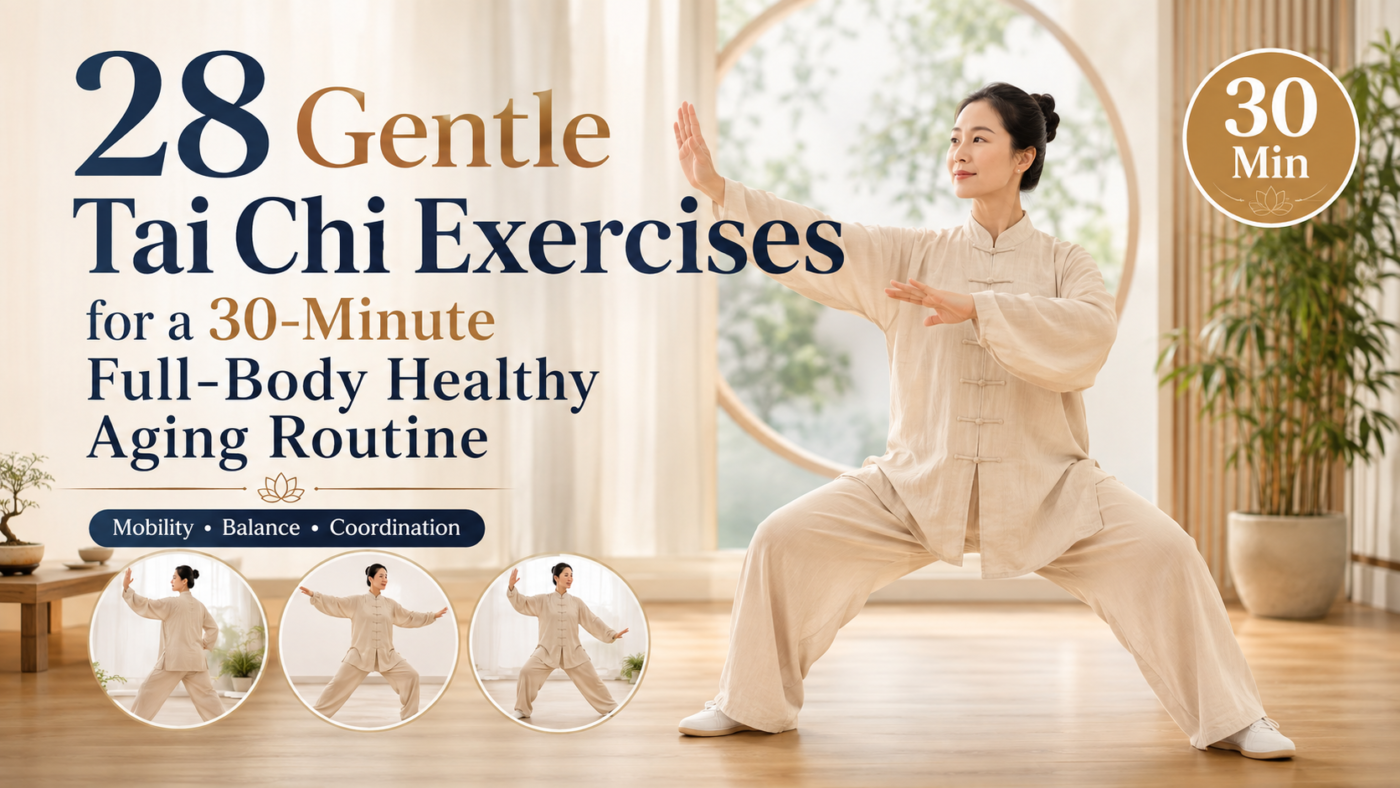
This 30-minute Tai Chi routine brings together 28 gentle full-body exercises designed to support mobility, balance, coordination, relaxation, and healthy aging.Reaching the final day of a seven-day movement challenge is an achievement in itself.
By this point, the real value is not simply completing another workout. It is building consistency, improving confidence, and proving that regular movement can become part of everyday life.
This 30-minute Tai Chi-inspired routine uses 28 gentle movements to keep the whole body active through stepping, arm swings, squats, heel raises, knee lifts, balance work, trunk rotation, and controlled stretching.
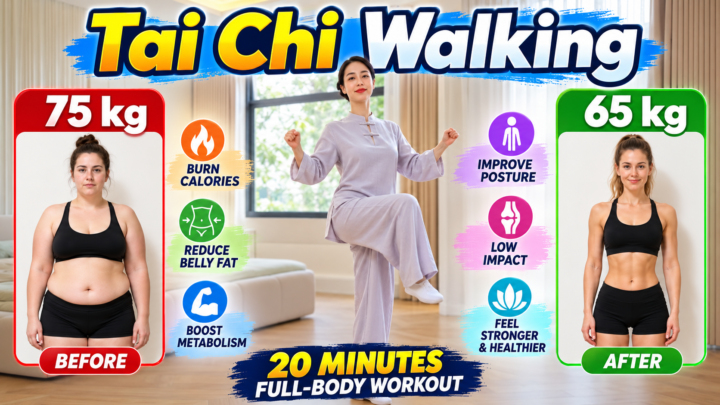
The original routine repeatedly links individual exercises with “belly fat reduction” or “full-body fat burning.” Those claims need to be interpreted carefully. A specific movement cannot selectively burn abdominal fat. What these exercises can do is increase daily physical activity, engage large muscle groups, improve mobility and balance, and contribute to overall energy expenditure. Over time, those benefits can support healthy weight management when combined with appropriate nutrition, sleep, and other forms of regular exercise.
Why This 30-Minute Routine Can Be Useful
This routine is especially suitable for people who prefer low-impact movement.
There is no running and no jumping.
Instead, the sequence emphasizes smooth transitions and whole-body coordination.
Regular practice may help support:
Lower-body strength
Balance and stability
Hip mobility
Shoulder mobility
Core control
Posture
Coordination
Joint-friendly activity
Daily energy expenditure
Healthy aging
The slower pace also makes it easier to focus on control rather than speed.
1. Heel Tap With Arm Swing
Stand tall and reach both arms overhead.
Lower the arms while tapping one heel forward.
Return to center.
Alternate sides continuously.
The rhythmic heel tap keeps the body moving while encouraging ankle mobility and coordination.
The arm movement increases total-body involvement.
Keep the heel tap light rather than striking the floor forcefully.
2. Overhead Body Twist
Raise both arms overhead.
Rotate the torso gently toward one side.
Return to center.
Repeat on the opposite side.
The twisting movement engages the abdominal and back muscles and helps maintain rotational mobility.
Allow the hips to move naturally rather than forcing the lower back to twist independently.
3. Side Step With Elbow Lift
Step to one side while lifting both elbows toward chest height.
Bring the feet together as the elbows lower.
Repeat on the opposite side.
This exercise combines lateral stepping with upper-body movement.
It can improve coordination and help maintain hip mobility.
4. Leg Curl With Elbow Pull
Bend one knee and bring the heel gently backward.
At the same time, pull both elbows behind the body.
Bring the hands together in front of the chest.
Lower the leg.
Switch sides.
The heel curl activates the hamstrings while the elbow pull engages the upper back.
This makes the movement useful for posture and whole-body coordination.
5. Hip Sway With Arm Swing
Raise one arm while lowering the other.
Gently shift or sway the hips from side to side.
Let the arms move with the rhythm.
The movement encourages relaxed hip and waist mobility.
Keep the pelvis controlled and avoid exaggerated side bending.
6. Heel Raise With Elbow Lift
Rise onto the balls of the feet.
At the same time, lift both elbows toward shoulder height.
Lower the heels and elbows together.
Repeat slowly.
Heel raises strengthen the calves and challenge ankle stability.
They also provide useful balance practice.
Use a wall or chair if needed.
7. Forward Step With Arm Swing
Step one foot forward.
Bend the front knee slightly while keeping the back leg comfortable.
Swing the arms in a controlled upward and downward rhythm.
Return to standing.
Switch sides.
This movement trains stepping control and lower-body stability.
Keep the front knee aligned with the toes.
8. Knee Lift With Backward Arm Swing
Hold both hands in front of the chest.
Lift one knee.
Swing both arms backward.
Return to center.
Switch sides.
This exercise challenges balance while engaging the core, hips, shoulders, and back.
Move slowly enough to avoid leaning backward.
9. Squat With Overhead Clap
Stand with the feet comfortably apart.
Bend both knees into a shallow squat.
As you rise, lift both arms overhead and clap.
Lower again with control.
Squats engage the thighs, glutes, and core.
The overhead arm movement adds full-body coordination.
Reduce the squat depth if the knees feel uncomfortable.
10. Overhead Knee Bend
Clasp both hands overhead.
Shift body weight gently from side to side while bending one knee and then the other.
Keep the movement controlled.
This movement combines lower-body loading with an overhead stretch.
It may help maintain shoulder, hip, and trunk mobility.
Avoid forcing the arms overhead if the shoulders are stiff.
11. Cross-Back Step With Clap
Step one foot diagonally behind the body.
Clap both hands overhead.
Return to center.
Alternate sides.
Cross-back stepping challenges coordination and balance more than ordinary side stepping.
Use a smaller step if necessary.
12. Side Bend With Toe Reach
Raise both arms overhead.
Lean gently toward one side.
Reach toward the raised or extended foot only as far as comfortable.
Return to center.
Repeat on the opposite side.
The goal is a controlled side stretch.
Do not force the torso downward.
13. Squat and Reach
Reach both arms overhead.
Bend the knees while lowering the arms.
Stand and reach upward again.
Repeat.
This combines a squat with a full-body lengthening movement.
It engages the legs while keeping the shoulders and trunk active.
14. Opposite Knee Touch
Lift one knee.
Bring the opposite hand toward it.
Return.
Switch sides.
This cross-body pattern is useful for balance, coordination, and core control.
The hand does not need to touch the knee.
15. Torso Twist With Arm Swing
Stand with the feet about shoulder-width apart.
Relax the knees.
Let the arms swing from side to side while the torso turns naturally.
Keep the movement comfortable.
This is a useful mobility exercise for the waist, upper back, and shoulders.
16. Forward Step Reach
Step one foot forward and tap the toes.
Raise the same-side arm overhead while keeping the other arm lower.
Return.
Switch sides.
This trains coordination between the arms and legs and encourages shoulder mobility.
17. Squat and Open Arms
Turn slightly toward one side.
Step forward into a shallow knee bend.
Pull the elbows backward.
Then open both arms out to the sides.
Return and repeat.
This movement combines lower-body control with chest opening.
It can be useful for posture and shoulder mobility.
18. Knee Tap
Hold both hands in front of the chest.
Lift one knee while lowering both hands toward it.
Return.
Switch sides.
This simple movement is excellent for controlled single-leg balance.
Keep the standing leg slightly soft rather than locked.
19. Heel Raise With Arm Swing
Raise and lower the heels rhythmically.
At the same time, swing both arms upward and downward.
Keep the movements synchronized.
This strengthens the calves and trains coordination.
It also adds a light cardiovascular element when performed continuously.
20. Side-to-Side Weight Shift
Cross both arms in front of the chest.
Shift body weight toward one side while slightly bending that knee.
Return through center.
Shift to the other side.
This is a basic but important balance exercise.
It helps train control during changes in direction and weight distribution.
21. Toe Raise With Open Arms
Raise both arms overhead as you rise onto the toes.
Lower the heels slowly.
At the same time, open the arms wide to the sides.
Repeat.
This movement trains ankle stability and shoulder mobility together.
The slow lowering phase is especially important.
22. Side Stretch Weight Shift
Lean slightly forward and place both hands on the legs.
Bend one knee while extending the opposite leg to the side.
Shift gradually toward the other side.
This movement stretches the inner thighs while mobilizing the hips.
Keep the spine long and avoid collapsing forward.
23. Cross-Arm Squat
Clap both hands overhead.
Bend the knees into a squat.
Swing both arms downward and cross them in front of the body.
Rise and repeat.
This engages the legs, hips, shoulders, and trunk.
The exercise also increases total-body movement.
24. Knee Lift With Side Arm Swing
Lift one knee while swinging both arms toward the same side.
Lower with control.
Repeat on the opposite side.
This combines balance, trunk movement, and coordination.
Use a smaller knee lift if needed.
25. Circular Arm Opening
Circle both arms upward until they reach overhead.
Then open them wide to the sides.
Repeat smoothly.
This movement helps maintain shoulder range and chest mobility.
Keep the shoulders relaxed away from the ears.
26. Back Kick With Opposite Toe Reach
Bend one leg backward.
Reach the opposite hand toward the lifted foot.
Use the other arm for balance.
Return.
Switch sides.
This is one of the more challenging balance movements in the routine.
If reaching the foot is difficult, simply lift the leg and reach backward without touching.
27. Wide Squat With Side Reach
Stand with the feet wide apart.
Bend the knees slightly.
Reach one arm overhead while leaning gently toward the opposite side.
Return.
Switch sides.
This combines lower-body strength with lateral trunk stretching.
Keep the knees aligned with the toes.
28. Forward Step With Overhead Reach
Clasp both hands together.
Step one foot forward.
Bend the front knee slightly.
Raise the hands from below to overhead.
Return to center.
Switch sides.
This finishing movement lengthens the body while mobilizing the hips, shoulders, and waist.
Move slowly and finish with a relaxed posture.
What This Routine Can Realistically Do
The most reliable benefits of this routine are not instant fat loss.
They are improvements in movement quality.
Practiced regularly, this type of exercise may help support:
Better balance
Stronger legs
Improved coordination
Greater joint mobility
More comfortable walking
Better posture
Reduced stiffness
More daily activity
Higher overall energy expenditure
Those changes can make it easier to remain active as you age.
Can It Reduce Belly Fat?
Not specifically.
Exercises involving twists, squats, knee lifts, and arm swings can strengthen the muscles around the midsection, but they cannot choose where stored fat is removed.
Reducing abdominal fat generally requires improvements in overall body composition.
That usually depends on a combination of:
Consistent physical activity
Appropriate calorie intake
Adequate protein
Strength training
Good sleep
Stress management
Regular walking or aerobic exercise
Long-term consistency
Tai Chi-style exercise can be one useful part of that strategy.
Why a Seven-Day Challenge Can Still Be Valuable
Seven days is not enough to transform body composition dramatically.
But it can be long enough to establish momentum.
A short challenge can help people discover:
Which movements feel comfortable
Which areas feel stiff
How balance changes from day to day
Whether a regular exercise time fits their schedule
How the body feels after consistent movement
The best outcome is not simply finishing Day 7.
It is continuing beyond Day 7.
How to Continue After the Challenge
You do not need to repeat all 28 movements every day.
A sustainable routine might look like this:
Perform 15 to 30 minutes of gentle Tai Chi-style movement three to five times per week.
Walk regularly.
Add at least two weekly strength-training sessions when appropriate.
Practice balance exercises several times per week.
Use mobility exercises on days when you feel stiff.
The exact plan should match your health and ability.
Safety Guidance
Move within a comfortable range.
Do not force deep squats.
Use a wall, chair, or countertop for balance if necessary.
Avoid aggressive twisting.
Keep the neck relaxed.
Stop exercising if you experience chest pain, faintness, severe dizziness, sudden weakness, unusual shortness of breath, or sharp pain.
People with recent surgery, severe osteoporosis, significant arthritis, cardiovascular disease, neurological conditions, or persistent balance problems should seek appropriate professional guidance before starting a new program.
Final Thoughts
Completing a seven-day challenge is useful because it creates momentum.
But lasting results come from what happens afterward.
This 28-movement Tai Chi-inspired routine combines many qualities that matter for healthy aging: balance, coordination, mobility, leg strength, posture, ankle control, and regular whole-body movement.
It is gentle enough to be approachable but active enough to make the body work.
The goal should not be to chase a single dramatic result.
The goal should be to keep the body capable.
Move regularly.
Stay consistent.
And let gradual improvement become part of everyday life.
FAQ
Is 30 minutes of Tai Chi-style exercise enough?
Thirty minutes can be a useful daily movement session, especially when combined with walking and strength training across the week.
Can these exercises burn abdominal fat?
They can contribute to total energy expenditure, but they cannot selectively burn abdominal fat.
Is this suitable for beginners?
Yes. Beginners can reduce the range of motion, use shallower squats, and perform balance exercises near a stable support.
Can I repeat this routine every day?
Many healthy adults can perform gentle mobility and balance work frequently, but recovery needs vary. Alternate harder and easier sessions when necessary.
Should people over 50 do strength training too?
In most cases, yes. Tai Chi-style exercise is valuable for balance and mobility, while progressive strength training can provide additional benefits for muscle and bone health.
What should I do after finishing a seven-day challenge?
Continue with a sustainable schedule instead of stopping completely. Consistency is more important than completing a short challenge perfectly.
Medical Disclaimer
This article is for educational purposes only and is not medical advice. Exercise needs vary according to age, medical history, medications, joint health, cardiovascular status, balance, and fitness level. Stop exercising if you experience pain, dizziness, faintness, unusual shortness of breath, weakness, or other concerning symptoms, and consult a qualified healthcare professional when appropriate.
This article is for general education and does not replace individualized care from a qualified health professional. Seek appropriate advice for persistent, severe, or concerning symptoms.
Read the full medical disclaimer