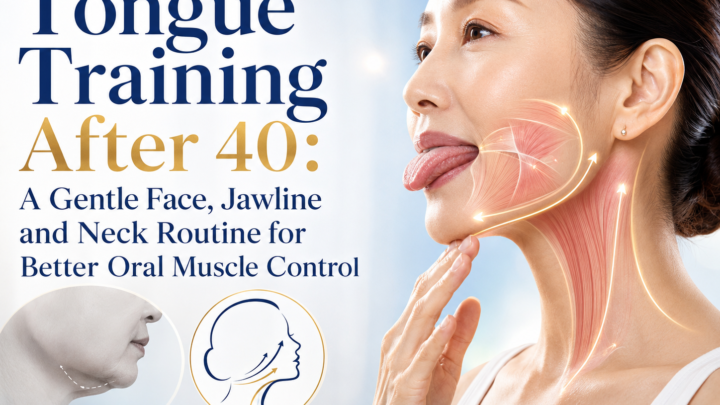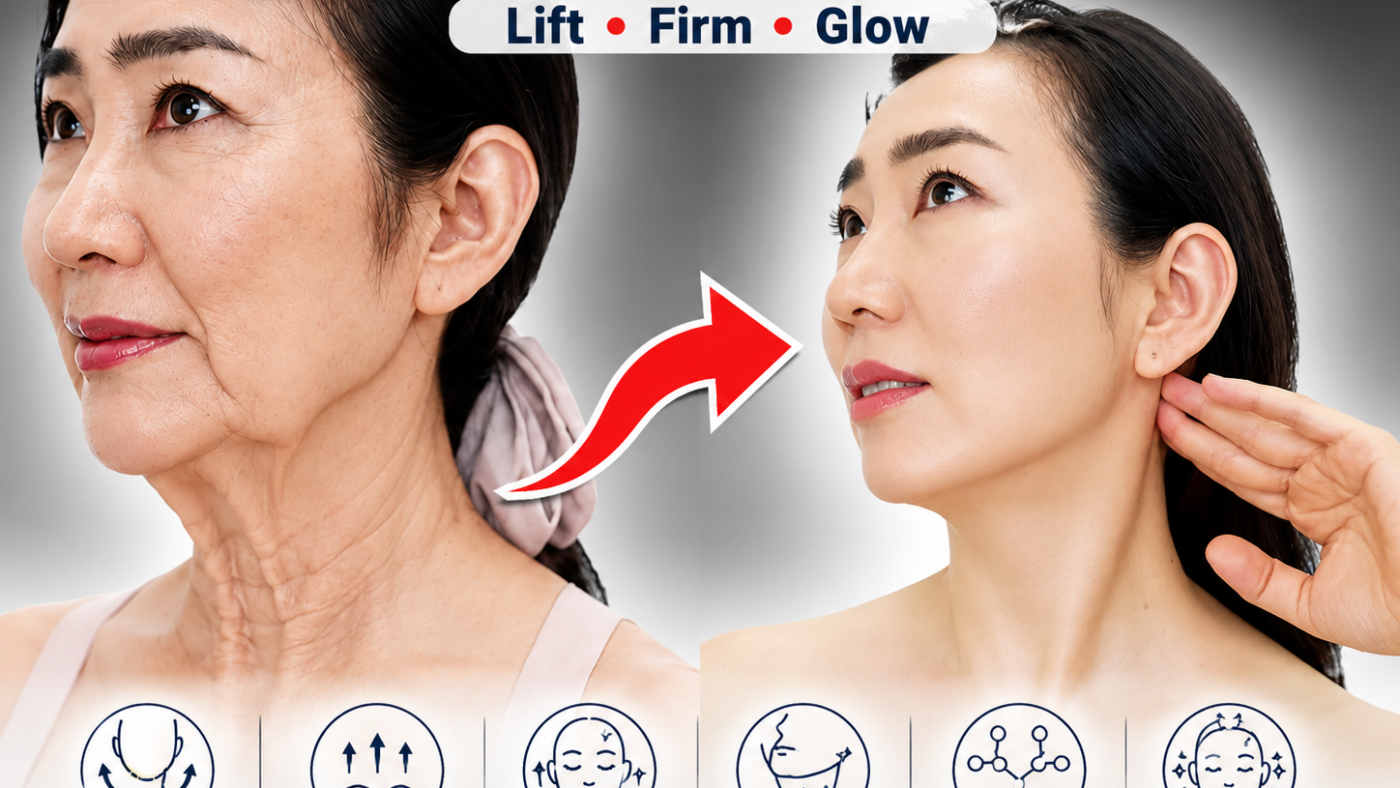
When people notice changes in the face and neck with age, attention usually goes immediately to the surface. Skin texture, wrinkles, nasolabial folds, jawline definition and neck laxity become the focus of creams, massage devices and cosmetic treatments.
But the face is more than skin.
Underneath it is a complex network of muscles, connective tissue, fat, bone, nerves, blood vessels and structures involved in chewing, swallowing, speaking and breathing. The tongue is part of this system.
The tongue is an unusually active muscular organ. It helps us speak, chew, swallow and position food. It also interacts with the jaw, floor of the mouth and several structures in the neck.
This raises an interesting question: can improving tongue activity, oral posture and surrounding muscle mobility affect how the face and neck feel or look?
The answer is more nuanced than many social-media claims suggest.
Tongue exercises may improve awareness, mobility and certain aspects of oral function. Jaw and neck exercises can also reduce tension in some people. However, there is not strong evidence that tongue exercises alone produce a nonsurgical facelift, permanently tighten loose skin or reverse structural facial aging.
Understanding what these exercises realistically can and cannot do makes them much more useful.
The Tongue Is More Than a Single Muscle
The tongue may look like one simple structure, but it contains multiple muscles working together in extremely coordinated ways.
Some muscles change the shape of the tongue. Others move the tongue forward, backward, upward and downward.
These movements are essential for speech and swallowing.
The tongue also works closely with the muscles of the jaw and the floor of the mouth. Because these structures are interconnected, excessive tension or altered movement in one area can sometimes influence sensations elsewhere.
For example, someone who frequently clenches the jaw may also experience tension around the temples, cheeks or neck.
That does not mean every facial wrinkle is caused by tongue weakness. But it does explain why oral function, jaw tension and neck mobility can sometimes be considered together rather than as completely separate systems.
Does Tongue Position Support the Face?
You may encounter claims that the tongue physically holds the face upward and that a weak tongue causes facial sagging.
This is an oversimplification.
The tongue does contribute to oral posture and interacts mechanically with the jaw and structures beneath it. However, the visible aging of the face is influenced by many other factors, including changes in skin collagen, elastin, facial fat compartments, bone structure, connective tissue and cumulative sun exposure.
Genetics, smoking, weight changes and general health also play important roles.
Therefore, tongue position should not be viewed as a hidden structural facelift mechanism.
A more realistic interpretation is that healthy oral posture and normal tongue function form one small part of a much larger musculoskeletal system.
Why Facial Aging Happens
Facial aging does not occur because one muscle suddenly stops working.
Several processes happen gradually.
The skin produces less collagen and elastin. Facial fat compartments change position and volume. Bone remodeling alters facial support. Connective tissues become less firm. Repeated facial expressions create dynamic lines that may eventually become visible at rest.
Gravity also contributes over decades.
This is why exercising the tongue or cheeks cannot completely reverse age-related facial changes.
However, muscle activity can influence expression, posture and temporary tissue appearance. Relaxing chronically tense muscles may make the face look softer. Improving head and neck posture may change how the jawline appears. Increased local blood flow after movement can temporarily produce a brighter appearance.
These effects are different from permanently tightening skin.
Tongue Posture and Oral Function
At rest, the tongue commonly rests gently against the roof of the mouth, although individual anatomy varies.
Good oral posture should feel natural rather than forced.
Aggressively pressing the tongue into the palate for long periods is unnecessary. The goal is normal function, not constant muscular contraction.
People who have difficulty swallowing, breathing through the nose, controlling the tongue or maintaining comfortable oral posture may benefit from professional evaluation.
Dentists, speech-language pathologists and specialists in orofacial myofunctional therapy may assess these issues when appropriate.
Can Tongue Exercises Strengthen the Tongue?
Yes.
The tongue is muscular tissue and can respond to training.
Tongue-strengthening exercises are used clinically in certain situations, particularly in rehabilitation involving swallowing difficulties.
Exercises may involve pressing the tongue against resistance or performing controlled movements.
But therapeutic tongue strengthening should not automatically be translated into cosmetic promises.
Improving tongue strength for swallowing is very different from claiming that tongue exercises erase wrinkles or reshape the entire lower face.
What About Lion’s Pose?
Lion’s Pose, commonly known as Simhasana in yoga, involves opening the mouth widely, extending the tongue and creating an exaggerated facial expression.
It can feel unusual, which may actually be part of its appeal.
For some people, exaggerated facial movement provides a temporary feeling of release after hours of jaw clenching or restrained facial expression.
The exercise may also increase awareness of how much tension is being held around the jaw, tongue and face.
There is little evidence that Lion’s Pose reverses facial aging. But as a gentle mobility and relaxation practice, it may be enjoyable for people who perform it comfortably.
Jaw Tension May Matter More Than People Realize
Many adults clench their jaw without noticing.
Stress, concentration and sleep-related grinding can all increase tension in the muscles involved in chewing.
Common signs include jaw soreness, morning headaches, tooth sensitivity, clicking around the temporomandibular joint and tightness around the temples.
Gentle relaxation exercises can sometimes help.
Try allowing the teeth to remain slightly separated while the lips rest comfortably together.
Notice whether your jaw is clenched while working at a computer or using your phone.
Gentle neck and shoulder movement may also reduce surrounding muscular tension.
Persistent jaw pain, locking or significant clicking should be evaluated professionally rather than treated solely with facial exercises.
The Neck and Face Work Together
Head posture influences the way the lower face and neck appear.
Spending hours looking downward at a phone or leaning toward a computer may create muscular fatigue and stiffness.
The head itself is relatively heavy, and supporting it for long periods in a forward position can increase demand on neck and shoulder muscles.
Improving mobility and posture may therefore make some people feel more comfortable and appear more upright.
Useful movements can include gentle shoulder rolls, chest opening, neck rotation and controlled upper-back mobility.
The goal is not to aggressively pull or stretch the neck.
Comfortable movement is usually preferable to forcing extreme ranges.
Can Facial Massage Improve Lymphatic Drainage?
Gentle facial massage may temporarily move superficial fluid and reduce the appearance of mild puffiness in some people.
That is different from permanently changing facial fat or skin structure.
The lymphatic system transports fluid through a network of vessels and lymph nodes. It is not necessary to press deeply into lymph nodes to make the system function.
In fact, aggressive pressure underneath the jaw or around the neck is not recommended.
If you massage these areas, use light pressure.
Persistent swelling, an unexplained neck lump or enlarged lymph nodes should be medically evaluated rather than massaged repeatedly.
What About Pressing Deeply Under the Chin?
This deserves particular caution.
The upper neck contains important blood vessels, nerves, glands and lymphatic structures.
Deep pressure is not necessary to obtain cosmetic benefits.
If a movement causes sharp pain, dizziness, numbness, unusual swelling or difficulty swallowing, stop.
People with recent neck surgery, vascular disease, lymphatic disorders or other medical conditions should seek professional guidance before performing intensive neck massage.
Do Facial Exercises Reduce Sagging?
Research on facial exercise is still limited.
A small number of studies have suggested that repeated facial exercises may influence facial muscle size or perceived appearance.
However, the evidence base is much smaller than that for conventional exercise involving larger muscle groups.
Several major questions remain unanswered.
Which movements are most effective?
How frequently should they be performed?
How long do changes last?
Can excessive facial repetition worsen expression lines?
Because these questions remain unresolved, facial exercises should be viewed as an optional self-care practice rather than a proven anti-aging treatment.
The Risk of Doing Too Much
More facial exercise is not necessarily better.
The face performs thousands of movements each day through speaking, chewing and expression.
Repeatedly forcing exaggerated contractions for long periods may potentially increase muscular tension.
People with temporomandibular disorders, jaw pain or frequent headaches should be especially cautious.
A sensible routine emphasizes mobility, relaxation and controlled activation rather than exhausting the facial muscles.
A Gentle Face, Tongue and Neck Routine
A short routine can focus on awareness rather than aggressive training.
Begin by relaxing your shoulders.
Allow your jaw to soften and keep your teeth slightly separated.
Take several slow breaths.
Gently move the tongue from one side of the mouth to the other.
Touch the tongue lightly to the roof of the mouth without straining.
Slowly open and close the jaw within a comfortable range.
Turn the head gently left and right.
Roll the shoulders backward several times.
Finish by allowing the entire face to relax.
Five minutes is enough.
There is no need to perform painful or extreme movements.
Why Breathing Matters
Jaw, tongue and neck tension often increase when people are stressed.
Slow breathing can help reduce general physiological arousal.
Try breathing comfortably through the nose when possible and allowing the exhalation to become slightly longer than the inhalation.
Avoid forcing enormous breaths.
The goal is to reduce unnecessary muscular effort.
Sometimes the most effective facial relaxation exercise is simply realizing how tightly you have been holding your jaw.
Healthy Aging Requires More Than Facial Exercise
If the goal is maintaining healthy-looking skin and facial aging as well as possible, several habits have substantially stronger scientific support.
Protect your skin from excessive ultraviolet exposure.
Avoid smoking.
Eat a nutritionally adequate diet with enough protein, fruits and vegetables.
Exercise regularly.
Sleep sufficiently.
Manage chronic stress.
Maintain appropriate dental care.
Use evidence-based skincare where appropriate.
Facial and tongue exercises may complement these habits, but they should not replace them.
A Note About Voice and Emotional Expression
The tongue obviously plays an essential role in speech, so people sometimes describe tongue exercises as helping them feel more expressive.
There may be a useful psychological element here.
Making unusual facial movements, producing sound, singing or speaking more freely can help some people become more aware of habitual tension.
That does not mean emotions are literally stored inside tongue muscles.
A better interpretation is that emotional states can influence muscular tension, breathing and expression.
Stress may tighten the jaw.
Anxiety may change breathing.
Concentration may make someone clench their teeth.
Relaxing these physical patterns can sometimes make a person feel calmer.
The relationship works in both directions.
When to Seek Professional Help
Facial exercises should not be used to explain away symptoms that require medical attention.
Seek evaluation if you develop persistent difficulty swallowing, unexplained changes in speech, tongue weakness, facial weakness, numbness, jaw locking, significant pain or persistent swelling in the neck.
Sudden facial weakness, especially on one side, requires urgent medical assessment.
Persistent snoring, choking during sleep or significant daytime sleepiness may also warrant evaluation for sleep-disordered breathing.
The Bottom Line
The tongue is an important and surprisingly complex part of the face, mouth and neck system.
Improving tongue awareness, reducing jaw tension and maintaining neck mobility may help some people feel more comfortable and expressive.
They may also temporarily change facial appearance through posture, muscular activation and reduced puffiness.
But tongue exercises are not a hidden facelift.
They cannot reliably reverse collagen loss, restore facial bone volume or permanently tighten loose skin.
The most useful approach is to treat these exercises as gentle movement and body-awareness practices rather than miracle anti-aging techniques.
Healthy aging is not about forcing the face to look frozen in time.
It is about maintaining function, mobility, expression and health while protecting the structures that support them.
And sometimes a few minutes spent relaxing the tongue, jaw, shoulders and neck can be a surprisingly pleasant place to begin.
FAQ
Can tongue exercises lift the face?
There is not strong evidence that tongue exercises produce a permanent facial lift. They may affect muscle activity, oral posture and temporary appearance, but facial aging involves skin, fat, connective tissue and bone as well.
Does tongue posture affect the jawline?
Tongue posture contributes to oral function, but claims that changing tongue position dramatically reshapes the adult jawline are not well supported by clinical evidence.
Can facial exercises reduce wrinkles?
Research is limited. Some exercises may affect facial muscle tone, but there is not enough evidence to conclude that they reliably reverse wrinkles or sagging.
Is Lion’s Pose good for the face?
Lion’s Pose may provide facial and tongue movement and can feel relaxing. It should be considered a yoga and mobility practice rather than a proven anti-aging treatment.
Can massage under the jaw improve lymphatic drainage?
Very gentle massage may temporarily reduce superficial fluid accumulation in some people. Deep pressure around the neck is unnecessary and may be unsafe.
Can jaw tension change facial appearance?
Chronic jaw clenching can increase muscle tension and may alter how the lower face feels or appears. Treating significant clenching or temporomandibular pain may require dental or medical evaluation.
How often should facial exercises be performed?
There is no scientifically established ideal schedule. Short, gentle sessions are more reasonable than prolonged or painful exercise.
What should I do if facial exercises cause pain?
Stop the exercise. Persistent jaw, facial or neck pain should be evaluated by an appropriate healthcare professional.
Medical Disclaimer
This article is for educational purposes only and is not intended to diagnose, treat or prevent any medical condition. Evidence supporting cosmetic benefits from tongue exercises, facial exercises and face yoga remains limited. Do not apply aggressive pressure to the neck, jaw or lymph-node areas. Consult a qualified healthcare professional if you have persistent pain, difficulty swallowing, unexplained swelling, facial weakness, neurological symptoms or other concerning symptoms.
This article is for general education and does not replace individualized care from a qualified health professional. Seek appropriate advice for persistent, severe, or concerning symptoms.
Read the full medical disclaimer