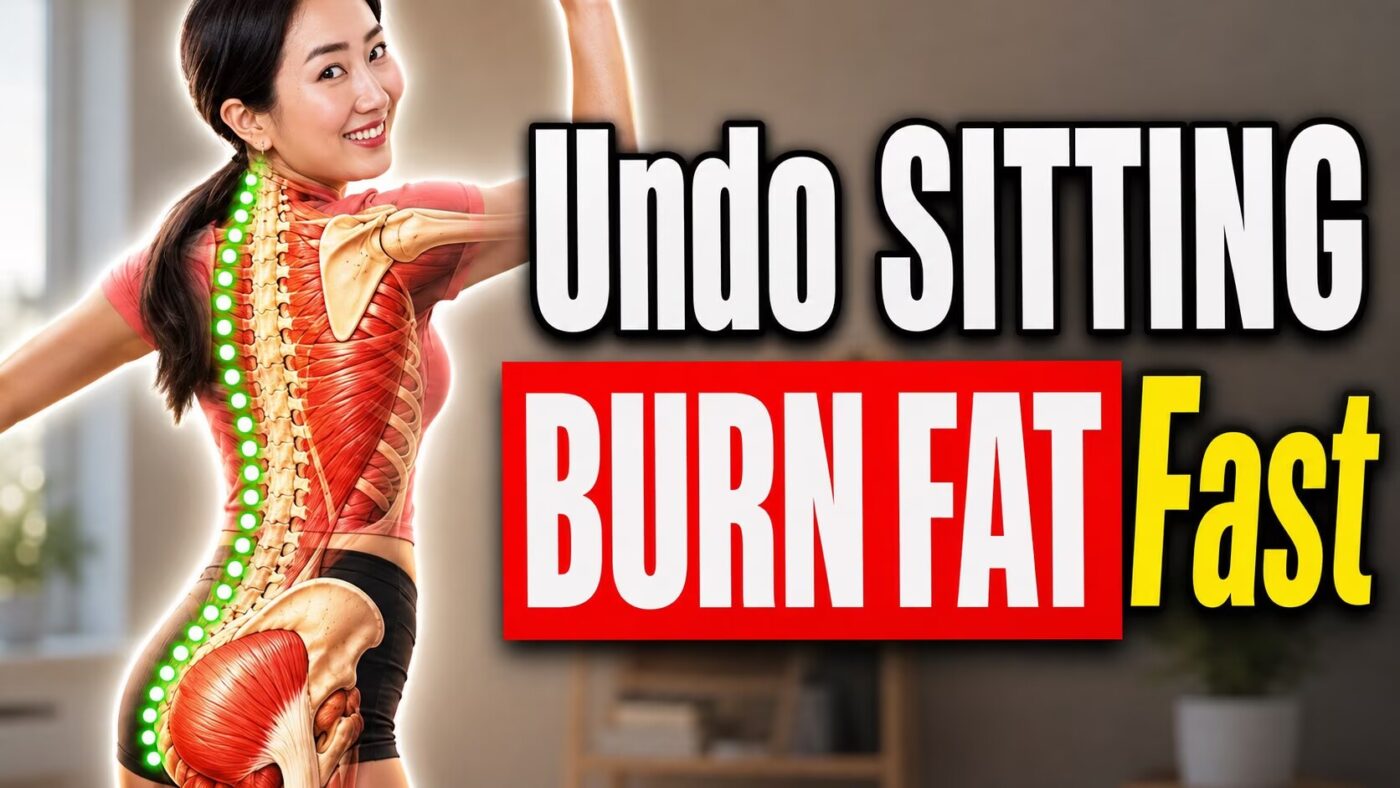
Sitting at a desk for eight hours and then spending the evening on a sofa may feel like rest, but your body is still spending most of the day in relatively similar positions. Over time, prolonged sitting can leave the hips feeling tight, the shoulders rounded, the neck stiff and the lower back uncomfortable. You may even wake up after a full night of sleep feeling as though your body never completely relaxed.
One simple way to interrupt that pattern is movement. It does not always need to involve an intense workout, complicated stretching routine or heavy resistance training. Sometimes a few minutes of gentle, rhythmic movement can be enough to make a stiff body feel noticeably freer.
One traditional movement that fits this idea particularly well is Shuai Shou, a relaxed arm-swinging exercise found in several Chinese movement and wellness traditions.
What Is Shuai Shou Exercise?
The Shuai Shou exercise involves standing comfortably and allowing the arms to swing rhythmically while the torso, hips and knees move naturally with them. The Chinese term is often translated roughly as “swinging the hands” or “swinging the arms.”
Unlike many conventional exercises, the goal is not to contract every muscle as hard as possible. The movement is deliberately loose. The shoulders stay relaxed, the arms remain relatively heavy, and the rotation comes primarily from the torso and hips.
This simplicity is part of its appeal. You do not need equipment, a gym membership or a large training space. A few feet of open floor can be enough.
The exercise also illustrates an important principle found in many traditional East Asian movement systems: efficient movement is not always created by more muscular effort. Sometimes reducing unnecessary tension allows the body to move more naturally.
Why Sitting Can Make the Body Feel So Stiff
Human bodies are designed to move through many different positions. Sitting itself is not inherently harmful, but remaining relatively motionless for long periods can temporarily reduce movement through the hips, spine and shoulders.
Hip flexors may feel shortened after hours in a seated position. The upper back may remain rounded while working at a computer. The shoulders can gradually drift forward, especially when typing or using a phone. Meanwhile, the gluteal muscles spend relatively little time producing meaningful movement.
This does not mean that your fascia has become permanently “stuck” or that your skeleton has moved out of place. Those explanations are often exaggerated online. A more practical way to understand the sensation is that tissues exposed to limited movement for long periods can simply feel stiff, tense or less comfortable.
Changing positions and moving regularly can help.
7 Potential Benefits of Shuai Shou Exercise
When practiced comfortably, rhythmic arm swinging may offer several useful benefits:
- Encourages whole-body movement. Rotating the torso while allowing the arms to follow introduces gentle motion through the shoulders, upper back, waist and hips.
- Breaks up prolonged sitting. A short period of movement provides an easy transition out of a desk-bound posture.
- May reduce the sensation of stiffness. Repeated comfortable movement can make muscles and joints feel less restricted after inactivity.
- Encourages shoulder mobility. Relaxed swinging allows the shoulder blades and arms to move without heavy resistance.
- Supports circulation during movement. Like other forms of light physical activity, rhythmic movement increases muscular activity and blood flow compared with remaining seated.
- Can feel mentally relaxing. Repetitive rhythmic movement, especially when paired with slow breathing, may help some people transition from a busy workday into a calmer state.
- Provides accessible low-intensity activity. Because the intensity can be adjusted easily, many people can use it as a gentle movement break rather than a formal workout.
These effects are far more realistic than claims that arm swinging directly “flushes toxins,” melts body fat or permanently realigns the spine.
How to Perform the Basic Shuai Shou Exercise
Stand with your feet approximately shoulder-width apart. Keep your knees soft rather than locking them completely straight.
Begin turning your torso gently from one side to the other. Allow your pelvis to participate naturally instead of trying to keep the lower body completely rigid.
Let both arms remain relaxed.
As your torso rotates, the arms should begin swinging naturally around the body. Imagine that your arms are ropes following the motion of your torso rather than actively throwing themselves from side to side.
Keep the shoulders away from the ears and allow the hands and fingers to remain relaxed.
Your knees can bend slightly as your weight shifts from side to side. The movement should remain smooth and comfortable rather than aggressive.
Continue for approximately one to three minutes when beginning.
As you become comfortable with the pattern, you can gradually practice for longer periods.
The Most Important Part: Do Less With the Arms
Beginners often make Shuai Shou harder than necessary because they actively swing their arms.
Instead, think of the torso as the engine and the arms as passengers.
Rotate the ribs and waist gently. Let the shoulders soften. Allow the weight of the arms to follow the body’s movement.
This creates a noticeably different sensation from deliberately performing arm repetitions.
The movement should feel fluid rather than forced.
If your shoulders immediately tense toward your ears, reduce the speed.
Add Gentle Rib-Cage Rotation
Once the basic movement feels natural, place your attention on the rib cage.
As you rotate from side to side, notice how the ribs move relative to the pelvis. You do not need to twist as far as possible. Comfortable movement is sufficient.
This variation can be particularly pleasant after computer work because it introduces motion through areas that may have remained almost completely still for several hours.
Breathing normally throughout the movement is more important than achieving a large range of motion.
Try Forward-and-Backward Movement
Shuai Shou does not have to be limited to side-to-side rotation.
You can also experiment with gentle forward-and-backward movement. Allow the chest to rise slightly as you move upward, then relax as you return.
Some practitioners allow the heels to lift gently before settling back toward the floor.
Again, there is no reason to exaggerate the motion.
The purpose is simply to introduce comfortable movement through the body after extended inactivity.
Why Rhythm Can Feel So Relaxing
There is something inherently different about repetitive, predictable movement.
Walking, rocking, swinging and slow rhythmic exercise can all feel calming to many people. Researchers continue to study how rhythmic activity interacts with attention, breathing, mood and the autonomic nervous system.
This does not mean that Shuai Shou has been proven to “switch on serotonin” or reset the nervous system in a specific biochemical way.
What can reasonably be said is that gentle repetitive movement can feel relaxing, particularly when it replaces prolonged immobility and is combined with comfortable breathing.
That alone makes it useful.
Shuai Shou Exercise After Desk Work
One of the best times to practice is immediately after a prolonged period of sitting.
Instead of finishing work and moving directly from an office chair to a sofa, spend several minutes moving first.
Stand up.
Walk briefly.
Swing your arms.
Rotate your torso.
Move your shoulders.
Allow your hips and knees to bend.
These small transitions can help remind the body that the workday’s seated posture does not need to become the posture of the entire evening.
Can Shuai Shou Help With Weight Loss?
Shuai Shou is movement, so it uses energy. However, claims that arm swinging alone causes dramatic weight loss or directly removes stubborn fat are not well supported.
Body-fat reduction depends largely on long-term energy balance, nutrition, overall physical activity, sleep and other individual factors.
Shuai Shou may still contribute positively by helping someone move more often.
For a person who has been extremely sedentary, developing a habit of taking regular movement breaks can be meaningful. But it should not be promoted as a replacement for walking, aerobic exercise, resistance training or an appropriate nutrition strategy when weight management is the goal.
Can It Improve Posture?
Movement may help someone feel more upright and less stiff temporarily, particularly after long periods of sitting.
But posture is not something that needs to be perfectly “aligned” at every moment.
Healthy bodies naturally use many postures.
Rather than searching for one perfect position, a more useful goal is to avoid remaining in exactly the same position for hours.
In that sense, Shuai Shou can be valuable because it encourages movement variety.
How Often Should You Practice?
There is no universal requirement.
For desk workers, even a few minutes during movement breaks can be useful. You might practice for two to five minutes after several hours of sitting or use it as part of a longer mobility routine.
The movement can also be combined with walking, gentle stretching, strength training, Tai Chi or Qigong.
Consistency matters more than intensity.
Safety Considerations
Shuai Shou should feel comfortable.
Do not force extreme spinal rotation, throw the arms aggressively or deliberately create pain in the shoulders, knees or lower back.
People with significant balance problems may prefer to practice beside a stable chair or countertop.
Anyone recovering from surgery, dealing with a recent injury or experiencing persistent unexplained pain should seek appropriate medical guidance before beginning a new exercise routine.
Stop if the movement causes dizziness, sharp pain, weakness or unusual neurological symptoms.
A Different Way to Think About Movement
Perhaps the most valuable lesson from Shuai Shou is not a specific physiological claim.
It is the idea that movement does not always need to feel like punishment.
After spending an entire day working, concentrating and maintaining fixed positions, the body may benefit from something simple: stand up, loosen your shoulders, allow the hips to rotate and let the arms move freely.
Traditional Chinese movement practices often emphasize softness, rhythm and adaptability alongside strength.
Modern exercise does not need to reject those ideas.
Strength training is valuable. Cardiovascular exercise is valuable. Mobility is valuable.
So is simply remembering to move.
The Bottom Line
Shuai Shou exercise is a simple, low-intensity arm-swinging practice that may help break up prolonged sitting, encourage comfortable movement through the torso and shoulders, and provide a relaxing transition after desk work.
It is unlikely to produce the dramatic fat-loss, detoxification or anti-aging effects sometimes claimed online. But it does not need miraculous claims to be useful.
For someone who spends much of the day sitting, a few minutes of rhythmic movement can be an easy way to feel less stiff, move more freely and reconnect with the body.
Sometimes the most sustainable exercise really is the one simple enough to do every day.
FAQ
What is Shuai Shou exercise?
Shuai Shou is a traditional Chinese-style arm-swinging movement in which the torso and hips rotate while the arms remain relaxed and follow the body’s momentum.
Can Shuai Shou reduce back stiffness?
Gentle movement may temporarily reduce feelings of stiffness after prolonged sitting, although persistent or severe back pain should be medically evaluated.
Does Shuai Shou burn belly fat?
It uses some energy because it involves physical movement, but there is no good evidence that Shuai Shou specifically targets belly fat.
How long should beginners practice?
One to three minutes is enough to learn the movement. Practice time can gradually increase if it remains comfortable.
Can older adults practice Shuai Shou?
Many older adults may be able to perform a gentle version, but anyone with balance problems, significant joint disease or other medical concerns should adjust the exercise appropriately and seek professional advice when necessary.
This article is for general education and does not replace individualized care from a qualified health professional. Seek appropriate advice for persistent, severe, or concerning symptoms.
Read the full medical disclaimer