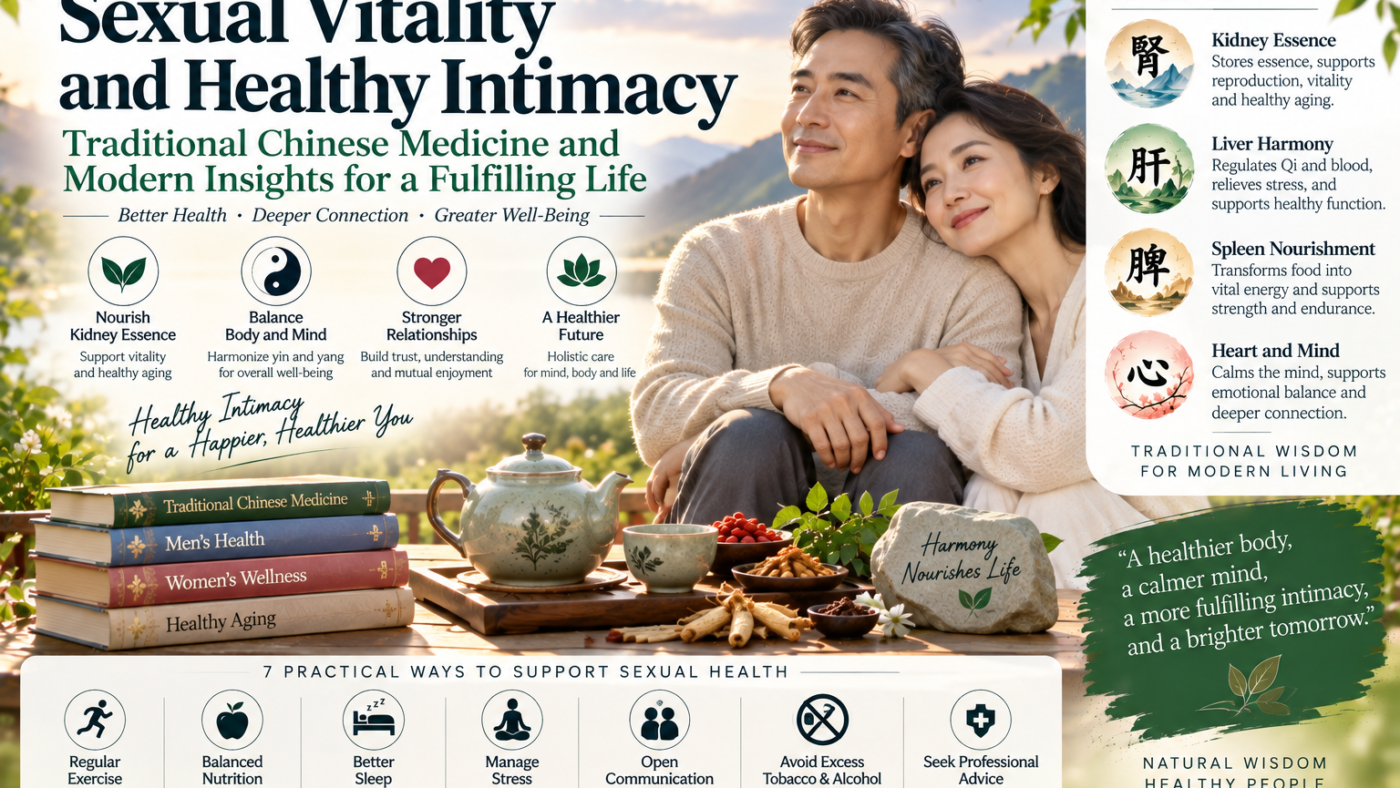
Sexual Vitality and Healthy Intimacy: Understanding Sexual Wellness
Sexual vitality and healthy intimacy are important components of physical well-being, emotional connection, personal confidence, and overall quality of life. Changes in sexual desire, erectile function, ejaculation, physical endurance, or sexual comfort can occur at different stages of adulthood.
Understanding sexual vitality and healthy intimacy involves recognizing the complex relationships among cardiovascular health, hormones, neurological function, psychological well-being, lifestyle habits, and interpersonal relationships.
Traditional Chinese Medicine offers a historical perspective through Kidney Essence, Liver Qi, Spleen nourishment, Heart Shen, and the harmonious relationship between Yin and Yang. Modern sexual medicine provides a scientific understanding of reproductive anatomy, sexual response, erectile dysfunction, premature ejaculation, and individualized treatment options.
A comprehensive approach to sexual wellness combines appropriate healthcare, balanced nutrition, regular physical activity, restorative sleep, stress management, and open communication to support satisfying intimacy throughout adulthood and healthy aging.Sexual health is an important component of physical well-being, emotional connection, personal confidence, and overall quality of life.
For some individuals, concerns begin with a gradual reduction in sexual desire. Others experience difficulty maintaining an erection, ejaculating sooner than they would like, feeling unusually tired after intimacy, or finding that sexual activity has become uncomfortable rather than enjoyable.
These experiences may occur at different stages of life.
Changes in sexual function can be associated with aging, stress, relationship circumstances, medical conditions, medication effects, hormonal changes, or individual differences in sexual response.
Traditional Chinese Medicine (TCM) approaches sexual wellness through the historical concepts of Kidney Essence, Qi and blood, Liver Qi regulation, Spleen nourishment, and the harmonious relationship between Yin and Yang.
Within this framework, sexual vitality is traditionally associated with the nourishment and coordinated functioning of the whole person.
Modern sexual medicine provides a different understanding based on reproductive anatomy, blood circulation, hormonal signaling, neurological activity, psychological well-being, and interpersonal relationships.
A comprehensive approach to sexual health recognizes that satisfying intimacy cannot be reduced to erection hardness, intercourse duration, or the frequency of sexual activity.
The goal is to support physical comfort, mutual satisfaction, informed choices, and healthy relationships throughout adulthood and the aging process.
The Traditional Chinese Medicine Philosophy of Sexual Vitality
Classical Chinese Medicine describes sexual vitality as part of the body’s broader capacity for growth, reproduction, and the maintenance of life.
The Kidney occupies an important position in this historical framework.
Traditional theory associates the Kidney with inherited vitality, reproductive development, aging, and the preservation of Essence, known as Jing (精).
The Liver is traditionally associated with the smooth movement of Qi and the storage of blood.
The Spleen and Stomach are associated with nourishment and the transformation of food into substances that sustain the body.
The Heart is linked with consciousness, emotional activity, and the traditional concept of Shen, or spirit.
Within this framework, sexual well-being is understood through relationships among these functional systems rather than through the reproductive organs alone.
The principle of Fu Zheng Tiao Ping (扶正调平) expresses the traditional goal of supporting foundational vitality while encouraging functional balance.
However, traditional organ systems should not be confused with their anatomical counterparts.
Kidney Essence is not equivalent to testosterone, semen volume, or measured kidney function.
Likewise, Liver Qi does not determine anatomical penile length, and Spleen Qi is not a direct measurement of sexual hormone production.
These concepts can provide cultural context for sexual wellness education, but they cannot independently establish the causes of sexual dysfunction.
Kidney Essence and Reproductive Health in Traditional Chinese Medicine
The classical expression “the Kidney stores Essence” reflects the importance placed on reproductive vitality in Chinese medical philosophy.
Within this traditional system, Essence is associated with growth, development, reproductive maturity, and aging.
The gradual transformation of Kidney Essence is also used to explain changes across the human lifespan.
Some traditional practitioners interpret reduced sexual desire, fatigue, or erectile difficulties through patterns involving Kidney Yang deficiency, Kidney Yin deficiency, or insufficient Kidney Essence.
These descriptions form part of traditional pattern differentiation.
However, reduced sexual function does not necessarily indicate anatomical kidney disease.
Similarly, a man with erectile difficulties does not automatically have low testosterone or a measurable deficiency of reproductive hormones.
Modern medical evaluation is necessary to determine whether a specific hormonal, vascular, neurological, psychological, or other condition is contributing to the symptoms.
The practical value of the traditional concept lies in encouraging attention to overall well-being rather than treating every sexual concern with the same Kidney-tonifying approach.
What Is Low Libido?
Libido refers to sexual desire or interest in sexual activity.
Sexual desire varies considerably among individuals and can change throughout life.
Some people experience relatively frequent sexual interest, while others have naturally lower levels of desire.
Neither pattern automatically indicates a medical problem.
Changes in libido become more relevant when they are persistent, unwanted, or associated with significant personal or relationship distress.
Several factors may contribute to reduced sexual desire.
These include chronic stress, inadequate sleep, depression, relationship concerns, certain medications, hormonal changes, persistent pain, and medical conditions.
For some individuals, sexual desire also depends heavily on emotional comfort and the context of intimacy.
A person may experience little spontaneous desire but develop interest during comfortable, mutually wanted physical affection.
This variation is part of normal human sexual response.
The appropriate approach is to understand the individual’s experience rather than assume that everyone should maintain the same level of sexual desire throughout life.
Why Sexual Desire May Change After 40
Middle age often brings changes in daily responsibilities, sleep, physical health, and relationship dynamics.
Some individuals experience greater work pressure, less time for recovery, or new caregiving responsibilities.
Others develop medical conditions or begin taking medications that influence sexual function.
For women, perimenopause and menopause may involve changes in estrogen levels, vaginal comfort, and sexual response.
For men, testosterone levels may change gradually with age, although age alone does not establish testosterone deficiency.
Cardiovascular health, diabetes, obesity, and other chronic conditions can also influence sexual well-being.
However, sexual decline is not an inevitable consequence of turning forty or fifty.
Many people maintain satisfying intimate relationships throughout later adulthood.
The objective of healthy aging is not to recreate a particular stage of youthful sexual performance.
It is to maintain physical comfort, emotional connection, and sexual experiences that remain meaningful to the individuals involved.
Erectile Dysfunction: Understanding the Causes
Erectile dysfunction, commonly abbreviated as ED, describes persistent difficulty obtaining or maintaining an erection sufficient for satisfactory sexual activity.
An occasional difficulty with erection is common and does not necessarily indicate a disorder.
However, repeated erectile difficulties may deserve medical attention.
An erection involves the coordinated activity of blood vessels, nerves, hormones, erectile tissue, and the brain.
Sexual stimulation triggers neurological signals that promote relaxation of certain blood vessels and smooth muscle tissues within the penis.
Blood flows into the erectile tissue, contributing to firmness.
Changes in blood circulation, nerve function, hormonal activity, or psychological state may interfere with this process.
Common contributing factors include diabetes, cardiovascular disease, high blood pressure, certain medications, smoking, excessive alcohol consumption, anxiety, and depression.
Erectile dysfunction can sometimes be an early indication of a broader vascular or metabolic health problem.
For this reason, persistent ED should not automatically be dismissed as a normal part of aging or treated solely with an over-the-counter sexual enhancement product.
The Relationship Between Erectile Dysfunction and Cardiovascular Health
The ability to achieve an erection depends partly on adequate blood flow.
Conditions affecting blood vessels may therefore influence erectile function.
Atherosclerosis, diabetes, hypertension, and other cardiovascular risk factors can contribute to vascular changes.
Some men notice erectile difficulties before developing more obvious symptoms of cardiovascular disease.
This does not mean that every episode of ED indicates an imminent heart attack.
However, persistent symptoms can provide an opportunity to review cardiovascular and metabolic health.
A healthcare professional may consider blood pressure, blood glucose, cholesterol, medication use, physical activity, and other relevant factors.
Appropriate evaluation can help identify treatable conditions while addressing the sexual concern itself.
Traditional Chinese Medicine associates erectile function with the movement of Qi and blood, but this should not be interpreted as evidence that acupuncture or herbal circulation products can reverse established vascular disease.
The Liver and Sexual Function in Traditional Chinese Medicine
Classical Chinese Medicine describes the Liver as governing the smooth movement of Qi and nourishing the sinews.
Traditional discussions of male reproductive function sometimes associate penile erection with the concept of the ancestral sinews, or Zong Jin (宗筋).
Within this framework, Liver Qi stagnation may be considered when sexual difficulties occur alongside emotional tension, frustration, or other traditional symptoms.
Some traditional practitioners also discuss Liver blood and Kidney Essence when addressing reproductive vitality.
These concepts reflect the historical understanding of relationships among emotion, nourishment, and sexual activity.
Modern physiology offers a different explanation.
Penile erection involves vascular filling, neurological signaling, and the response of specialized erectile tissue.
There is no established medical evidence that the anatomical liver determines penile length or that Liver tonification can increase penile size.
Persistent changes in penile shape, new curvature, pain, or other anatomical concerns require appropriate medical assessment.
The traditional Liver concept is most useful as a historical perspective on the relationship between emotional well-being and sexual function.
Premature Ejaculation: Understanding Sexual Timing and Control
Premature ejaculation, commonly abbreviated as PE, describes a pattern in which ejaculation occurs sooner than desired, with limited perceived control and associated distress.
It is one of the common sexual concerns reported by men.
However, there is no single ideal duration of intercourse that applies to every couple.
Ejaculating after a particular number of minutes does not automatically establish a disorder.
Clinical assessment considers whether the pattern is persistent, whether the individual experiences difficulty controlling ejaculation, and whether it causes meaningful distress.
Some men experience rapid ejaculation from the beginning of their sexual lives.
Others develop the problem after a period of previously satisfactory sexual functioning.
The distinction between lifelong and acquired premature ejaculation can help guide evaluation and treatment.
An occasional episode during excitement, after a period without sexual activity, or during a new relationship is not necessarily a cause for concern.
The objective of treatment is not to achieve an unusually long duration of intercourse.
It is to improve perceived control, comfort, and mutual satisfaction.
What Causes Premature Ejaculation?
Premature ejaculation can involve a combination of biological, psychological, and interpersonal factors.
Performance anxiety may contribute to a cycle in which concern about ejaculation increases tension and makes sexual experiences less comfortable.
Relationship stress can also affect sexual response.
In some cases, acquired premature ejaculation is associated with erectile dysfunction.
A man who worries about losing his erection may develop a pattern of rushing toward ejaculation.
Certain thyroid or prostate-related conditions may also be relevant in selected cases.
Early sexual experiences and learned patterns of arousal can influence later sexual behavior, but this does not mean masturbation itself causes permanent sexual dysfunction.
Normal masturbation does not establish Kidney Essence depletion or irreversible damage to sexual function.
The most useful approach is to identify the individual’s actual concerns and contributing factors.
Traditional Chinese Medicine and the Concept of Jing Guan Bu Gu
Traditional Chinese Medicine describes some presentations of premature ejaculation through the concept of Jing Guan Bu Gu (精关不固).
The phrase is commonly interpreted as an inability to maintain control over the traditional Essence Gate.
Within the classical framework, this pattern may be associated with Kidney Qi deficiency or other functional imbalances.
Some traditional practitioners also consider Heart and Kidney relationships, Liver Qi, or broader constitutional patterns.
These descriptions should be understood as traditional diagnostic concepts.
They are not equivalent to an identified neurological abnormality or a measurable failure of a physical ejaculatory valve.
Modern sexual medicine evaluates ejaculation through neurological processes, sexual response, psychological factors, and individual circumstances.
There is insufficient reliable evidence that a traditional Kidney-tonifying formula consistently treats all forms of premature ejaculation.
Modern Treatment Options for Premature Ejaculation
Treatment depends on the individual’s symptoms, medical history, and preferences.
Some men benefit from behavioral techniques designed to improve awareness of arousal and perceived control.
One example is the stop-start technique, which involves temporarily pausing sexual stimulation as ejaculation approaches.
Sexual counseling or therapy may also help when anxiety or relationship concerns are contributing to the problem.
Certain medications can delay ejaculation.
These may include selected serotonin reuptake inhibitors or other prescription treatments.
Topical anesthetic products can also reduce penile sensitivity in some individuals.
However, inappropriate use may reduce pleasure or transfer the anesthetic to a partner.
If erectile dysfunction is also present, addressing it may be an important component of treatment.
No single method is appropriate for everyone.
Medication should be selected with consideration of possible interactions, contraindications, and adverse effects.
Sexual Fatigue: Why Some People Feel Tired After Intimacy
Sexual activity involves physical exertion, emotional engagement, neurological activity, and changes in physiological arousal.
Feeling relaxed or sleepy afterward is common.
Some people also experience temporary physical tiredness.
The intensity of the experience may depend on activity level, sleep, physical fitness, emotional state, and other individual circumstances.
However, consistently experiencing severe fatigue, pronounced weakness, or other troubling symptoms after sexual activity may warrant further assessment.
Possible contributing factors include inadequate sleep, excessive exertion relative to current physical capacity, medication effects, chronic illness, or other medical conditions.
The traditional concept of Essence consumption has historically been used to interpret some forms of post-intimacy fatigue.
However, sexual activity does not automatically cause harmful depletion of a finite substance known as Kidney Essence.
Semen production is a normal biological process.
There is no established scientific basis for claiming that ordinary ejaculation necessarily reduces memory, damages bone marrow, accelerates aging, or shortens lifespan.
If fatigue after sexual activity is persistent or disproportionate, the appropriate response is to understand the individual’s health rather than automatically recommend sexual abstinence or herbal supplementation.
Does Sexual Activity Deplete the Body’s Vitality?
Traditional Chinese health preservation sometimes emphasizes moderation in sexual activity.
Within this framework, excessive sexual activity is described as potentially consuming foundational resources.
Modern medicine approaches this question differently.
There is no universal number of sexual encounters that defines healthy or excessive activity for all adults.
A frequency that feels comfortable for one couple may not suit another.
The appropriate level depends on desire, physical comfort, consent, health conditions, relationship circumstances, and personal preferences.
Sexual activity should not routinely cause significant pain, injury, prolonged exhaustion, or distress.
If an individual repeatedly feels unwell afterward, reducing the intensity or frequency temporarily may be reasonable while the cause is assessed.
However, healthy sexual activity is not inherently a form of bodily damage.
Likewise, there is no established evidence that maintaining a predetermined monthly limit guarantees longevity.
A balanced approach respects individual limits without turning normal sexual desire into a health threat.
Female Sexual Desire and Arousal
Women’s sexual health involves more than vaginal lubrication or the frequency of intercourse.
Sexual desire, arousal, comfort, emotional connection, and personal satisfaction are related but distinct experiences.
A woman may experience reduced sexual desire for many reasons.
These can include fatigue, stress, relationship concerns, depression, medication effects, hormonal changes, or painful sexual experiences.
Pregnancy, childbirth, breastfeeding, and menopause can also influence sexual function.
Traditional Chinese Medicine may interpret certain patterns through Kidney Yang deficiency, insufficient blood nourishment, or Liver Qi stagnation.
However, these traditional classifications cannot independently establish why a woman experiences reduced desire.
Cold hands and feet do not prove that the genital tissues are inadequately supplied with Qi.
Similarly, a woman who experiences little spontaneous desire is not necessarily experiencing a medical disorder.
A person-centered approach considers whether the change is unwanted, persistent, and distressing.
Sexual health should be defined through the individual’s well-being rather than expectations about how an attentive spouse should behave.
Vaginal Dryness and Painful Intercourse
Pain during sexual activity deserves attention.
For some women, discomfort is associated with insufficient lubrication.
Others experience pain because of pelvic floor muscle tension, infection, skin irritation, endometriosis, or another gynecological condition.
During perimenopause and menopause, declining estrogen levels may contribute to vaginal dryness and changes in tissue elasticity.
This can make penetration uncomfortable.
Pain can also affect desire, creating a cycle in which anticipation of discomfort makes sexual activity increasingly stressful.
Modern treatment depends on the underlying cause.
Some individuals benefit from appropriate lubricants or vaginal moisturizers.
Others require treatment for infection, pelvic floor physical therapy, or selected prescription hormonal treatments.
Persistent or severe pain should be evaluated by a qualified healthcare professional.
Traditional concepts of Kidney deficiency should not be used to dismiss treatable gynecological conditions.
The Heart, Emotional Connection, and Sexual Satisfaction
Traditional Chinese Medicine describes the Heart as governing blood and housing Shen.
Within this historical framework, emotional stability and mental activity are closely associated with physical well-being.
Modern sexual medicine also recognizes that emotional experience and sexual response are connected.
Trust, communication, personal boundaries, and relationship satisfaction can influence intimacy.
However, a disagreement about sexual frequency does not automatically mean that either partner has a medical condition.
Differences in sexual desire are common.
One person may prefer more frequent intimacy, while another may experience desire less often.
Open communication can help partners understand each other’s needs without treating sexual activity as an obligation.
When difficulties become persistent or distressing, counseling or sexual therapy may provide useful support.
A satisfying intimate relationship depends on mutual respect and comfort, not simply on maintaining a particular level of physical performance.
Nocturnal Emissions: Understanding Wet Dreams in Adult Men
Nocturnal emission refers to ejaculation that occurs during sleep.
It is commonly associated with adolescence, but it can also occur in adulthood.
The frequency varies considerably.
Some men experience nocturnal emissions occasionally, while others rarely or never experience them.
This variation does not automatically indicate a medical problem.
Traditional Chinese Medicine sometimes interprets frequent nocturnal emissions through concepts involving Kidney Essence, Heart Fire, or disturbances in Yin and Yang.
However, an occasional wet dream does not establish that Essence has become excessive or depleted.
Likewise, nocturnal emission does not inherently damage reproductive health.
If episodes are accompanied by pain, blood in the semen, substantial sleep disruption, or other persistent symptoms, medical evaluation may be appropriate.
The objective is to distinguish ordinary physiology from symptoms that deserve attention.
Erectile Dysfunction Medication: Separating Medical Treatment From Unsafe Products
One important distinction in sexual health is the difference between regulated prescription medication and unregulated sexual enhancement products.
Medications such as sildenafil and tadalafil belong to a class known as phosphodiesterase type 5 inhibitors, or PDE5 inhibitors.
These medicines can help improve penile blood flow during sexual stimulation.
When appropriately prescribed and used, they are established treatment options for erectile dysfunction.
They do not work by draining a measurable reserve of Kidney Essence.
They also do not automatically cause damage to internal organs or shorten lifespan.
However, they are not suitable for everyone.
PDE5 inhibitors must not be combined with nitrate medications, such as nitroglycerin, because the interaction can cause a dangerous drop in blood pressure.
Recreational nitrite products, sometimes known as poppers, also create a potentially dangerous interaction.
Other medical conditions and medication combinations may require special consideration.
Possible side effects include headache, flushing, nasal congestion, dizziness, and digestive discomfort.
Rare but serious adverse effects require prompt attention.
A prolonged erection lasting four hours or more is a medical emergency.
Sudden vision or hearing changes also require urgent assessment.
The appropriate response is informed prescribing and safe use, rather than treating all erectile dysfunction medication as inherently toxic.
The Risks of Unregulated Sexual Enhancement Supplements
Products marketed as natural aphrodisiacs, herbal Viagra, or instant sexual performance enhancers deserve particular caution.
Some are promoted through exaggerated claims about penile size, endurance, testosterone, or guaranteed sexual satisfaction.
The U.S. Food and Drug Administration has repeatedly identified sexual enhancement products containing undeclared pharmaceutical ingredients.
For example, a product may contain sildenafil or a related substance without disclosing it on the label.
This creates a serious safety concern because consumers may unknowingly combine the product with medications that interact dangerously.
Some products may contain multiple active substances or inappropriate doses.
Traditional herbal ingredients can also carry their own risks.
Certain toxic plants, including strychnine-containing preparations, should not be regarded as safe simply because they have appeared in historical formulas.
The safety of a product cannot be determined by checking whether it reduces appetite or causes immediate discomfort.
Some harmful products produce few obvious early symptoms.
A lack of immediate side effects does not prove that a preparation is safe.
The most appropriate approach is to avoid unregulated products making extraordinary sexual performance claims and seek professional advice when treatment is needed.
Can Traditional Chinese Medicine Improve Sexual Function?
Traditional Chinese Medicine has a long history of discussing reproductive vitality, sexual desire, and intimate well-being.
Traditional practitioners may consider patterns involving Kidney Essence, Kidney Yang, Kidney Yin, Liver Qi, Heart Shen, or Spleen nourishment.
Some people also seek acupuncture, herbal medicine, Tai Chi, Qigong, or other complementary approaches.
However, traditional theory alone does not establish the effectiveness of a particular treatment.
Current evidence does not support treating herbal sexual enhancement products as proven alternatives to established erectile dysfunction treatment.
Some individuals may find that gentle movement, relaxation, and improved sleep support general well-being.
These benefits should not be confused with evidence that a specific practice reliably reverses vascular erectile dysfunction or cures premature ejaculation.
Herbal preparations may interact with prescription medicines.
Individuals considering complementary treatment should discuss the ingredients and potential risks with a qualified healthcare professional.
The most responsible role of traditional health cultivation is to complement appropriate healthcare rather than delay the evaluation of persistent sexual symptoms.
7 Healthy Habits for Sexual Vitality and Healthy Intimacy
Sexual health is influenced by everyday habits as well as specific medical and relationship factors.
The following practices support broader physical and emotional well-being.
1. Maintain Consistent, Restorative Sleep
Adequate sleep supports general health, mood, concentration, and daily functioning.
Persistent sleep problems deserve attention, particularly when associated with significant daytime fatigue.
A reasonably consistent sleep schedule can contribute to a more sustainable daily routine.
2. Support Cardiovascular and Metabolic Health
Physical activity, balanced nutrition, and appropriate management of blood pressure, diabetes, and other medical conditions can support overall health.
Vascular health is particularly relevant to erectile function.
Individuals with persistent ED may benefit from reviewing cardiovascular risk factors with a healthcare professional.
3. Manage Stress and Performance Anxiety
Sexual experiences can become difficult when individuals feel pressure to achieve a particular level of performance.
Relaxation, open communication, and appropriate counseling may help reduce this pressure.
The objective is comfort and satisfaction rather than competition with an unrealistic standard.
4. Avoid Tobacco and Limit Excessive Alcohol
Smoking can affect vascular health and contribute to erectile difficulties.
Excessive alcohol consumption may interfere with sexual response and general well-being.
Addressing these habits can support long-term health.
5. Maintain Open Communication With Your Partner
Discuss preferences, comfort, boundaries, and changes in sexual desire.
Avoid assuming that reduced interest means rejection or that sexual satisfaction depends only on intercourse duration.
Mutual understanding can help partners adapt to changing needs throughout life.
6. Respect Physical Comfort and Individual Limits
Sexual activity should be consensual and comfortable for everyone involved.
Pain, significant exhaustion, or repeated distress should not be ignored.
Temporary changes in activity may be appropriate when someone is unwell, recovering from surgery, or experiencing a medical problem.
7. Seek Appropriate Medical Care When Problems Persist
Persistent erectile dysfunction, premature ejaculation, painful intercourse, or unwanted changes in sexual desire deserve individualized assessment.
Effective treatments are available for many underlying conditions.
Avoid relying on unregulated supplements or products promising permanent results within a few days.
Sexual Health After 40: A Balanced Approach to Intimacy and Longevity
Sexual well-being can remain meaningful throughout middle age and later adulthood.
Although certain physical changes become more common with age, satisfying intimacy is not limited to youth.
A healthy approach recognizes that sexual response may change with time.
Some individuals experience changes in erection firmness or recovery time.
Others notice differences in desire, lubrication, physical endurance, or emotional preferences.
These changes can be addressed through communication, appropriate healthcare, and adjustments that support mutual comfort.
Traditional Chinese Medicine emphasizes preserving vitality and maintaining balance throughout the lifespan.
Modern medicine provides diagnostic tools and treatment options for specific sexual concerns.
These perspectives can coexist when historical concepts are not mistaken for established physiological mechanisms.
Sexual wellness should not be judged through the length of intercourse, the number of ejaculations, or the appearance of the reproductive organs alone.
The more meaningful objective is to maintain health, autonomy, satisfaction, and connection.
When Sexual Symptoms Require Medical Attention
Persistent erectile difficulties may warrant evaluation for vascular, metabolic, hormonal, neurological, or psychological factors.
Premature ejaculation that causes ongoing distress may benefit from medical assessment or sexual therapy.
Persistent pain during intercourse, unusual genital symptoms, or unwanted changes in sexual desire may also require attention.
A prolonged erection lasting four hours or more requires emergency medical care.
Chest pain, fainting, or severe breathlessness during sexual activity also requires urgent assessment.
Sudden vision or hearing changes after taking erectile dysfunction medication should be evaluated promptly.
People with known cardiovascular conditions should discuss the safety of sexual activity and relevant medications with their healthcare professional.
Seeking care is not an admission of weakness.
It is an appropriate way to understand symptoms and make informed decisions about health.
Sexual Vitality and Healthy Intimacy: Supporting Relationships and Healthy Aging
Traditional Chinese Medicine offers a historical philosophy in which sexual vitality is associated with Kidney Essence, Qi and blood, Liver regulation, Spleen nourishment, and the harmonious relationship between Yin and Yang.
The classical principle of supporting foundational vitality reflects a longstanding interest in maintaining reproductive health throughout life.
Modern sexual medicine provides a scientific understanding of erectile function, ejaculation, hormonal influences, genital comfort, psychological well-being, and interpersonal relationships.
These perspectives can coexist when their different purposes and limitations are clearly understood.
Sexual difficulties should not automatically be interpreted as evidence of constitutional weakness, excessive ejaculation, or irreversible physical decline.
Many conditions have identifiable contributing factors and available treatments.
For some individuals, improving sleep, reducing stress, or addressing lifestyle factors may support sexual well-being.
Others benefit from medication, pelvic floor rehabilitation, counseling, treatment of an underlying medical condition, or a combination of approaches.
The purpose of healthy sexual living is not to achieve extraordinary endurance or preserve an arbitrary level of youthful performance.
It is to maintain physical comfort, emotional connection, mutual respect, and personal well-being.
The deeper lesson of traditional health cultivation is that intimacy should exist in harmony with the rest of life.
By respecting individual needs, supporting overall health, and seeking appropriate care when necessary, people can maintain satisfying relationships and a healthier approach to sexuality throughout the aging process.
FAQ
What is sexual vitality?
Sexual vitality refers to an individual’s broader sense of sexual well-being, which may include sexual desire, physical comfort, sexual response, emotional connection, and personal satisfaction. It should not be measured solely by erection firmness, ejaculation timing, or sexual frequency.
What causes low libido?
Low libido may be associated with chronic stress, inadequate sleep, depression, relationship concerns, hormonal changes, medication effects, chronic illness, or painful sexual experiences. Sexual desire varies naturally, and treatment is most relevant when a change is unwanted or distressing.
What causes erectile dysfunction?
Erectile dysfunction may involve vascular, neurological, hormonal, psychological, or medication-related factors. Diabetes, cardiovascular disease, hypertension, smoking, and certain medications can contribute. Persistent symptoms deserve individualized medical evaluation.
Is erectile dysfunction a normal part of aging?
Erectile difficulties become more common with age, but they should not automatically be considered inevitable or untreatable. Appropriate medical assessment can identify contributing factors and available treatment options.
What is premature ejaculation?
Premature ejaculation involves ejaculation occurring sooner than desired, usually with difficulty controlling ejaculation and associated distress. Occasional episodes are common and do not necessarily indicate a sexual disorder.
Can premature ejaculation be treated?
Treatment may include behavioral techniques, psychosexual counseling, selected medications, or management of an underlying condition. The appropriate approach depends on the individual’s symptoms, medical history, and preferences.
Does frequent masturbation cause erectile dysfunction?
Masturbation is a normal sexual behavior and is not established as a cause of permanent erectile dysfunction or depletion of a measurable reserve of Kidney Essence. Persistent sexual symptoms should be evaluated according to their actual medical and psychological causes.
Why do some women experience pain during intercourse?
Painful intercourse may involve vaginal dryness, hormonal changes, infection, pelvic floor dysfunction, endometriosis, skin conditions, or other causes. Persistent or severe pain deserves gynecological assessment.
Can Traditional Chinese Medicine cure erectile dysfunction?
Traditional Chinese Medicine offers historical concepts involving Kidney Essence, Liver Qi, and reproductive vitality. However, no complementary health approach has been established as both safe and effective for treating erectile dysfunction. Complementary practices should not replace appropriate medical treatment.
Are prescription erectile dysfunction medications dangerous?
Prescription medications such as sildenafil and tadalafil can be effective when appropriately prescribed, but they have contraindications and potential side effects. They must not be combined with nitrate medications because of the risk of dangerously low blood pressure.
Are natural sexual enhancement supplements safe?
Not necessarily. Some products marketed as natural sexual enhancers contain undeclared pharmaceutical ingredients that may interact dangerously with prescription medication. The FDA has continued to identify such products, including a warning published in August 2026.
Medical Disclaimer
This article is intended for educational and informational purposes only and does not constitute medical advice, diagnosis, or treatment. Traditional Chinese Medicine concepts are presented for historical and educational understanding and should not be considered equivalent to established medical diagnoses. Erectile dysfunction, premature ejaculation, persistent sexual fatigue, painful intercourse, and changes in sexual desire may have different underlying causes and require individualized medical assessment. Do not discontinue prescribed medication or replace necessary medical care with herbal remedies, unregulated sexual enhancement products, or complementary practices. Prescription erectile dysfunction medications may interact dangerously with nitrates and certain other substances. An erection lasting four hours or longer, chest pain, severe breathlessness, or sudden vision or hearing changes requires urgent medical attention. Consult a qualified healthcare professional before using sexual enhancement supplements, hormone-related products, or prescription sexual dysfunction treatments.
This article is for general education and does not replace individualized care from a qualified health professional. Seek appropriate advice for persistent, severe, or concerning symptoms.
Read the full medical disclaimer