Facial massage trends are becoming increasingly focused on deeper tissues.
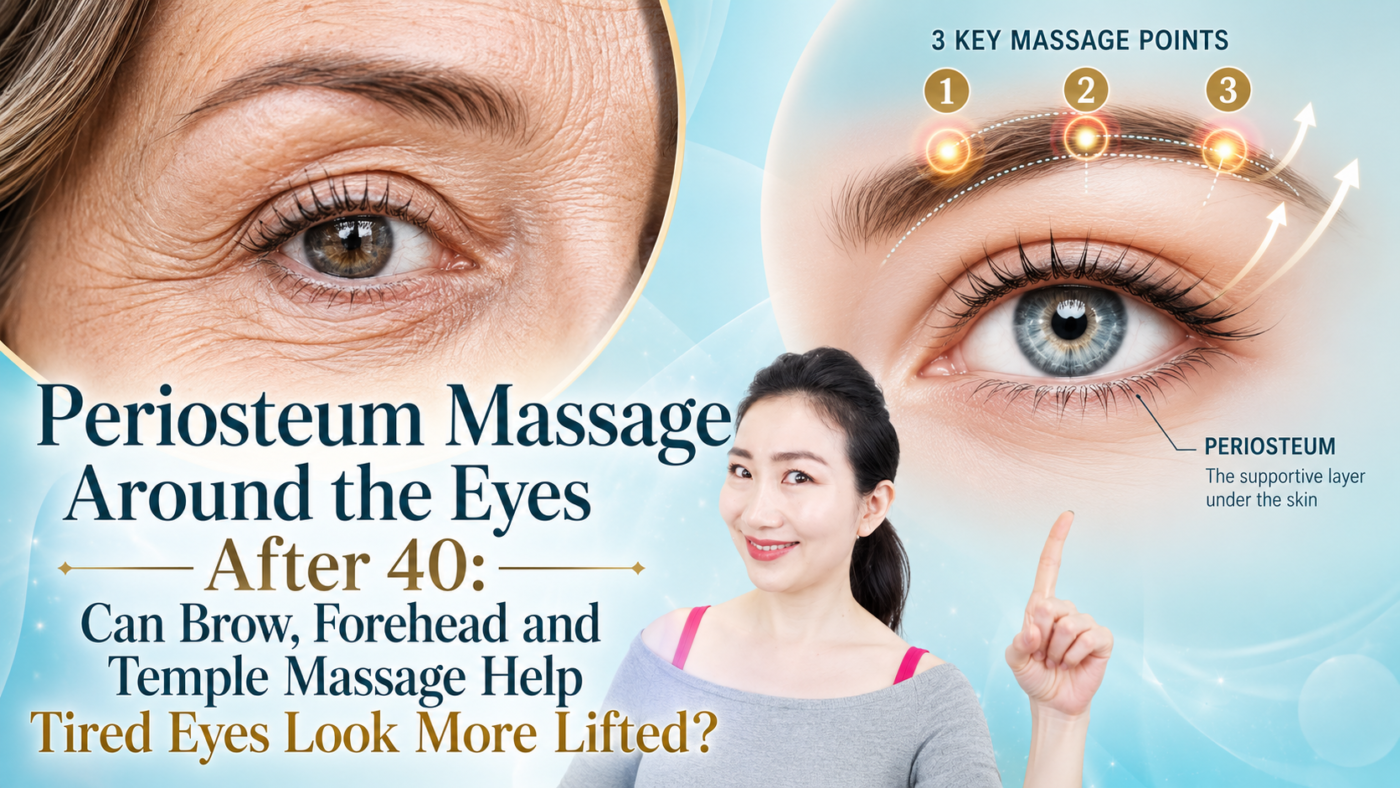
Instead of stopping at the skin or superficial facial muscles, some techniques claim to reach the periosteum—the thin connective-tissue membrane covering the surface of bone.
The idea sounds powerful.
If skin and muscle tension contribute to an older or more tired appearance, perhaps working closer to the bone could create an even stronger lifting effect.
That is the theory behind so-called periosteum facial massage.
But there is an important anatomical distinction.
The periosteum is a real biological tissue.
It contains nerves and blood vessels and plays important roles in bone health.
Yet ordinary facial massage cannot simply “loosen,” reposition or remodel the periosteum in the dramatic way some beauty routines suggest.
What massage can do is stimulate the soft tissues lying over bone, reduce the sensation of muscular tension, temporarily increase superficial circulation and help the face feel more relaxed.
Those effects may subtly influence appearance.
That makes this technique worth exploring—provided expectations remain realistic.
What Is the Periosteum?
The periosteum is a thin membrane covering much of the outer surface of bone.
It contains connective tissue, blood vessels and nerve fibers.
It contributes to:
Bone nourishment.
Bone repair.
Attachment of certain tendons and ligaments.
Sensation.
The periosteum is highly sensitive.
That is one reason pressure directly over bony facial areas can feel surprisingly intense.
Does the Periosteum “Harden” With Age?
Age-related changes occur throughout connective tissues.
Bone remodeling changes.
Skin becomes thinner.
Collagen organization changes.
Facial fat compartments shift.
Ligaments and muscles also change.
However, describing facial aging simply as the periosteum “hardening” and pulling the face downward is not anatomically accurate.
Facial aging is much more complex.
It involves:
Skin.
Fat.
Bone.
Muscle.
Ligaments.
Hormones.
Sun exposure.
Genetics.
Lifestyle.
There is no single layer responsible for sagging.
Can Periosteum Massage Reverse Facial Aging?
No established evidence shows that self-massage can reverse aging at the periosteal level.
But massage may still influence how the face feels and looks temporarily.
Possible effects include:
Reduced facial muscle tension.
Temporary increase in superficial blood flow.
Less jaw or forehead tightness.
A softer facial expression.
Temporary changes in puffiness.
Greater body awareness.
These are much more realistic goals.
Why Deep Facial Pressure Feels Different
The face contains many areas where skin and soft tissue lie close to bone.
Examples include:
The brow ridge.
Forehead.
Temple.
Cheekbone.
Jawline.
Because these regions have less soft tissue between the fingers and the skeleton, pressure may feel stronger and more focused.
That does not necessarily mean the periosteum is being “released.”
It simply means you are applying pressure to tissues lying over a firm surface.
Does Facial Massage Improve Blood Flow?
Yes, temporarily.
Mechanical stimulation can increase superficial circulation.
The skin may feel warmer.
It may look slightly pinker.
This can contribute to a temporary healthy glow.
But temporary increased blood flow should not be confused with permanent rejuvenation.
What About Lymphatic Flow?
Gentle facial massage may influence superficial fluid movement.
That may help with mild puffiness in some people.
But facial aging is not caused by “blocked lymph.”
And pain during massage does not prove that lymphatic flow is poor.
Can Massage Boost Facial Metabolism?
This phrase is too vague to be meaningful.
Massage may increase local tissue activity temporarily because of mechanical stimulation and circulation.
But it does not dramatically speed up facial metabolism in a way that reverses aging.
The term should be used cautiously.
Start With the Shoulders
Before touching the face, reduce upper-body tension.
Raise the shoulders gently toward the ears.
Inhale.
Exhale and let them drop.
Repeat several times.
This can help you become aware of unnecessary tension before moving to the face.
Add a Shoulder and Chest Stretch
Place one arm behind the body if comfortable.
Use the opposite hand to gently guide the shoulder.
Do not force the range.
Breathe slowly.
Repeat on the other side.
This may reduce the sensation of tightness through the upper chest and neck.
Neck Massage
Use your fingertips along the sides and back of the neck.
Avoid deep pressure over the front of the throat.
Move slowly.
The goal is relaxation.
This step does not mechanically lift the face, but reducing neck tension can make the whole routine feel easier.
Ear Massage
Gently massage the outer ears.
Use light pressure.
Move the ear slightly in different directions.
This can be a calming sensory technique.
There is no need to assign anti-aging or detox properties to it.
Finding the Brow Ridge
Place your fingertips along the eyebrow.
You will feel the firm contour of the bone underneath.
Use the pads of the fingers.
Do not use fingernails.
Keep pressure gentle.
Brow Pressure and Gentle Shaking
Apply light vertical pressure over the brow ridge.
Then create a tiny side-to-side movement.
Think of moving the skin and soft tissue slightly.
Do not push hard enough to create pain.
This can help relax the muscles around the brow.
Can This Lift the Eyebrows?
Only temporarily, if at all.
Manual pressure can change the resting position of skin and muscles for a short time.
But it cannot permanently raise the brow bone or remodel the forehead after one session.
Forehead Massage
Place fingertips over the forehead.
Use slow circular movements.
Move from the center toward the temples.
Keep the face relaxed.
Avoid aggressive stretching.
If the skin is dry, use moisturizer to reduce friction.
Does Forehead Massage Remove Sagging?
No.
It may make the forehead look smoother temporarily because the muscles relax and the skin becomes warmer.
But structural sagging requires more than massage.
Hairline Massage
Move your fingertips along the hairline.
Use small circles.
Avoid pulling the hair tightly.
This area can feel tense in people who frequently raise the eyebrows or wear tight hairstyles.
Massage may reduce that sensation.
Does a Tight Hairline Pull the Whole Face Down?
No.
This is an oversimplification.
The scalp, forehead and facial tissues are anatomically connected, but there is no single “tight hairline” that causes the entire face to sag.
Temple Massage
Place three fingertips over the temples.
Make slow circular movements.
Keep the jaw unclenched.
Many people find this relaxing, especially after prolonged screen use.
Can Temple Massage Prevent Hollow Temples?
No.
Temple hollowing is often related to changes in fat, muscle and bone structure.
Massage cannot restore lost volume.
It may improve comfort, but it cannot prevent anatomical volume loss.
The Cheekbone Area
Place fingertips over the cheekbone.
Use gentle pressure.
Move outward toward the temple.
Do not attempt to “lift the bone.”
The cheekbone cannot be repositioned with finger pressure.
Why “Lifting the Bone” Is Misleading
Facial bones are part of the skull.
They do not shift upward because of massage.
What can move is the soft tissue over them.
That can temporarily create the impression of lift.
Orbital Bone Massage Requires Extra Care
The area around the eyes is delicate.
Use very light pressure around the orbital rim.
Never press on the eyeball.
Avoid strong upward pulling.
Keep the movements slow and controlled.
Eyebrow Support Technique
Rest one hand lightly on the forehead.
Use the other hand to support the eyebrow area.
Lift the skin only slightly.
Breathe slowly.
Release.
This can create a sensation of openness around the eyes.
Can You Lift the Orbital Bone?
No.
You are not actually moving the orbital bone.
You are temporarily repositioning skin and soft tissue.
That distinction matters.
Why the Eyes May Look More Open
After relaxing the forehead and brow region, the eyes may appear slightly more open.
Possible reasons include:
Reduced squinting.
Less brow tension.
More relaxed facial expression.
Temporary changes in soft-tissue position.
This is a reasonable cosmetic effect.
Does Deep Pressure Refresh the Eyes?
It may reduce the sensation of facial tension.
But it does not improve eyesight.
If you experience blurred vision, eye pain or persistent visual symptoms, see an eye-care professional.
Can Pressing Too Hard Cause Headaches?
Yes.
The forehead, temples and brow are sensitive.
Excessive pressure may aggravate headaches or cause tenderness.
This is why gentle pressure is safer.
Skin Stimulation and Collagen
One of the strongest claims in the original routine is that manual stimulation “wakes up” cells and makes them produce more collagen.
This needs caution.
Massage may create mechanical stimulation.
But there is no strong evidence that ordinary facial massage significantly increases collagen enough to remodel aging skin.
Collagen production is a complex biological process.
What Actually Has Better Evidence for Collagen Support?
More established approaches include:
Daily broad-spectrum sunscreen.
Topical retinoids.
Adequate nutrition.
Avoiding smoking.
Certain professionally administered procedures.
Massage can complement these practices but should not replace them.
Winking Exercises
Some routines combine massage with controlled facial movement.
Place fingertips near the eyelid or outer eye.
Wink gently.
Feel the muscle contract.
Release.
This can improve awareness of the orbicularis oculi muscle.
Can You Sculpt the Eyelids?
Not in a structural sense.
Facial exercises may strengthen or increase awareness of muscles.
They cannot reliably redesign eyelid anatomy.
Eyelid shape depends heavily on genetics, fat, skin, muscle and connective tissues.
Avoid Creating More Wrinkles Through Excess Force
Do not pull the skin strongly while winking.
Use only light contact.
Repeated aggressive stretching can irritate delicate eye-area skin.
Gentle Pinch-and-Release
Some massage routines use very light pinching.
If you use this technique:
Pinch only superficial skin.
Use minimal force.
Release quickly.
Avoid bruising.
The goal is sensory stimulation, not deep tissue trauma.
Why the Face May Look Different Immediately Afterward
Temporary changes can result from:
Warmer skin.
Less muscle tension.
Altered fluid distribution.
More relaxed expression.
Moisturizer or oil.
Physical repositioning from the massage itself.
These changes can be real while still being temporary.
What Periosteum Massage Cannot Do
It cannot reliably:
Move facial bones.
Raise the orbital bones.
Permanently lift the cheeks.
Restore lost temple volume.
Erase deep wrinkles.
Reverse structural aging.
Rebuild collagen dramatically in one session.
Keep the face permanently lifted.
A 12-Minute Facial Tension Routine
Minute 1: Shoulder Release
Raise and lower the shoulders.
Minute 2: Neck Stretch
Gentle side stretch.
Minute 3: Neck Massage
Light pressure only.
Minute 4: Ear Massage
Slow and gentle.
Minute 5: Brow Massage
Light vertical pressure.
Minute 6: Forehead Massage
Circular motions.
Minute 7: Hairline Massage
Small movements.
Minute 8: Temple Massage
Relax the jaw.
Minute 9: Cheekbone Massage
Move outward gently.
Minute 10: Orbital Rim Support
No pressure on the eyeball.
Minute 11: Gentle Facial Movement
Controlled winking and smiling.
Minute 12: Warm Palms Over the Face
Breathe and relax.
How Often Can You Do This?
A short gentle routine can generally be performed regularly.
Daily use may be appropriate if:
There is no irritation.
The skin is healthy.
Pressure remains light.
You are not bruising.
You are not aggravating headaches.
Longer and harder are not necessarily better.
When to Avoid Deep Facial Massage
Avoid or modify facial massage if you have:
Recent cosmetic injections.
Recent facial surgery.
Active skin infection.
Severe acne inflammation.
Open wounds.
Fresh laser treatment.
Severe facial pain.
Recent dental surgery.
Follow professional aftercare instructions.
Facial Massage After Botox or Fillers
Do not automatically massage recently treated areas.
The correct timing depends on the procedure and product.
Follow the clinician’s instructions.
Sudden Facial Drooping Is Not a Beauty Problem
Seek urgent medical care for sudden facial weakness or drooping, especially if associated with:
Speech difficulty.
Arm weakness.
Severe headache.
Vision changes.
Dizziness.
Confusion.
Do not attempt to massage neurological symptoms away.
Traditional Ideas and Modern Anatomy
Some manual facial techniques come from traditional massage systems.
Those traditions may describe energy, meridians or deep tissue release.
Those ideas can remain part of a relaxation ritual.
But claims about bone movement, collagen production and periosteal remodeling should be separated from metaphor.
Why the Ritual Still Matters
A routine can be valuable even when it does not reverse aging.
It creates:
Time away from screens.
Slow breathing.
Awareness of tension.
Gentle touch.
Relaxation.
Consistent skincare.
These benefits are easy to underestimate.
Facial Aging Is Not a Failure
Changes in skin, bone, muscle and fat are normal parts of aging.
Self-care does not need to promise a face that never changes.
A more useful goal is:
Comfort.
Healthy skin.
Relaxed facial muscles.
Good sleep.
Sun protection.
Realistic cosmetic expectations.
Final Takeaway
So-called periosteum facial massage is best understood as a deep-feeling facial self-massage technique rather than a method for physically remodeling the bones or periosteum.
Gentle pressure over the brow, forehead, temples and cheekbones may reduce the sensation of tension, temporarily increase superficial circulation and create a more relaxed facial appearance.
But the massage does not move facial bones.
It does not pull the periosteum into a new position.
And it cannot permanently redesign the eyelids or stimulate enough collagen to reverse facial aging.
The safest approach is:
Use gentle pressure. Work around—not on—the eyeball. Relax the muscles. Breathe slowly. Protect the skin. And treat massage as supportive self-care rather than a structural facelift.
Frequently Asked Questions
What is the periosteum?
The periosteum is a connective-tissue membrane covering much of the outer surface of bone.
Can facial massage reach the periosteum?
Pressure over thin facial tissues may transmit force toward the bone, but self-massage cannot reliably “release” or remodel the periosteum.
Does periosteum massage lift the face?
Any visible lifting effect is likely temporary and related to soft-tissue positioning, muscle relaxation or reduced puffiness.
Can massage move facial bones?
No. Facial bones cannot be repositioned with ordinary finger pressure.
Does massage increase collagen production?
Ordinary facial massage has not been proven to create major clinically meaningful collagen remodeling.
Can brow massage make the eyes look more open?
It may temporarily relax surrounding muscles and change expression, making the eyes appear more open.
Can massage prevent temple hollowing?
No. Temple hollowing is mainly related to volume and structural changes.
Should facial massage hurt?
No. Strong pain is unnecessary and may cause irritation or headaches.
Can you massage around the eyes?
Yes, but pressure must remain extremely light and should never be applied directly to the eyeball.
How often can I perform facial massage?
Short gentle sessions can be used regularly if the skin remains comfortable and non-irritated.
Medical and Skincare Disclaimer
This article is for educational purposes only and is not medical diagnosis, dermatologic treatment, ophthalmic care or individualized cosmetic advice. Sudden facial weakness, severe headache, vision changes, eye pain or new neurological symptoms require prompt medical evaluation. Avoid aggressive pressure around the eyes and recent cosmetic treatment areas.
This article is for general education and does not replace individualized care from a qualified health professional. Seek appropriate advice for persistent, severe, or concerning symptoms.
Read the full medical disclaimer