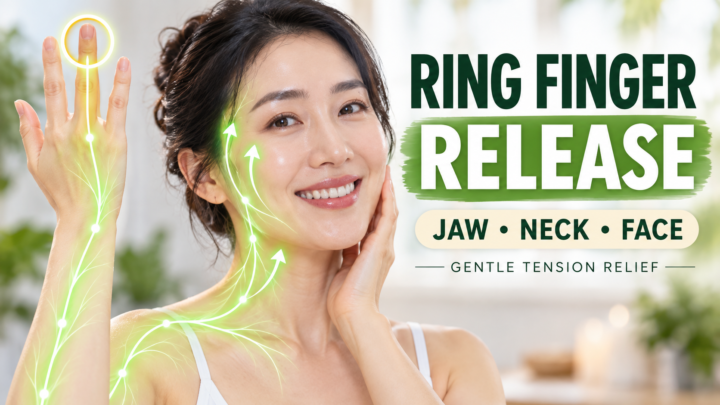
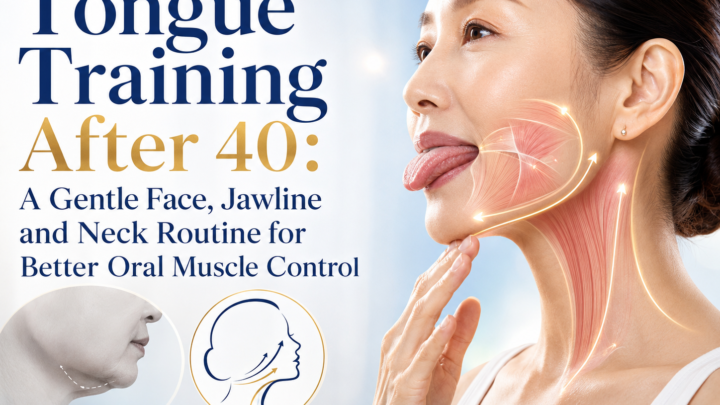
Neck and collarbone massage is often promoted online as a way to “flush toxins,” lift the face, erase a double chin, reduce wrinkles, and reverse aging. Those claims go much further than the evidence supports. However, gentle massage around the neck, shoulders, scalp, ears, and collarbone may still be useful for a more realistic reason: it can help relax tense muscles, provide a temporary sense of lightness, and sometimes reduce the appearance of mild puffiness related to fluid distribution.
The neck connects the head, jaw, shoulders, and upper chest. When the muscles in this area feel tense after long periods of sitting, screen use, stress, or poor posture, the entire face and upper body can feel heavier. A short, gentle routine may help you feel more comfortable without relying on exaggerated detox or anti-aging promises.
Why the Neck and Collarbone Area Can Feel Tight
The neck contains several important muscles that help support and move the head. One of the most noticeable is the sternocleidomastoid, which runs from behind the ear toward the collarbone and breastbone. The trapezius, platysma, and smaller muscles around the jaw, scalp, and shoulders also contribute to posture and movement.
When these muscles remain tense for long periods, you may notice:
- neck and shoulder tightness
- jaw tension
- a stiff or heavy feeling around the face
- reduced comfort when turning the head
- tension around the scalp or temples
Massage cannot “remove toxins” stored in these muscles, but it may help reduce the sensation of muscular tension.
What the Lymphatic System Actually Does
The lymphatic system is a real part of the circulatory and immune systems. It helps move lymph fluid through a network of vessels and lymph nodes.
Lymph nodes are found in several areas around the head and neck, including beneath the jaw, around the ears, and along the neck.
However, the body does not normally need forceful manual “detoxing.” Healthy lymphatic circulation is supported naturally by muscle movement, breathing, circulation, and normal bodily processes.
Specialized manual lymphatic drainage can be useful in certain medical situations, particularly lymphedema, but it is a specific therapeutic technique and should not be confused with aggressive rubbing or pressing.
Can Neck Massage Reduce Facial Puffiness?
Possibly, but usually only temporarily.
Gentle massage, movement, hydration, sleep, and changes in body position can influence how fluid is distributed in the face. This may make the face look slightly less puffy for a period of time.
That is different from permanently changing facial fat, tightening loose skin, or reversing structural aging.
Facial puffiness can also result from allergies, high sodium intake, poor sleep, alcohol, medications, hormonal changes, sinus problems, and medical conditions.
Persistent or unexplained swelling should not simply be treated with massage.
1. Begin With Gentle Neck Turning
Sit upright with your shoulders relaxed.
Slowly turn your head toward one side until you feel a mild stretch.
Do not force your chin toward your shoulder.
Hold for several slow breaths.
Return to center and repeat on the other side.
This can gently mobilize the neck before massage.
2. Relax the Upper Shoulders
Place one hand over the opposite upper shoulder.
Gently squeeze or knead the trapezius muscle.
Use comfortable pressure.
Turn your head slightly away if that creates a pleasant stretch.
Repeat for 20 to 30 seconds, then switch sides.
Avoid aggressive pressure.
3. Massage Around the Collarbone Carefully
Place your fingertips gently above and below the collarbone.
Use small, light circular movements.
The goal is not to “push toxins out.”
This region contains delicate structures, so pressure should remain light.
Avoid pressing deeply into the front or side of the neck.
4. Gently Massage Around the Ears
Use your fingertips to massage the outer ear and the area immediately around it.
Small circular movements can feel relaxing.
Some people find ear massage soothing because the area is richly innervated and sensitive to touch.
It is not necessary to press hard.
5. Release the Sternocleidomastoid Carefully
The sternocleidomastoid is the prominent muscle that becomes visible when you turn your head.
You may gently touch or lightly massage the muscular portion.
Do not dig deeply into the side of the neck.
Important blood vessels, nerves, and other structures are located nearby.
If you are uncertain where the muscle is, skip this step rather than applying strong pressure.
6. Add Gentle Scalp Massage
Place your fingertips on the scalp and move the skin in small circles.
Work across the temples, sides of the scalp, and back of the head.
Scalp massage may help with relaxation and reduce the sensation of tension.
There is no good evidence that scalp “elasticity determines facial age,” but relaxing the scalp can still feel pleasant.
7. Try Light Jaw and Cheek Massage
With clean hands, place your fingertips along the jaw.
Use gentle circular movements over the masseter and surrounding muscles.
If you clench your jaw frequently, this area may feel tender.
Keep the pressure moderate.
Massage may temporarily reduce the sensation of tightness, but it does not dissolve facial fat.
8. Add Gentle Tongue and Jaw Movement
Slowly move your tongue around the inside of your mouth or lightly press it against the roof of your mouth.
Relax.
Then gently open and close the jaw.
These movements activate muscles involved in speech, chewing, and swallowing.
They should not be presented as a “facelift,” but they can be useful as simple movement exercises.
Can Tongue Exercises Lift the Face?
Claims that tongue exercises permanently lift sagging cheeks or reverse facial aging are exaggerated.
The tongue and surrounding muscles are important for swallowing, speech, breathing mechanics, and oral function.
Training them can be clinically useful in specific situations, but visible anti-aging effects are not well established.
Does Neck Massage Remove a Double Chin?
No.
A double chin may reflect genetics, body fat distribution, skin laxity, jaw structure, age-related changes, or a combination of these factors.
Massage may temporarily reduce fluid-related puffiness, but it does not remove submental fat.
Can Massage Increase Blood Flow?
Massage can temporarily increase local warmth and circulation.
That is normal.
But increased blood flow should not be interpreted as proof that wrinkles are disappearing, fat is melting, or toxins are being removed.
Those are separate claims.
Avoid Aggressive Neck Pressure
This is particularly important.
The neck contains the carotid arteries, jugular veins, thyroid gland, lymph nodes, nerves, and other sensitive structures.
Avoid:
- strong pressure on the front or side of the neck
- prolonged compression
- forceful pinching
- pressing directly over the carotid pulse
- painful techniques
- aggressive manipulation
If a technique causes dizziness, nausea, vision changes, numbness, sharp pain, headache, or unusual symptoms, stop immediately.
Who Should Ask a Professional First?
Use extra caution or seek medical guidance if you have:
- recent neck surgery
- vascular disease
- blood-clotting disorders
- enlarged or unexplained lymph nodes
- thyroid disease with neck swelling
- recent infection
- unexplained facial or neck swelling
- severe neck pain
- neurological symptoms
- a history of stroke or carotid artery disease
A Simple 8-Minute Routine
Minute 1: Slow neck turns and breathing.
Minute 2: Gentle upper-shoulder massage.
Minute 3: Light collarbone-area massage.
Minute 4: Ear and surrounding-area massage.
Minute 5: Gentle scalp massage.
Minute 6: Light jaw and cheek massage.
Minute 7: Easy tongue and jaw movements.
Minute 8: Relax the shoulders and take slow breaths.
The routine should feel comfortable from beginning to end.
The Bottom Line
Neck and collarbone massage does not need a detox explanation to be worthwhile.
Gentle massage may help you feel less tense, improve comfort around the neck and shoulders, and temporarily make mild facial puffiness appear reduced.
What it cannot reliably do is remove facial fat, permanently lift sagging skin, eliminate wrinkles, or “flush toxins” from the body.
For most people, the safest approach is simple:
Use gentle pressure, avoid sensitive neck structures, stop if anything feels wrong, and treat massage as relaxation and mobility—not a medical detox.
Frequently Asked Questions
Can neck massage help facial puffiness?
It may temporarily reduce the appearance of mild puffiness in some people, particularly when combined with movement, hydration, sleep, and reduced sodium intake.
Does collarbone massage drain lymph?
Gentle movement may support normal fluid circulation, but general self-massage is not the same as medical manual lymphatic drainage.
Can neck massage tighten loose skin?
There is no strong evidence that massage permanently tightens loose skin.
Can massage remove a double chin?
No. Massage does not remove submental fat.
Should neck massage hurt?
No. Sharp, intense, or deep pain is a reason to stop.
Is it safe to massage the side of the neck?
Only gently. Avoid deep pressure because important blood vessels and nerves are located there.
Can jaw massage help tension?
It may help some people feel temporarily less tight, especially if they frequently clench their jaw.
Medical Disclaimer:This article is for general educational purposes only and is not medical advice. Avoid deep pressure over the front or side of the neck. Seek professional medical evaluation for unexplained swelling, persistent pain, enlarged lymph nodes, neurological symptoms, or other concerning symptoms.
This article is for general education and does not replace individualized care from a qualified health professional. Seek appropriate advice for persistent, severe, or concerning symptoms.
Read the full medical disclaimer