Rhinitis is a common condition that affects many people, including children and adults. Symptoms such as nasal congestion, sneezing, discomfort, and difficulty breathing through the nose can affect daily life.
In traditional Chinese wellness practices, moxibustion has been used for centuries as a method to warm specific areas of the body and support overall balance.
While modern medical treatments remain important for managing rhinitis, some people also explore traditional approaches such as moxibustion as part of a broader wellness routine.
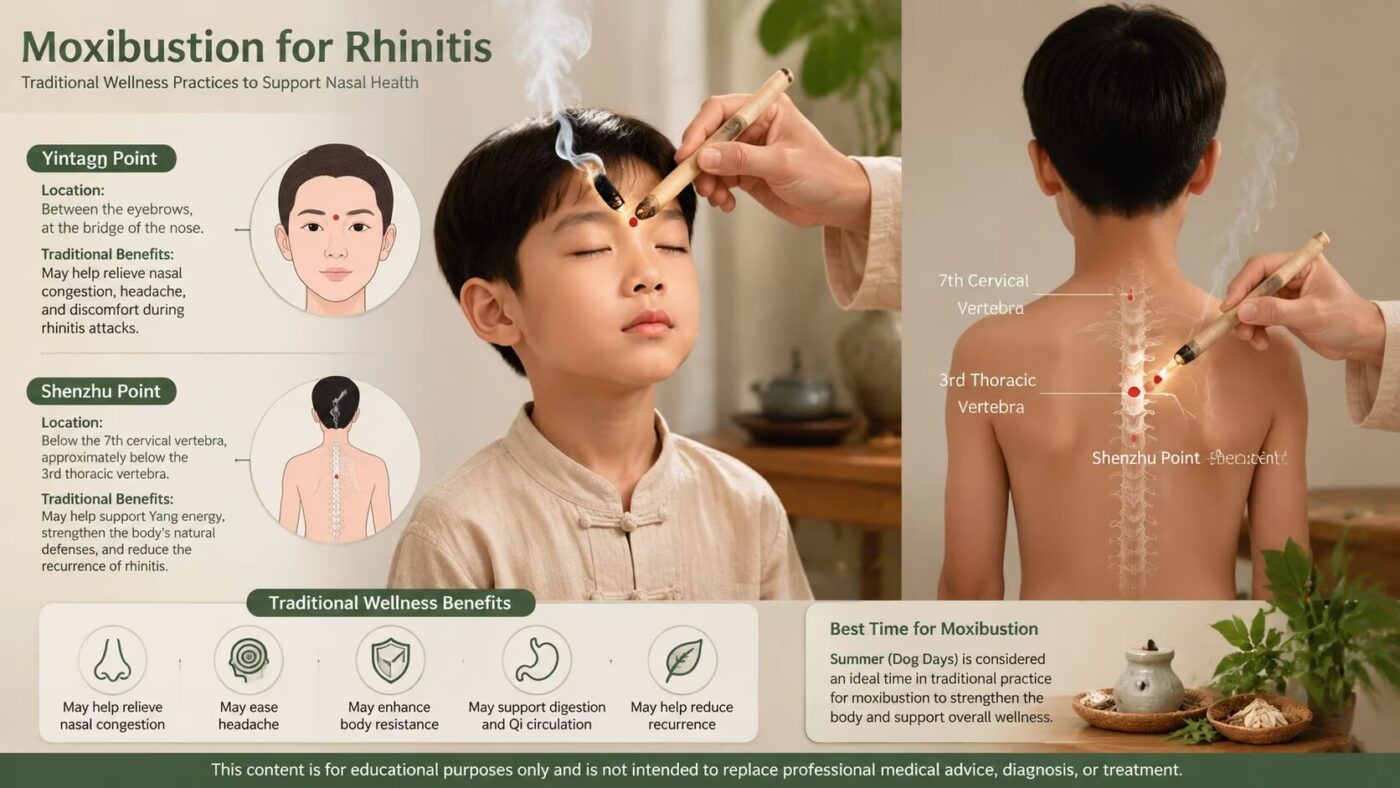
Yintang Point: A Traditional Focus Area During Nasal Discomfort
The Yintang point is located between the eyebrows, near the bridge of the nose.
According to traditional Chinese medicine concepts, gentle warming of this area through moxibustion is traditionally believed to help promote circulation and relaxation around the forehead and nasal region.
Many practitioners use this area during periods of nasal discomfort as part of a traditional wellness routine.
Shenzhu Point: Supporting Body Balance
After addressing immediate discomfort, traditional practices often focus on the Shenzhu point.
The Shenzhu point is located on the upper back, below the seventh cervical vertebra and approximately below the third thoracic vertebra.
In traditional Chinese medicine theory, this area is associated with supporting the body’s Yang energy and maintaining overall balance.
Moxibustion at this point is traditionally believed to help warm the body and support vitality.
Seasonal Wellness and Traditional Practices
Traditional Chinese wellness often emphasizes adapting care methods according to seasonal changes.
Summer is considered an important period for certain warming practices, including moxibustion.
Some people choose seasonal wellness routines to support their body’s natural resilience and maintain comfort throughout the year.
A Balanced Approach to Nasal Health
Rhinitis can have many different causes, including allergies, environmental factors, infections, and individual health conditions.
Traditional wellness methods such as moxibustion may be explored as complementary practices, but they should not replace professional medical diagnosis or treatment when needed.
Maintaining good sleep, reducing irritants, practicing healthy habits, and seeking appropriate medical advice are all important parts of supporting nasal health.
This article is for general education and does not replace individualized care from a qualified health professional. Seek appropriate advice for persistent, severe, or concerning symptoms.
Read the full medical disclaimer