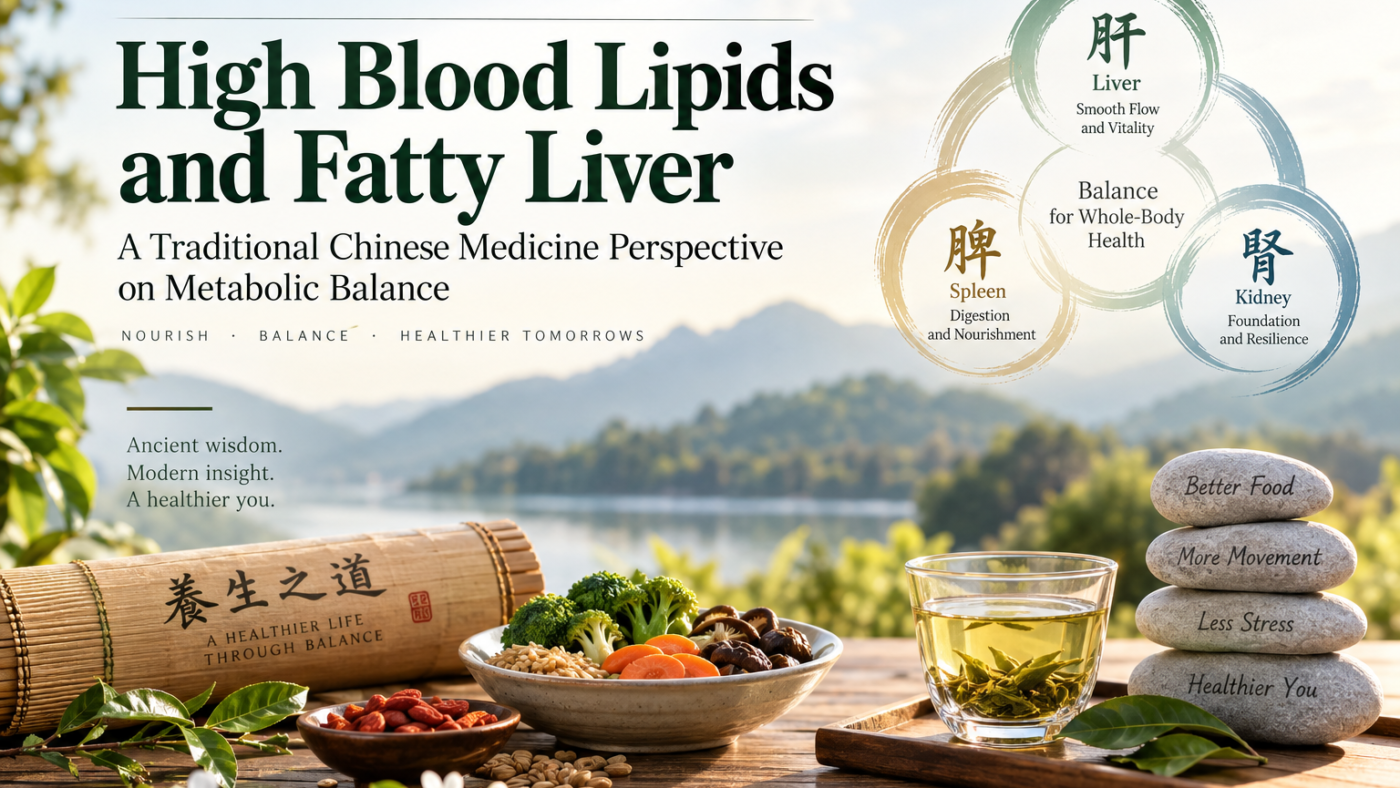
High blood lipids and fatty liver are two common metabolic health concerns that often develop alongside changes in diet, physical activity, body weight, glucose regulation, and cardiovascular risk.Traditional Chinese medicine has long emphasized the idea that health is not simply the absence of symptoms. Instead, it views well-being as a dynamic state in which nourishment, circulation, digestion, rest, movement, and the functional relationships among the body’s systems remain in balance.
This philosophy is sometimes described as tiaoyang, or health cultivation through both regulation and nourishment.
In this traditional framework, “regulation” refers to restoring functional balance, while “nourishment” refers to supporting the body’s capacity to maintain vitality and resilience. Rather than focusing exclusively on a single symptom or laboratory value, traditional health cultivation looks at the broader pattern in which that problem develops.
This perspective can provide an interesting complementary framework for understanding modern metabolic conditions such as elevated blood lipids and fatty liver disease. However, traditional concepts should not be interpreted as substitutes for modern diagnosis or evidence-based treatment.
Understanding High Blood Lipids and Fatty Liver
Blood lipids include cholesterol and triglycerides, substances the body needs for normal cellular function, hormone production, energy storage, and other essential processes.
Understanding the relationship between high blood lipids and fatty liver can help people take a broader approach to long-term metabolic health.
Problems arise when certain lipid levels become persistently elevated or when the overall lipid profile contributes to cardiovascular risk. High LDL cholesterol, elevated triglycerides, diabetes, excess body weight, smoking, inactivity, genetics, and other factors may influence a person’s long-term risk.
Lifestyle measures such as improving diet quality, increasing physical activity, reducing excess weight when appropriate, limiting alcohol, and avoiding tobacco can improve metabolic health. In some people, however, lifestyle changes alone are not sufficient and cholesterol-lowering medication may also be appropriate. Modern lipid-lowering medicines, including statins and other therapies, can play an important role in reducing cardiovascular risk when clinically indicated.
Fatty liver disease is also closely connected with metabolic health.
The condition now commonly referred to as metabolic dysfunction-associated steatotic liver disease, or MASLD, involves excess fat accumulating in the liver in association with metabolic risk factors. Many people have few or no obvious symptoms, which is why abnormal liver tests or imaging sometimes reveal the condition unexpectedly.
For people with overweight or obesity, gradual and sustainable weight reduction can decrease liver fat, while regular physical activity may provide benefits even when significant weight loss does not occur. Healthy eating patterns and long-term metabolic management are therefore central components of care.
The Traditional Chinese Medicine View
Traditional Chinese medicine describes metabolism and digestion using a different conceptual language from modern anatomy and biochemistry.
The TCM concepts of the Spleen, Liver, and Kidney represent broader functional networks and should not be understood as identical to the anatomical spleen, liver, and kidneys recognized in modern medicine.
Within this traditional framework, excessive intake of rich, greasy, sweet, or highly processed foods may burden the digestive system and contribute to what classical medicine describes as the accumulation of “dampness” and “phlegm.”
The Spleen system is traditionally associated with transforming food into usable nourishment and distributing that nourishment throughout the body. When this function becomes weakened, traditional theory suggests that fluids and nutrients may not be processed efficiently.
The Liver system, meanwhile, is associated with the smooth movement of qi and with maintaining harmonious functional relationships among different systems of the body. Chronic stress, irregular eating, excessive alcohol consumption, inactivity, and other lifestyle disturbances have traditionally been viewed as factors capable of disrupting this balance.
For this reason, classical health cultivation often approaches metabolic imbalance by supporting the Spleen while maintaining the smooth functional activity of the Liver.
Traditional theory also describes a close relationship between the Liver and Kidney systems. From this perspective, maintaining adequate rest, avoiding chronic exhaustion, remaining physically active, and following a balanced daily routine are considered important foundations of long-term vitality.
These concepts belong to the historical theoretical system of Chinese medicine. They should be understood as traditional explanatory models rather than literal descriptions of cholesterol metabolism or liver physiology.
Supporting the Spleen and Liver Through Daily Habits
Many traditional recommendations for supporting the Spleen and Liver overlap with modern principles of healthy living.
A practical approach begins with food.
Meals centered on vegetables, whole grains, legumes, fruit, nuts, seeds, fish, lean protein, and appropriate portions can support metabolic and cardiovascular health. Saturated and trans fats should generally be limited, while highly refined carbohydrates, excess added sugar, and frequent overeating are best kept under control.
Alcohol deserves particular attention.
Frequent or heavy alcohol consumption can increase triglycerides and can contribute to liver injury. People who already have liver disease should discuss alcohol use with a qualified healthcare professional rather than assuming that a particular amount is safe for them.
Movement is equally important.
Regular walking, strength training, Tai Chi, Qigong, cycling, swimming, or other sustainable forms of activity can support cardiovascular fitness, insulin sensitivity, mobility, and healthy weight management.
The goal does not have to be extreme exercise. Consistency matters more than short periods of intense effort followed by inactivity.
Sleep and stress regulation also deserve attention. Chronic sleep deprivation and persistent stress can make healthy eating, exercise, and weight management more difficult. Traditional practices such as slow breathing, gentle Qigong, meditation, and Tai Chi may therefore serve as useful components of a broader wellness routine.
Fatty Liver Is Often Reversible, but There Is No Fixed Timeline
One of the most important distinctions between responsible health education and exaggerated wellness claims concerns the word “reversal.”
Liver fat can decrease substantially when the underlying metabolic drivers improve. For some people, lifestyle changes produce measurable improvements relatively quickly, while others require months or longer.
There is no universal 7-day, 21-day, or 30-day formula that can guarantee reversal.
The amount of liver fat, presence of inflammation or fibrosis, body weight, diabetes status, alcohol intake, genetics, medication use, diet, physical activity, and many other factors can influence progress.
For people with excess body weight, gradual weight reduction has been associated with reductions in liver fat, while greater sustained weight loss may also improve inflammation and fibrosis in some patients. Rapid or poorly supervised weight loss is not recommended.
The most useful goal is therefore not a short-term “detox,” but sustainable improvement in metabolic health.
Enlarged Liver or Spleen Should Not Be Treated as a Simple Wellness Problem
An enlarged liver or spleen deserves particular caution.
Although liver enlargement can sometimes occur with fatty liver disease, enlargement of the liver or spleen may have many possible causes. These can include liver disease, infection, blood disorders, vascular conditions, portal hypertension, inflammatory disease, and other medical problems.
For that reason, persistent hepatomegaly or splenomegaly should not be assumed to represent merely “poor circulation,” “weak Spleen qi,” or excess dietary fat.
Proper evaluation may involve medical history, physical examination, blood testing, ultrasound or other imaging, and additional testing when appropriate.
Traditional wellness practices may be used as supportive lifestyle measures, but they should not delay diagnosis.
Be Careful With Herbal Products and Supplements
For people concerned about high blood lipids and fatty liver, sustainable daily habits are generally more valuable than short-term restrictive programs or so-called detox plans.Natural does not automatically mean harmless.
Herbal medicines and dietary supplements may contain biologically active compounds, and some products can interact with prescription medications or affect liver function.
This is particularly important for people who already have fatty liver disease, hepatitis, abnormal liver enzymes, cirrhosis, or other chronic liver conditions.
People taking cholesterol-lowering medication should also avoid stopping prescribed treatment simply because a supplement is marketed as a “natural lipid cleanser.”
Evidence-based medication and lifestyle improvement are not mutually exclusive. In many cases they are used together.
The appropriate treatment depends on a person’s lipid levels, cardiovascular risk, medical history, liver health, age, medications, and other individual factors.
From a traditional perspective, high blood lipids and fatty liver may be discussed through broader patterns involving digestion, nourishment, fluid metabolism, and the functional relationship among the Spleen, Liver, and Kidney systems.
A More Balanced Philosophy of Health Cultivation
The lasting value of traditional Chinese health cultivation may lie less in promises of rapid cures and more in its emphasis on maintaining balance before illness becomes severe.
Eating with moderation, staying physically active, sleeping adequately, managing stress, avoiding excessive alcohol, maintaining a healthy body weight, and paying attention to early metabolic changes are all habits that can support long-term health.
From a traditional perspective, these practices may be described as strengthening the Spleen, nourishing the Liver, supporting the Kidney, regulating qi, and preserving vitality.
From a modern medical perspective, many of the same habits support healthier blood lipids, glucose regulation, cardiovascular function, body composition, and liver health.
The languages are different, but the practical lesson can be surprisingly similar:
Long-term health is built through consistent daily habits rather than short-term attempts to eliminate a single symptom.
For people with elevated cholesterol, high triglycerides, fatty liver disease, abnormal liver tests, diabetes, or an enlarged liver or spleen, lifestyle cultivation can be valuable—but it should work alongside appropriate medical assessment rather than replacing it.
Managing high blood lipids and fatty liver requires attention to the broader metabolic picture rather than focusing on a single laboratory value or symptom.
FAQ
Can fatty liver be reversed?
Liver fat can often be reduced when the underlying metabolic factors improve. Sustainable weight management, regular physical activity, healthier eating patterns, better blood glucose control, and reduced alcohol intake can all contribute to improvement. The degree and speed of recovery vary between individuals, and there is no universal timeline.
Are high cholesterol and fatty liver related?
They can occur together because both may be associated with metabolic dysfunction, excess body weight, insulin resistance, diabetes, diet, genetics, and physical inactivity. However, one condition does not automatically mean the other is present.
What does traditional Chinese medicine say about fatty liver?
Traditional Chinese medicine does not describe fatty liver using the same biomedical terminology used today. Traditional theory may interpret related patterns through concepts involving the Spleen, Liver, qi movement, dampness, phlegm, and overall functional balance. These are traditional explanatory models rather than modern anatomical mechanisms.
What foods support liver and metabolic health?
A balanced eating pattern emphasizing vegetables, whole grains, legumes, fruit, nuts, seeds, fish, lean protein, and minimally processed foods can support metabolic health. Limiting excess added sugar, highly refined carbohydrates, trans fats, excessive saturated fat, and heavy alcohol intake may also be beneficial.
Does exercise help fatty liver?
Regular physical activity can help reduce liver fat, improve insulin sensitivity, support cardiovascular health, and assist with weight management. Walking, resistance training, cycling, swimming, Tai Chi, and other sustainable forms of movement can all contribute.
Can herbal supplements replace cholesterol medication?
No. Herbal products and supplements should not be used as substitutes for prescribed cholesterol-lowering treatment without professional medical guidance. Some supplements may also interact with medications or affect liver function.
Is an enlarged liver always caused by fatty liver?
No. Liver enlargement can have many possible causes, including fatty liver disease, infection, inflammation, vascular disorders, alcohol-related liver disease, and other conditions. Persistent enlargement should be medically evaluated.
What is MASLD?
MASLD stands for metabolic dysfunction-associated steatotic liver disease. It is the modern term used for a common form of fatty liver associated with metabolic risk factors such as excess body weight, abnormal glucose regulation, high blood pressure, and abnormal blood lipids.
Are high blood lipids and fatty liver connected?
High blood lipids and fatty liver frequently occur together because they can share metabolic risk factors such as excess body weight, insulin resistance, diabetes, physical inactivity, diet, and genetics. However, each condition should be evaluated individually.
Medical Disclaimer
This article is for educational purposes only and is not intended to diagnose, treat, cure, or prevent any disease. Traditional Chinese medicine concepts discussed here represent a historical wellness framework and should not be interpreted as established biomedical mechanisms. Individuals with abnormal cholesterol levels, fatty liver disease, abnormal liver tests, liver or spleen enlargement, or other medical concerns should seek evaluation from a qualified healthcare professional. Do not start, stop, or replace prescribed medication or treatment based solely on information in this article.
This article is for general education and does not replace individualized care from a qualified health professional. Seek appropriate advice for persistent, severe, or concerning symptoms.
Read the full medical disclaimer