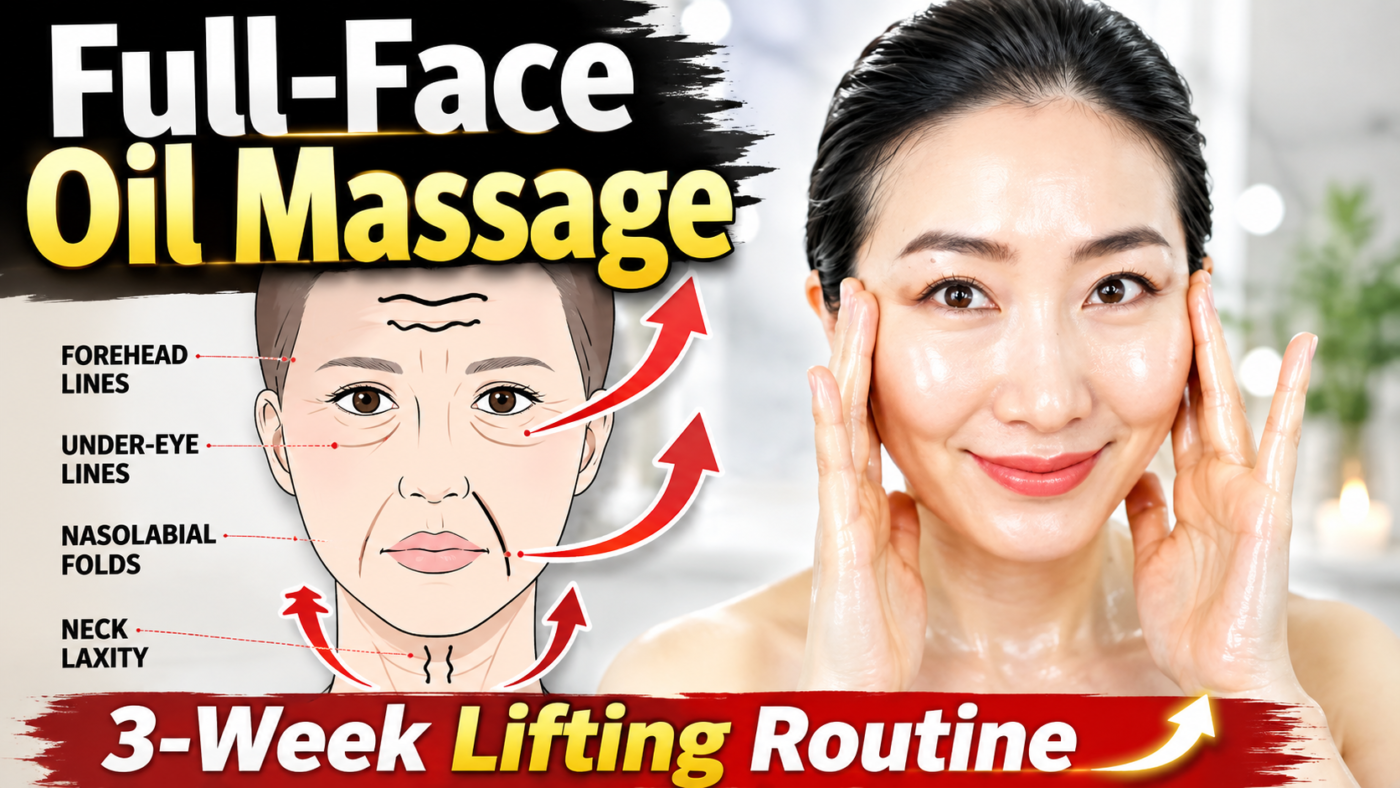
Full-face oil massage after 40 can be a gentle way to support dry, mature-looking skin, reduce temporary facial puffiness, and create a smoother, more refreshed appearance.A full-face oil massage can be a relaxing way to soften dry skin, reduce the temporary appearance of puffiness, and make the face look smoother and more refreshed. It cannot permanently erase wrinkles, eliminate facial fat, “detox” the skin, or reproduce the effects of cosmetic procedures, but gentle massage combined with a suitable moisturizer or facial oil may improve how the skin looks and feels—especially when dryness and facial tension are making fine lines appear more noticeable.
For adults over 40, this distinction matters. Skin gradually becomes drier and less elastic with age, so a routine that emphasizes moisture, gentle touch, and protection of the skin barrier can be more useful than aggressive rubbing or painful massage.
Why Oil Can Make Mature Skin Look Smoother
For many people, full-face oil massage after 40 works best as a gentle addition to an established skincare routine.Facial oils primarily work as emollients and occlusives. They help reduce moisture loss and soften the outer layer of the skin. When dry surface cells become better hydrated, fine dehydration lines may look less obvious and the skin may appear temporarily plumper and more luminous.
Coconut oil and sesame oil are sometimes used for massage because they provide plenty of slip. However, neither is ideal for everyone. Coconut oil can feel heavy and may contribute to clogged pores in acne-prone skin. Sesame oil can also cause irritation or allergic reactions in sensitive individuals.
A facial oil formulated specifically for the face may therefore be a better choice for many people.
Before applying a new oil widely, patch-test a small area and stop using it if you develop itching, burning, persistent redness, swelling, or breakouts.
Start With the Neck — Gently
A relaxing facial routine can begin around the sides and back of the neck.
Apply enough oil or moisturizer for your hands to glide easily. Place the palms gently against the neck and use slow strokes without squeezing the throat.
Massage should feel comfortable. Strong pressure around the front and sides of the neck is unnecessary because major blood vessels, nerves, the thyroid gland, and other sensitive structures are located there.
The goal is relaxation—not attempting to physically “unblock” veins or force lymphatic fluid through the tissues.
The goal of full-face oil massage after 40 is not to permanently erase wrinkles, but to moisturize the skin, reduce friction, and temporarily improve its appearance.
Forehead Massage for Tension and Dryness
After distributing a thin layer of oil across the forehead, use your fingertips to make gentle circular movements from the center toward the temples.
The forehead muscles frequently become tense when concentrating, squinting, or raising the eyebrows. Relaxing those muscles may make expression lines look temporarily softer.
Avoid techniques described as needing to “hurt like crazy.” Pain is not evidence that a massage is working, and aggressive pressure can irritate skin and underlying tissues.
For vertical lines between the eyebrows, lightly glide the fingertips outward rather than repeatedly stretching or pulling the skin.
Treat the Eye Area With Extra Care
The skin surrounding the eyes is thin and delicate.
Use only a very small amount of product and keep it out of the eyes. Rather than rubbing directly across the eyelids, place your fingertips lightly around the orbital bone—the firm bony area surrounding the eye.
Slow, gentle pressure may feel relaxing and can sometimes reduce the temporary appearance of morning puffiness.
Under-eye bags caused by genetics, changes in facial structure, or prominent fat pads will not disappear through massage. Likewise, dark circles caused by pigmentation or visible blood vessels require different approaches.
If eye swelling is persistent, painful, one-sided, or associated with visual symptoms, it deserves medical evaluation rather than massage.
Gentle Cheek Massage
Apply enough oil to prevent friction.
Use the flats of the fingers rather than fingernails or sharp knuckles. Glide gently from the center of the face toward the outer cheeks.
Massage may briefly increase local blood flow, producing a warmer or brighter appearance. It can also relax the jaw and cheek muscles, which is useful for people who unconsciously clench their teeth.
What it does not do is permanently lift sagging skin or physically move facial fat back into position.
Age-related cheek changes result from multiple processes, including collagen loss, changes in fat distribution, bone remodeling, and skin laxity.
Massage Around the Smile Lines
Nasolabial folds are the creases running from the sides of the nose toward the corners of the mouth.
Their depth depends heavily on facial anatomy and age-related structural changes, so they cannot simply be “drained away.”
However, applying moisturizer or oil and gently massaging the surrounding skin can make dehydrated areas look softer.
Move slowly along the cheeks rather than repeatedly stretching the fold itself.
Relax the Jawline
Jaw tension can make the lower face feel tight or uncomfortable.
Using gentle circular movements over the masseter muscles—the strong chewing muscles located toward the back of the cheeks—can be soothing.
Avoid extremely deep pressure.
If you have temporomandibular joint pain, jaw clicking, persistent headaches, or difficulty opening the mouth, aggressive self-massage is not a substitute for professional assessment.
Facial massage may temporarily decrease puffiness, but it cannot permanently sculpt a new jawline or eliminate a double chin.
Finish With Warm Palms
Toward the end of the routine, place clean, warm palms gently against the cheeks for several slow breaths.
This provides a simple transition from massage back to normal skincare.
If your face feels excessively oily afterward, blot the excess gently with a soft tissue or clean towel rather than scrubbing.
For nighttime routines, you can also leave a thin layer of a well-tolerated moisturizer on the skin.
How Often Should You Do a Full-Face Oil Massage?
For most people, two or three sessions per week is plenty.
A session does not need to last 20 or 30 minutes. Even five to ten minutes of gentle massage may provide the relaxation and moisturization benefits people are looking for.
Doing more is not automatically better. Persistent rubbing can disrupt the skin barrier, particularly if your skin is sensitive, rosacea-prone, acne-prone, or already irritated.
Consistency and gentleness matter more than intensity.
Can Three Weeks Transform Your Face?
Three weeks of consistent moisturizing and gentle massage may make dry skin feel softer and can improve its temporary appearance.
You may notice:
- better surface hydration
- less tight or flaky skin
- a temporary healthy-looking glow
- reduced facial muscle tension
- temporary improvement in mild puffiness
- fine dehydration lines appearing softer
However, massage cannot reliably reverse established wrinkles, replace lost collagen, permanently tighten loose skin, or reproduce the results of Botox, fillers, lasers, or surgery.
Those distinctions make the routine more useful rather than less useful: it becomes a realistic skincare and relaxation practice instead of a promise it cannot deliver.
What Actually Helps Prevent Premature Skin Aging?
For long-term skin health, daily habits matter far more than facial massage alone.
Broad-spectrum sunscreen is particularly important because ultraviolet exposure accelerates pigmentation changes, collagen breakdown, and wrinkle formation.
A simple evidence-based routine may include gentle cleansing, moisturizer, daily sunscreen, and—when appropriate—ingredients such as retinoids, vitamin C, niacinamide, or other products suited to your individual skin.
Sleep, smoking avoidance, adequate nutrition, and treatment of chronic skin conditions also matter.Full-face oil massage after 40 can be an enjoyable part of a mature skincare routine when it is gentle, comfortable, and realistic.
The Bottom Line
A full-face oil massage can be an enjoyable part of an over-40 skincare routine when it is gentle, comfortable, and realistic.
Think of it primarily as a combination of moisturizing, relaxation, and temporary cosmetic enhancement.
You do not need painful pressure, aggressive scraping, or dramatic claims about removing toxins. Protecting the skin barrier and treating your face gently is considerably more important.
FAQ
Can facial oil massage permanently remove wrinkles?
No. Moisturization can temporarily soften the appearance of fine dehydration lines, while massage may relax facial tension, but established wrinkles involve structural changes in collagen, elastin, fat and bone.
Can facial massage reduce under-eye bags?
It may temporarily reduce mild fluid-related puffiness. Genetic eye bags or prominent fat pads are unlikely to change significantly through massage.
Is coconut oil good for facial massage?
It provides excellent slip but may be too heavy or pore-clogging for some acne-prone people. Patch testing is advisable.
How often should I massage my face?
Two or three gentle sessions per week are sufficient for many people. Stop if you develop irritation, redness, tenderness or breakouts.
Should facial massage hurt?
No. Pain is not required for results. Strong pressure and aggressive rubbing may irritate the skin.
Can facial massage replace Botox or cosmetic treatments?
No. Massage and cosmetic medical procedures work through very different mechanisms.
Medical Disclaimer
This article is for general educational purposes only and is not medical advice. Facial massage should be gentle and should not cause significant pain, bruising or persistent irritation. People with active skin infections, recent facial procedures, significant swelling, eye conditions, severe acne, rosacea flares or other medical concerns should seek appropriate professional advice before starting a new facial massage routine.
This article is for general education and does not replace individualized care from a qualified health professional. Seek appropriate advice for persistent, severe, or concerning symptoms.
Read the full medical disclaimer