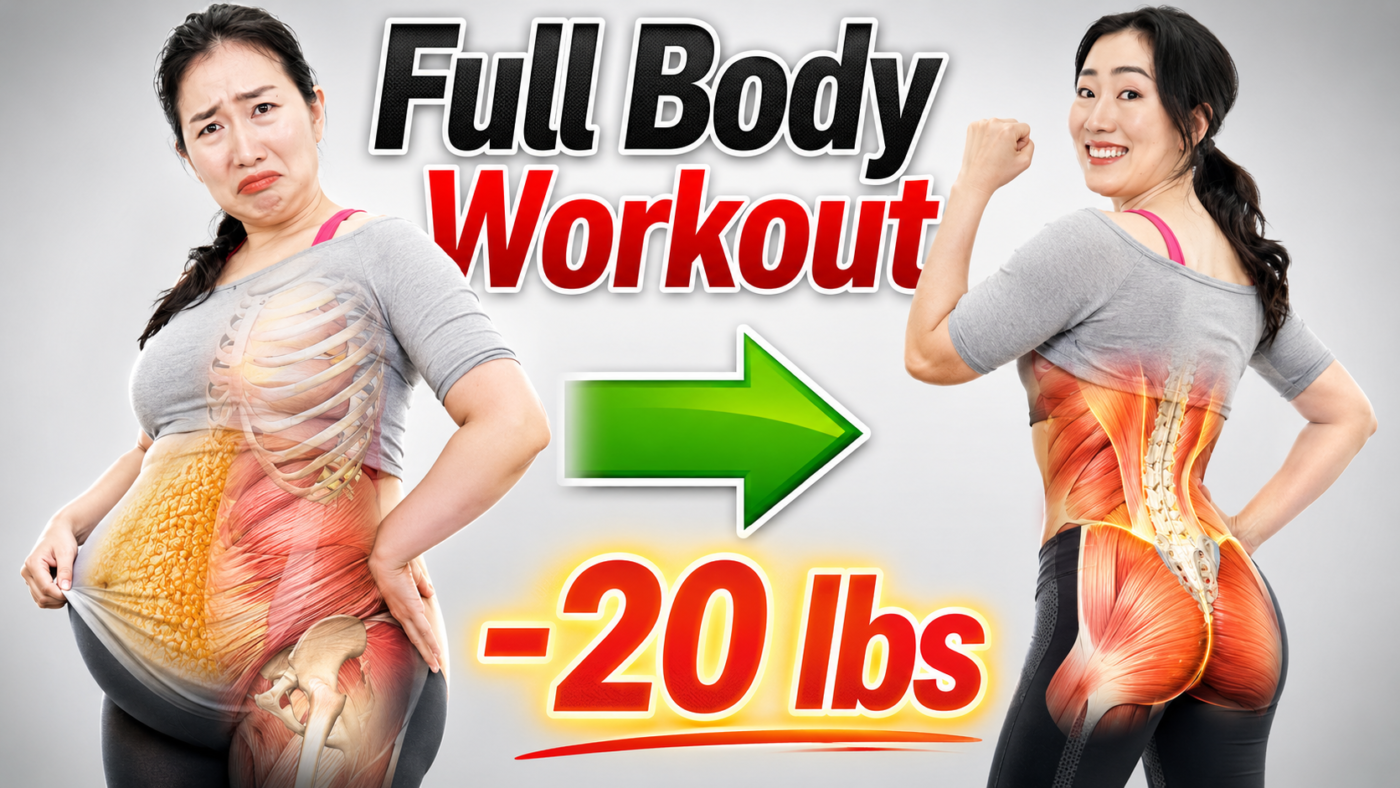
A full body mobility workout after 40 does not need to be exhausting, complicated, or painful.
In fact, one of the most useful ways to stay active in midlife is to combine gentle mobility work with light strength, balance, core control, and low-impact aerobic movement.
This type of routine can be especially useful if you spend long hours sitting, feel stiff when you first stand up, or want a workout that feels more approachable than an intense gym session.
The goal is not to “flush toxins” from the body.
Your liver, kidneys, lungs, digestive system, and other organs already perform the body’s normal waste-processing functions.
The real benefits of movement are more practical:
- Improving joint mobility
- Activating muscles
- Increasing daily energy expenditure
- Supporting cardiovascular health
- Improving balance and coordination
- Maintaining strength as you age
- Breaking up prolonged sitting
- Helping you feel less stiff
And importantly, you can start gently.
Why Full-Body Movement Matters After 40
Physical changes do not suddenly begin on your 40th birthday.
But many adults become progressively less active during midlife.
Work, family responsibilities, commuting, and prolonged sitting can reduce the amount of movement performed every day.
Over time, this may contribute to:
- Reduced aerobic fitness
- Loss of muscle mass
- Lower joint mobility
- Reduced balance
- Stiff hips and shoulders
- Lower daily energy expenditure
Regular physical activity helps counter these trends.
WHO recommends that adults generally aim for 150–300 minutes of moderate-intensity aerobic activity per week, or the equivalent amount of vigorous activity, while also performing muscle-strengthening activities involving major muscle groups on at least two days per week.
You do not need to complete all of that exercise at once.
Everyday movement counts.
Mobility Is More Than Stretching
Mobility refers to your ability to move a joint through a useful range of motion with control.
That means mobility involves more than simply becoming flexible.
It combines:
joint movement + muscle control + coordination
For example, being able to passively stretch your hip does not automatically mean you can control that range while walking, squatting, or climbing stairs.
That is why this routine mixes stretching with active movement.
1. Seated Pelvic Rocking
Sit near the front of a sturdy chair.
Place both feet flat on the floor.
Rest your hands on your thighs.
Slowly tilt your pelvis forward.
Return to neutral.
Then tilt slightly backward.
Repeat 8–10 times.
Keep the movement small and comfortable.
This can help you become more aware of how your pelvis and lower spine move together.
Do You Need to Keep the Sacrum Perfectly Vertical?
No.
There is no single “perfect” sacral position that everyone must maintain.
Body proportions and sitting positions vary.
Instead, aim for a comfortable upright posture in which you can breathe normally without forcing your spine.
2. Seated Spine Flexion and Extension
Stay seated.
Inhale as you gently lift the chest.
Exhale as you round the upper back slightly.
Move slowly.
Repeat 8 times.
Do not force your lower back into a large range.
Does This “Massage the Sacrum”?
Not literally.
The movement changes spinal and pelvic position and may feel soothing.
It does not need to be described as massaging the sacrum internally.
3. Gentle Lower-Back Tapping
If you enjoy rhythmic movement, lightly tap the muscles beside the lower back with relaxed hands.
Avoid hitting directly over painful areas.
Use very light pressure.
Continue for approximately 15 seconds.
This is optional.
The benefit is mainly sensory stimulation—not “organ detoxification.”
4. Heel Raises
Sit or stand.
Keep the toes on the floor.
Slowly lift your heels.
Lower them with control.
Repeat 10–15 times.
If standing, use a chair for balance.
Heel raises strengthen the calf muscles and ankle complex.
These muscles are important for:
- Walking
- Stair climbing
- Balance
- Push-off during gait
Should You Slam Your Heels Into the Ground?
No.
There is no need.
Controlled movement is safer and gives the muscles more useful work.
5. Seated Trunk Rotation
Sit tall.
Place your hands gently across your chest.
Rotate your upper body slightly to the right.
Return to center.
Rotate left.
Repeat 5–8 times each side.
Keep your hips relatively stable.
Do not force the neck.
This can help maintain comfortable rotational movement through the upper trunk.
6. Overhead Reach
Sit or stand tall.
Bring your hands overhead as far as comfortable.
Imagine lengthening through the crown of your head.
Do not aggressively pull the abdomen inward.
Continue breathing.
Hold for 3–5 seconds.
Relax.
Repeat 5 times.
Should You Keep Your Belly Tight the Entire Time?
No.
You can create light abdominal tension when needed.
But maximal bracing throughout an entire workout is unnecessary.
The core should be able to both engage and relax.
7. Rib-Cage Mobility
Place your hands lightly around the lower ribs.
Take a slow breath in.
Feel the ribs expand.
Exhale.
Then gently rotate your torso side to side.
Do not strike or aggressively shake the ribs.
Does Tapping the Ribs “Activate the Organs”?
There is no good evidence for that claim.
Rib movement primarily affects the chest wall, respiratory muscles, and trunk.
Your internal organs do not need to be manually activated by tapping.
8. Shoulder Rolls
Let the arms hang naturally.
Roll your shoulders backward 8 times.
Then forward 8 times.
Keep the movement smooth.
This may be particularly comfortable after prolonged computer or desk work.
9. Arm Pull-and-Push
Extend both arms forward.
Pull your elbows backward toward your sides.
Gently squeeze the shoulder blades.
Then extend the arms again.
Repeat 10–15 times.
Avoid shrugging the shoulders.
This works muscles around the upper back and shoulder blades.
10. Wrist Rotation
Extend the arms comfortably.
Rotate the wrists slowly in circles.
Reverse direction.
Continue for about 15 seconds.
Simple joint movements like this can be useful during long periods of desk work.
11. Standing Hip Circles
Stand with feet comfortably apart.
Place your hands on your hips.
Make slow hip circles.
Keep the range small.
Perform 5 circles in each direction.
If you feel dizzy or unstable, hold a chair.
Can Hip Circles Prevent Back Pain?
No single movement guarantees prevention.
However, regular physical activity and maintaining strength and mobility are generally important components of back health.
12. Gentle Pelvic-Floor Coordination
Stand or sit comfortably.
Breathe in normally.
As you exhale, imagine gently lifting the pelvic-floor muscles.
Think of the sensation of stopping gas.
Use only light effort.
Hold briefly.
Then fully relax.
Repeat 5 times.
Do Not Constantly Squeeze the Pelvic Floor
The pelvic floor must relax as well as contract.
More tension is not automatically better.
Overactive pelvic-floor muscles can also cause symptoms.
Anyone with pelvic pain, pressure, prolapse symptoms, or urinary problems should consider individualized assessment by a pelvic-health professional.
13. Side-to-Side Steps
Stand tall.
Step to the right.
Bring your feet together.
Step left.
Continue for 30–60 seconds.
Let your arms move naturally.
This begins the aerobic portion of the routine.
14. High-Knee March
March in place.
Lift the knees only as high as comfortable.
Keep your posture tall.
Use a wall or chair if balance is an issue.
Continue for 30 seconds.
Rest if necessary.
Increase the duration gradually as fitness improves.
15. Supported Leg Swing
Stand beside a sturdy chair.
Hold it lightly.
Swing one leg gently forward and backward.
Keep the range controlled.
Perform 8–10 repetitions.
Switch sides.
This combines hip mobility with balance.
Do not swing aggressively.
Optional Finisher: Calf Raise and March
Perform:
10 heel raises
followed by:
30 seconds of marching
Repeat once if comfortable.
This provides a simple transition from mobility into light conditioning.
Does This Workout “Burn Fat”?
Movement uses energy.
So yes, this routine contributes to energy expenditure.
But one workout does not selectively remove fat from a specific area.
Fat loss occurs through sustained changes in overall energy balance.
A routine like this can contribute by helping you:
- Move more
- Improve fitness
- Build exercise consistency
- Reduce sedentary time
What About the “Fat-Burning” Feeling?
Warmth, sweating, or a burning sensation in a muscle means that your body is working.
It does not necessarily mean body fat is melting from that exact area.
This distinction is important.
Can Mobility Improve Blood Circulation?
Muscle movement increases local blood demand.
Walking, marching, calf raises, and other rhythmic exercises all involve changes in circulation.
That is very different from claiming that massage “clears blocked blood.”
Healthy circulation is driven by the cardiovascular system and muscular activity—not by manually pushing stagnant blood through the body.
What About Lymphatic Flow?
Your lymphatic system helps return fluid from tissues back toward the bloodstream.
Muscle contraction and normal movement contribute to lymph transport.
However, a healthy person does not need a special “detox massage” to flush lymphatic toxins.
Clinical manual lymphatic drainage is a specialized technique mainly used in particular medical contexts, such as lymphedema.
That should not be confused with general fitness massage.
Does Exercise Remove Toxins?
This is one of the most common wellness myths.
Exercise does not “sweat toxins out of every corner of the body.”
Your major systems for processing and eliminating waste include:
- Liver
- Kidneys
- Gastrointestinal tract
- Lungs
Exercise supports overall metabolic and cardiovascular health, which is valuable enough without attaching a detox claim.
Why Calf Exercises Matter More With Age
Calf strength contributes to walking efficiency and balance.
As adults age, maintaining lower-body strength becomes increasingly important for independence.
Heel raises are simple but surprisingly useful because they train muscles needed every time you push off the ground during walking.
Why Shoulder-Blade Movement Matters
Modern lifestyles often involve:
- Computer work
- Driving
- Smartphone use
- Prolonged sitting
These habits can reduce movement variety.
Shoulder rolls, rowing motions, and arm swings restore movement rather than keeping the shoulders in one position for hours.
Can Adults Over 40 Still Build Muscle?
Absolutely.
Muscle tissue remains responsive to resistance training throughout adulthood.
Age is not a reason to abandon strength training.
The key variables include:
- Appropriate resistance
- Progressive overload
- Adequate protein
- Recovery
- Consistency
A gentle mobility workout is a good starting point, but eventually adding structured resistance training will provide greater strength benefits.
How Hard Should This Workout Feel?
For a gentle session, aim for approximately:
3–5 out of 10 effort
You should feel warmer and more mobile.
You should not feel:
- Sharp pain
- Severe breathlessness
- Dizziness
- Joint instability
The goal is to finish feeling better—not destroyed.
How Long Should the Routine Take?
You do not need to perform the full 30-minute original video.
A practical version is:
15–20 minutes
For example:
5 minutes mobility
5 minutes upper-body movement
5 minutes standing lower-body movement
5 minutes light marching
This makes the routine easier to repeat consistently.
How Often Should You Do It?
You can perform a gentle mobility routine most days if it feels comfortable.
But it should not be your only exercise.
For broader health, combine it with:
- Brisk walking
- Resistance training
- Balance exercises
- Other aerobic activities
WHO recommends adults generally accumulate 150–300 minutes of moderate aerobic activity weekly and strength training on at least two days.
What About Adults Over 65?
The same overall activity principles continue to apply.
For older adults, balance and functional-strength exercises become especially important.
WHO specifically highlights multicomponent activity involving balance and strength for older people to support function and reduce fall risk.
Who Should Modify This Routine?
Use extra caution if you have:
- Recent surgery
- Severe osteoporosis
- Severe balance problems
- Significant joint pain
- Uncontrolled cardiovascular disease
- Acute back pain
- A recent fall
- Pelvic-organ prolapse symptoms
- Unexplained numbness or weakness
Use a chair or wall for support when needed.
Stop If You Experience
Stop exercising if you develop:
- Chest pain
- Faintness
- Severe shortness of breath
- Sudden weakness
- Sharp joint pain
- New numbness
- Loss of balance
Seek appropriate medical attention when symptoms are concerning.
The Bottom Line
A full body mobility workout after 40 can be an excellent way to reconnect with movement.
You do not need a detox.
You do not need painful stretching.
You do not need to aggressively hit your ribs, spine, knees, or heels.
Instead, focus on:
mobility + muscle activation + balance + light cardio + breathing
These are the elements that make the routine genuinely useful.
Start gently.
Move regularly.
Build strength gradually.
And remember that long-term healthy aging comes from consistent movement—not one magical exercise.
Frequently Asked Questions
Is a full body mobility workout after 40 worth doing?
Yes. Mobility work can help maintain useful movement while also reducing sedentary time.
Can mobility exercises burn fat?
They use energy, but fat loss depends on overall energy balance and sustained activity.
Does exercise detox the body?
No. Your liver, kidneys, lungs, and digestive system handle normal waste processing.
Should I tap my sacrum or ribs?
It is unnecessary. Gentle tapping may feel pleasant but is not required for health benefits.
Can pelvic-floor exercises lift internal organs?
Pelvic-floor muscles provide support, but simple squeezing cannot be promised to reposition pelvic organs.
Can I do this workout every day?
Gentle mobility can often be performed frequently, but the routine should be modified if you develop pain or excessive fatigue.
Do I still need strength training?
Yes. Dedicated resistance training provides benefits that gentle mobility alone cannot fully replace.
How much exercise should adults get?
WHO recommends roughly 150–300 minutes of moderate aerobic activity per week, plus muscle strengthening on at least two days.
Is this suitable for beginners?
Yes, provided the movements are performed within a comfortable range.
What is the most important rule?
Do not force painful range of motion.
Medical Disclaimer:
This article is for educational and informational purposes only and is not medical advice. Exercise within a comfortable range and stop if you experience sharp pain, chest pain, severe shortness of breath, faintness, sudden weakness, numbness or loss of balance. People with significant osteoporosis, recent surgery, cardiovascular disease, pelvic-floor disorders, severe joint problems or other medical conditions should seek individualized guidance before beginning a new exercise program.
References
- World Health Organization. Physical Activity. Adults are advised to perform 150–300 minutes of moderate-intensity aerobic activity per week, with muscle-strengthening exercise on at least two days.
- World Health Organization. WHO Guidelines on Physical Activity and Sedentary Behaviour.
- World Health Organization. Guidelines on Physical Activity and Sedentary Behaviour: At a Glance. Regular activity supports cardiovascular, metabolic and mental health, and all physical activity counts.
This article is for general education and does not replace individualized care from a qualified health professional. Seek appropriate advice for persistent, severe, or concerning symptoms.
Read the full medical disclaimer