Facial exercises for wrinkles have become increasingly popular among people looking for a natural, noninvasive way to support facial appearance as they age. Videos often promise dramatic lifting, fewer wrinkles, sharper cheekbones, or even a face that appears decades younger. Those promises can sound exciting, but the science is considerably more modest.
Facial aging is not caused by one weak muscle or one neglected exercise. Skin changes with age because of many interacting factors, including collagen and elastin changes, sun exposure, genetics, changes in facial fat, bone remodeling, muscle activity, lifestyle, and hormonal influences. Facial exercises cannot simply reverse all of these processes.
What they may be able to do is more interesting and realistic: encourage movement of facial muscles, improve awareness of habitual facial tension, and possibly increase fullness in selected areas of the face when practiced consistently.
A small but well-known study published in JAMA Dermatology followed middle-aged women performing a structured facial exercise program for 20 weeks. Researchers reported improvements in upper- and lower-cheek fullness, and blinded evaluators estimated that participants appeared somewhat younger at the end of the study. However, only 16 participants completed the program, there was no untreated control group, and the researchers themselves emphasized the need for larger studies.
More recent research remains cautious. A 2025 systematic review examining facial exercises, myofunctional therapy, and massage found some localized improvements involving areas such as the cheeks, jawline, and around the eyes. However, small study sizes, inconsistent treatment protocols, and methodological differences meant that the overall effectiveness still could not be established with confidence.
That makes facial exercise better viewed as a self-care practice rather than a facelift replacement.
How Facial Exercises for Wrinkles Might Affect Appearance
Facial muscles are different from many muscles elsewhere in the body because several of them insert into the skin and help produce expression. Every smile, squint, frown, lip movement, and eyebrow movement involves coordinated muscular activity.
Some advocates of face yoga argue that exercising these muscles can increase their volume and provide more support beneath the skin. That hypothesis is plausible, and increased cheek muscle fullness was one possible explanation proposed in the JAMA Dermatology study. But it has not yet been demonstrated strongly enough to claim that facial exercises reliably tighten loose skin or erase established wrinkles.
Facial exercises may also make people more conscious of unnecessary tension. Someone who habitually clenches the jaw, tightens the forehead, or compresses the lips may find relaxation exercises useful simply because they interrupt those patterns.
The important distinction is between changing muscle activity and reversing structural skin aging. They are not the same thing.
Exercise 1: Gentle Cheek Activation
Begin with your face relaxed and your shoulders comfortable. Instead of forcing a large grin, gradually raise the corners of the mouth while allowing the cheeks to lift.
Try to feel the muscles of the cheeks doing the work rather than aggressively squinting the eyes or wrinkling the forehead.
Hold the expression briefly, release completely, and repeat slowly.
The purpose is not to stretch your skin as hard as possible. It is to develop better control over the muscles involved in smiling and cheek elevation.
If you notice deep creasing around the eyes or forehead, reduce the intensity. More force does not necessarily mean better results.
Exercise 2: Controlled Cheek and Lip Movement
Relax the jaw and gently draw the cheeks inward, creating a mild “fish face” rather than forcefully sucking them between the teeth.
Hold briefly and then release.
You can also alternate between gently drawing the cheeks inward and returning the face to a completely relaxed position.
This kind of movement recruits several muscles surrounding the mouth and cheeks. However, there is no good evidence that aggressively pulling or squeezing the tissues will “break down” wrinkles, dissolve facial fat, or instantly stimulate collagen.
The safest principle is simple: controlled movement without pain.
Exercise 3: The Relaxed Smile
The final exercise combines several facial regions.
Allow the space between the eyebrows to soften rather than frowning. Keep the forehead relaxed. Gently activate the muscles beneath and around the eyes without squeezing them shut.
Next, raise the corners of the mouth into a comfortable smile and allow the cheeks to follow upward naturally.
Hold for several seconds while breathing normally, then completely relax your face.
This exercise can be particularly useful for noticing the difference between an intentional expression and unconscious facial tension.
Rather than thinking of it as an anti-wrinkle treatment, think of it as coordination training for facial expression.
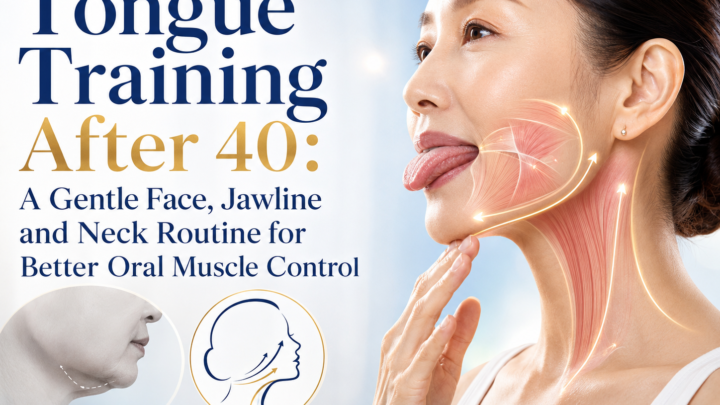
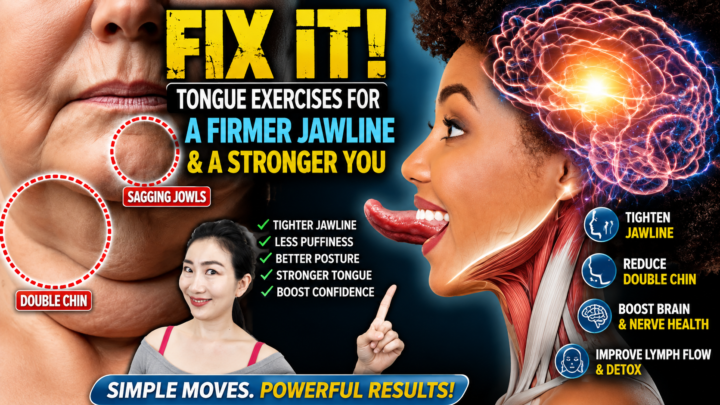
What About Tongue Exercises?
Tongue exercises frequently appear in face-yoga routines because the tongue participates in swallowing, speech, breathing mechanics, and other orofacial functions.
Myofunctional therapy—the clinical field involving coordinated oral and facial muscle function—is a legitimate area of rehabilitation. A 2024 systematic review found studies reporting improvements in both orofacial function and some facial-aging measures after myofunctional interventions, although the protocols and evaluation methods varied substantially.
That does not mean tongue exercises have been proven to lift the entire face, prevent aging, improve longevity, or reverse wrinkles.
Those are much stronger claims than current evidence supports.
Can Facial Exercise Replace Botox, Fillers, or Other Treatments?
No direct comparison can currently justify that conclusion.
Botulinum toxin, fillers, lasers, ultrasound treatments, surgery, skincare, facial exercises, and massage all act through very different mechanisms.
Someone may prefer facial exercise because it is inexpensive, noninvasive, and easy to practice at home. Others may choose dermatologist-directed treatments. Some people may combine several approaches.
The key is understanding that facial exercise should not be marketed as a guaranteed biological substitute for medical aesthetic procedures.
How Often Should You Practice?
Consistency probably matters more than intensity.
The 2018 facial-exercise study used a much more demanding routine than most social-media videos: participants performed approximately 30 minutes of exercises daily for the first eight weeks and then every other day through week 20.
That does not mean everyone needs that much exercise.
For a general self-care routine, a short session several times per week may be more practical. Movements should remain comfortable and controlled.
Stop if an exercise causes jaw pain, headache, dizziness, significant facial pain, or persistent discomfort. Anyone with recent facial surgery, facial nerve disorders, temporomandibular joint problems, or other relevant medical conditions should ask an appropriate healthcare professional before beginning intensive facial exercises.
What Actually Matters Most for Facial Aging?
Facial exercises can be an interesting addition to a healthy-aging routine, but they should not distract from strategies with much stronger evidence.
Protecting skin from excessive ultraviolet exposure remains one of the most important steps for reducing premature skin aging. Avoiding smoking, getting adequate sleep, eating a nutritionally balanced diet, managing chronic health conditions, and using evidence-based skincare can also matter considerably more than any single facial movement.
Face yoga can therefore occupy a useful but appropriately modest position: a low-cost movement and relaxation practice that may provide localized aesthetic benefits for some people.
The Bottom Line
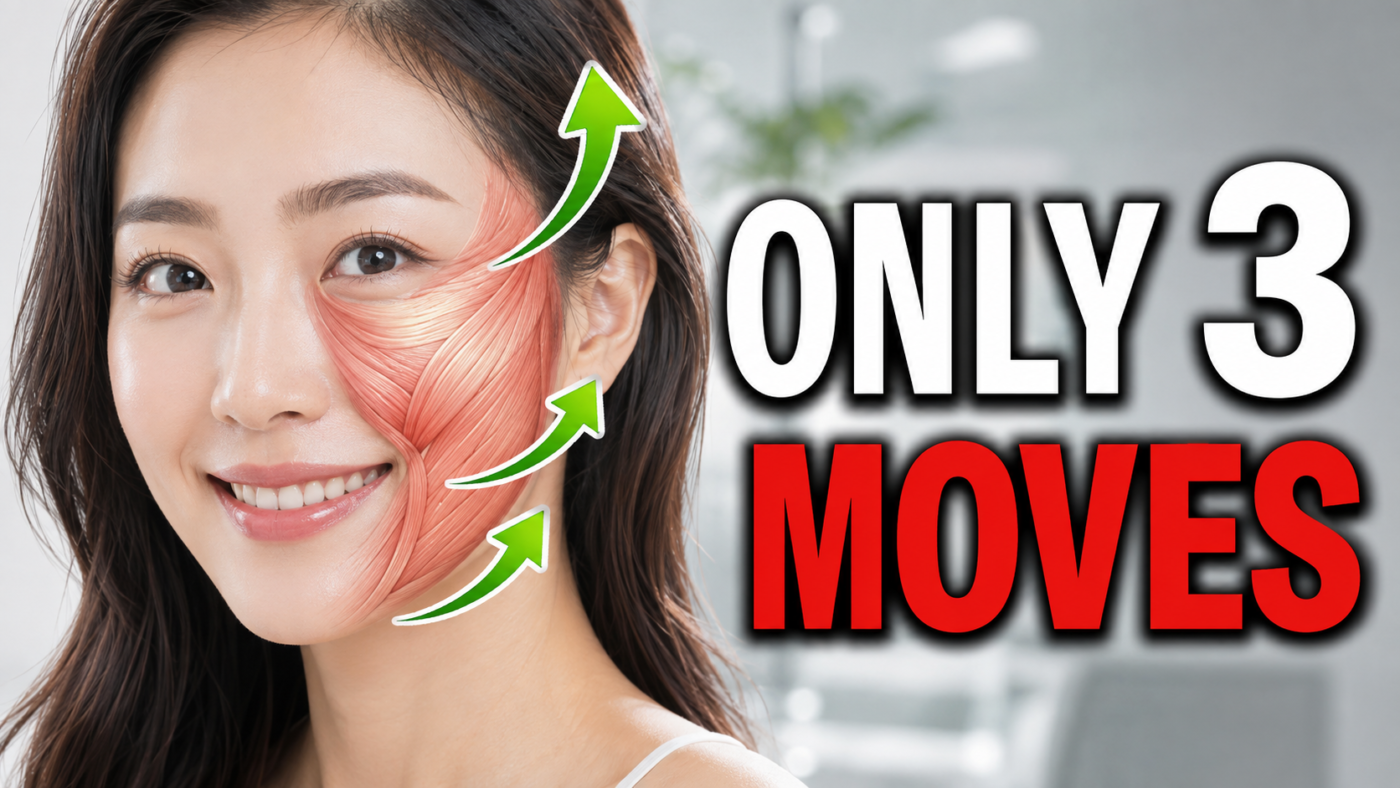
The idea that three exercises will make someone wrinkle-free at 90 is not supported by current science.
But dismissing facial exercise completely would also go beyond the evidence.
Small clinical studies and recent reviews suggest that certain facial exercises and myofunctional techniques may affect cheek fullness, facial muscle function, or selected aspects of facial appearance. At the same time, researchers continue to emphasize that better controlled studies are needed before strong anti-aging claims can be made.
So practice facial exercises because they feel comfortable, help you become more aware of your facial muscles, and perhaps improve aspects of facial appearance over time—not because someone promised they can reverse decades of aging.
A face does not need to look frozen or ageless to look healthy. Movement, expression, skin health, and vitality remain part of what makes a face look alive.
FAQ
Can facial exercises remove wrinkles permanently?
There is currently no strong evidence that facial exercises permanently remove wrinkles. Limited research suggests certain exercises may modestly improve cheek fullness or selected aspects of facial appearance.
How long does face yoga take to work?
Research has not established a universal timeline. The best-known pilot study examined changes over 20 weeks rather than after several days.
Can facial exercises make wrinkles worse?
Normal facial movement is part of everyday life, but repeatedly making forceful expressions can temporarily deepen expression lines. Gentle, controlled exercises are preferable to aggressive pulling or squeezing.
Do facial exercises increase collagen?
There is not enough evidence to claim that a particular facial exercise immediately or substantially increases collagen in humans.
Are facial exercises safe?
Gentle facial movements are generally low risk for healthy adults, but exercises should not cause pain. People with facial nerve problems, recent surgery, significant jaw disorders, or other medical concerns should seek professional guidance.
Medical Disclaimer: This article is for educational purposes only and is not medical advice. Facial exercises are not intended to diagnose, treat, cure, or prevent any disease or to replace care from a qualified healthcare professional.
This article is for general education and does not replace individualized care from a qualified health professional. Seek appropriate advice for persistent, severe, or concerning symptoms.
Read the full medical disclaimer