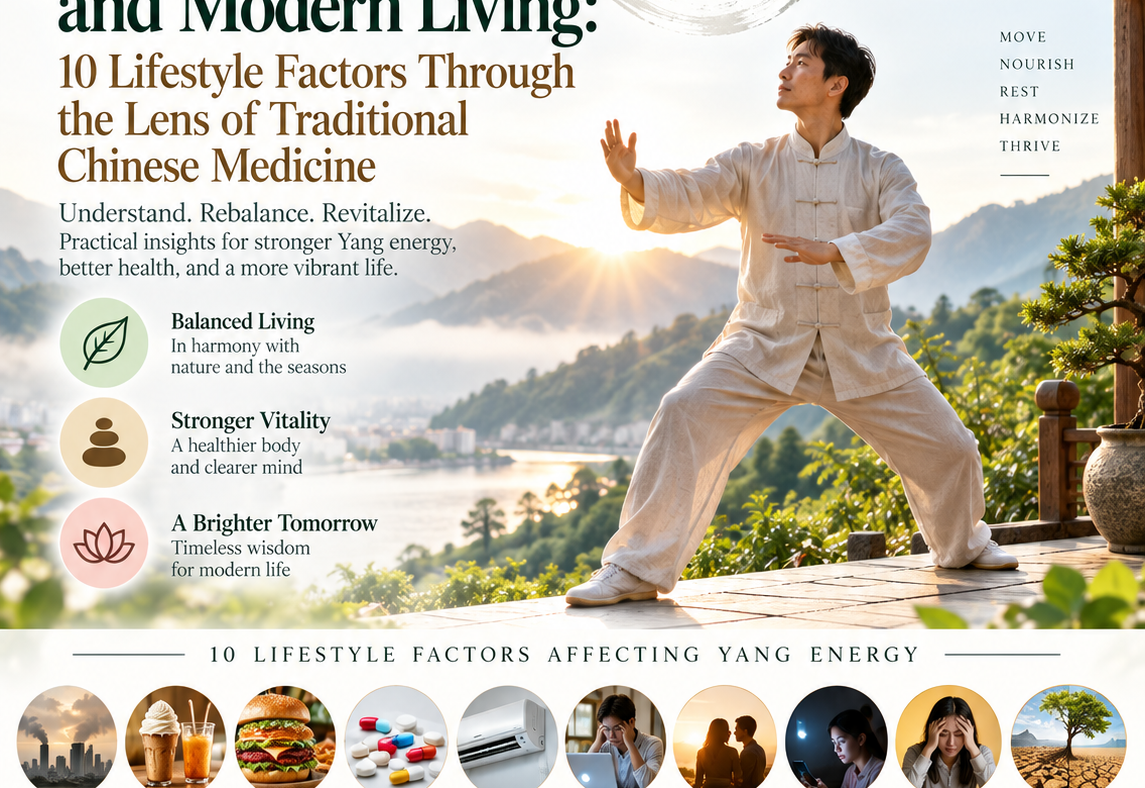
Yang energy and modern living are closely connected through the traditional Chinese philosophy of balance, vitality, and harmony with nature. Traditional Chinese Medicine views human health through the dynamic interaction of Yin and Yang, emphasizing the importance of nourishment, movement, rest, and adaptation to changing environmental conditions.Exploring Yang vitality, healthy daily rhythms, environmental influences, emotional balance, and the timeless principles of Chinese health cultivation.
Traditional Chinese Medicine views human health through the dynamic interaction of Yin and Yang.
These complementary principles describe relationships such as activity and rest, warmth and coolness, movement and stillness, and nourishment and transformation.
Within this framework, Yang is associated with warmth, movement, functional activity, and the body’s capacity to respond to changing conditions.
Yin is associated with nourishment, restoration, structure, and the resources that support physiological activity.
Neither principle exists independently.
Classical Chinese health cultivation emphasizes that vitality depends on their harmonious relationship rather than on the unlimited accumulation of one at the expense of the other.
In modern life, irregular sleep, prolonged stress, poor nutrition, environmental exposure, and inadequate physical activity may disrupt overall well-being.
Traditional concepts of Yang cultivation offer a cultural framework for exploring these challenges while modern science helps distinguish established health risks from historical interpretations.
Understanding Yang Deficiency in Traditional Chinese Medicine
Yang deficiency is a traditional diagnostic pattern associated with an insufficient warming or activating function.
Classical practitioners may consider this pattern when evaluating symptoms such as persistent coldness, fatigue, low vitality, or certain digestive complaints.
The specific interpretation depends on the overall presentation and the traditional system involved.
However, these symptoms do not establish a diagnosis on their own.
Cold intolerance, fatigue, digestive disturbance, and exercise intolerance can have numerous modern medical explanations, including anemia, thyroid disorders, sleep deprivation, cardiovascular conditions, nutritional deficiencies, or medication effects.
Traditional Yang deficiency is therefore best understood as a historical pattern classification rather than a direct biomedical diagnosis.
1. Environmental Pollution and Reduced Well-Being
Traditional Chinese medicine emphasizes the relationship between human beings and their surroundings.
The Huangdi Neijing presents health as an interaction between the human body, seasonal changes, and the wider natural environment.
Modern environmental health research recognizes that polluted air and contaminated water can contribute to disease.
Air pollution is associated with respiratory and cardiovascular risks, while unsafe drinking water can expose individuals to harmful microorganisms or chemical contaminants.
Reducing environmental exposure is therefore an important part of preventive health.
However, properly treated tap water should not be confused with contaminated water.
Water disinfection, including appropriately controlled chlorination, is an established public health measure that helps prevent waterborne infections.
There is no reliable evidence that properly regulated chlorine levels in drinking water routinely cause Yang deficiency or male sexual dysfunction.
Traditional ideas about environmental harmony can encourage attention to air quality, safe drinking water, and access to healthy natural surroundings without replacing established environmental science.
2. Excessive Dietary Restriction and Poor Nutritional Balance
Traditional Chinese dietary theory describes foods according to properties such as warming, cooling, nourishing, and drying.
These classifications are used to explain how different foods may be selected according to a person’s constitution and the season.
Modern nutrition approaches dietary health through nutrient content, energy balance, food quality, and individual physiological needs.
Cold foods and beverages do not inherently damage the body’s vital energy.
However, people with certain digestive conditions may find that particular foods or temperatures trigger discomfort.
The practical objective is to develop a diet that is balanced, tolerable, and nutritionally adequate.
Fresh vegetables, fruit, whole grains, legumes, suitable protein sources, and other minimally processed foods can form the foundation of healthy eating.
Traditional warm meals, soups, and cooked vegetables may also provide satisfying ways to maintain a balanced diet.
Food choices should be guided by individual tolerance, nutritional requirements, and overall health rather than rigid rules about dietary temperature.
3. Excessive Consumption of Energy-Dense Foods
Traditional Chinese Medicine associates the Spleen and Stomach with the transformation of food and the nourishment of the body.
Within this framework, excessive eating may be interpreted as placing unnecessary demands on digestive function.
Modern medicine recognizes that persistently consuming more energy than the body requires can contribute to weight gain and metabolic problems.
A dietary pattern high in processed meat, saturated fat, sodium, or highly processed foods may also increase certain long-term health risks.
However, meat itself is not inherently harmful, and appropriately chosen animal foods can provide valuable protein and nutrients.
The objective is moderation and dietary quality.
A balanced eating pattern can include suitable sources of protein alongside vegetables, fruit, whole grains, legumes, and other nutrient-rich foods.
4. Inappropriate Use of Antibiotics and Other Medications
Antibiotics are among the most important advances in modern medicine.
They can treat certain bacterial infections and prevent serious complications when appropriately prescribed.
However, antibiotics do not treat viral infections such as the common cold.
Unnecessary antibiotic use can cause adverse effects and contribute to antimicrobial resistance.
Similarly, corticosteroids and other hormone-related medications may be essential for treating specific conditions but require appropriate medical supervision.
Their benefits and risks depend on the medication, dose, duration, and underlying illness.
Traditional Chinese Medicine sometimes interprets medication effects through concepts such as Heat, Cold, or the balance of Qi.
These descriptions should not replace pharmacological knowledge or clinical guidelines.
Unnecessary medication should be avoided, but necessary treatment should not be withheld because of concerns that modern medicines inherently weaken Yang.
There is also no established basis for claiming that routine childhood antibiotic treatment causes leukemia through the accumulation of hidden toxins.
Responsible healthcare requires both avoiding unnecessary medication and using effective treatment when indicated.
5. Indoor Climate and Temperature Regulation
Heating and air conditioning make indoor environments more comfortable and can protect people during extreme weather.
However, excessively cold or hot indoor temperatures may contribute to discomfort and affect sleep or daily functioning.
Some individuals are particularly sensitive to rapid temperature changes.
People with Raynaud’s phenomenon, for example, may experience changes in blood flow to the fingers or toes in response to cold exposure.
Traditional Chinese Medicine interprets some temperature-related symptoms through the concepts of Cold and Yang deficiency.
Modern medicine distinguishes normal thermal responses from conditions involving circulation, hormones, or other physiological processes.
Maintaining a comfortable indoor environment, dressing appropriately, and ensuring adequate ventilation are practical measures for everyday well-being.
Air conditioning does not inherently cause asthma, chronic infection, or the accumulation of Cold inside the body.
6. Excessive Work and Chronic Stress
Modern life often places considerable demands on attention, productivity, and emotional resilience.
Long working hours, inadequate recovery, and persistent psychological stress can affect sleep, mood, cardiovascular health, and general well-being.
Traditional health cultivation describes excessive activity without adequate restoration as a potential disturbance of physiological balance.
Within the Yin–Yang framework, sustained activity must be accompanied by sufficient rest.
This principle can be interpreted as a reminder that recovery is an essential component of sustainable performance.
Practical approaches include regular breaks, reasonable working hours, adequate sleep, physical activity, and opportunities for relaxation.
Persistent exhaustion should not simply be accepted as a normal consequence of a busy life.
If fatigue is severe or unexplained, medical assessment may be necessary.
7. Sexual Health and Personal Balance
Classical Chinese health cultivation includes discussions of sexual activity, reproduction, and the preservation of Essence.
Some historical traditions recommend moderation and attention to personal well-being.
Modern medicine does not establish a universal frequency of sexual activity that is harmful or beneficial for everyone.
Consensual sexual activity is not inherently a cause of weakened immunity, reduced intelligence, or depletion of a measurable vital resource.
Sexual health is better supported through appropriate education, informed consent, protection against sexually transmitted infections, healthy relationships, and attention to individual physical and emotional needs.
When sexual behavior interferes significantly with sleep, work, relationships, or daily responsibilities, professional guidance may be helpful.
Traditional ideas about moderation can be understood as encouragement toward balance rather than a basis for shame or fear surrounding normal sexuality.
8. Irregular Sleep and Disrupted Circadian Rhythms
Traditional Chinese medicine emphasizes living in harmony with the rhythms of nature.
Classical health cultivation encourages adjusting daily routines according to the changing patterns of day and night.
Modern chronobiology recognizes that the human body operates through internal circadian rhythms.
These rhythms influence sleep, alertness, hormone release, body temperature, and metabolic processes.
Irregular sleep schedules can interfere with normal circadian regulation.
Adequate sleep and consistent waking times are important for supporting physical and mental health.
Adults generally require at least seven hours of sleep per night, although individual needs vary.
Reducing unnecessary late-night activity, maintaining a comfortable sleeping environment, and establishing predictable routines can support healthier sleep.
The traditional principle of following natural rhythms remains relevant when interpreted through contemporary understanding of circadian biology.
9. Emotional Distress and Mental Well-Being
Traditional Chinese Medicine associates emotional activity with the functional relationships among the Heart, Liver, Kidneys, and other systems.
The Heart is traditionally associated with the Shen, encompassing aspects of awareness, mental activity, and emotional life.
Classical practitioners emphasized that persistent emotional disturbance could influence the wider condition of the body.
Modern medicine recognizes substantial connections among psychological stress, sleep, cardiovascular function, and general health.
However, emotional distress should not be interpreted as personal weakness or moral failure.
Healthy emotional regulation can be supported through social connection, physical activity, restorative sleep, mindfulness practices, and appropriate psychological care.
Tai Chi, Qigong, and gentle breathing exercises may provide accessible opportunities for relaxation.
When emotional symptoms are persistent or interfere with daily functioning, professional mental health support may be appropriate.
10. Environmental Change and the Human Relationship With Nature
Traditional Chinese philosophy describes human beings as participants in the wider natural world.
The concept of harmony between Heaven and humanity reflects the idea that people are influenced by seasonal, environmental, and ecological conditions.
Contemporary environmental science recognizes that climate change can affect health through extreme temperatures, air quality, food systems, and other pathways.
However, the extraction and combustion of fossil fuels should not be interpreted as the literal depletion of the Earth’s Yang energy.
Greenhouse warming is explained through physical processes involving heat-trapping gases in the atmosphere.
Traditional concepts of environmental balance may still serve as philosophical reminders of the importance of maintaining healthy surroundings and responsible relationships with nature.
Practical measures include reducing unnecessary pollution exposure, supporting safe living conditions, and adapting appropriately to environmental change.
The Relationship Between Yang, Recovery, and Healthy Aging
In traditional Chinese health cultivation, preserving Yang does not mean remaining constantly active or avoiding every form of Cold.
Instead, the broader principle emphasizes balance between movement and rest, warmth and nourishment, effort and recovery.
Modern approaches to healthy aging similarly recognize the importance of maintaining physical function while allowing adequate restoration.
Regular physical activity supports muscle strength, cardiovascular health, and mobility.
Balanced nutrition provides the materials necessary for tissue maintenance.
Sleep supports recovery and cognitive function.
Emotional well-being and social connection contribute to quality of life.
These factors cannot prevent every disease, but they provide a foundation for long-term health.
Cultivating Vitality Without Relying on Miracle Remedies
Traditional wellness products are sometimes marketed as methods of restoring Yang, improving immunity, reversing aging, or preventing multiple diseases.
Such claims require careful examination.
There is insufficient evidence that a single herbal formula or supplement can reliably correct every form of fatigue, restore sexual function, reverse cognitive decline, or prevent disease.
Certain herbal preparations may also interact with medication or contain contaminants.
Individuals who are pregnant, elderly, managing chronic illness, or caring for children should be particularly cautious about unverified products.
The most sustainable approach combines appropriate medical care with consistent daily habits.
Traditional health cultivation can contribute philosophical and practical insights, but it should not be presented as a universal substitute for evidence-based treatment.
Yang Energy and Modern Living: A Balanced Approach to Lifelong Vitality
The enduring appeal of the Huangdi Neijing lies partly in its understanding of health as an ongoing relationship between the individual and the surrounding world.
Its emphasis on moderation, emotional calm, seasonal adaptation, and the preservation of vitality continues to resonate with contemporary discussions of well-being.
Modern life presents challenges that ancient physicians could not have anticipated, including digital overstimulation, sedentary work, industrial pollution, and irregular schedules.
Nevertheless, the fundamental need for nourishment, movement, rest, connection, and recovery remains.
Healthy living does not require abandoning modern medicine or attempting to reproduce every historical practice.
It requires understanding which traditional principles remain meaningful, which claims need scientific evaluation, and which contemporary interventions can improve health.
True health cultivation is not the pursuit of endless energy. It is the art of maintaining a sustainable balance between activity and restoration, allowing the body and mind to function well throughout life.
Frequently Asked Questions
- What is Yang energy in Traditional Chinese Medicine?
Yang energy is a traditional Chinese medicine concept associated with warmth, movement, functional activity, and physiological vitality. Within the Yin–Yang framework, Yang and Yin are complementary principles that describe patterns of activity, restoration, nourishment, and balance. Yang is not a measurable biological energy recognized by modern medicine. - What are the traditional signs of Yang deficiency?
Traditional Chinese Medicine may associate Yang deficiency with symptoms such as persistent coldness, fatigue, low vitality, and certain digestive complaints. However, these symptoms can also occur with medical conditions such as anemia, hypothyroidism, sleep disorders, or circulatory problems. Persistent symptoms require appropriate medical assessment. - How does modern living influence the traditional concept of Yang vitality?
Traditional Chinese health cultivation emphasizes balanced daily routines, appropriate nutrition, adequate rest, emotional well-being, and harmony with the environment. Modern lifestyle factors such as irregular sleep, prolonged stress, physical inactivity, and poor dietary habits may affect general health, although they do not establish a biomedical diagnosis of Yang deficiency. - Can cold foods and drinks weaken Yang energy?
Traditional Chinese dietary theory classifies foods according to properties such as warming and cooling. However, modern medicine does not establish that cold foods or beverages inherently weaken the body’s vital energy. Individual food tolerance, nutritional quality, and underlying medical conditions are more relevant to dietary decisions. - Does air conditioning cause Yang deficiency?
Traditional Chinese Medicine may interpret sensitivity to cold through patterns involving Yang deficiency or Cold. However, air conditioning does not inherently cause Yang deficiency, asthma, or chronic disease. Maintaining a comfortable indoor temperature and appropriate ventilation can support general well-being. - Can antibiotics damage Yang energy?
Traditional Chinese Medicine may interpret certain medication effects through its own theoretical framework, but Yang depletion is not an established pharmacological effect of antibiotics. Antibiotics are essential for treating certain bacterial infections when appropriately prescribed. Unnecessary use should be avoided because of potential adverse effects and antimicrobial resistance. - How does sleep support vitality and healthy aging?
Adequate sleep supports physical recovery, cognitive function, emotional regulation, and general physiological health. Consistent sleeping and waking times also help maintain circadian rhythms. Traditional Chinese health cultivation emphasizes the importance of balancing activity with rest. - Can Tai Chi and Qigong support healthy living?
Tai Chi and Qigong combine gentle movement, controlled breathing, coordination, and attention. They may support balance, physical function, relaxation, and quality of life. These practices can complement a healthy lifestyle but should not replace necessary medical treatment.
- Can herbal supplements restore Yang energy?
Traditional Chinese herbal medicine includes formulas historically used for patterns described as Yang deficiency. However, there is insufficient high-quality evidence that a single supplement can reliably restore vitality, reverse aging, or prevent multiple diseases. Herbal products may cause adverse effects, contain contaminants, or interact with medications.
NCCIH
- What daily habits support a balanced and healthy lifestyle?
A balanced lifestyle includes adequate sleep, nutritious food, regular physical activity, emotional well-being, appropriate medical care, and time for recovery. Traditional Chinese health cultivation emphasizes moderation and harmony, while modern medicine provides evidence-based guidance for maintaining long-term health.
Medical Disclaimer
This article is intended for educational and informational purposes only and does not constitute medical advice, diagnosis, or treatment. Traditional Chinese Medicine concepts such as Yang, Yin, Qi, and Kidney Essence are presented as historical and cultural health frameworks and should not be interpreted as established biomedical diagnoses. Persistent fatigue, cold intolerance, cognitive difficulties, or other concerning symptoms should be evaluated by a qualified healthcare professional. Do not discontinue prescribed medications or replace necessary medical treatment with unproven remedies.
This article is for general education and does not replace individualized care from a qualified health professional. Seek appropriate advice for persistent, severe, or concerning symptoms.
Read the full medical disclaimer