Why Thighs Change Over Time
Many women notice that the appearance and feel of their thighs changes with age.
Skin may feel less firm.
Muscle definition may become less obvious.
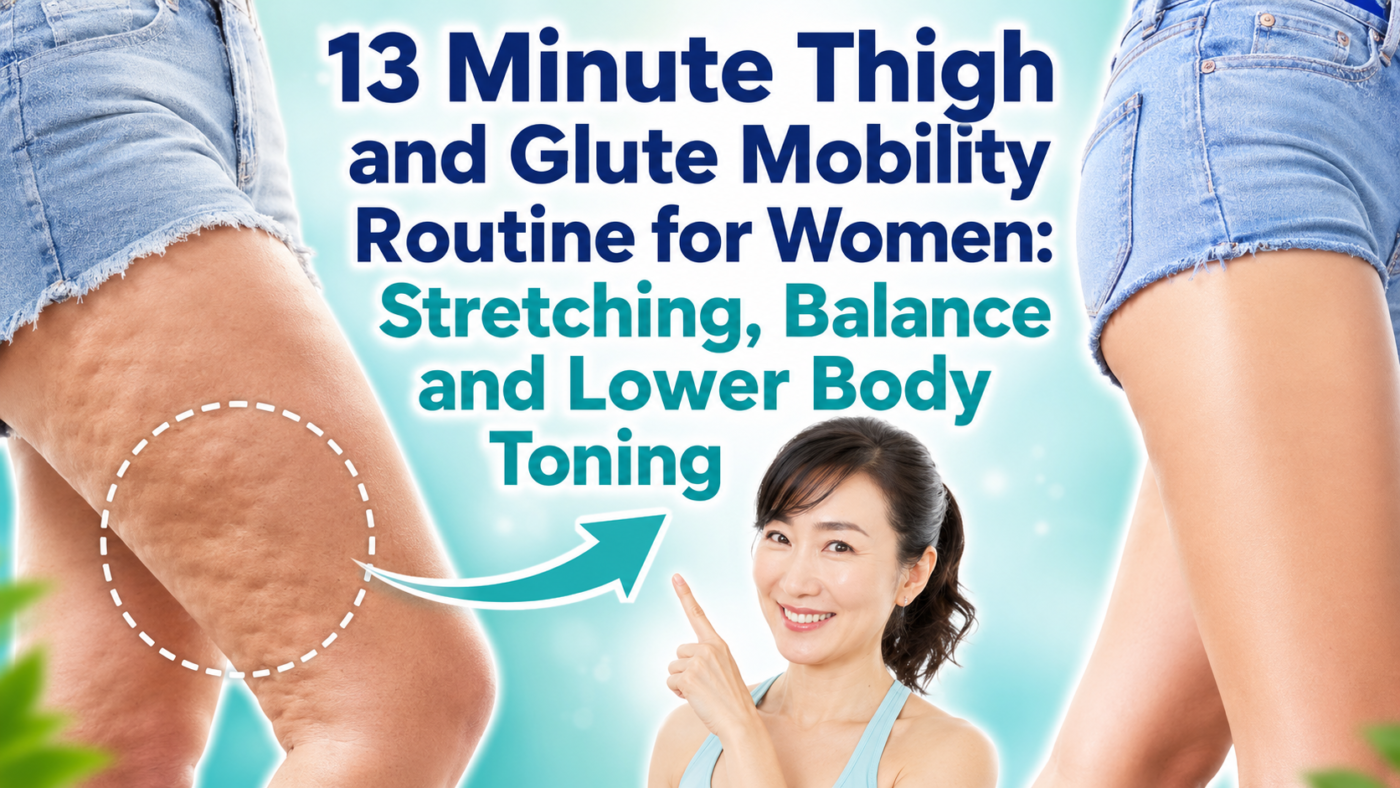
Cellulite may become more visible.
Body fat distribution can shift.
Strength may also decrease if the muscles are not being challenged regularly.
These changes can become particularly noticeable during midlife.
Hormonal changes around perimenopause and menopause may influence body composition, skin and connective tissue.
But none of this means your thighs are damaged or beyond improvement.
A realistic goal is not to create perfectly smooth skin.
A better goal is to keep the lower body strong, mobile and functional while caring for the skin and connective tissues in a sensible way.
What Is Cellulite?
Cellulite refers to the dimpled or uneven appearance commonly seen on the thighs, hips and buttocks.
It is extremely common.
It occurs when subcutaneous fat and fibrous connective tissue interact in a way that creates surface dimpling.
It is not simply trapped toxins.
It is not proof of poor circulation.
And it is not a disease.
Body fat, connective tissue structure, hormones, genetics, skin thickness and age can all influence how visible cellulite appears.
Thin people can have cellulite.
Fit people can have cellulite.
Young people can have cellulite.
Its presence does not mean your body is unhealthy.
Can Exercise Remove Cellulite?
Exercise can improve the appearance of the thighs in some people by building muscle and reducing overall body fat when that occurs.
Stronger glute and thigh muscles can create more shape underneath the skin.
But exercise cannot guarantee that cellulite completely disappears.
The fibrous structure involved in cellulite remains influenced by anatomy and genetics.
Think of exercise as a way to improve the foundation beneath the skin rather than a way to erase every dimple.
Can Massage Remove Cellulite?
Massage may temporarily alter the appearance of the skin by changing local fluid distribution and increasing warmth.
Some people may notice smoother looking skin immediately afterward.
That effect is usually temporary.
Massage does not permanently destroy fat cells or untangle all connective tissue.
So use it as a comfort or skin care practice, not as a guaranteed cellulite treatment.
Begin With Lower Body Shaking
Stand with your feet around shoulder width.
Relax your knees.
Gently shake the legs and hips.
Let the movement stay loose.
The goal is simply to reduce stiffness and prepare for the session.
Do not bounce aggressively.
Keep your balance.
If you feel unstable, stand near a chair or wall.
Wide Stance Inner Thigh Stretch
Step your feet wider than shoulder width.
Bend one knee slightly.
Shift your weight toward that side.
Keep the opposite leg more extended.
You may feel a stretch along the inner thigh.
Breathe.
Return to the center.
Then move to the opposite side.
Keep the movement controlled.
Avoid forcing the knee outward with excessive pressure.
The inner thighs do not need to be aggressively stretched to be useful.
Front Thigh Stretch
Stand tall.
Bend one knee.
Bring your heel toward your buttocks.
Hold the ankle or foot if comfortable.
Use a chair for balance if needed.
You should feel a stretch along the front of the thigh.
Keep your knees reasonably close together.
Avoid arching the lower back excessively.
Then switch sides.
This stretches the quadriceps.
A simple front thigh stretch can feel especially useful after prolonged sitting.
Do Not Force the Stretch
The original routine encourages holding the ankle with both hands for a stronger stretch.
That may be too much for many people.
A deeper stretch is not automatically better.
Use enough range to feel gentle tension.
Stop if you feel pain in the knee, hip or lower back.
Comfort matters more than intensity.
Supported Thigh Massage
The routine next places one leg on a chair and uses the elbow to massage the front thigh.
You can modify this substantially.
Use your hand or forearm instead of the elbow if that feels more comfortable.
Apply moderate pressure.
Avoid pressing hard enough to bruise yourself.
Massage may help the muscle feel warmer and more relaxed.
It should not be painful.
Repeat on the opposite side.
Does Deep Massage Smooth the Skin?
You may notice temporary visual changes after massage.
The skin may look warmer.
Fluid distribution may shift slightly.
The muscle underneath may feel relaxed.
That does not mean cellulite has been permanently removed.
Take before and after photos with caution.
Lighting and muscle tension can dramatically change how cellulite looks.
Massage the Outer Thigh and Glute Area
Use your hands to massage the outer thigh and buttock.
Keep pressure comfortable.
You can use broad circles or gentle squeezing.
Avoid aggressive crushing.
Cellulite is not something that needs to be physically smashed.
Bruising the tissue is not a sign of progress.
If you enjoy using a small amount of body oil or lotion, that can reduce friction.
Choose a product your skin tolerates.
Inner Thigh Massage
The inner thigh can be sensitive.
Use lighter pressure here.
Avoid pressing deeply near the groin.
Major blood vessels, nerves and lymphatic structures pass through the upper inner thigh.
Beauty massage should remain gentle.
Stop if you feel pain, numbness or unusual sensitivity.
Repeat on the opposite side.
What About Lymphatic Claims?
Normal movement supports circulation and fluid movement.
But general thigh massage should not be described as clearing lymphatic blockages or removing waste.
Clinical lymphatic drainage is a specific therapy used for certain medical conditions.
A casual home massage is different.
If you have persistent leg swelling, do not assume cellulite massage will solve it.
Seek appropriate evaluation.
Warm the Thighs With Your Hands
Place your palms over the thighs.
Rub gently.
This can create warmth.
Use the moment to relax and breathe.
There is no need to assign mystical meaning to the sensation.
Warmth simply reflects friction and local circulation changes.
That can still feel good.
Single Leg Balance
Stand near a chair if needed.
Shift your weight onto one leg.
Lift the opposite leg.
Hold briefly.
Keep your standing knee soft.
Try not to lock it.
Keep your torso tall.
Balance work engages multiple muscles around the hip and ankle.
If you wobble, that is normal.
Use support.
Repeat on the other side.
Why Balance Matters
Balance becomes increasingly important with age.
It depends on vision, the inner ear, muscle strength, joint sensation and coordination.
Single leg balance challenges several of these systems.
You do not need to stand perfectly still.
Small corrections are part of the exercise.
The goal is controlled practice, not perfection.
Backward Leg Lift
Stand on one leg while holding a chair if needed.
Move the opposite leg backward.
Keep the movement small.
Avoid arching your back.
You should feel the gluteal muscles working.
Return slowly.
Repeat several times.
Then switch sides.
This is a simple way to challenge the hip extensors.
Can Glute Exercises Improve Thigh Appearance?
Stronger glutes can change lower body shape over time.
Muscle development can contribute to a firmer appearance.
However, stronger glutes do not directly dissolve cellulite.
Appearance changes are influenced by both muscle and fat.
Keep expectations realistic.
Side Leg Lift
Stand tall.
Move one leg out to the side.
Keep your toes mostly forward.
Avoid leaning dramatically in the opposite direction.
Return slowly.
Repeat.
Then switch sides.
This challenges muscles around the side of the hip, including the gluteus medius.
These muscles help stabilize the pelvis during walking and single leg movement.
Single Leg Balance With Movement
The routine then adds small movements while standing on one leg.
This increases difficulty.
Only do this if the basic balance version feels safe.
Hold a chair with one hand.
Move the free leg slowly.
Do not rush.
The goal is control.
If balance becomes poor, return to the easier variation.
Outer Hip Opening
Stand on one leg.
Lift the opposite leg slightly out to the side.
Open and close the hip through a comfortable range.
Keep the standing leg stable.
This challenges balance and hip control.
You do not need a huge range.
Small controlled movements are enough.
Figure Four Style Stretch
The routine ends with a deeper hip stretch.
Stand near a chair or wall.
Cross one ankle over the opposite thigh if comfortable.
Bend the standing leg slightly.
You may feel a stretch through the outer hip and buttock.
Hold.
Breathe.
Use support.
If this position feels too difficult, perform a seated figure four stretch instead.
Then switch sides.
Do Not Force the Hip
People have different hip anatomy.
Some can easily place the ankle high on the thigh.
Others cannot.
That does not mean anything is wrong.
Never force the knee downward.
Use the range your hip allows.
Joint structure limits flexibility as well as muscle tension.
Can This Routine Tone the Thighs?
The exercise portions can challenge thigh and glute muscles.
If you are a beginner, that can provide a useful training stimulus.
However, the routine includes a large amount of stretching and massage, so it should not be your only lower body strength program.
For stronger muscle development, add progressive resistance exercises such as squats, lunges, step ups, hip bridges or resistance band movements.
Can It Reduce Outer Thigh Bulges?
Not selectively.
Fat cannot be removed from one exact location simply by massaging or exercising that region.
Overall body fat changes through long term energy balance.
Muscle development can alter shape.
Genetics strongly influence where fat is stored.
A realistic plan addresses the whole body.
What Happens During Perimenopause and Menopause?
Hormonal changes can affect body composition.
Many women notice changes in fat distribution, muscle mass and skin.
That does not mean cellulite suddenly becomes permanent.
Strength training, regular activity, adequate protein and overall healthy habits remain useful during midlife.
But there is no single cellulite treatment that reverses hormonal aging.
Collagen and Skin
Skin contains collagen and elastin that contribute to structure and resilience.
With age, these tissues change.
Sun exposure also contributes to collagen breakdown.
That means skin care matters too.
If your thighs are frequently exposed to sunlight, sunscreen can help reduce ultraviolet damage.
Massage cannot compensate for repeated sun damage.
Can Lotion or Oil Help?
A moisturizer can improve skin hydration.
Hydrated skin may look temporarily smoother.
That can make cellulite slightly less noticeable in some people.
This is a cosmetic effect.
It does not change the deeper connective tissue structure.
Still, comfortable skin care can be worthwhile.
How Often Should You Practice?
Two or three times per week is a reasonable starting point.
You can also separate the components.
Stretch more often if you enjoy it.
Perform strength work several times per week.
Use massage when it feels good.
You do not need to complete the entire 13 minute routine every day.
Consistency matters more than frequency extremes.
How to Make the Routine More Effective
Add progressive strength training.
Walk regularly.
Train the glutes.
Train the quadriceps.
Train the hamstrings.
Include balance work.
Maintain adequate protein intake.
Stay active overall.
These habits will do more for long term lower body function than aggressive massage alone.
A Simple Weekly Plan
Monday
Thigh and glute routine
Tuesday
Walking
Wednesday
Lower body strength
Thursday
Rest or mobility
Friday
Thigh and glute routine
Saturday
Walking or full body exercise
Sunday
Recovery
Adjust according to your own schedule.
Women Over 40
This routine fits especially well for women over 40 because it combines mobility, balance and light lower body strengthening.
But midlife exercise should ideally include real resistance training too.
Muscle becomes increasingly important for strength, metabolism, bone health and everyday function.
Do not rely only on massage and stretching.
Use them as additions to a stronger foundation.
Women Over 50
Women over 50 can also benefit from balance and leg strength work.
Start conservatively.
Use a chair.
Avoid unstable positions.
Progress slowly.
If osteoporosis, arthritis or other conditions are present, modifications may be appropriate.
The goal is confidence and capability.
Body Confidence and Cellulite
Cellulite does not need to be treated as a failure.
It is extremely common.
You can work toward stronger and healthier legs while still accepting normal skin texture.
Fitness and body confidence do not have to be enemies.
You can improve what you want to improve without turning every dimple into a problem.
That mindset is often more sustainable than chasing perfectly smooth thighs.
Frequently Asked Questions
Can exercise remove cellulite?
Exercise may improve the appearance of cellulite by building muscle and changing overall body composition, but it cannot guarantee complete removal.
Does massage permanently remove cellulite?
No. Massage may temporarily make the skin look smoother, but permanent structural changes are unlikely from ordinary home massage.
Can cellulite be crushed?
No. Cellulite should not be aggressively squeezed or crushed. Excessive pressure can cause bruising and irritation.
Does lymphatic massage remove cellulite?
There is not strong evidence that general lymphatic massage permanently removes cellulite.
Can glute exercises help thigh appearance?
Yes. Stronger glute muscles can improve lower body shape and function over time.
Can cellulite get worse during menopause?
Hormonal and skin changes may make cellulite more noticeable for some women, but individual experiences vary.
Can thigh massage reduce fat?
No. Massage does not selectively remove thigh fat.
Can balance training help older adults?
Yes. Balance practice can support movement confidence and may be useful as part of a broader healthy aging program.
Should thigh massage hurt?
No. Significant pain or bruising means too much pressure is being used.
How often should I train my legs?
Two or three lower body strength sessions per week is a common starting point for many adults, depending on intensity and recovery.
Medical Disclaimer
This article is for general educational and informational purposes only and is not medical advice, diagnosis or treatment. Stop any exercise or massage that causes sharp pain, significant bruising, numbness, dizziness or worsening symptoms. Consult an appropriate healthcare professional if you have unexplained leg swelling, severe joint pain, recent surgery, vascular disease or other significant medical conditions.
This article is for general education and does not replace individualized care from a qualified health professional. Seek appropriate advice for persistent, severe, or concerning symptoms.
Read the full medical disclaimer