Throughout human history, medicine has always evolved alongside civilization.
From ancient healing traditions based on observation and experience to modern healthcare systems built on scientific research and clinical evidence, humanity has continuously searched for better ways to understand the body, prevent illness, and improve quality of life.
Traditional Chinese Medicine (TCM) represents one of the world’s oldest continuously practiced medical traditions.
It has experienced periods of great influence, criticism, transformation, and renewed interest. Today, as people around the world focus more on preventive health, healthy aging, and lifestyle medicine, traditional wellness concepts are once again attracting attention.
But how should we understand Traditional Chinese Medicine in the modern world?
The answer requires looking at both history and science.
The Encounter Between Traditional Medicine and Modern Healthcare
At the beginning of the 20th century, China experienced enormous social and technological changes.
Modern Western medicine, with its emphasis on anatomy, microbiology, laboratory research, and public health systems, gradually entered Chinese society.
One important historical event was the 1910–1911 Manchurian plague outbreak.
During this crisis, modern approaches such as:
disease surveillance;
quarantine measures;
sanitation;
infection control;
played a significant role in controlling the spread of the epidemic.
This period demonstrated an important lesson:
Healthcare must continue to develop with new knowledge and scientific progress.
The evolution of medicine is not simply about replacing one tradition with another. It is about continuously improving our understanding of health.
Traditional Chinese Medicine and the Holistic View of Health
The value of Traditional Chinese Medicine is not limited to individual treatments or specific herbal remedies.
One of its most influential contributions is a holistic approach to health.
Traditional Chinese health philosophy emphasizes the relationship between:
the human body and nature;
daily habits and long-term health;
nutrition and vitality;
emotional balance and physical well-being.
Many traditional wellness ideas focus on maintaining health before illness occurs.
For example:
maintaining regular sleep patterns;
eating according to individual needs;
practicing moderate physical activity;
managing stress and emotions.
These concepts share similarities with modern health fields such as:
Lifestyle Medicine;
Preventive Healthcare;
Healthy Aging Research.
The Legacy of Ancient Medical Texts
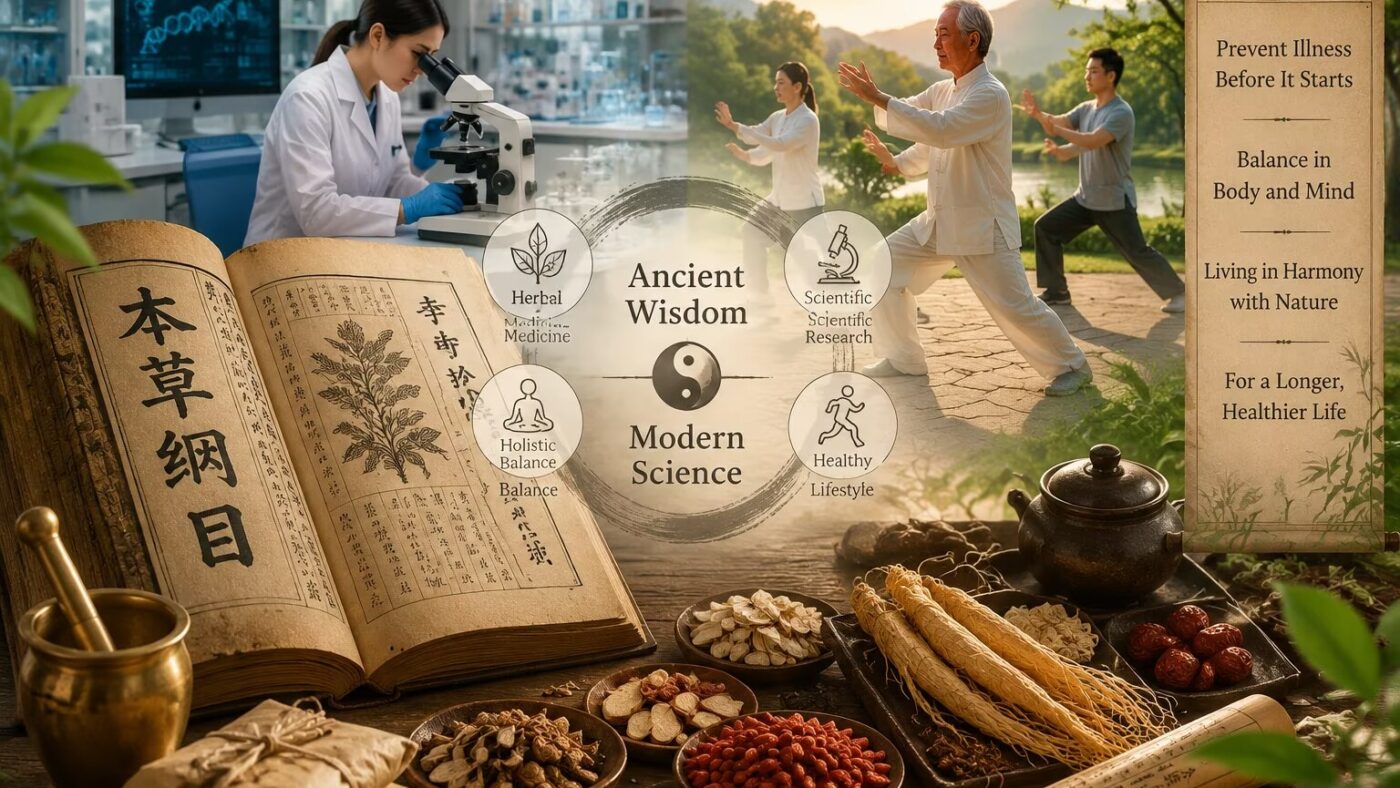
Among the most influential works in Chinese medical history is Compendium of Materia Medica (Bencao Gangmu), written by the Ming Dynasty physician Li Shizhen.
This remarkable work collected extensive information about:
medicinal plants;
natural substances;
traditional applications;
observations from previous generations.
Li Shizhen spent decades organizing and reviewing medical knowledge from numerous historical sources.
The book represents an extraordinary effort to document humanity’s understanding of nature and healing during that era.
However, ancient medical texts should always be understood within their historical context.
Like many traditional medical writings around the world, they contain:
valuable observations accumulated through experience;
cultural beliefs from their time;
traditional explanations that require modern evaluation.
Modern healthcare does not simply accept or reject ancient knowledge.
Instead, it studies, tests, and refines it.
Tradition Requires Evidence, and Science Benefits From History
The relationship between traditional knowledge and modern science should not be viewed as a conflict.
A balanced approach includes three important principles.
- Preserve Valuable Health Wisdom
Many traditional lifestyle practices continue to inspire modern wellness approaches:
balanced nutrition;
regular movement;
adequate rest;
emotional harmony;
prevention-focused living.
These principles remain meaningful because they support fundamental aspects of human health. - Evaluate Through Modern Research
Modern medicine emphasizes:
clinical studies;
scientific measurement;
safety evaluation;
evidence-based practice.
Any health approach should continue to be examined and improved through reliable research. - Create an Integrated Approach to Wellness
The future of healthcare is unlikely to belong exclusively to either traditional or modern systems.
Instead, the most valuable approach may come from combining:
ancient observations about lifestyle and balance;
modern scientific understanding of biology and disease.
The Wisdom of Huangdi Neijing and Preventive Health
The Huangdi Neijing (Yellow Emperor’s Inner Classic) is considered one of the foundational texts of Traditional Chinese Medicine.
One of its most important ideas is the concept of “preventing illness before it develops.”
This idea emphasizes that health management should not only focus on treating disease but also on maintaining balance through everyday choices.
Today, similar concepts appear in modern healthcare:
preventive medicine;
wellness management;
healthy aging strategies;
lifestyle optimization.
Although ancient and modern explanations may differ, the shared goal remains:
Helping people maintain better health throughout life.
A Balanced Perspective on Traditional Chinese Medicine
After thousands of years of development, Traditional Chinese Medicine has become an important part of global medical and cultural history.
A thoughtful understanding of TCM requires avoiding two extremes.
On one hand:
We should recognize the valuable health observations and lifestyle wisdom developed through centuries of human experience.
On the other hand:
Traditional ideas should continue to be evaluated through modern scientific methods.
The most constructive approach is:
Respect tradition. Study history. Apply science. Improve health.
Conclusion: Health Is a Journey Across Generations
Health is not the achievement of one civilization or one medical system.
It is the result of humanity’s continuous exploration of life.
From ancient medical classics to modern biotechnology;
from traditional wellness practices to contemporary health management;
different generations have contributed knowledge to the pursuit of a longer, healthier life.
The future of wellness may come from the integration of:
Ancient wisdom + Modern science + Personalized health management.
Traditional Chinese Medicine reminds us that health is not only about treating disease.
It is also about understanding the relationship between our bodies, our environment, and our way of living.
This article is for educational purposes only and does not provide medical advice. Traditional practices should be discussed with qualified healthcare professionals when addressing health conditions.
This article is for general education and does not replace individualized care from a qualified health professional. Seek appropriate advice for persistent, severe, or concerning symptoms.
Read the full medical disclaimer