Most people train their legs, arms and core.
Very few think about training the tongue.
Yet the tongue is not simply a passive organ used for tasting food. It is a highly active muscular structure involved in swallowing, speech, chewing, breathing mechanics and the positioning of food inside the mouth.
That makes tongue exercise an interesting area of movement training.
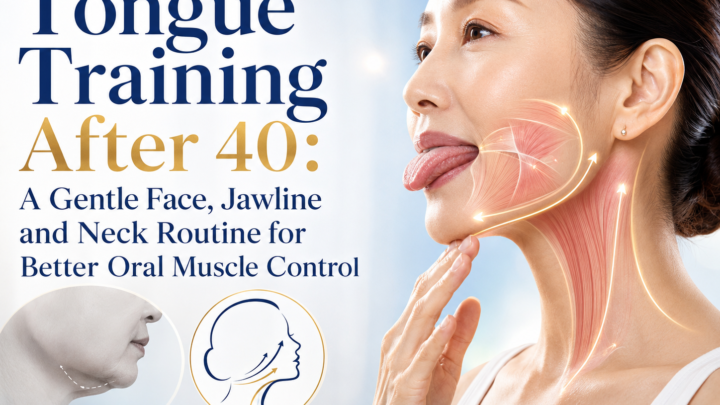
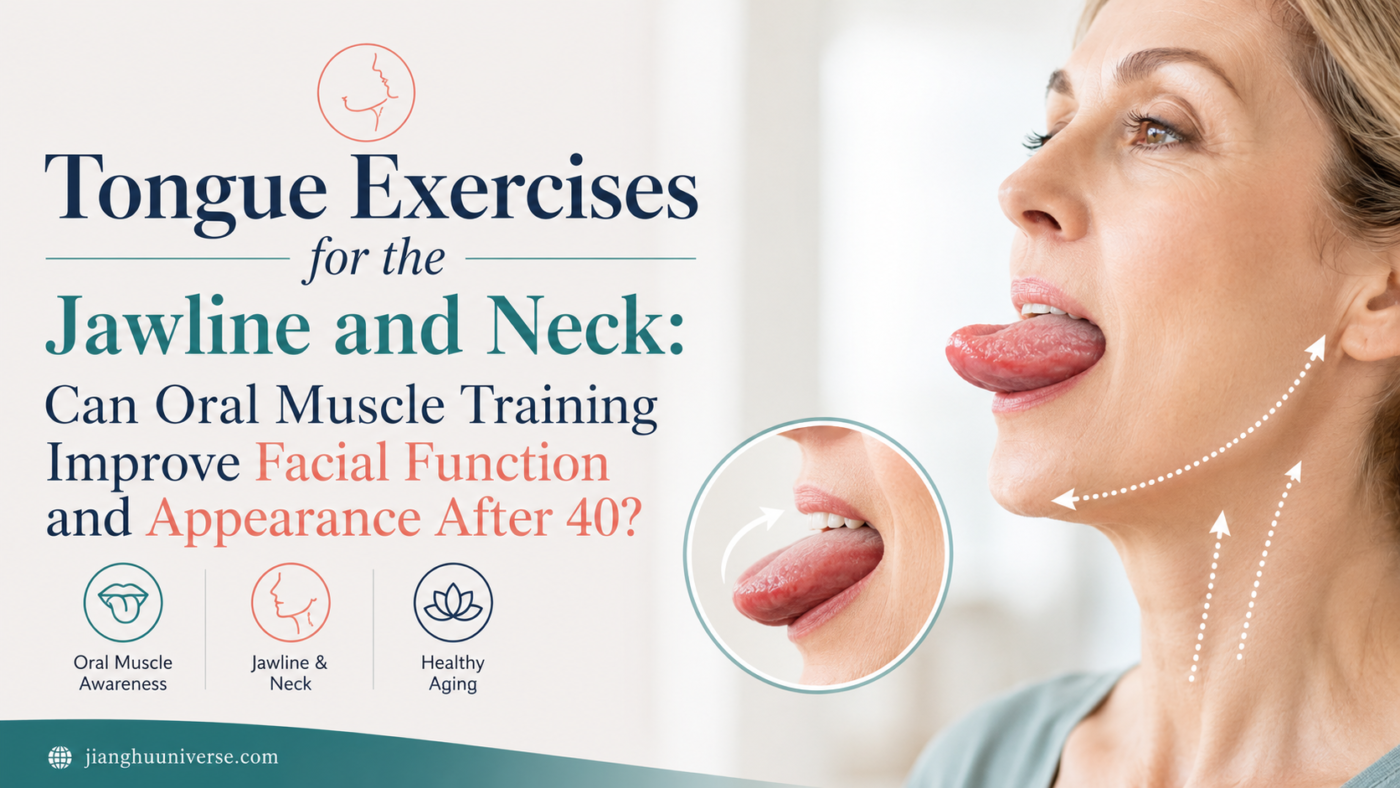
In recent years, tongue workouts and facial exercises have also become popular as natural approaches to improving the appearance of the jawline, neck and lower face.
Some routines make dramatic promises: tighter skin, elimination of nasolabial folds, improved lymphatic drainage, stronger immunity or even looking decades younger.
The scientific reality is more nuanced.
Tongue exercises can train oral and oropharyngeal muscles. They may improve awareness and control of the mouth and tongue, and specialized oropharyngeal exercises have legitimate clinical applications in areas such as swallowing rehabilitation and selected cases of obstructive sleep apnea.
But tongue exercise cannot literally tighten loose neck skin, rebuild lost facial collagen or permanently redesign the jawline.
The best way to use these exercises is to appreciate what they genuinely train while avoiding unrealistic anti-aging claims.
The Tongue Is More Powerful Than It Looks
The tongue is a muscular organ composed of several intrinsic and extrinsic muscles.
Intrinsic muscles change its shape.
Extrinsic muscles move the tongue forward, backward, upward and downward.
These muscles work together continuously during speech, chewing and swallowing.
The tongue also interacts functionally with structures in the floor of the mouth, hyoid region, jaw and upper airway.
This anatomical relationship explains why tongue exercises may feel surprisingly demanding.
It does not mean, however, that the tongue is directly attached to “70 facial muscles” or that strengthening it automatically lifts the skin of the jaw and neck.
The relationships are functional and anatomical—not a hidden anti-aging pulley system.
Can Tongue Training Improve the Jawline?
Possibly in a limited functional sense, but expectations should remain realistic.
Tongue exercises may strengthen or improve control of muscles involved in oral function.
Some movements also recruit muscles underneath the jaw.
When those muscles contract, people may feel tension under the chin or along the floor of the mouth.
That does not mean submental fat is being burned or loose skin is being tightened.
The visible contour of the jawline is influenced by multiple factors:
Body-fat distribution, genetics, bone structure, skin elasticity, collagen changes, age-related tissue descent, posture and muscle tone all contribute.
Tongue exercise addresses only a small part of that picture.
Can Tongue Exercises Tighten Neck Skin?
There is no strong evidence that tongue exercises alone can significantly tighten loose neck skin.
Skin laxity develops partly because collagen, elastin and other structural tissues change with age.
Sun exposure, genetics, smoking, body-weight changes and hormonal factors may also contribute.
Muscle activity underneath the skin is not the same as structural remodeling of the skin itself.
You may notice a temporary change in muscular tension or posture after exercising the tongue and neck.
That can subtly change how the area looks.
But it should not be described as permanent skin tightening.
Why the Neck and Shoulders Are Included
The original routine begins with neck stretching and shoulder movements before focusing on the tongue.
This is a sensible sequence.
The jaw, tongue, neck and shoulders do not operate as completely isolated systems.
People who spend long hours at computers may develop a habitual forward-head position, elevated shoulders and increased muscular tension around the upper trapezius and neck.
Gentle stretching can reduce the sensation of stiffness and make later exercises more comfortable.
That does not mean tight shoulders literally pull facial skin downward.
It simply means the upper body often feels better when movement is distributed across the neck, shoulders and upper back.
Step 1: Gentle Side Neck Stretch
Sit or stand comfortably.
Place one hand gently over the side of your head.
Allow the head to tilt toward one shoulder.
Do not pull aggressively.
The goal is to feel a mild stretch along the opposite side of the neck.
Continue breathing slowly.
Hold briefly, release and repeat on the other side.
A stretch should feel like tension, not sharp pain.
Step 2: Shoulder Elevation and Release
Bring both shoulders upward toward the ears.
Hold briefly.
Then allow them to drop and relax.
Repeat several times.
This simple movement can help you become aware of how much unnecessary shoulder tension you carry during the day.
Do not force the shoulders together or hold your breath.
Does This “Loosen the Rhomboids”?
Not exactly in the way some routines describe.
The rhomboid muscles are located between the shoulder blades and spine.
Raising the shoulders toward the ears does not specifically isolate or “release” the rhomboids.
But shoulder elevation, scapular movement and breathing can contribute to general upper-body mobility.
It is more accurate to think of this as a shoulder-awareness exercise rather than a targeted rhomboid treatment.
Step 3: Gentle Neck Massage
Use the pads of your fingers rather than aggressive pressure.
Massage the side of the neck with slow movements.
Avoid pressing directly over the front of the neck, carotid arteries or sensitive structures.
The pressure should remain comfortable.
Massage can temporarily reduce the sensation of muscular tension.
Pain does not mean you have discovered a lymphatic blockage.
Pain Is Not Proof of “Blocked Lymph”
This is an important correction.
If pressing a spot under the jaw or along the neck hurts, that does not diagnose impaired lymphatic drainage.
Tenderness can come from muscular tension, irritated tissues, lymph nodes, skin sensitivity, dental issues and many other causes.
True lymphatic disorders require medical assessment.
Trying to eliminate a supposed blockage by pressing harder can cause unnecessary irritation.
Gentle is better.
Step 4: Tongue Press Along the Upper Lip
Place clean fingers lightly on the skin above the upper lip.
Inside the mouth, press the tongue against the inner surface behind the upper lip.
Move slowly from side to side.
You can then repeat the movement without using the fingers externally.
This exercise requires active tongue movement and may fatigue the tongue surprisingly quickly.
That fatigue simply indicates muscular work.
It does not mean wrinkles are being destroyed.
Can This Remove Upper-Lip Wrinkles?
There is no good evidence that tongue pressure from inside the mouth can erase established wrinkles around the upper lip.
These lines are influenced by repeated facial movement, collagen loss, sun exposure, smoking and other age-related changes.
Oral exercises can train muscles.
They cannot selectively restore lost dermal collagen.
Step 5: Tongue Along the Inside of the Cheek
Place your fingers lightly over one cheek.
From inside the mouth, press the tongue against the cheek.
Move the tongue around the inner surface.
You may notice substantial resistance.
Switch sides.
This is essentially an oral muscular coordination exercise.
Do not scrape aggressively against the teeth.
If you have sores, recent dental work or painful oral lesions, postpone this part.
Step 6: Tongue Movement Along the Nasolabial Area
From inside the mouth, move the tongue along the inner surface corresponding approximately to the nasolabial fold.
Move slowly.
Repeat on both sides.
This may create a sensation of internal massage.
However, it cannot literally erase a nasolabial fold from underneath.
Nasolabial folds are influenced by facial anatomy, cheek volume, ligament structure, skin aging and tissue descent.
Step 7: Tongue Left and Right
Stick the tongue comfortably toward the right.
Return to the center.
Move toward the left.
Continue slowly.
Once the movement feels easy, the tempo can increase slightly.
Keep the jaw relaxed.
You do not need to strain for maximum distance.
Step 8: Tongue Circles
Move the tongue around the inside perimeter of the mouth.
Imagine tracing a large circle behind the lips and cheeks.
Complete several rotations.
Then reverse direction.
This is one of the most demanding tongue exercises in the routine.
Muscular fatigue is normal.
Sharp pain is not.
Does Tongue Exercise Involve Dozens of Muscles?
The tongue itself is composed of multiple paired intrinsic and extrinsic muscles, and oral movements involve additional muscles of the jaw, lips, cheeks and throat.
But claims that each tongue exercise directly trains exactly “70 connected muscles” are not a meaningful anatomical measurement.
Human movement is coordinated across muscle groups rather than occurring through one fixed numerical network.
Step 9: Look Up and Extend the Tongue
Raise your gaze slightly.
Avoid throwing the head dramatically backward.
Extend the tongue gently.
Relax.
Repeat.
You may feel activity beneath the chin and in the front of the neck.
Keep breathing normally.
If you develop neck discomfort, reduce the extension.
Step 10: Move the Tongue Side to Side While Looking Slightly Up
Maintain only a comfortable degree of neck extension.
Move the tongue from left to right.
Keep the shoulders relaxed.
There is no need to exaggerate the motion.
The objective is controlled movement.
Step 11: Massage the Back of the Head
Use your fingertips to massage the muscles near the base of the skull.
Many people carry tension here, especially after long periods of screen use.
Gentle massage can feel relaxing.
There are functional anatomical relationships among the tongue, hyoid, neck and craniofacial region, but fatigue at the back of the head does not necessarily originate from weak tongue muscles.
What About Saliva?
Tongue and oral movements can stimulate saliva production.
That is normal.
Saliva is important.
It lubricates the mouth, begins digestion, protects oral tissues and contains antimicrobial proteins and other components involved in oral defense.
However, saying that increasing saliva through tongue massage directly “boosts immunity” is too broad.
Saliva participates in local oral defense.
It should not be presented as a whole-body immune treatment.
Why Saliva Matters More With Age
Dry mouth becomes more common in some older adults, particularly among people taking certain medications.
Adequate saliva helps make swallowing and speaking easier and protects oral health.
If persistent dry mouth is a problem, tongue exercise alone may not solve it.
Medication side effects, dehydration, salivary-gland disorders and other causes should be considered.
The Role of Tongue Exercises in Swallowing
This is one area where tongue and oral exercises have genuine clinical importance.
Speech-language pathologists may prescribe specific exercises for people with dysphagia, or swallowing difficulty.
These exercises can target tongue strength, coordination and swallowing-related musculature.
But therapeutic swallowing exercises are individualized.
A social-media facial exercise routine should not replace professional swallowing rehabilitation.
Difficulty swallowing deserves proper evaluation.
Tongue Training and Sleep Apnea
Research into oropharyngeal or myofunctional exercises has suggested potential benefits for selected patients with obstructive sleep apnea and snoring.
Such programs typically involve structured exercises for the tongue, soft palate, facial muscles and breathing patterns.
This is a legitimate field of clinical research.
However, a general beauty-focused tongue workout should not be presented as a treatment for sleep apnea.
Anyone with loud habitual snoring, witnessed breathing pauses, morning headaches or significant daytime sleepiness should seek medical evaluation.
Does Tongue Training Make You Look Younger?
Not literally.
No exercise can reduce chronological age by 20 years.
But some habits associated with these routines may support a more relaxed appearance.
Better posture can change how the neck and jaw are presented.
Reducing habitual facial tension may make the expression look softer.
Improved oral and facial awareness can make people feel more confident.
Regular exercise and self-care can also influence mood and well-being.
Those are legitimate benefits.
They simply do not require a claim of reversing two decades of aging.
Can Facial Exercise Prevent Sagging Forever?
No.
Facial aging is a normal biological process.
Skin, fat compartments, ligaments, fascia, muscle and bone all change with time.
No facial exercise can guarantee that the face will never sag.
This does not make facial movement useless.
It means the goal should shift from fighting aging at all costs to maintaining function, mobility, comfort and healthy skin.
A Better Anti-Aging Strategy for the Neck and Jawline
If appearance is the primary goal, tongue exercise can be one small piece of a broader strategy.
Protect the Skin From UV Exposure
Sun exposure is a major contributor to premature skin aging.
Daily broad-spectrum sunscreen remains one of the most evidence-based interventions for protecting facial and neck skin.
Maintain Muscle Throughout the Body
Resistance training helps preserve lean mass and physical function as we age.
Whole-body strength training has far stronger evidence for healthy aging than isolated facial exercise.
Maintain a Stable, Healthy Weight
Large weight fluctuations can alter facial and neck appearance.
Avoid Smoking
Smoking accelerates skin aging and collagen breakdown.
Use Evidence-Based Skincare
Retinoids, moisturizers and other dermatologic treatments may have stronger evidence for improving aspects of photoaging than facial exercise.
Finish With Facial Relaxation
The original routine ends with a broad smile and facial-awareness exercise.
This part can be retained as a relaxation practice.
Relax the forehead.
Allow the eyebrows to rest.
Keep the jaw unclenched.
Gently lift the corners of the mouth.
Take a slow breath.
The goal is not to force every facial muscle into a “perfect” position.
Simply notice how your expression feels.
Then release.
How Often Can You Practice?
Healthy adults may perform gentle tongue movements regularly if they remain comfortable.
A short routine lasting several minutes is enough for beginners.
There is no evidence that longer or more painful sessions automatically produce better cosmetic results.
Muscular fatigue should be mild.
If the tongue or jaw remains sore afterward, reduce the intensity.
Who Should Be Careful?
Modify or avoid these exercises if you have recent oral surgery, significant dental procedures, painful mouth ulcers, severe temporomandibular joint pain, acute neck injury or other conditions that make the movements uncomfortable.
People with neurological disorders, swallowing problems or speech difficulties should seek individualized professional guidance rather than relying solely on generic exercises.
Stop If You Experience These Symptoms
Stop the exercise if you develop severe tongue pain, jaw locking, worsening TMJ pain, significant dizziness, unusual neck pain or difficulty swallowing.
Persistent tongue swelling, unexplained oral lesions, tongue weakness or speech changes also deserve medical evaluation.
The Real Value of Tongue Training
Tongue exercise is interesting because it draws attention to an area of the body most people rarely train intentionally.
It can challenge oral coordination.
It can increase awareness of the jaw and tongue.
It can make people more conscious of chronic tension in the neck and shoulders.
It can even serve as an enjoyable self-care ritual.
Those benefits are enough.
We do not need to claim that tongue movements erase wrinkles, unblock lymphatic vessels or make someone biologically 20 years younger.
Final Takeaway
The tongue is an important muscular organ involved in speech, swallowing, chewing and airway function.
Training it can be surprisingly challenging.
Tongue exercises combined with gentle neck mobility, shoulder relaxation and breathing may improve oral muscle awareness and provide a pleasant movement routine, especially for adults who spend much of the day sitting or holding tension around the jaw and neck.
But the science does not support the idea that tongue training alone permanently tightens loose neck skin, eliminates facial sagging or erases nasolabial folds.
The strongest message is simpler:
Train gently. Keep breathing. Avoid painful pressure. Improve function first, and treat any cosmetic changes as a possible bonus rather than a guarantee.
Frequently Asked Questions
Can tongue exercises sharpen the jawline?
They can activate muscles around the tongue, floor of the mouth and jaw, but there is insufficient evidence that they substantially reshape the jawline or tighten loose skin.
Can tongue exercises reduce a double chin?
They cannot selectively burn fat beneath the chin. Overall body composition, genetics, skin elasticity and anatomy play much larger roles.
Do tongue exercises tighten neck skin?
There is no strong evidence that they meaningfully tighten age-related loose skin.
Can tongue exercises improve swallowing?
Specific tongue and swallowing exercises can be useful in clinical rehabilitation, but swallowing problems should be assessed by an appropriate healthcare professional.
Do tongue exercises increase saliva?
Oral movements can stimulate saliva production temporarily.
Does more saliva boost the immune system?
Saliva contributes to local oral defense, but increasing saliva through exercise should not be described as a general immune-boosting treatment.
Does tenderness under the jaw mean blocked lymph?
No. Pain with pressure is not a reliable sign of lymphatic blockage.
Can tongue exercises reduce nasolabial folds?
There is insufficient evidence that they can significantly or permanently reduce established nasolabial folds.
Can adults over 40 benefit from tongue exercises?
They may benefit from improved oral-muscle awareness, coordination and a gentle movement routine, but cosmetic expectations should remain realistic.
Medical and Fitness Disclaimer
This article is for educational purposes only and is not medical diagnosis, treatment, speech therapy or individualized exercise advice. Persistent difficulty swallowing, unexplained tongue weakness, oral lesions, sudden facial weakness, severe jaw pain or other concerning symptoms require appropriate medical evaluation. People receiving treatment for swallowing, speech, sleep apnea or neurological conditions should follow individualized professional guidance.
This article is for general education and does not replace individualized care from a qualified health professional. Seek appropriate advice for persistent, severe, or concerning symptoms.
Read the full medical disclaimer