Personal refinement is often presented as an external project. Improve your clothes. Change your hairstyle. Perfect your skincare routine. Learn how to speak more elegantly.
Those things can influence how you present yourself, but lasting change usually begins somewhere less visible.
It begins with what you repeatedly do.
Your movement habits, attention, sleep, learning, relationships and everyday self care gradually shape how you feel and how you carry yourself. Instead of treating personal development as a dramatic transformation, it may be more useful to think about it as cultivation.
Small habits repeated consistently can become part of your lifestyle.
Here are five ways to approach that process from the inside out.
1. Keep Challenging Your Mind
A healthy life includes more than maintaining the body. Continuing to learn can give everyday life curiosity, structure and a sense of progress.
You might read about a subject you know little about, study another language, learn an instrument, take a cooking class or begin a creative hobby.
The activity itself does not need to look impressive.
What matters is continuing to encounter situations in which you are a beginner.
Learning something new requires attention, patience and tolerance for mistakes. Those qualities can be valuable far beyond the hobby itself.
Instead of trying to absorb enormous amounts of information in one weekend and then doing nothing for weeks, build a small learning ritual.
Read for ten minutes.
Practice several vocabulary words.
Work on a new skill.
Write down one idea you learned.
Consistency usually matters more than creating an elaborate self improvement schedule you cannot maintain.
Learning can also become a healthier alternative to passive digital consumption. There is a significant difference between intentionally reading about something that matters to you and spending an hour moving rapidly between unrelated posts without remembering much afterward.
Ask yourself a simple question:
What am I deliberately teaching my mind this week?
That question alone can make personal growth more intentional.
2. Build a Body That Supports Your Life
You do not need ballet level flexibility or an extreme workout routine to become more physically capable.
The goal is to move consistently.
Walking, strength training, swimming, cycling, Pilates, tai chi, qigong, dancing and many other activities can support physical health when they are appropriate for your abilities.
For most adults, a useful general target is at least 150 minutes of moderate intensity aerobic activity per week, together with muscle strengthening activities on at least two days.
You do not need to complete all of that at once.
Movement can be accumulated throughout the week.
If you currently exercise very little, even a regular walk is meaningful progress.
The most sustainable activity is usually one you actually enjoy enough to repeat.
That is why hobbies such as dancing can be so powerful. You are not simply burning calories. You are learning coordination, balance, timing and body awareness while doing something that has its own purpose.
Flexibility can also be useful, but more is not always better.
Avoid forcing deep stretches simply because they look impressive. Stretching should be gradual, controlled and appropriate for your current mobility. Pain is not evidence that a stretch is working.
The aim is a body that helps you live well, not one that performs for comparison.
3. Create Space Between Your Thoughts and Your Reactions
Emotional self care is one of the most overlooked parts of personal refinement.
Someone can have immaculate clothing, polished manners and expensive skincare while constantly feeling overwhelmed internally.
That is why practices that improve self awareness deserve a place beside physical self care.
Mindfulness meditation is one option.
You might spend five or ten minutes noticing your breathing, sensations and thoughts without immediately trying to change them.
The goal is not to completely empty your mind.
Thoughts will appear.
The practice is learning to notice them without automatically treating every thought as an instruction.
For some people, mindfulness practices may help reduce stress or anxiety symptoms and improve aspects of well being. They should be considered tools rather than guaranteed treatments.
Qigong, tai chi, gentle yoga, quiet walking and other mind body practices may provide a similar opportunity to slow down and pay attention.
The important element is creating periods during which you are not constantly reacting to notifications, obligations and external stimulation.
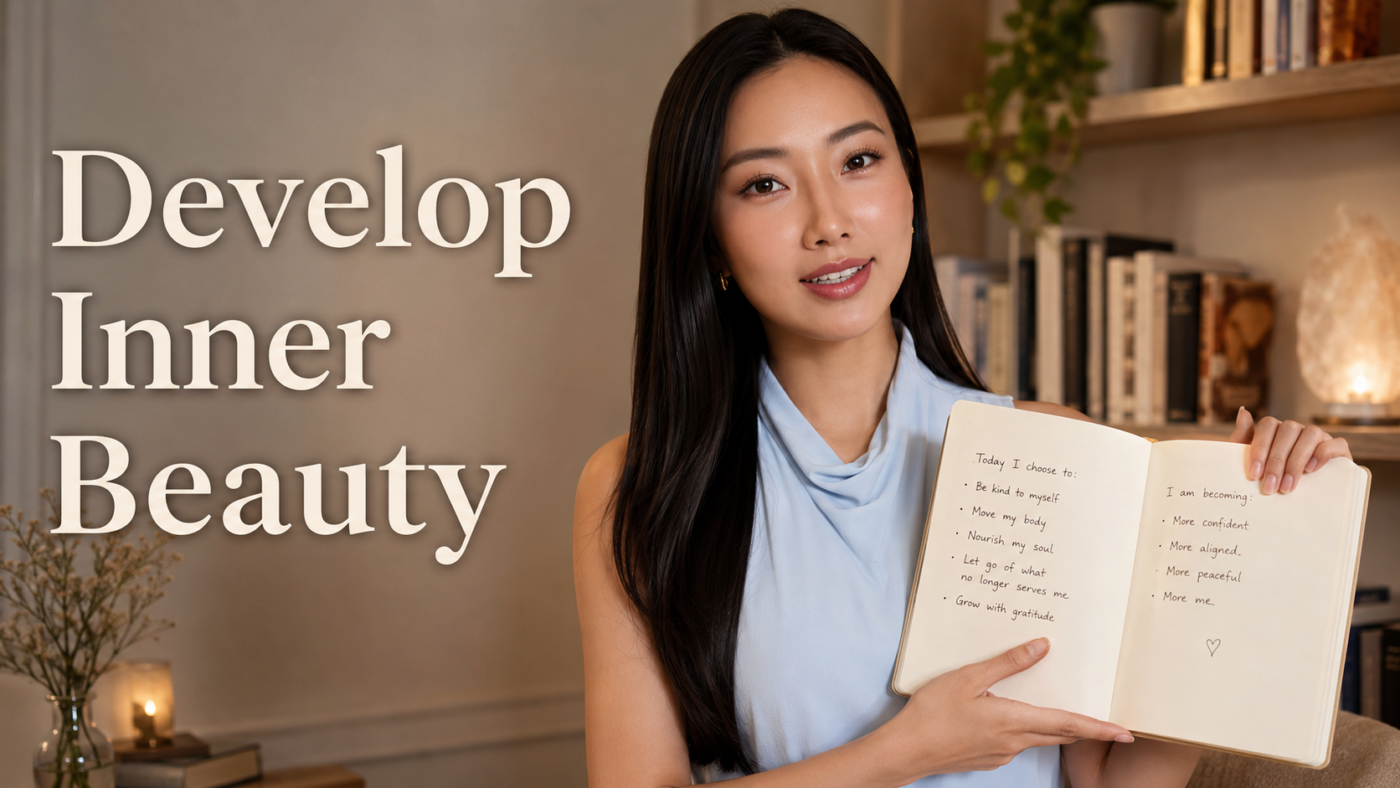
4. Use Journaling to Understand Your Patterns
Journaling becomes especially useful when it moves beyond simply recording what happened.
You can use it to notice relationships between your habits and how you feel.
Keep the system simple.
Record your sleep.
Record whether you exercised.
Note alcohol if you drink.
Record your mood.
Write down important events or sources of stress.
Then look for patterns over several weeks rather than drawing conclusions from one day.
You may notice that poor sleep often appears before difficult mornings.
You may discover that certain social situations consistently leave you energized while others drain you.
Perhaps exercise days are associated with better mood.
Perhaps late night work makes it harder to unwind.
These observations are not medical diagnoses, but they can make your lifestyle less automatic.
Instead of saying, “I always feel terrible for no reason,” you begin asking more useful questions.
What changed?
What have I been doing differently?
What helps?
What repeatedly makes things harder?
That is a practical form of self awareness.
Journaling should not become obsessive measurement. You do not need to score every meal, emotion or interaction.
Use it to understand your life, not to turn your life into a spreadsheet.
5. Treat External Self Care as Maintenance, Not Perfection
Once internal habits are established, external grooming can become something much healthier than appearance anxiety.
It becomes maintenance.
Clean hair, comfortable skin, healthy teeth, cared for hands and clothing that suits the situation can all contribute to feeling prepared and confident.
But none of these requires perfection.
Hair Care
Wash your hair according to your scalp, hair type, activity level and styling habits.
Some people feel best washing daily. Others do well with less frequent washing.
There is no universal schedule.
Clarifying shampoos may be helpful when styling products accumulate, but they can also feel drying if overused. Your routine should respond to your own hair rather than someone else’s product schedule.
Skin Care
A complicated routine is rarely necessary.
A basic routine can include:
Gentle cleansing.
Moisturizer according to your skin type.
Broad spectrum sunscreen with SPF 30 or higher during sun exposure.
Additional products such as vitamin C, retinoids or other active ingredients can be added according to individual goals and tolerance.
Eye cream is optional. The skin around the eyes is delicate, but everyone does not need a separate expensive product. In many cases, a suitable moisturizer and sun protection remain more important.
Consistency usually beats owning a bathroom full of products.
Body Care
Dry skin often benefits from regular moisturizer, especially after bathing.
Lip balm may help when lips are dry.
Again, the goal is comfort and skin barrier support rather than constantly correcting perceived imperfections.
Oral Care
Good oral hygiene is one of the most practical forms of grooming because it is also an important health habit.
Brush your teeth thoroughly twice daily and clean between the teeth once a day with floss or another appropriate interdental cleaner.
Persistent bad breath should not automatically be blamed on the gut.
It can be associated with dental plaque, gum disease, dry mouth, smoking, certain foods, tonsil problems or other medical and dental causes.
If bad breath persists despite good oral hygiene, a dentist or healthcare professional can help identify the reason.
Yogurt can be part of a healthy diet, but it should not be presented as a treatment for chronic bad breath.
Nail Care
Healthy nails do not need polish.
Keep them clean and trimmed and moisturize dry surrounding skin.
Frequent gel manicures, aggressive removal or repeated filing may weaken nails in some people. If nails become brittle or damaged, reducing cosmetic treatments for a period may be sensible.
The purpose of nail care is cleanliness and comfort, not maintaining perfect polish every week.
Do Not Turn Self Care Into Appearance Competition
There is a point at which self care stops being care and becomes constant self surveillance.
Social media makes that transition particularly easy.
Someone will always appear younger, thinner, wealthier, more fashionable or more polished.
If your entire sense of progress depends on comparing your appearance with other people, there is no finish line.
Inside out self care offers a different standard.
Can you move comfortably?
Are you taking care of your health?
Are you sleeping adequately?
Are you learning?
Are you becoming more aware of your emotions?
Do you treat people well?
Do your grooming habits make you feel comfortable rather than anxious?
Those questions provide a much more stable foundation for confidence.
Let Personal Style Develop Instead of Chasing Every Trend
Clothing can be enjoyable without becoming another form of pressure.
Rather than automatically adopting whatever style is currently popular, pay attention to what consistently works for you.
Consider fit.
Comfort.
Color.
Climate.
Occasion.
Lifestyle.
Personal preference.
Over time, this creates something more useful than trend following: a recognizable personal style.
The same principle applies to makeup and fragrance.
Makeup is optional.
A person does not owe other people cosmetics in order to look respectable.
If you enjoy makeup, use as much or as little as makes you comfortable.
Fragrance is also personal, but remember that strong scents can trigger discomfort, headaches or respiratory symptoms in some people. In shared spaces, moderation is considerate.
Refinement Is Also How You Treat Other People
A polished appearance means very little if it is combined with dismissive behavior.
Everyday interactions reveal more about a person than expensive clothing.
How do you speak to restaurant staff?
How do you treat cleaners?
Do you listen when another person speaks?
Do you dominate conversations?
Do you notice when somebody is being excluded?
Do you respect other people’s space?
Etiquette is most useful when understood this way.
It is not a competition over which fork someone knows how to use.
It is awareness of how your behavior affects the people around you.
Dining etiquette can therefore be reduced to several useful principles.
Eat in a way that does not unnecessarily disturb others.
Use your napkin appropriately.
Take manageable bites.
Avoid speaking with food in your mouth.
Be present in the conversation.
Respect cultural differences.
Treat restaurant staff courteously.
Formal rules vary across countries and cultures. Consideration travels much better.
Communication Is Part of Self Care Too
Good communication begins before words leave your mouth.
It begins with knowing what you are trying to say.
When thoughts feel scattered, speech often becomes scattered as well.
Before an important conversation, identify your main point.
Then identify two or three pieces of supporting information.
Slow down.
Allow pauses.
Listen to the response instead of preparing your next sentence while the other person is talking.
You can also practice by reading aloud and recording yourself.
Listen for clarity rather than trying to imitate a particular accent.
Notice whether you rush.
Notice whether important words receive enough emphasis.
Notice whether your voice sounds unnecessarily tense.
Communication becomes more refined when it becomes more deliberate.
Why Small Habits Beat Occasional Extremes
One of the easiest ways to abandon self improvement is to begin with an impossible routine.
Three hours at the gym.
Fifty pages every evening.
Thirty minutes of meditation.
A complicated fifteen product skincare routine.
Perfect meals every day.
Then life gets busy.
Everything disappears.
A more sustainable approach is deliberately less dramatic.
Walk for twenty minutes.
Read for ten.
Meditate for five.
Clean your teeth properly.
Apply sunscreen.
Write three sentences in a journal.
Go to bed at a reasonable time.
Repeat.
These actions do not look transformative in a single day.
That is precisely why they work as lifestyle habits.
They are small enough to survive ordinary life.
A Simple Daily Inside Out Routine
Morning can begin with a few minutes without immediately checking social media.
Move your body.
Get ready with a simple grooming routine.
During the day, make time for deliberate learning rather than only passive consumption.
Eat normally and move regularly.
Interact with other people thoughtfully.
In the evening, briefly reflect on the day.
What worked?
What did not?
What do you want to repeat tomorrow?
Then allow yourself to stop optimizing.
Rest is part of self care too.
Frequently Asked Questions
What are the most important self care habits for mind and body?
Regular movement, adequate sleep, balanced nutrition, stress management, meaningful relationships, appropriate personal hygiene and time for recovery provide a stronger foundation than complicated wellness routines.
Can meditation improve emotional control?
Mindfulness may help some people become more aware of thoughts and emotional responses, but it does not guarantee complete emotional control and should not replace appropriate mental healthcare when needed.
Is journaling good for mental health?
Journaling can help some people organize thoughts, reflect on experiences and identify patterns. Its effects vary, and it is not a substitute for professional care when significant psychological symptoms are present.
Do I need to exercise every day?
No. You can spread activity across the week. A common adult guideline is at least 150 minutes of moderate intensity activity per week plus muscle strengthening on at least two days.
Should I stretch every day?
Gentle mobility work may be appropriate for many people, but flexibility needs vary. Avoid forcing extreme stretches, especially without adequate preparation.
Do I need expensive skincare to look well groomed?
No. Gentle cleansing, moisturizing when needed and effective sun protection can form a strong basic routine.
Is eye cream necessary?
Not necessarily. Some people enjoy specialized eye products, but a separate eye cream is not universally required.
Does yogurt cure bad breath?
No. Persistent bad breath can have many causes and should not be treated simply by eating yogurt.
Does makeup make someone more refined?
No. Makeup is a personal choice. Cleanliness, health, appropriate grooming and respectful behavior matter much more than cosmetics.
How long does it take to build better habits?
There is no universal timetable. Habit formation depends on the behavior, environment and individual. Focus on making a behavior easy enough to repeat rather than chasing a specific number of days.
Bottom Line
Personal refinement is not a makeover.
It is the gradual development of a healthier, more aware and more intentional way of living.
Train your mind through learning.
Support your body through regular movement.
Create quiet moments for reflection.
Pay attention to your emotional patterns.
Maintain your skin, hair, teeth and nails without turning grooming into perfectionism.
Communicate thoughtfully.
Treat people well.
And above all, choose habits that you can continue when life is ordinary, busy and imperfect.
The strongest version of self care is not the one that produces the most dramatic transformation photograph.
It is the one that quietly improves the way you live.
Affiliate Disclosure
This article may contain affiliate links. If you purchase through one of these links, we may earn a small commission at no additional cost to you. Affiliate relationships do not influence our commitment to providing balanced and educational wellness information.
Medical Disclaimer
This article is for general educational and informational purposes only and is not intended to diagnose, treat, cure or prevent any disease or medical condition. Individual exercise, skincare and mental wellness needs vary. People with persistent anxiety, depression, pain, skin problems, oral health concerns or other ongoing symptoms should consult an appropriately qualified healthcare professional.
This article is for general education and does not replace individualized care from a qualified health professional. Seek appropriate advice for persistent, severe, or concerning symptoms.
Read the full medical disclaimer