You wake up, look in the mirror and immediately notice it.
Your cheeks look fuller. Your eyes seem swollen. Your jawline appears softer than it did the night before.
Social media may call this cortisol face, lymphatic congestion or even toxins trapped in the face.
The reality is usually more complicated.
Temporary facial puffiness can be influenced by sodium intake, sleep quality, hydration, alcohol, allergies, hormonal changes, sleeping position and normal shifts in body fluid.
Some people simply retain more visible fluid around the eyes and cheeks than others.
Although stress can indirectly influence your appearance by disrupting sleep, eating habits and daily routines, a puffy face alone does not prove that your cortisol level is too high.
The good news is that many everyday causes of mild morning puffiness can be addressed with surprisingly simple habits.
You do not necessarily need an expensive treatment.
You need consistency.
Why Does Your Face Look Puffy in the Morning?
Facial puffiness usually involves temporary accumulation of fluid within the tissues.
When you are lying down for several hours, gravity no longer pulls fluid toward the lower body in the same way it does when you are standing.
This can make fluid around the face and eyes more noticeable after waking.
A salty dinner can amplify the effect.
Poor sleep may also indirectly contribute by changing appetite, food choices, stress levels and daily activity.
Your face can therefore become a surprisingly visible reflection of what happened during the previous 24 hours.
Think about your own routine.
Did you eat a very salty restaurant meal?
Did you sleep only five hours?
Did you spend most of the previous day sitting?
Did you drink alcohol late at night?
Are seasonal allergies bothering you?
Did you go to bed immediately after a large meal?
The answer may be much more useful than searching for the newest facial detox.
What Traditional Chinese Medicine Calls Dampness
Traditional Chinese Medicine uses the concept of dampness to describe patterns that may include sensations such as heaviness, bloating, sluggishness and puffiness.
Within the traditional TCM framework, practitioners may discuss digestion, movement, food choices and daily habits when addressing these patterns.
It is important to separate traditional terminology from modern medical diagnosis.
TCM dampness is not the same thing as medically diagnosed edema, lymphatic disease or another specific biomedical condition.
The most useful approach is to appreciate the traditional lifestyle philosophy without turning it into an unsupported medical claim.
Interestingly, many of the everyday habits traditionally emphasized for maintaining balance overlap with modern wellness advice.
Eat reasonably.
Stay active.
Sleep consistently.
Avoid excessive indulgence.
- Start the Morning Without Immediately Entering Stress Mode
Many people open their eyes and immediately reach for their phones.
Emails.
Messages.
News.
Notifications.
Social media.
Within minutes, the brain has gone from sleep to information overload.
Instead, experiment with protecting the first 10 minutes of your morning.
You might sit quietly, breathe slowly, stretch or simply notice your surroundings before checking notifications.
Meditation is optional.
The goal is not to perform a perfect mindfulness ritual.
The goal is to avoid starting every morning in a highly reactive state.
Try slow breathing for several minutes if formal meditation does not appeal to you.
A calmer morning may make it easier to maintain better choices throughout the rest of the day.
- Pay Attention to Sodium Before Blaming Your Hormones
One of the simplest explanations for feeling unusually puffy after eating is sodium.
Salt helps regulate fluid balance, but consuming large amounts can temporarily increase water retention in susceptible people.
Restaurant meals, packaged snacks, instant noodles, processed meats, sauces, takeout foods and many frozen meals can contain surprisingly large amounts of sodium.
You do not have to eliminate salt completely.
Instead, look at your overall pattern.
A meal based on vegetables, fruit, legumes, whole grains, eggs, fish, lean protein and minimally processed foods will generally give you much more control over sodium than heavily processed food.
Also be careful with the healthy food label.
A salad covered in salty dressing, processed meat, cheese and packaged toppings can contain far more sodium than expected.
Your body responds to the ingredients, not the marketing.
- Improve Sleep Before Buying Another Beauty Treatment
Sleep may be one of the most underrated beauty habits.
When sleep is consistently inadequate, appetite and food preferences can change.
People may become more interested in highly palatable and calorie dense foods, which can make maintaining a balanced diet more difficult.
Poor sleep also affects energy.
When you are exhausted, you are less likely to walk, exercise, cook or maintain your normal routine.
That creates a cycle.
Poor sleep leads to lower energy.
Lower energy makes movement and healthy eating harder.
Less movement and poorer food choices can make you feel sluggish and uncomfortable.
That discomfort may then interfere with another night of good sleep.
Breaking the cycle does not require perfection.
A consistent sleep and wake time is a powerful place to begin.
As evening approaches, dim the lights and reduce exposure to stimulating content.
Your nervous system needs a transition between the intensity of the day and sleep.
- Move Your Body Every Day
Movement helps circulation and is one of the simplest ways to prevent long periods of physical inactivity.
You do not need to obsess over achieving exactly 10,000 steps.
The more important goal is to avoid remaining almost completely sedentary for hours at a time.
Walk after meals.
Stretch between work sessions.
Stand up regularly.
Take the stairs when practical.
Go outside for a short walk.
Exercise according to your ability.
Five thousand steps are better than two thousand if two thousand is your current baseline.
Eight thousand steps are better than spending the entire day sitting because you could not achieve a perfect ten thousand.
Consistency wins.
- Make Water Your Default Drink
Hydration does not magically flush toxins from the face, but maintaining normal hydration supports your body’s normal physiological functions.
Many people unintentionally replace water with sweetened coffee drinks, soda, energy drinks or other calorie heavy beverages.
Making plain water your default immediately simplifies the situation.
If you prefer something warm, try unsweetened tea or a simple fruit infusion.
A Gentle Green Apple and Lemon Drink
One traditional inspired option is a warm apple and lemon infusion.
Simmer sliced green apple in water until softened.
Allow the drink to cool slightly, then add a small amount of fresh lemon according to taste.
Do not add sugar if your purpose is to replace sweet drinks.
This should be viewed as a pleasant hydration option rather than a medical treatment.
Apple contains soluble fiber including pectin, but you will obtain much more of that fiber by actually eating the cooked apple rather than drinking only the strained water.
Lemon can add flavor and vitamin C, but lemon water should not be promoted as a detoxification treatment, liver cleanse or cure for fluid retention.
Your liver and kidneys already perform the body’s major waste processing functions.
- Try Gentle Facial Massage for Temporary Puffiness
The lymphatic system helps transport fluid throughout the body.
Because lymphatic vessels are relatively superficial, lymphatic style massage should generally be gentle rather than aggressive.
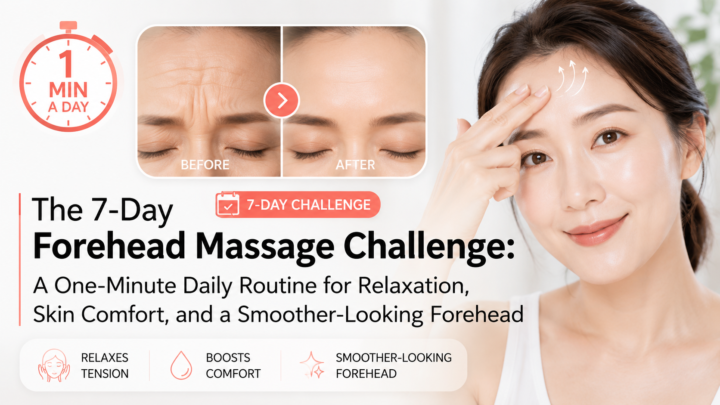
For ordinary temporary morning puffiness, a short facial massage may help some people feel less swollen.
The effect is usually temporary.
It does not permanently change facial anatomy or remove facial fat.
A Simple Three Part Routine
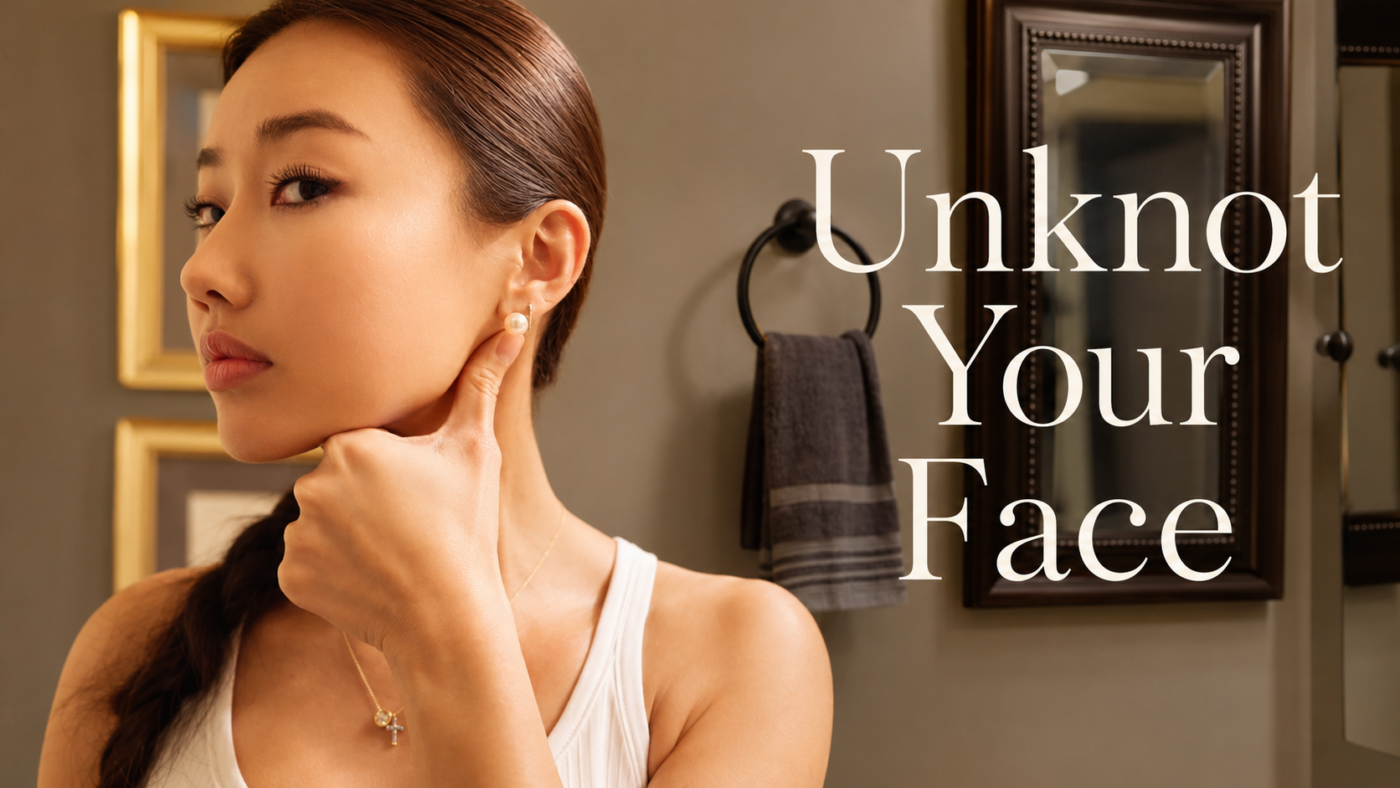
First, relax the jaw.
Clench your teeth gently and locate the masseter muscles near the back of your jaw.
Release your teeth.
Using your fingertips, gently massage the area with small circular movements.
People who clench or grind their teeth may hold significant tension here.
Do not use painful pressure.
Next, sweep along the jawline.
Using clean fingers and very light pressure, glide from the center of the chin outward toward the ears.
Repeat several times.
The skin should move gently without aggressive scraping or pulling.
Finally, move gently toward the neck and collarbone.
From the area below and behind the ears, use very light downward strokes toward the lower neck and collarbone.
Do not deeply press, pinch or massage the front or sides of your neck.
More pressure does not mean better drainage.
If an area is painful, stop.
What About Under Eye Puffiness?
Use particularly light pressure around the eyes.
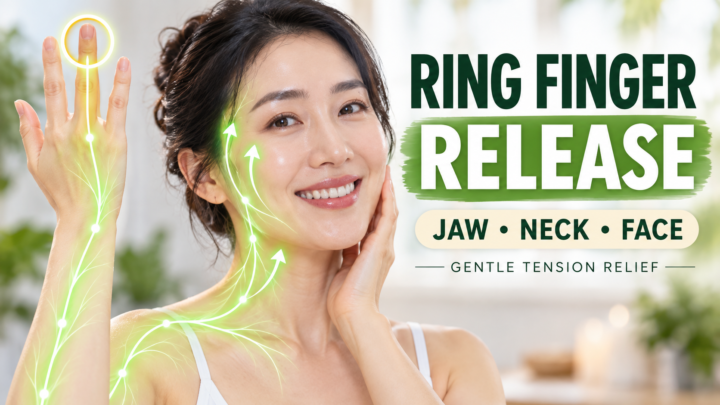
With your ring finger, gently trace along the orbital bone rather than pressing directly into the eye.
Move from the inner area outward toward the temples.
This may temporarily improve the appearance of morning swelling in some people.
However, dark circles are different.
Dark circles can be influenced by genetics, pigmentation, allergies, thin skin, visible blood vessels and facial anatomy.
Massage cannot reliably erase pigmentation or genetically determined under eye darkness.
- Reduce Evening Overstimulation
A surprisingly effective wellness intervention may simply be deciding what you will not consume.
That includes information.
Constant scrolling can keep your attention activated long after your body wants to wind down.
Try creating an evening boundary.
Reduce social media.
Turn off unnecessary notifications.
Dim your lights.
Play relaxing music.
Read.
Stretch.
Talk with someone you care about.
Drink an unsweetened warm beverage.
None of these behaviors directly drains cortisol from your face.
Their value comes from helping you create a healthier transition into sleep, which can support a much larger network of healthy behaviors.
The Lifestyle Connection Matters More Than Any Single Hack
Facial massage can be pleasant.
A warm apple drink can be comforting.
A cold roller may temporarily reduce the appearance of swelling.
But none of these should distract you from the foundation.
If you sleep badly every night, eat highly processed salty food every day, barely move and spend your evenings overstimulated by screens, a five minute facial routine cannot compensate for the entire pattern.
Think in systems rather than hacks.
Your sleep affects your appetite.
Your appetite affects your food choices.
Your food choices influence how you feel.
How you feel influences whether you exercise.
Movement can influence sleep.
And sleep begins the cycle again.
Improving one part can make the others easier.
A Simple Daily Anti Puffiness Routine
Morning
Drink water after waking.
Avoid immediately checking stressful notifications.
Take several slow breaths or spend a few quiet minutes before starting the day.
Do two to five minutes of gentle facial massage if you enjoy it.
Eat a balanced breakfast if breakfast fits your routine.
During the Day
Make minimally processed foods the foundation of most meals.
Be mindful of excessive sodium.
Drink water according to thirst and individual needs.
Walk and move regularly.
Avoid sitting uninterrupted for many hours.
Evening
Avoid an extremely salty meal close to bedtime.
Reduce alcohol if you notice that it makes you look or feel puffy.
Dim lights as bedtime approaches.
Reduce stimulating social media and news.
Aim for a consistent sleep schedule.
Simple does not mean ineffective.
Repeated daily habits often matter more than dramatic interventions performed occasionally.
When Facial Swelling Should Not Be Treated as a Beauty Problem
Not every swollen face is ordinary morning puffiness.
Seek medical evaluation if facial swelling is severe, sudden, persistent, unexplained or worsening.
Urgent medical attention may be necessary when swelling occurs together with difficulty breathing, difficulty swallowing, swelling of the tongue or throat, severe allergic symptoms, faintness or other signs of a serious reaction.
You should also talk with a healthcare professional if recurrent swelling occurs alongside significant swelling elsewhere in your body or if you have known heart, kidney, liver or lymphatic conditions.
Persistent facial swelling deserves a diagnosis rather than another beauty hack.
Frequently Asked Questions
Can high cortisol cause a puffy face?
Certain medical conditions involving prolonged excessive cortisol can change fat distribution and facial appearance.
However, ordinary morning facial puffiness should not automatically be labeled cortisol face.
Stress may indirectly affect appearance through sleep, diet and behavior, but facial puffiness alone cannot diagnose abnormal cortisol levels.
Does lymphatic drainage make your jawline sharper?
Gentle massage may temporarily reduce superficial fluid accumulation and puffiness, which can make facial contours appear slightly more defined.
It does not permanently reshape your jawbone or remove facial fat.
Can salt make your face puffy?
Yes.
Higher sodium intake can contribute to temporary fluid retention in some people.
If you repeatedly notice facial puffiness after very salty meals, reducing excessive sodium is a reasonable experiment.
Does drinking more water eliminate facial swelling?
Normal hydration is important, but drinking extreme amounts of water is unnecessary and can be dangerous.
Hydration is only one part of the picture.
Does apple and lemon water reduce facial puffiness?
There is no good evidence that apple and lemon water specifically treats facial swelling.
It can, however, be an enjoyable unsweetened drink that helps replace sugary beverages.
Eating the apple itself also provides fiber.
Can facial massage remove dark circles?
Massage may temporarily reduce under eye puffiness, but dark circles often have other causes including genetics, pigmentation, allergies and facial anatomy.
It should not be considered a cure.
How quickly can facial puffiness improve?
Mild morning puffiness may improve naturally after getting out of bed and moving around.
If sodium, sleep or another lifestyle factor contributes, improvements may become noticeable when the underlying habit changes.
Persistent or unexplained swelling should be medically evaluated.
Bottom Line
A less puffy face usually does not come from one miraculous drink, one massage technique or one viral cortisol detox.
Start with the basics.
Sleep consistently.
Be mindful of excessive sodium.
Eat mostly minimally processed foods.
Move every day.
Stay normally hydrated.
Create calmer mornings and evenings.
Use facial massage gently if it feels good.
These habits may not produce the dramatic promises seen on social media, but they are far more useful for building sustainable health and well-being.
When you feel healthier overall, your face often reflects it.
Affiliate Disclosure
This article may contain affiliate links. If you purchase through one of these links, we may earn a small commission at no additional cost to you.
Affiliate relationships do not influence our commitment to providing balanced, educational wellness information.
Medical Disclaimer
This content is for general educational and informational purposes only and is not intended to diagnose, treat, cure or prevent any disease or medical condition.
Traditional Chinese Medicine concepts discussed in this article represent traditional wellness frameworks and should not be interpreted as modern medical diagnoses.
Facial swelling can occasionally be associated with medical conditions that require professional evaluation.
Always consult a qualified healthcare professional regarding persistent, severe or unexplained symptoms.
This article is for general education and does not replace individualized care from a qualified health professional. Seek appropriate advice for persistent, severe, or concerning symptoms.
Read the full medical disclaimer