Floor sitting exercises can be a surprisingly useful way to bring more movement back into the hips, knees, ankles and spine. Modern life encourages us to spend hours in chairs, cars and sofas, often with the hips and knees held in nearly the same position. Over time, some people may notice that getting down to the floor, squatting, kneeling or standing back up feels much harder than it once did.
That does not necessarily mean the body has permanently lost its mobility. Strength, flexibility, balance and coordination remain trainable throughout life. The key is to expose the body to different positions gradually rather than forcing joints into ranges they are not ready for.
Floor sitting is not a miracle cure for back pain or knee pain, but it can provide something many adults lack: movement variety.
Why Floor Sitting Can Challenge Your Body
A chair supports much of your body and keeps the hips and knees in a relatively narrow range of motion. Sitting on the floor is different.
Depending on the position you choose, your hips may need to rotate, your ankles may need to flex, your trunk may work harder to stay upright and your legs may need to help you change positions.
That is why simply sitting comfortably on the floor can initially feel like an exercise.
Regularly changing positions may help maintain functional movement, especially when combined with walking, resistance training and other forms of physical activity.
The goal is not to force yourself into a perfect yoga pose. The goal is to regain options.
1. Start With Supported Floor Sitting
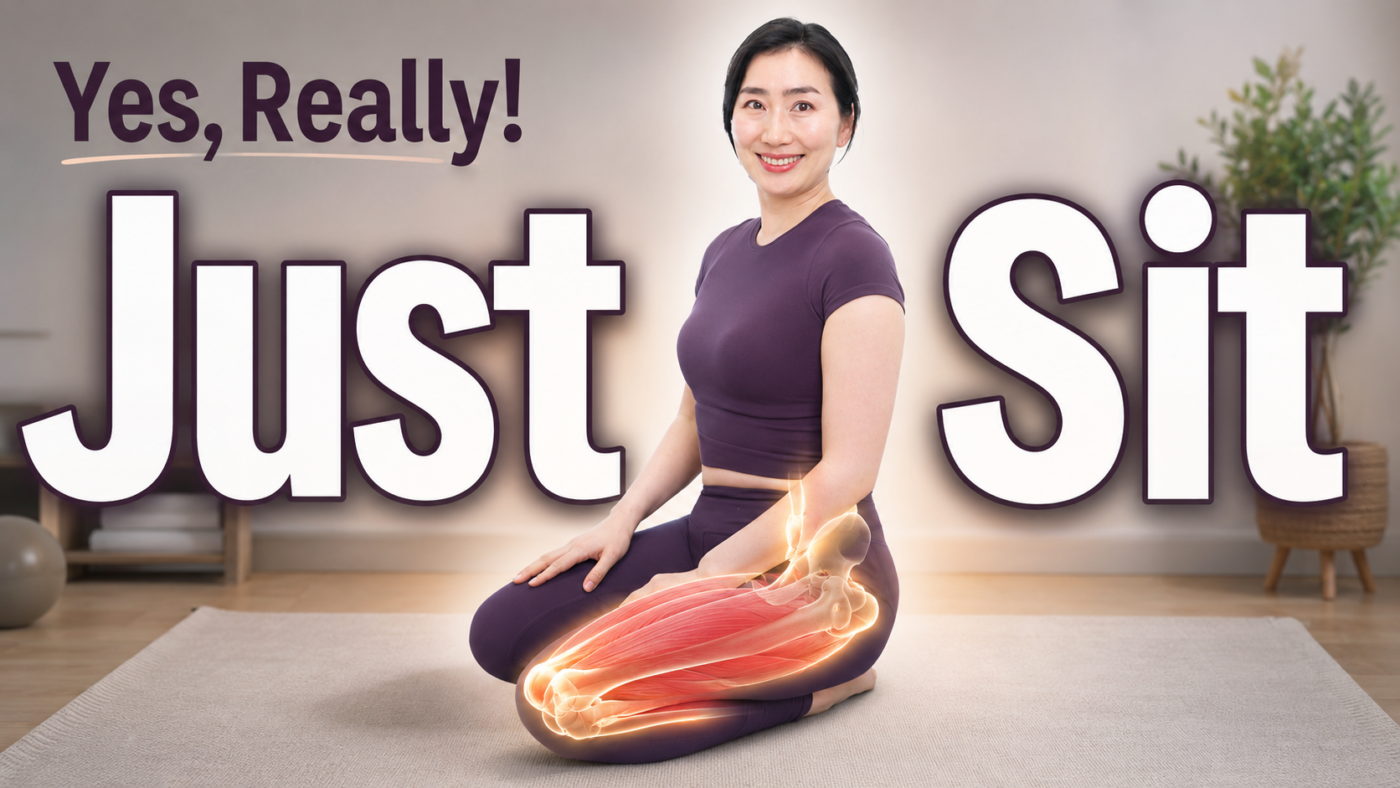
The easiest of these floor sitting exercises is simply sitting comfortably on the floor.
Sit on a folded blanket, firm cushion or yoga block if your hips feel tight. Elevating the pelvis often makes it easier to keep the spine in a comfortable upright position.
You can place both legs loosely in front of you or sit cross-legged if that feels natural.
Stay for 30–60 seconds while breathing normally.
If your knees are much higher than your hips, do not push them toward the floor. Increase the height of your cushion instead.
Over time, you may notice that the position becomes easier without aggressive stretching.
2. Try Gentle Knee and Thigh Tapping
The routine in the original video uses light tapping around the thighs and knees before deeper floor positions.
Gentle tapping may feel warming or relaxing and can increase sensory awareness of the area. Some people find that this makes movement feel easier afterward.
However, claims that tapping directly “releases fascia,” resets the pelvis or produces clinically meaningful increases in osteocalcin are not well established.
Think of tapping as a warm-up rather than a medical treatment.
Using relaxed hands, gently tap the muscles above and around the knee for 20–30 seconds.
Avoid striking the kneecap itself aggressively.
The sensation should feel comfortable, not painful.
3. Practice Supported Seiza
Seiza is a traditional Japanese kneeling position in which the hips rest toward the heels.
It requires considerably more knee and ankle mobility than sitting in a chair, so beginners should modify it.
Kneel on a padded surface and place one or more cushions between your hips and heels. Allow the cushions to carry enough weight that your knees remain comfortable.
Sit tall and breathe slowly.
Try 20–30 seconds initially.
As your mobility improves, you may gradually reduce the amount of support.
Never force Seiza through sharp knee pain.
For some people with significant knee arthritis, previous knee surgery or other joint conditions, another sitting position may be more appropriate.
4. Explore Kiza Carefully
Kiza is another kneeling position, but the toes are tucked underneath the feet.
This places more demand on the toes, feet and ankles.
Begin on a thick exercise mat. Kneel and tuck the toes underneath you. Keep most of your body weight supported by cushions if necessary.
Hold briefly while breathing normally.
Even 10–20 seconds may be enough for beginners.
Tight feet and ankles are extremely common, particularly among people who wear structured footwear most of the day. Gradually exposing the feet to different positions can help maintain mobility, but pain is not required for progress.
5. Work Toward a Supported Resting Squat
A deep resting squat requires coordinated mobility through the ankles, knees and hips.
If your heels lift from the floor, that does not mean you have failed.
Place a folded towel, book-sized exercise block or wedge underneath the heels. You can also hold a sturdy chair, countertop or railing.
Slowly lower into a comfortable squat.
Keep your knees tracking generally in the same direction as your toes.
Hold for 10–30 seconds.
If comfortable, gently shift your weight from side to side.
As your ankle and hip mobility improves, you may gradually reduce the amount of heel elevation or hand support.
Why Getting Down to the Floor Matters
The ability to move between standing and the floor involves several physical qualities at once:
strength, balance, joint mobility, coordination and confidence.
These abilities become increasingly important with age because everyday independence depends on more than cardiovascular fitness alone.
Being able to squat, kneel, bend, reach and stand up comfortably can make gardening, playing with grandchildren, household tasks and many recreational activities easier.
Floor sitting therefore should not be thought of as one magical posture.
It is better viewed as movement practice.
Floor Sitting and Back Pain
Sitting in any single position for hours can become uncomfortable, whether that position is on a chair or the floor.
There is no universally perfect sitting posture.
For many people, the better strategy is to change positions regularly.
You might spend some time in a chair, stand for a while, walk, sit on the floor and then move again.
Movement variety is often more practical than trying to maintain one “perfect” posture all day.
If floor sitting increases back pain, use additional support or choose another position.
Can Older Adults Practice Floor Sitting Exercises?
Many can, but the progression should match the individual.
Someone who has not sat on the floor for decades should not suddenly force themselves into a deep squat or prolonged kneeling position.
A better progression might be:
chair sitting → elevated floor sitting → supported kneeling → supported squat → progressively lower positions.
Strength training is also important.
Hip, thigh and core strength help you lower yourself toward the floor and stand back up safely.
A Simple 5-Minute Floor Mobility Routine
Try this sequence once a day:
1 minute: Supported floor sitting
30 seconds: Gentle thigh and knee tapping
1 minute: Comfortable cross-legged sitting
30 seconds: Supported Seiza
30 seconds: Supported Kiza
30 seconds: Supported resting squat
1 minute: Relaxed breathing and easy hip movement
There is no prize for getting lower.
Use enough cushions, blocks or furniture support to keep every position comfortable.
Consistency matters more than intensity.
When to Stop
Stop the exercise if you experience sharp pain, sudden swelling, locking of a joint, numbness, significant instability or symptoms that worsen rather than settle.
People recovering from knee, hip or spine surgery, or those with significant arthritis or balance problems, may benefit from individualized advice from a physical therapist or other qualified healthcare professional.
The Bigger Lesson: Keep Your Movement Options
Aging does not require giving up every position you enjoyed when you were younger.
But maintaining those movements usually requires practicing them.
Walk.
Squat.
Reach.
Rotate.
Get down to the floor when appropriate.
Get back up.
Strengthen your legs.
Move your ankles.
Use your hips.
Your body responds to what you repeatedly ask it to do.
Floor sitting is simply one accessible way to keep asking.
FAQ
Are floor sitting exercises good for mobility?
They can help expose the hips, knees, ankles and trunk to ranges of motion that may not occur frequently when sitting in chairs. They work best as part of a broader program that includes strength and aerobic exercise.
How long should I sit on the floor?
Beginners can start with 1–5 minutes using cushions or other support. Gradually increase the duration if the position remains comfortable.
Should my knees touch the floor when sitting cross-legged?
No. There is no requirement for the knees to reach the floor. Elevating the hips with a cushion often makes the position more comfortable.
Can floor sitting help lower back stiffness?
Changing positions and gently moving the hips and spine may help some people feel less stiff, but persistent or severe back pain should be evaluated appropriately.
Is knee tapping scientifically proven to loosen fascia?
There is not strong evidence that simple knee tapping mechanically “releases” fascia or resets the pelvis. Gentle tapping may nevertheless feel warming, relaxing and useful as a movement warm-up.
Medical Disclaimer
This article is for educational purposes only and is not medical advice. Exercise tolerance varies between individuals. Stop if you experience sharp pain, swelling, numbness, dizziness or instability, and consult a qualified healthcare professional if you have an injury, medical condition or concerns about beginning a new exercise routine.
This article is for general education and does not replace individualized care from a qualified health professional. Seek appropriate advice for persistent, severe, or concerning symptoms.
Read the full medical disclaimer