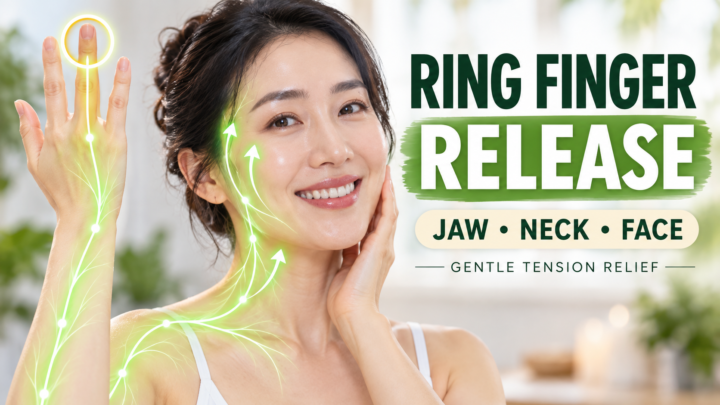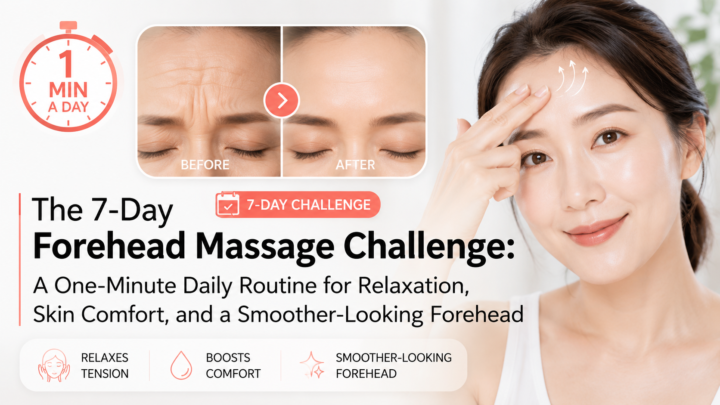
Facial fascia massage has become increasingly popular among people looking for a gentler way to address facial tension, jaw tightness, scalp stiffness and the tired appearance that can accompany long hours at a desk or on a phone. Rather than concentrating only on the cheeks or forehead, many routines work from the upper chest and shoulders toward the neck, scalp and face.
There is a sensible reason for looking beyond the face itself. Facial expression, head position, jaw movement and shoulder posture are all influenced by muscles and connective tissues extending well beyond the cheeks. A tense upper body does not literally “drag the face downward” in the dramatic way sometimes claimed online, but chronic muscle tension can affect posture, comfort and the way the face appears at rest.
The useful goal is therefore not to “reverse aging” or force tissues into a new position. It is to restore comfortable movement, reduce unnecessary muscular tension and give the face and upper body an opportunity to relax.
What Is Fascia?
Fascia is connective tissue that surrounds and connects muscles, nerves, blood vessels and many other structures throughout the body. It helps tissues glide against one another while contributing to structural organization and force transmission.
When people describe their fascia as “stuck,” they are often describing a combination of muscle tightness, reduced mobility, tenderness or a sensation of stiffness. Massage and movement can temporarily make these areas feel softer and easier to move.
However, fascia should not be treated as though it is a container filled with toxins that must be physically squeezed out. Nor is there good evidence that simply massaging fascia permanently lifts facial tissues or reverses biological aging.
The benefits are more realistic—and still useful: relaxation, improved comfort, increased awareness of posture and temporary changes in how tight or puffy an area feels.
Why the Chest, Shoulders and Neck Matter
People who spend hours looking down at phones or laptops often develop a forward-head posture accompanied by rounded shoulders. The muscles around the neck, upper back and chest may consequently remain in relatively fixed positions for long periods.
This can contribute to neck stiffness, shoulder discomfort and jaw tension. Some people also clench their teeth when concentrating or under stress, placing additional demand on the muscles around the jaw and temples.
Because these areas function together, addressing only the face may miss an important part of the picture.
A gentle routine that begins at the upper body and gradually moves toward the face may therefore feel more comfortable than aggressively rubbing individual wrinkles.
1. Start With the Upper Chest
Begin around the upper chest rather than immediately pulling at facial skin.
Place your fingertips on the muscular tissue below the collarbone and toward the outer chest. Use gentle circular movements rather than digging deeply into the tissue.
Keep breathing normally and allow your shoulders to relax.
This region can become tight in people who spend much of the day with their shoulders rounded forward. Gentle massage may increase awareness of that tension and make subsequent shoulder movement feel easier.
Avoid pressing hard over the breast tissue itself or any unexplained lump, swelling or painful area.
2. Work Around the Shoulders and Upper Back
Next, gently massage the muscles near the front and side of the shoulder and the accessible area around the upper back.
Slow shoulder circles can be particularly useful. Raise the shoulders slightly, roll them backward and let them descend naturally.
Repeat in the opposite direction.
The objective is not to “break up fascia.” Think instead about creating comfortable movement between the shoulder blades, ribs and upper arms.
If you have spent several hours sitting, even one or two minutes of relaxed shoulder movement can feel noticeably different.
3. Be Gentle Around the Collarbone
The collarbone is another area frequently included in massage routines.
Using light pressure, move your fingertips along the soft tissue above and below the collarbone without pressing forcefully.
There are important blood vessels, nerves and lymphatic structures in this region, so more pressure is not necessarily better.
A gentle touch combined with slow breathing is enough.
4. Relax the Side of the Neck Carefully
One prominent muscle running from behind the ear toward the collarbone is the sternocleidomastoid, or SCM.
It can become noticeably tense in people with forward-head posture.
You may gently touch or lightly massage the muscular portion of the side of the neck, but do not apply deep pressure to the front or side of the neck where major arteries are located.
Deep, aggressive neck massage is unnecessary and can be unsafe.
If an area feels like a distinct lump rather than normal muscle—or if you notice persistent swelling—do not attempt to massage it away. Have it medically evaluated.
5. Massage the Scalp and Temples
The scalp can also accumulate a great deal of perceived tension.
Place the pads of your fingers against the scalp and gently move the skin in small circles. Work across the sides and top of the head without scratching.
At the temples, use especially light pressure.
Scalp massage may feel relaxing and can temporarily increase local skin blood flow. It may also help people become more aware of unconscious jaw clenching.
What it cannot reliably do is permanently lift the face or guarantee thicker hair.
Think relaxation rather than transformation.
Facial Fascia Massage Around the Brows and Cheeks
Once the neck and scalp feel relaxed, move to the face.
Around the eyebrows, place the fingertips lightly against the brow bone and massage gently rather than pulling aggressively on the eyelids.
Around the cheekbones, small circular motions are preferable to forceful scraping.
The skin around the eyes is particularly delicate. Avoid strong pressure, excessive stretching or movements that cause pain.
Massage can make the face temporarily feel warmer or look slightly different because of changes in blood flow, muscle tension and fluid distribution. These effects should not be confused with permanent structural lifting.
7. Finish Around the Jaw
Jaw tension is extremely common.
Place your fingertips over the masseter muscles—the muscles that tighten when you clench your teeth—and slowly open and close your mouth.
Use gentle circular pressure while keeping the jaw relaxed.
You can also massage the temples because the temporalis muscles participate in chewing.
If you frequently wake with jaw pain, headaches or worn teeth, massage alone may not address the underlying problem. Teeth grinding or temporomandibular joint disorders may require evaluation by a dentist or other qualified clinician.
What Results Can You Realistically Expect?
A well-designed massage session may leave your face and upper body feeling looser, warmer and more comfortable.
Some people notice that their face appears less tense afterward. Temporary puffiness may also change as you move, change posture and gently manipulate superficial tissues.
These are reasonable outcomes.
Claims that massage can instantly regenerate collagen, permanently erase wrinkles, move internal “waste” out of the face or reverse decades of aging are much less well supported.
Long-term skin aging is influenced by factors including genetics, ultraviolet exposure, smoking, sleep, nutrition, hormonal changes and the natural loss of collagen and elastin with age.
Massage can complement good skin care, but it does not replace it.
Combine Massage With Better Daily Habits
For lasting improvements in how your neck and face feel, what you do throughout the day may matter more than one intense massage session.
Avoid remaining in the same position for hours. Raise screens closer to eye level when possible. Let your shoulders move regularly. Relax your jaw when you notice yourself clenching it.
For skin health, daily broad-spectrum sunscreen remains one of the most useful anti-aging habits.
Adequate sleep, regular physical activity, not smoking and using a moisturizer appropriate for your skin can also contribute to healthier-looking skin.
Massage works best as one part of that larger routine.
A Simple 5-Minute Routine
You do not need an aggressive 20-minute session every day.
Spend approximately one minute relaxing the shoulders and upper chest, one minute on comfortable neck mobility, one minute massaging the scalp and temples, one minute around the cheeks and jaw, and one final minute breathing slowly while checking that your shoulders and jaw remain relaxed.
The entire routine should feel soothing.
Pain is not evidence that the treatment is “working.”
If massage produces sharp pain, dizziness, numbness, tingling, headache or worsening symptoms, stop.
The Bottom Line
Facial fascia massage is best understood as a relaxation and mobility practice rather than a miracle face-lifting treatment.
The face does not exist in isolation. Jaw tension, head position, scalp tightness and upper-body posture can all influence how comfortable and relaxed your face feels.
By gently working from the chest and shoulders toward the neck, scalp, jaw and face, you may reduce unnecessary tension and create a softer, more rested appearance.
The most useful approach is also the simplest: gentle pressure, comfortable movement, regular practice and realistic expectations.
FAQ
Can facial fascia massage lift sagging skin?
Massage may temporarily change muscle tension, circulation and fluid distribution, making the face appear more relaxed. There is not strong evidence that massage permanently lifts age-related sagging skin.
Can facial fascia massage remove wrinkles?
It may temporarily soften the appearance of some expression-related tension, but established wrinkles are influenced by skin structure, sun exposure, collagen loss and other factors that massage alone cannot reverse.
How often can I practice facial fascia massage?
For most healthy adults, a short gentle routine several times per week is reasonable. Avoid aggressive pressure and give irritated skin time to recover.
Should facial massage hurt?
No. Mild tenderness can occur in tight muscles, but strong pain is not necessary for results. Reduce pressure or stop if massage becomes painful.
Can I massage lymph nodes in my neck?
Avoid aggressively pressing directly on lymph nodes or unexplained lumps. Gentle skin-level massage around the neck is different from forcefully manipulating swollen tissue.
Medical Disclaimer
This article is for educational purposes only and is not medical advice. Facial, neck or scalp massage should not be used to diagnose or treat medical conditions. Avoid massage over unexplained swelling, infections, recent surgery or injury, and seek medical care for persistent pain, new lumps, neurological symptoms or other concerning changes.
This article is for general education and does not replace individualized care from a qualified health professional. Seek appropriate advice for persistent, severe, or concerning symptoms.
Read the full medical disclaimer