Dazhui GV14 is a traditional acupuncture point at the base of the neck that is commonly discussed in Eastern wellness practices for seasonal neck care and relaxation.As temperatures begin to fall, many people notice that their neck and shoulders feel tighter or less comfortable, especially after long hours at a desk, prolonged phone use, or spending time in a cool environment.
Traditional Chinese wellness practices often place special importance on an acupuncture point at the base of the neck known as Dazhui, or GV14.
Historically, Dazhui has been associated with concepts such as yang energy, external cold, and the body’s defensive functions.
Modern medicine uses a very different explanation.
A cold or respiratory infection is caused by viruses—not by allowing one particular acupuncture point to become cold. More than 200 respiratory viruses can cause common-cold symptoms, with rhinoviruses among the most frequent causes.
That does not mean traditional Dazhui massage has no place in a wellness routine. Gentle warmth, touch, and movement around the neck and upper shoulders may simply be used for comfort and relaxation when the area feels stiff or tense.
What Is Dazhui, or GV14?
Dazhui is one of the acupuncture points traditionally associated with the Governing Vessel meridian.
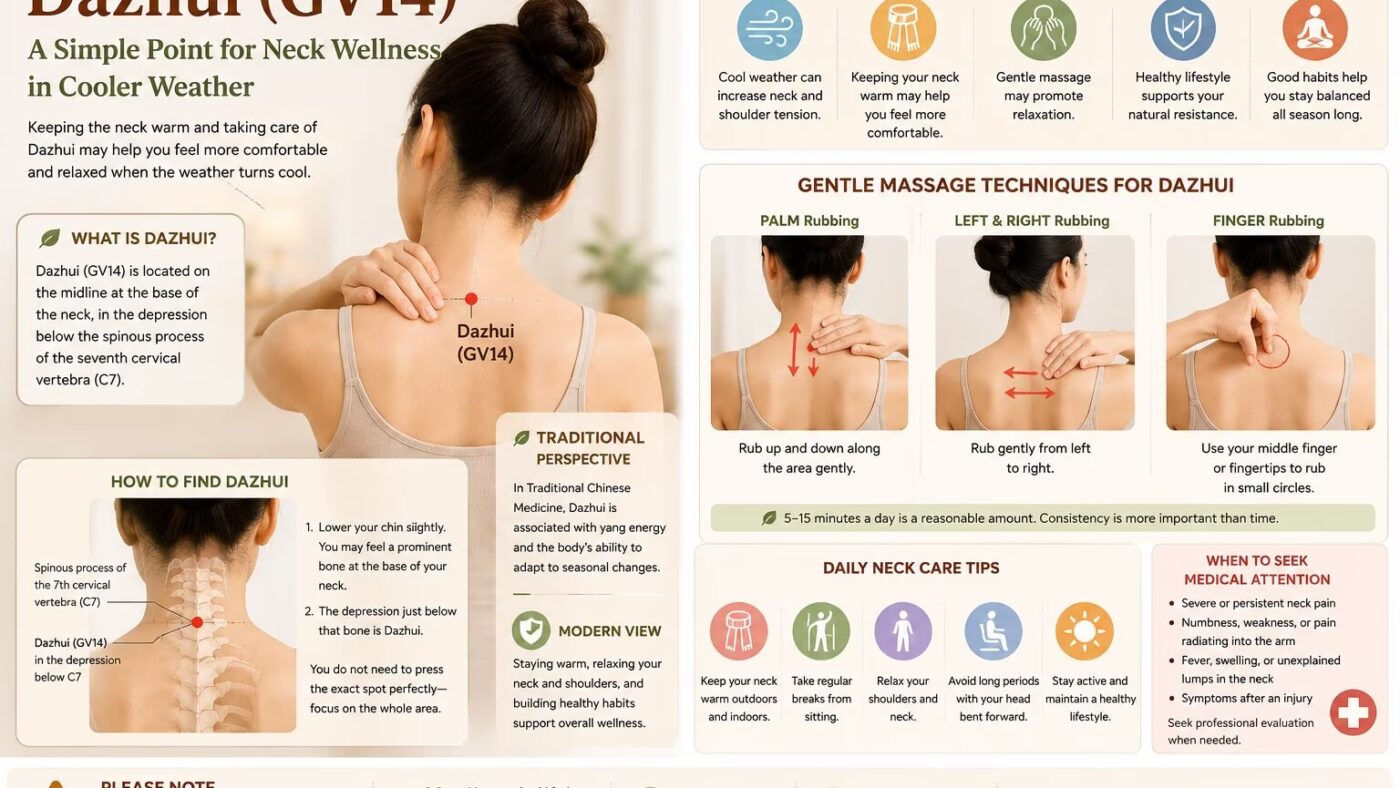
In standardized acupuncture descriptions, GV14 is located on the posterior midline at the base of the neck, in the depression below the spinous process of the seventh cervical vertebra, or C7.
If you gently bend your head forward, you may feel a prominent bony area where the neck meets the upper back.
However, identifying spinal landmarks by touch is not always as straightforward as it appears. For general self-massage, there is no need to press a single spot with extreme precision.
Think instead of the broader area around the lower neck and upper shoulders.
The Traditional Chinese Medicine Perspective
In traditional Chinese medicine, Dazhui has historically been regarded as an important meeting point associated with yang meridians.
Traditional theory may describe the area in terms of supporting yang, dispersing wind and cold, or helping the body maintain balance during seasonal changes.Gentle Dazhui GV14 massage can be incorporated into a broader neck wellness routine alongside movement, comfortable warmth, and healthy posture habits.
These concepts belong to the historical framework of traditional Chinese medicine.
They should not be interpreted literally to mean that GV14 releases a measurable form of “yang energy,” creates an immune barrier, or prevents viruses from entering the body.
Modern respiratory medicine explains colds and similar illnesses through viral infection and transmission.
Both perspectives can be discussed, but they should be clearly separated.
Can a Cold Neck Cause a Cold?
Not in the way traditional videos sometimes suggest.
Simply exposing the Dazhui area to cool air does not directly cause a viral cold.
Common colds are respiratory infections caused by viruses and can occur throughout the year.
However, feeling cold can certainly make a person uncomfortable, and cool conditions may make already tense muscles feel more noticeable.
For people with uncomplicated muscular neck discomfort, warmth is sometimes used as a self-care measure. MedlinePlus notes that warm showers, warm compresses, or heating pads may be useful for certain types of neck pain or muscle spasm.
So wearing appropriate clothing or keeping the neck comfortably warm on a chilly morning can make sense for comfort.
It just should not be described as a way to block infections.
A Gentle Dazhui Self-Massage Practice
If you enjoy traditional self-massage, the base of the neck can be treated gently.
Begin in a comfortable seated or standing position.
Relax your shoulders.
Using your fingertips or the palm of one hand, gently rub the area where the lower neck meets the upper back.
You can use small circular movements or slow strokes across the surrounding muscles.
Keep the pressure comfortable.
The goal is to create a mild sense of warmth and relaxation—not pain.
Breathe naturally while you massage.
After a short period, stop and notice whether the neck and shoulders feel more relaxed.
There is no established medical requirement to massage GV14 for exactly 15 minutes.
A few comfortable minutes may be enough for a simple self-care routine.
Avoid Pressing Directly and Aggressively on the Spine
More pressure is not necessarily better.
Do not repeatedly dig a fingertip forcefully into the bones of the cervical spine.
Massage is better directed toward the surrounding soft tissues with comfortable pressure.
Stop if the technique causes:
pain,
dizziness,
numbness,
tingling,
weakness,
headache,
or pain radiating into the shoulder or arm.
Self-massage should feel relaxing rather than something you have to endure.
Combine Massage With Gentle Neck Movement
People who spend hours using computers or phones may benefit more from changing their overall movement habits than from repeatedly pressing one acupuncture point.
If it feels comfortable, combine your self-massage with gentle movements such as slowly turning the head from side to side, relaxing and lowering the shoulders, taking regular breaks from a fixed sitting position, and doing appropriate neck and upper-back exercises.
MedlinePlus recommends regular stretching for people who spend much of the day working in the same position.
The goal is not to force the neck through a large range of motion.
Small, comfortable movements are enough.
Can Dazhui Massage Treat Cervical Spondylosis?
It should not be described that way.
Cervical spondylosis involves age-related changes in the cervical spine and may require different management depending on symptoms and severity.
Gentle massage around the neck may temporarily feel comfortable for some people, but rubbing GV14 should not be promoted as a treatment for structural cervical spine disease.
There is some evidence that acupuncture as a broader clinical intervention may help certain types of neck pain, but that evidence does not prove that self-massaging one specific point produces the same effect. NCCIH notes that acupuncture has shown potential benefit for some people with neck pain.
That distinction is important.
Acupuncture performed as a clinical intervention and casual home massage of GV14 are not the same treatment.
What About Rhinitis, Coughs, and Colds?
Dazhui is frequently promoted online for rhinitis, cough, and the common cold.
These claims should be presented cautiously.
Respiratory symptoms can result from many different conditions. Common colds are usually viral, while nasal symptoms may also arise from allergies or other respiratory disorders.
Rubbing the base of the neck may feel soothing, but there is not sufficient evidence to tell readers that GV14 massage eliminates a respiratory infection or treats rhinitis.
If you enjoy the practice, use it for comfort rather than as a substitute for appropriate care.
Dazhui Massage Does Not Prevent Heart Disease
Another claim in the original material is that failing to “protect” Dazhui may contribute to heart disease.
There is no established medical basis for that statement.
Cardiovascular health is influenced by factors such as blood pressure, blood lipids, diabetes, smoking, physical activity, diet, genetics, body weight, and many other variables.
A single acupuncture point should not be presented as a protective barrier against cardiovascular disease.
Traditional wellness practices can complement a healthy lifestyle, but they should not replace established cardiovascular prevention or treatment.
A Better Cooler-Weather Neck Routine
Rather than focusing entirely on one point, think about the whole neck and upper-back region.
On cooler days, a practical routine might include keeping yourself comfortably warm, taking regular movement breaks, gently relaxing the neck and shoulders, avoiding long periods with the head bent forward, maintaining regular physical activity, and using gentle warmth when muscular stiffness responds well to it.
Warmth is commonly used as a comfort measure for some types of muscular neck and shoulder discomfort.
Dazhui massage can simply be one optional part of that routine.
When Neck Symptoms Need Medical Attention
Not every episode of neck stiffness requires medical care.
But self-massage should not be the only response to persistent or concerning symptoms.
Seek medical evaluation if neck symptoms are severe or follow a significant injury, or if you experience persistent numbness, weakness, loss of coordination, significant pain radiating into an arm, unexplained fever, difficulty swallowing, or a new or unusual swelling in the neck.
Neck pain can have many causes, and not all of them are related to muscle tension. For example, inflammatory conditions of the thyroid can also cause neck pain and swelling.
The Bottom Line
Dazhui, or GV14, is an important point in traditional Chinese acupuncture theory and can be incorporated into a gentle neck self-care routine.
But its role should be described realistically.
Keeping the neck warm and gently massaging the area may help some people feel more comfortable and relaxed.
It does not create a scientifically established “first barrier” against disease.
It does not prevent viruses from entering the body.
And it should not be promoted as a treatment for cervical spondylosis, heart disease, rhinitis, cough, or other medical conditions.
A more useful approach is to combine traditional self-care with modern healthy habits:
move regularly,
avoid prolonged fixed posture,
keep comfortably warm when temperatures drop,
use gentle massage or warmth for muscular comfort,
and seek medical evaluation when symptoms are persistent or concerning.
Traditional practices are most valuable when they complement—not replace—evidence-based health care.
Medical Disclaimer
This article is provided for general educational and wellness purposes only. It is not intended to diagnose, treat, cure, or prevent any disease and should not replace professional medical advice.
Gentle self-massage may be used for comfort, but persistent or severe neck pain, weakness, numbness, radiating pain, fever, significant swelling, breathing or swallowing difficulty, or symptoms following an injury should be evaluated by a qualified healthcare professional.
This article is for general education and does not replace individualized care from a qualified health professional. Seek appropriate advice for persistent, severe, or concerning symptoms.
Read the full medical disclaimer