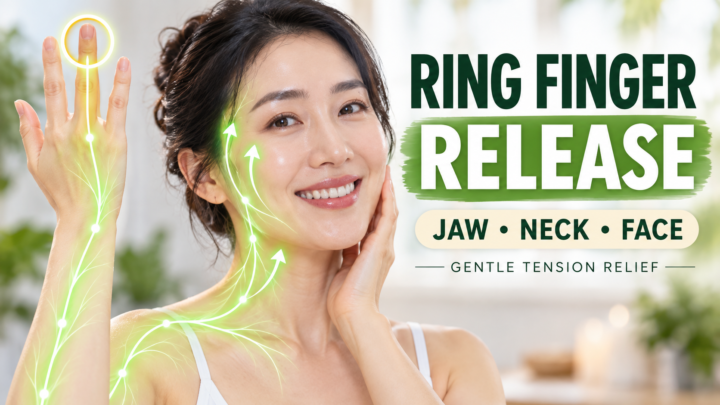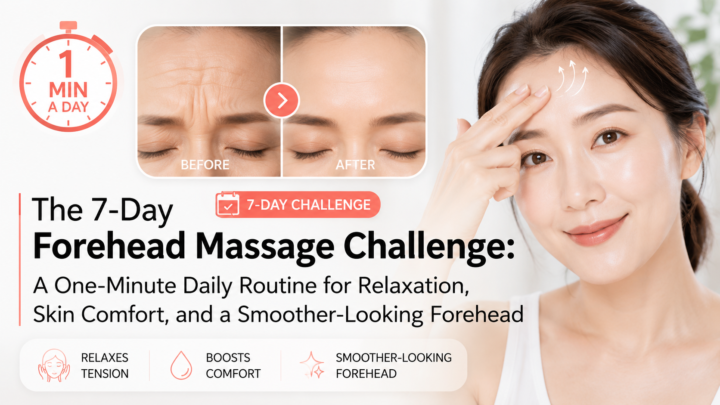
Your face changes throughout life, but not every visible change is permanent or caused by aging alone. Stress, habitual jaw clenching, facial expressions, sleep, hydration, muscle activity and temporary puffiness can all influence how your face looks from one day to the next.
That is one reason cheek and masseter massage has become popular in face yoga and facial wellness routines.
Advocates sometimes describe the cheeks and jaw as “reset buttons” capable of reversing aging, lifting sagging tissue or producing results faster than Botox. Those claims go far beyond what massage has been proven to do.
A more realistic explanation is still useful: gentle massage may temporarily relax tense facial muscles, increase awareness of clenching, reduce the sensation of tightness and make facial expressions appear softer.
You do not need to believe that your face can literally “remember” its younger shape to benefit from taking a few minutes to relax it.
Why the Cheeks and Jaw Can Feel So Tight
The middle and lower face contain several muscles involved in chewing, speaking and expression.
One of the most important is the masseter, located along the side of the jaw.
The masseter helps close the jaw and can become overactive in people who frequently clench or grind their teeth.
Above it, the temporalis muscle also participates in chewing. Around the cheeks, numerous smaller muscles contribute to smiling, lip movement and facial expression.
None of these muscles work in complete isolation.
Jaw tension often appears alongside tightness in the neck, temples and shoulders, particularly during stressful periods.
This does not mean emotional experiences become physically “stored” inside facial tissue. Instead, emotions and stress can influence habits such as clenching, frowning or raising the shoulders.
Those muscular habits can then influence how the face feels.
Can Facial Tension Make You Look Older?
Temporarily, it can change your appearance.
A tense face may involve a clenched jaw, narrowed eyes, tightened lips or raised shoulders. When those muscles relax, the expression may look softer and more open.
That is different from reversing structural facial aging.
Age-related facial changes involve many factors, including:
- Skin collagen and elastin changes
- Bone remodeling
- Changes in facial fat compartments
- Sun exposure
- Genetics
- Hormonal influences
- Lifestyle
- Gravity
- Repeated facial movement
Massage cannot permanently reverse all of these processes.
But reducing unnecessary muscular tension may influence how rested or relaxed your face appears.
Does the Masseter Affect Facial Shape?
Yes, to some extent.
The masseter is a relatively large and powerful facial muscle. People who chronically clench their teeth can sometimes develop enlarged masseter muscles.
This may make the lower face appear broader or more angular.
However, facial width is also strongly influenced by bone structure, genetics and fat distribution.
Massage does not permanently shrink the jawbone or selectively eliminate facial fat.
If a tense masseter relaxes temporarily, your lower face may feel less rigid, but dramatic reshaping claims should be treated cautiously.
What About the Cheek Muscles?
The cheek region contains a complex group of muscles and connective tissues.
Facial massage may temporarily change how the tissues feel and may increase local warmth through mechanical stimulation.
Some people report that their face looks slightly brighter or more relaxed immediately afterward.
That does not mean the cheekbones have physically moved upward.
Bones do not rise because you push the cheeks upward with your hands.
The visual change is more plausibly related to expression, temporary fluid shifts, muscle relaxation and changes in surface blood flow.
Can Massage Increase Blood Flow?
Massage can temporarily increase local skin blood flow.
That may contribute to warmth, mild redness or a temporary “glow.”
However, claims that massage suddenly floods the face with oxygen and nutrients in a way that reverses aging are exaggerated.
Blood already continuously supplies facial tissues.
The realistic benefit is temporary circulation change and relaxation, not biological rejuvenation.
Does Facial Massage Work Faster Than Botox?
No meaningful scientific comparison supports that claim.
Botulinum toxin works by temporarily reducing nerve signals to selected muscles. Facial massage works mechanically on superficial tissues and muscles.
They are fundamentally different interventions.
Massage may produce an immediate feeling of relaxation.
Botulinum toxin generally takes days to produce its intended effect.
That does not make massage a faster equivalent.
A pleasant short-term cosmetic change should not be confused with the physiological effect of a medical treatment.
Start With the Neck and Shoulders
If your jaw feels tight, beginning directly with aggressive facial massage is rarely necessary.
Start with the upper body.
Sit comfortably with your spine supported.
Allow your shoulders to drop.
Slowly tilt your head toward one shoulder until you feel a gentle stretch on the opposite side of the neck.
Do not pull your head forcefully.
Hold for approximately 15 to 20 seconds while breathing normally.
Return to center and repeat on the other side.
This simple movement may help you notice how much tension you were carrying before you even touched your face.
Gentle Neck Massage
Using your fingertips, lightly massage the muscular areas along the side and back of your neck.
Avoid pressing forcefully into the front or side of the neck where major blood vessels and nerves are located.
Use slow, comfortable movements.
Massage should feel calming, not painful.
If you experience dizziness, unusual pain, numbness or other concerning symptoms, stop immediately.
Scalp Massage and Facial Relaxation
The scalp contains skin, connective tissue, muscles, blood vessels and nerves.
Gentle scalp massage may feel relaxing and can temporarily increase local circulation.
However, scalp “elasticity” is not a reliable test of how old your face is.
Pinching the scalp until it hurts is also unnecessary.
Instead, place your fingertips against the scalp and gently move the skin in small circles.
Work across the temples, sides of the head and scalp for 30 to 60 seconds.
Keep the pressure comfortable.
Gentle Cheek Massage
Place the pads of your fingers or the broad surface of your knuckles against the cheek.
Use slow circular movements.
Do not grind deeply into the tissue.
Move around the cheek area for approximately 20 to 30 seconds.
Then repeat on the other side.
Your cheek may become warmer.
That is normal.
Sharp pain, significant tenderness or bruising is not something you need to pursue.
Why Pain Is Not a Sign of Success
Some facial massage videos suggest that if an area hurts, you have discovered trapped tension and should keep pushing.
That is not a reliable rule.
Pain can mean many things.
Excessive pressure can irritate nerves, joints, muscles or skin.
A technique does not become more effective simply because it hurts.
The best pressure is generally enough to feel the tissue without creating significant pain.
Think gentle and consistent, not deep and aggressive.
Masseter Release
To find your masseter, place your fingertips on the side of your jaw.
Briefly clench your teeth.
You should feel the muscle become firm.
Then stop clenching.
Keep your teeth slightly separated.
Using two or three fingertips, gently massage the muscle in small circles.
Continue for approximately 20 to 30 seconds.
Move slightly upward or downward and repeat.
Then switch sides.
If you habitually clench your jaw, this area may feel surprisingly tender.
Reduce pressure accordingly.
Avoid Digging Into the Jaw Joint
The temporomandibular joint, or TMJ, lies just in front of the ear.
Aggressively pressing knuckles or thumbs “inside” the jaw is unnecessary and can irritate sensitive structures.
You do not need to enter a “pain cave” to obtain a useful massage.
If you have existing TMJ pain, locking, clicking accompanied by pain or difficulty opening your mouth, aggressive self-treatment is particularly inappropriate.
Seek professional evaluation instead.
Try a Gentle Cheek Lift Without Force
Place your palms or fingertips against the cheeks.
Apply very light upward contact.
Hold for several seconds while breathing normally.
Then release.
This may create a pleasant sensory experience, but do not interpret it as physically moving facial bones or permanently lifting sagging tissue.
The purpose is awareness and relaxation.
Add Gentle Vocal Movement
Jaw muscles also participate in speaking.
After massage, slowly make relaxed vowel sounds such as:
Ah — Oh — Ee
Allow the jaw to move comfortably.
Do not open the mouth to its maximum range.
The goal is smooth movement rather than stretching aggressively.
If the movement causes pain, stop.
A Simple 7-Minute Facial Relaxation Routine
You can combine the techniques into a short routine:
1. Neck stretch — 30 seconds per side
Keep your shoulders relaxed.
2. Scalp massage — 60 seconds
Use gentle circular movements.
3. Cheek massage — 30 seconds per side
Use fingertips or broad knuckle contact.
4. Masseter massage — 30 seconds per side
Keep the teeth separated.
5. Temple massage — 30 seconds per side
Massage gently above and in front of the ears.
6. Gentle facial movements — 60 seconds
Make relaxed vowel sounds or smile softly.
7. Quiet jaw relaxation — 60 seconds
Let your lips rest together while keeping your teeth slightly apart.
A routine this simple is sufficient.
Longer and harder does not necessarily mean better.
Can This Lift Sagging Cheeks?
There is not strong evidence that manual cheek massage permanently lifts sagging tissue.
Facial aging involves structural changes beneath the skin that cannot simply be pushed back into place.
You may notice a temporary difference after massage because the face is less tense or mildly less puffy.
Enjoy that effect without turning it into an unrealistic promise.
Can Facial Massage Reduce Wrinkles?
Massage is not a proven substitute for established wrinkle treatments.
Temporary hydration, relaxation or mild swelling changes may make fine lines look different for a short period.
Long-term wrinkle prevention is more strongly associated with measures such as sun protection and avoiding smoking.
Topical retinoids and certain professional treatments also have much stronger evidence than facial massage for improving some signs of photoaging.
Massage is better understood as a wellness practice rather than a wrinkle-erasing treatment.
What About “Toxins” in the Face?
Your cheeks do not accumulate emotional toxins that need to be squeezed out.
The body’s metabolic waste is continuously processed by organs and transported through blood and lymphatic systems.
Gentle massage can influence superficial fluid movement, but that is not the same as detoxification.
Avoid using pain, bruising or aggressive manipulation in an attempt to “flush toxins.”
There is no need.
Can Facial Massage Reduce Puffiness?
It may temporarily help some people.
Morning facial puffiness can be influenced by fluid distribution, sleep position, sodium intake, allergies and other factors.
Gentle facial movement or massage may redistribute superficial fluid temporarily.
Persistent or unexplained facial swelling, especially when sudden or one-sided, should be medically evaluated.
Face Yoga and Facial Expressions
Some facial routines include exaggerated smiles, lip movements or controlled expressions.
These exercises may improve awareness and coordination of facial muscles.
Evidence for meaningful long-term anti-aging effects remains limited.
There is also no need to repeatedly contract facial muscles to exhaustion.
A relaxed, natural range of expression is generally a more reasonable goal.
Your Face Does Not Need to Look 20 Again
A healthy approach to facial wellness does not require declaring war on aging.
Your face reflects decades of expression, experience and biology.
Massage may help it feel less tense.
Good sleep may make it appear more rested.
Sun protection may help reduce future photoaging.
Exercise, nutrition and stress management support health more broadly.
None of these require pretending that aging can be completely reversed.
A face can change and still look healthy, expressive and attractive.
When You Should Not Massage Your Face Aggressively
Avoid deep facial massage over areas with:
- Active skin infection
- Open wounds
- Significant inflammation
- Recent surgery
- Severe acne lesions
- Unexplained swelling
- Recent injectable or cosmetic procedures unless cleared by your clinician
- Acute dental pain
- Severe TMJ symptoms
People with bleeding disorders, vascular problems or certain medical conditions should also seek appropriate professional advice before using aggressive massage techniques.
When Jaw Tension Needs Professional Help
Self-massage is not always enough.
See a dentist or another qualified healthcare professional if you regularly experience:
- Jaw locking
- Persistent jaw pain
- Difficulty opening your mouth
- Tooth damage from grinding
- Frequent morning headaches
- Severe facial pain
- Significant swelling
- Sudden facial weakness
- Changes in your bite
These symptoms may require evaluation rather than more massage.
The Real “Reset Button”
There probably is no magical facial reset button.
But there is something simpler and more useful.
Awareness.
Notice when your jaw is clenched.
Notice when your shoulders creep toward your ears.
Notice when you are pressing your tongue, teeth or lips together unnecessarily.
Then soften.
Massage gently if it feels good.
Breathe.
Move your jaw comfortably.
Relax your expression.
The result may not be a completely different face.
It may be something better: the same face, carrying less unnecessary tension.
FAQ
What is cheek and masseter massage?
Cheek and masseter massage involves gently manipulating the muscles and superficial tissues around the cheeks and jaw to encourage relaxation and reduce feelings of muscular tightness.
Can masseter massage make my face look slimmer?
It may temporarily relax an overactive jaw muscle and soften facial expression, but massage does not permanently remove facial fat or change bone structure.
Can cheek massage lift sagging skin?
There is insufficient evidence that cheek massage permanently lifts sagging facial tissue. Temporary changes in expression, puffiness or muscle tension can sometimes make the face look different immediately afterward.
Is facial massage supposed to hurt?
No. Significant pain is not a requirement for effective massage. Reduce pressure or stop if you experience sharp pain, numbness, bruising or worsening symptoms.
How often can I massage my face?
A short, gentle routine can be performed as tolerated. A few minutes is generally enough. More pressure and longer sessions are not necessarily more effective.
Does facial massage remove toxins?
No convincing evidence supports the claim that ordinary facial massage removes trapped toxins. The body naturally processes metabolic waste through its normal circulatory, lymphatic and organ systems.
Can facial massage improve wrinkles?
Facial massage may temporarily change the appearance of the skin through relaxation or superficial circulation, but it has not been proven to permanently erase wrinkles.
Can masseter massage help with jaw clenching?
Gentle massage may temporarily reduce muscular tension for some people. Persistent clenching, grinding, jaw pain or tooth damage should be evaluated by a dentist or healthcare professional.
Medical Disclaimer
This article is for educational and informational purposes only and is not medical advice. Facial and jaw symptoms can have many causes. Avoid aggressive pressure, forceful stretching or techniques that cause significant pain. Seek professional medical or dental evaluation for persistent jaw pain, locking, swelling, facial weakness, severe headaches, dental damage or other concerning symptoms.
This article is for general education and does not replace individualized care from a qualified health professional. Seek appropriate advice for persistent, severe, or concerning symptoms.
Read the full medical disclaimer