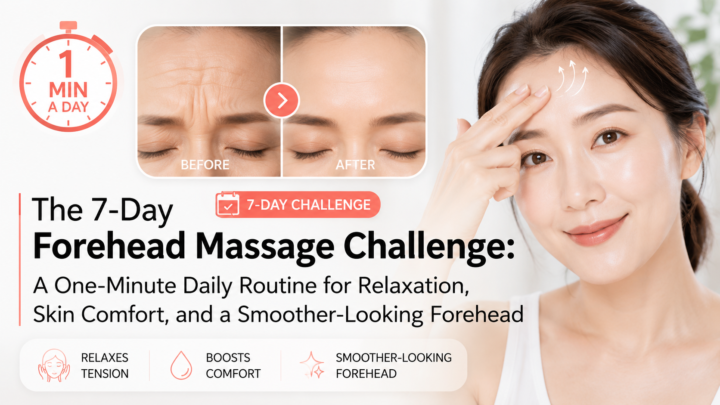
Castor oil face massage has become increasingly popular among people looking for a simple, natural skincare ritual that combines moisturizing oils with gentle facial massage. Supporters often claim that castor oil can tighten skin, erase wrinkles, stimulate collagen, detox the face, and even reverse aging. Those claims go much further than the available evidence.
What castor oil can realistically do is more modest. Like other plant oils, it can help reduce friction during massage and support skin softness by acting as an emollient. A gentle facial massage may also temporarily increase local blood flow, reduce feelings of muscular tension, and make mild puffiness look less noticeable in some people.
That makes castor oil face massage potentially useful as a self-care routine—but not as a replacement for evidence-based skincare or medical treatment.
What Is Castor Oil?
Castor oil is a vegetable oil derived from the seeds of the castor plant, Ricinus communis. It is rich in ricinoleic acid, a fatty acid that gives the oil its thick texture.
Because castor oil is much heavier than many other facial oils, some people prefer to dilute it with lighter carrier oils such as jojoba oil, squalane, or sweet almond oil.
The main cosmetic role of these oils is to support lubrication and reduce moisture loss from the outer layer of the skin.
They do not need to penetrate “deep into the cells” to be useful.
Can Castor Oil Hydrate the Skin?
Castor oil does not add water to the skin in the same way a humectant does, but it can help reduce transepidermal water loss by forming an occlusive or semi-occlusive layer on the skin surface.
This may make dry skin feel softer and more comfortable.
For even better hydration, many people benefit from applying a moisturizer or humectant-containing product first, followed by a small amount of facial oil to help seal in moisture.
People with oily or acne-prone skin may find pure castor oil too heavy.
Can Castor Oil Reduce Wrinkles?
There is no strong evidence that castor oil can erase established wrinkles or significantly rebuild collagen on its own.
However, well-moisturized skin can temporarily look smoother because hydration improves the appearance of fine surface lines.
That visual improvement is real, but it should not be confused with reversing structural skin aging.
Long-term wrinkle prevention and treatment rely more strongly on measures such as sun protection, retinoids when appropriate, smoking avoidance, and professional dermatological treatments.
Can Facial Massage Reduce Puffiness?
Possibly, in a temporary way.
Gentle facial massage may influence superficial fluid distribution and help some people feel less puffy, particularly in the morning.
This effect is usually subtle and short-lived.
It is more accurate to describe it as temporary fluid movement rather than “detoxing” the face.
Your lymphatic system already performs essential fluid-balance and immune functions. Ordinary facial massage does not remove toxins in the way many social-media claims suggest.
Does Facial Massage Improve Blood Flow?
Gentle mechanical massage can temporarily increase local skin blood flow.
That may explain why the face sometimes looks warmer or slightly more flushed after massage.
You do not need to press directly on facial arteries to achieve this effect.
In fact, deliberately pressing hard on vascular structures is unnecessary and potentially unsafe.
Light surface massage is enough.
Choosing a Castor Oil for the Face
If you want to try castor oil, choose a simple product with as few additives as possible.
Useful features include:
- 100% pure castor oil
- fragrance-free
- minimal added ingredients
- clearly labeled for cosmetic use
- packaged in a clean container
“Cold pressed” and “organic” may be desirable preferences, but they do not automatically guarantee better clinical results.
Likewise, terms such as “hexane-free” are often used in marketing. The more important issue is buying from a reputable manufacturer with clear ingredient labeling and quality control.
Should Castor Oil Be Diluted?
Many people prefer dilution because castor oil is very thick.
A simple starting blend could use approximately one part castor oil to four or five parts of a lighter facial oil.
For sensitive skin, start with even less castor oil.
Possible carrier oils include:
- jojoba oil
- squalane
- sweet almond oil
- grapeseed oil
Coconut oil is also commonly used, but it may be too occlusive for acne-prone skin.
Patch-test first.
How to Patch-Test Castor Oil
Apply a small amount of the diluted oil to a limited area of skin, such as the inner forearm or behind the ear.
Wait at least 24 hours.
Look for redness, itching, swelling, burning, or rash.
If irritation occurs, do not use the product on your face.
Even “natural” ingredients can cause contact dermatitis or irritation.
Step 1: Start With Clean Hands and Skin
Wash your hands.
Cleanse your face gently.
Apply a small amount of oil between your palms.
Rub your hands together briefly to distribute the product.
You need enough slip to prevent dragging the skin, but not so much that the oil runs into your eyes.
Step 2: Begin With the Neck
Use your palms to make gentle upward and outward strokes along the sides of the neck.
Avoid strong pressure over the front of the throat.
Do not press hard over major blood vessels.
Keep the pressure light and comfortable.
Slow breathing can make this part of the routine feel especially relaxing.
Step 3: Massage Around the Jaw
Place your fingertips along the jawline.
Make small circular movements.
If you clench your jaw, you may notice tension around the masseter muscles near the back of the jaw.
Gentle massage may feel soothing.
It cannot permanently reshape the jawbone or remove facial fat.
Step 4: Massage the Cheeks
Place your palms or fingertips over the cheeks.
Glide outward slowly.
Avoid aggressively pulling the skin upward.
A few gentle passes are enough.
The goal is comfort and lubrication, not forcing the face into a different position.
Step 5: Work Around the Nasolabial Folds
Use your fingertips to make small circles beside the nose and along the cheeks.
Keep the movements gentle.
Do not pinch deeply into the fold.
Massage may temporarily soften the appearance of the area through hydration and relaxation, but established nasolabial folds are structural and cannot be permanently erased by massage.
Step 6: Massage the Temples
Place your fingertips over the temples.
Move slowly in small circles.
This can feel especially pleasant for people who hold tension around the jaw or forehead.
Avoid excessive pressure.
Step 7: Be Extremely Gentle Around the Eyes
The skin around the eyes is thin.
Use minimal pressure.
Do not “iron out” wrinkles aggressively.
Do not pull the eyelids.
Do not press on the eyeballs.
A safer approach is to lightly glide around the orbital bone rather than directly over the eye.
If oil gets into your eyes, rinse thoroughly with clean water.
Step 8: Massage the Forehead
Use the pads of your fingers to move gently across the forehead.
If you notice that you habitually raise your eyebrows or frown, try relaxing those muscles.
Massage may temporarily reduce the feeling of tension, but it does not permanently eliminate forehead lines.
Step 9: Finish With Gentle Palming
Place your palms softly against your cheeks.
Do not press hard.
Take several slow breaths.
Allow the face to relax.
This is a good point to notice whether your jaw, forehead, and shoulders feel less tense.
Can Castor Oil Stimulate Collagen?
There is not enough strong clinical evidence to say that topical castor oil meaningfully increases collagen production in human facial skin.
Many online claims use the words “collagen activation” loosely.
Moisturized skin may look plumper and smoother, but that visual effect is not the same as rebuilding collagen.
If collagen support is your goal, sun protection and evidence-based skincare ingredients have stronger scientific support.
Can Castor Oil Help Under-Eye Bags?
Under-eye bags can result from genetics, aging, fat-pad changes, fluid retention, allergies, lack of sleep, and other factors.
Oil can moisturize the skin, and very gentle massage may temporarily influence mild puffiness.
It cannot permanently remove true under-eye bags caused by structural changes.
Be especially careful around the eyes because heavy oils may cause irritation or migrate into the eyes.
Can Castor Oil Help Dark Circles?
Dark circles may result from pigmentation, visible blood vessels, thin skin, shadowing, allergies, or anatomical structure.
Castor oil has not been proven to reliably treat all of these causes.
Moisturizing may improve the overall appearance of dry under-eye skin, but persistent dark circles often require a more targeted approach.
Is Castor Oil Good for Acne-Prone Skin?
It depends.
Castor oil is thick and occlusive. Some acne-prone people may tolerate it well, while others may develop clogged pores or irritation.
If you are acne-prone, use a very small amount, dilute it, and stop if breakouts worsen.
A lightweight non-comedogenic moisturizer may be a better choice for some skin types.
How Often Should You Do Castor Oil Face Massage?
Two or three times per week is more than enough for most people starting out.
Daily massage is not necessary.
Longer sessions are not automatically better.
Five to ten minutes is sufficient.
If your skin becomes red, irritated, sore, or congested, reduce the frequency or stop.
What You Should Avoid
Do not use painful facial massage.
Do not use strong pressure over arteries, the throat, or the eyeballs.
Do not massage over open wounds, active infections, severe acne lesions, or irritated skin.
Avoid facial massage immediately after injections, fillers, laser treatment, chemical peels, microneedling, or surgery unless your clinician has specifically approved it.
Do not assume discomfort means the treatment is working.
Pain is not a beauty goal.
Can Castor Oil Face Massage “Detox” the Skin?
No good evidence supports the idea that facial massage removes toxins from the skin.
The skin, liver, kidneys, lungs, gastrointestinal tract, and lymphatic system already participate in normal metabolic and waste-management processes.
Massage may move superficial fluid temporarily.
That is not the same thing as detoxification.
A Simple 10-Minute Castor Oil Face Massage Routine
Spend the first minute applying a small amount of diluted oil.
Use two minutes on the neck and jaw.
Spend two minutes on the cheeks and nasolabial area.
Use one minute on the temples.
Use one minute very gently around the orbital bone.
Spend one minute on the forehead.
Finish with two minutes of relaxed palming and slow breathing.
Stop immediately if your skin becomes uncomfortable.
The Bottom Line
Castor oil face massage is not a miracle anti-aging treatment.
It cannot reliably erase wrinkles, permanently lift sagging skin, reshape facial fat, or detox the face.
But it can still be a pleasant skincare ritual.
Castor oil and other facial oils can reduce friction and support skin softness. Gentle massage may temporarily improve local blood flow, ease facial tension, and reduce the appearance of mild puffiness.
The safest approach is simple:
Use a small amount.
Dilute if necessary.
Patch-test first.
Keep pressure gentle.
Be extremely careful around the eyes.
And treat facial massage as supportive self-care rather than a substitute for proven skincare or medical treatment.
Frequently Asked Questions
Is castor oil good for facial skin?
It can act as an emollient and help reduce moisture loss, but it may be too heavy for some skin types.
Can castor oil remove wrinkles?
No strong evidence shows that castor oil permanently removes wrinkles. Hydrated skin may temporarily look smoother.
Can castor oil tighten sagging skin?
There is insufficient evidence that castor oil can significantly tighten structurally sagging skin.
Can facial massage reduce puffiness?
Gentle massage may temporarily reduce mild puffiness in some people by influencing superficial fluid distribution.
Can castor oil clog pores?
It may for some people, especially when used heavily. Acne-prone skin should be monitored carefully.
Can I use castor oil around my eyes?
Use extreme caution. Avoid direct contact with the eyes and apply only a very small amount around the orbital bone.
How long should I leave castor oil on my face?
There is no proven optimal duration. Some people tolerate it overnight, while others prefer to remove excess oil after massage. If your skin feels heavy or irritated, cleanse it off.
Medical Disclaimer:This article is for general educational purposes only and is not medical or dermatological advice. Skin reactions can occur with any topical product. Patch-test new oils, stop use if irritation develops, and seek professional guidance for persistent skin problems or after cosmetic procedures.
This article is for general education and does not replace individualized care from a qualified health professional. Seek appropriate advice for persistent, severe, or concerning symptoms.
Read the full medical disclaimer