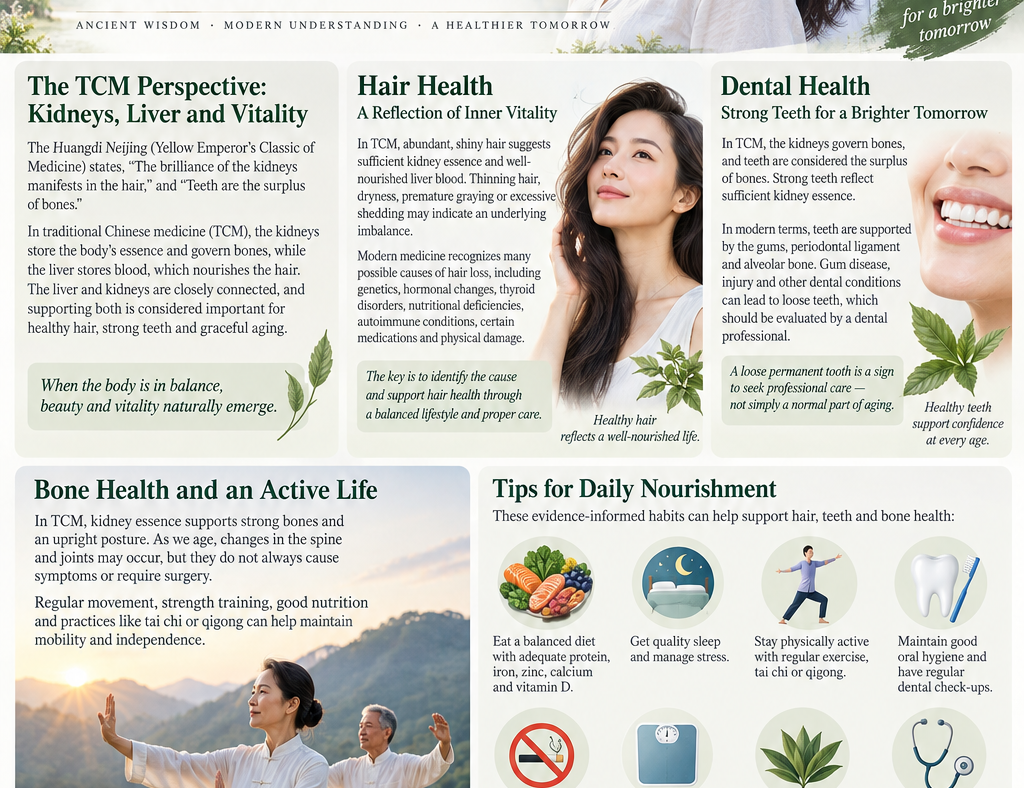
Hair loss and loose teeth are common concerns among adults who want to maintain their health, appearance, and vitality as they age. Traditional Chinese medicine (TCM) offers a broader wellness perspective on these changes, connecting hair health, dental strength, and bone vitality with the body’s overall condition. Modern health science adds important insights into the many factors that influence healthy aging.Hair thinning, premature graying, loose teeth, and changes in bone health are often considered inevitable consequences of aging. Yet traditional Chinese medicine (TCM) offers a broader perspective, viewing these changes as potential reflections of the body’s overall condition rather than isolated problems.
In classical Chinese wellness philosophy, health preservation involves more than addressing visible symptoms. It emphasizes maintaining balance, supporting vitality, and creating favorable conditions for the body’s natural restorative processes.
This approach is traditionally described through two interconnected principles: regulation and nourishment.
Regulation refers to restoring harmony among the body’s functional systems, while nourishment focuses on supporting the foundations of health through appropriate nutrition, rest, movement, and daily habits.
Together, these principles form the foundation of traditional Chinese health cultivation, particularly in relation to healthy aging.
Hair Loss and the Traditional Kidney–Liver Connection
According to the Huangdi Neijing (Yellow Emperor’s Classic of Medicine), the kidneys are associated with the body’s foundational essence and the nourishment of hair.
The classical expression “the brilliance of the kidneys manifests in the hair” reflects the traditional belief that strong internal vitality is associated with healthy, abundant hair.
Within this framework, hair that remains thick, resilient, and lustrous is traditionally regarded as a sign of sufficient nourishment, while thinning, dryness, premature graying, and excessive shedding may suggest an underlying imbalance.
TCM also describes an important relationship between the liver and hair.
The liver is traditionally associated with storing blood, while hair is described as an extension of blood nourishment. Consequently, classical practitioners often consider both liver and kidney patterns when evaluating hair-related concerns.
The traditional expression “the liver and kidneys share a common source” reflects this interconnected understanding.
It is important to recognize that the liver and kidneys described in TCM represent broader traditional functional concepts. They should not be confused with the anatomical organs or their functions as understood in modern medicine.
From a contemporary medical perspective, hair loss may result from genetics, hormonal changes, thyroid disorders, nutritional deficiencies, autoimmune conditions, illness, certain medications, or physical damage to hair follicles.
These causes require different approaches, making proper evaluation particularly important when hair loss is sudden, progressive, or accompanied by other symptoms.
Supporting Hair Health Through Daily Nourishment
A balanced lifestyle can help maintain the conditions needed for healthy hair growth.
Adequate dietary protein supplies essential building blocks for hair structure, while sufficient iron, zinc, and other nutrients support normal physiological functions involved in hair development.
Consistent sleep, stress management, gentle scalp care, and avoidance of excessive heat or chemical treatments may also contribute to healthier hair maintenance.
Traditional wellness practices such as gentle qigong, tai chi, and mindful breathing can complement these habits by encouraging relaxation and sustainable physical activity.
However, they should be understood as supportive health practices rather than proven treatments for specific forms of hair loss.
The central principle is to nourish the body consistently while identifying and addressing the actual cause of excessive shedding.
Loose Teeth and the Traditional Relationship Between Kidneys and Bones
Traditional Chinese medicine describes the kidneys as governing bones and supporting the development and maintenance of skeletal strength.
The classical expression “teeth are the surplus of bones” reflects the traditional association between kidney essence, skeletal integrity, and dental health.
Within this system, strong teeth and resilient bones are understood as manifestations of adequate foundational nourishment.
Conversely, loose teeth, declining skeletal strength, and other age-related changes may be interpreted through patterns of kidney essence deficiency.
This traditional perspective emphasizes that maintaining oral and skeletal health requires attention to the body as a whole.
Modern medicine, however, provides a more specific understanding of tooth stability.
Permanent teeth are supported by the periodontal ligament, surrounding gum tissues, and alveolar bone. These structures work together to hold teeth securely in position.
When the supporting tissues become inflamed or damaged, teeth may gradually lose stability.
Periodontal disease is a major cause of adult tooth loss. Other potential contributors to tooth mobility include injury, excessive biting forces, and certain dental conditions.
A loose permanent tooth is therefore a reason to seek professional dental assessment rather than simply a normal sign of aging.
Protecting Teeth as We Age
Preserving natural teeth is an important component of healthy longevity.
Daily brushing with fluoride toothpaste, cleaning between the teeth, and regular dental examinations help reduce the accumulation of plaque and support periodontal health.
Nutrition also contributes to the maintenance of normal bones and tissues. Adequate calcium, vitamin D, and protein are particularly important for musculoskeletal health.
Managing diabetes, avoiding tobacco, and addressing persistent gum inflammation can further support long-term oral health.
When teeth become loose, early dental assessment may identify treatable problems before further damage occurs.
Depending on the diagnosis, professional periodontal cleaning, bite adjustment, or other dental interventions may be necessary.
Traditional dietary practices and general wellness routines may be incorporated into daily life, but they cannot replace treatment for periodontal infection or restore bone that has already been lost.
Bone Health, Posture, and the Aging Spine
The traditional association between kidney essence and skeletal strength also provides a useful cultural perspective on maintaining physical resilience throughout life.
In classical health cultivation, the ability to remain upright, move comfortably, and preserve strength in later years is considered an important expression of vitality.
Modern medical science explains these functions through the interaction of muscles, bones, joints, nerves, and connective tissues.
As people age, changes in spinal discs, joints, and surrounding structures may contribute to stiffness, reduced mobility, and the development of osteophytes, commonly known as bone spurs.
Although these changes are often associated with aging, they do not necessarily produce symptoms or require surgery.
Treatment depends on the location of the structural changes, their effects on surrounding nerves and tissues, and the person’s symptoms and functional limitations.
Gentle strengthening exercises, appropriately prescribed physical therapy, healthy body weight, and regular movement may help support physical function.
Traditional movement practices such as tai chi and qigong can also form part of a sustainable activity routine, particularly when exercises are adapted to individual abilities.
The goal of healthy aging is not simply to avoid physical changes, but to preserve independence, mobility, comfort, and quality of life.
A Whole-Body Approach to Healthy Longevity
Hair health, oral health, and skeletal strength are influenced by many interconnected factors.
Nutrition, hormonal regulation, inflammation, genetics, physical activity, sleep, and access to preventive healthcare all contribute to the way the body changes over time.
Traditional Chinese health cultivation encourages individuals to observe these changes and adopt consistent habits that support overall well-being.
Modern healthcare adds diagnostic precision and evidence-based treatments for specific conditions.
These perspectives can coexist when their roles are understood clearly.
For individuals experiencing hair loss, loose teeth, or declining physical strength, the most constructive approach combines timely professional assessment with sustainable daily health practices.
The essence of healthy longevity is not the promise of reversing every sign of aging, but the lifelong commitment to nourishing the body, preserving function, and maintaining the foundations of well-being.
FAQ
Q1: Can traditional Chinese medicine help with hair loss?
Traditional Chinese medicine traditionally associates hair health with kidney essence and liver blood. Practices such as balanced nutrition, restful sleep, and stress management may support general well-being. However, specific hair loss conditions require proper diagnosis, and traditional wellness practices should not replace evidence-based medical treatment.
Q2: Why do teeth become loose as people age?
Loose permanent teeth may result from periodontal disease, injury, excessive biting forces, or other dental conditions. Aging alone does not necessarily cause teeth to become loose. A dentist can identify the underlying cause and recommend appropriate treatment.
Q3: What is the connection between kidneys and hair in traditional Chinese medicine?
In traditional Chinese medicine, kidney essence is associated with growth, development, reproduction, and aging. Hair is traditionally considered a visible expression of this foundational vitality. These concepts differ from the anatomical functions of the kidneys described in modern medicine.
Q4: Can loose teeth become firm again naturally?
The outcome depends on the cause and severity of tooth mobility. Some conditions may improve with appropriate professional treatment, while advanced periodontal damage may require more extensive intervention. Herbal remedies and general wellness practices cannot reliably restore lost periodontal support.
Q5: What foods support healthy hair, teeth, and bones?
A balanced diet containing sufficient protein, calcium, vitamin D, iron, zinc, vegetables, fruits, and whole grains supports general health. Individual nutritional needs vary, and supplements are most appropriate when a deficiency or specific medical need has been identified.
Q6: Can tai chi support healthy aging?
Tai chi is a gentle movement practice that may support balance, mobility, physical function, and psychological well-being. It can be incorporated into a broader healthy aging routine alongside adequate nutrition, regular activity, sleep, and preventive healthcare.
Q7: When should I seek professional help for hair loss or loose teeth?
Seek medical assessment for sudden, patchy, or persistent hair loss, particularly when accompanied by scalp inflammation or other symptoms. Loose permanent teeth, persistent gum bleeding, swelling, or dental pain warrant prompt professional dental evaluation.
Medical Disclaimer: This article is intended for educational purposes only and does not constitute medical or dental advice. Traditional Chinese medicine concepts are presented as historical wellness perspectives and are not substitutes for modern diagnosis or treatment. Consult a qualified healthcare professional for persistent hair loss, loose permanent teeth, spinal symptoms, or other health concerns.
This article is for general education and does not replace individualized care from a qualified health professional. Seek appropriate advice for persistent, severe, or concerning symptoms.
Read the full medical disclaimer