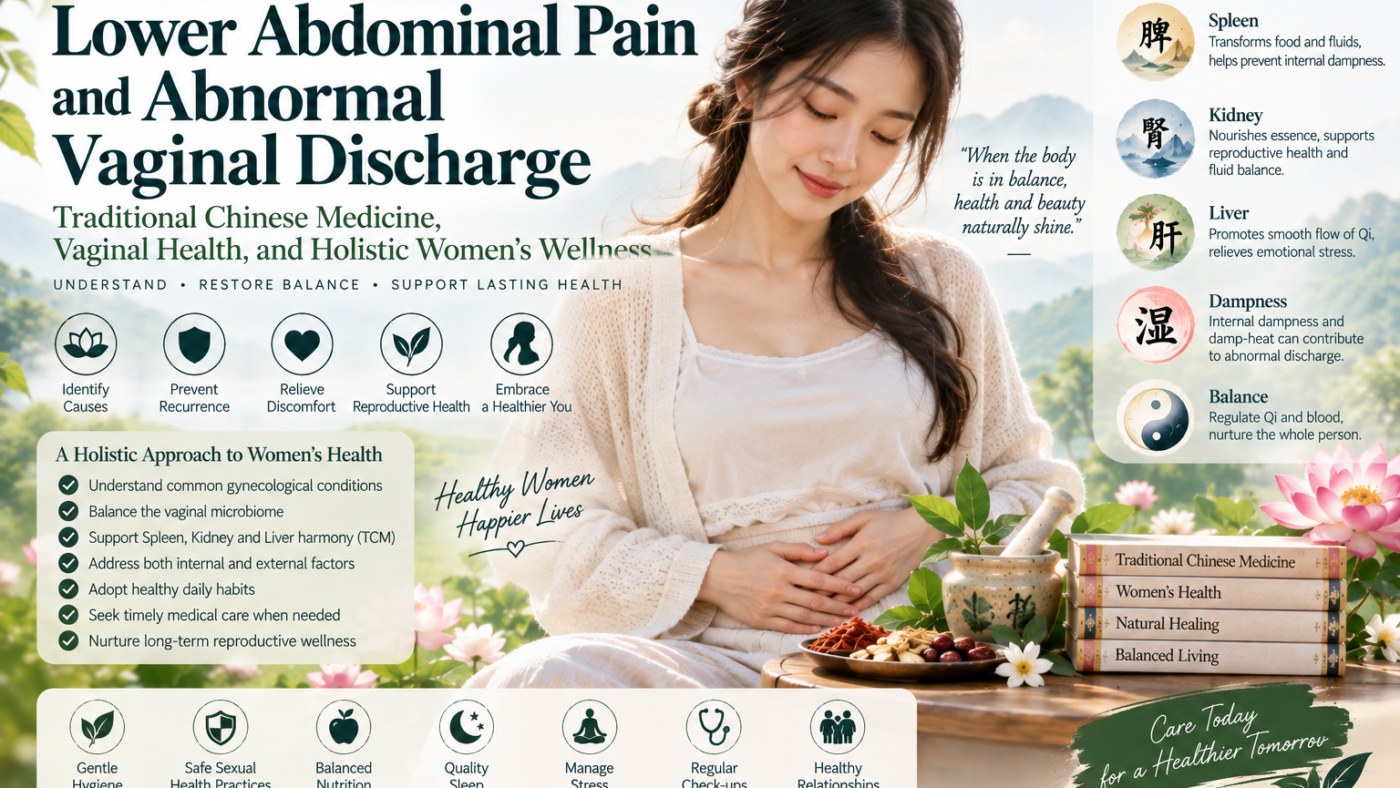
Lower Abdominal Pain and Abnormal Vaginal Discharge: Understanding Women’s Health
Lower abdominal pain and abnormal vaginal discharge are common women’s health concerns that can affect physical comfort, reproductive health, emotional well-being, and everyday quality of life. Although changes in vaginal discharge are sometimes part of normal reproductive physiology, persistent symptoms accompanied by pelvic pain, unusual odor, itching, or burning may require medical evaluation.
Understanding lower abdominal pain and abnormal vaginal discharge involves recognizing several possible causes, including bacterial vaginosis, vaginal yeast infections, cervicitis, pelvic inflammatory disease, hormonal changes, and other gynecological conditions.
Traditional Chinese Medicine offers a historical perspective through the concepts of dampness, damp-heat, Qi and blood, and the functional relationships among the Spleen, Kidney, and Liver systems. Modern gynecology provides a scientific understanding of vaginal microbiology, reproductive anatomy, infection, inflammation, and individualized medical treatment.
A comprehensive approach combines appropriate healthcare, gentle hygiene, informed sexual health practices, balanced nutrition, and sustainable daily habits to support long-term vaginal and pelvic wellness.Lower abdominal pain and abnormal vaginal discharge are common women’s health concerns that can affect physical comfort, emotional well-being, intimate relationships, and everyday quality of life.
Some women notice that their vaginal discharge becomes unusually yellow, gray, or green. Others experience an unpleasant odor, persistent vulvar itching, burning, pelvic discomfort, or pain during sexual activity.
These symptoms may appear suddenly or develop gradually.
Although certain changes in vaginal discharge are part of normal reproductive physiology, persistent changes accompanied by discomfort deserve attention.
Traditional Chinese Medicine (TCM) approaches these concerns through the historical concepts of dampness, damp-heat, Qi and blood, and the functional relationships among the Spleen, Kidney, and Liver systems.
Modern gynecology provides a different understanding based on vaginal microbiology, hormonal activity, inflammation, infection, reproductive anatomy, and immune function.
A comprehensive approach to women’s intimate health can incorporate the traditional philosophy of nurturing balance while recognizing the importance of accurate medical diagnosis and appropriate treatment.
The goal of holistic women’s wellness is not simply to eliminate temporary discomfort.
It is to understand the factors affecting reproductive health, protect the body’s normal functions, reduce avoidable risks, and support long-term physical and emotional well-being.
What Is Normal Vaginal Discharge?
Vaginal discharge is a normal part of reproductive health.
It consists of fluid, mucus, cells, and microorganisms that contribute to the vagina’s natural environment.
Healthy vaginal discharge helps maintain moisture and supports the body’s normal protective functions.
Its appearance can change throughout the menstrual cycle.
Some women notice clearer, more slippery discharge around ovulation. Others experience thicker discharge before menstruation.
Hormonal changes during pregnancy, breastfeeding, and menopause can also influence the amount and consistency of vaginal secretions.
Normal discharge is commonly clear or white and does not have a strong or unpleasant odor.
However, the amount and appearance vary among individuals.
The most important consideration is whether a change differs noticeably from what is normal for that person.
A sudden change in color, odor, consistency, or quantity may indicate irritation, infection, or another condition.
When these changes occur together with pelvic pain, vulvar itching, burning, or unusual bleeding, medical evaluation becomes particularly important.
Understanding the Vaginal Microbiome
The vagina contains a community of microorganisms known as the vaginal microbiome.
These microorganisms play an important role in maintaining the local environment.
In many reproductive-age women, beneficial bacteria belonging to the genus Lactobacillus are prominent.
These bacteria help maintain an acidic vaginal environment through the production of lactic acid.
The acidic environment can help limit the growth of certain potentially harmful microorganisms.
However, vaginal microbiomes vary naturally among individuals, and not every healthy vaginal community has the same bacterial composition.
The vaginal environment can also change in response to hormonal fluctuations, sexual activity, menstrual cycles, medications, and other factors.
When the balance of microorganisms changes, some women develop symptoms such as unusual discharge, odor, itching, or irritation.
This helps explain why vaginal health cannot be maintained simply by repeated washing or attempting to eliminate every microorganism.
A healthy vaginal environment depends partly on preserving its normal protective functions.
The American College of Obstetricians and Gynecologists emphasizes that changes in vaginal microorganisms can contribute to vaginitis and that treatment depends on identifying the underlying cause.
The Traditional Chinese Medicine Concept of Dampness and Vaginal Discharge
Traditional Chinese Medicine has a long history of discussing abnormal vaginal discharge through the concept of Dai Xia (带下).
In classical gynecological literature, Dai Xia refers to vaginal discharge and related symptom patterns.
The influential traditional medical text Fu Qing Zhu’s Gynecology discusses the relationship between abnormal discharge and dampness.
A classical statement reads:
“Vaginal discharge disorders are associated with dampness.”
Within the traditional framework, dampness describes a perceived disturbance in the body’s transformation and movement of fluids.
It is not equivalent to a specific bacterium, fungus, virus, or laboratory finding.
Traditional practitioners may distinguish among patterns such as damp-heat, cold-dampness, Spleen deficiency, Kidney deficiency, or Qi stagnation.
Different patterns are associated with different combinations of symptoms.
For example, a traditional damp-heat presentation may include yellowish discharge, a sensation of heaviness, or lower abdominal discomfort.
A traditional deficiency pattern may involve persistent discharge accompanied by fatigue or other symptoms.
These interpretations belong to classical Chinese medical theory.
They cannot independently determine whether a person has bacterial vaginosis, candidiasis, cervicitis, pelvic inflammatory disease, or another gynecological condition.
Modern diagnostic testing is necessary when symptoms suggest infection or disease.
The Spleen and the Traditional Regulation of Body Fluids
Traditional Chinese Medicine describes the Spleen as the foundation of acquired nourishment.
Within this framework, the Spleen is associated with transforming food and fluids into substances that sustain the body.
When traditional Spleen function is considered impaired, practitioners may describe patterns involving dampness, heaviness, fatigue, or digestive discomfort.
Classical explanations sometimes connect these patterns with abnormal vaginal discharge.
The traditional principle of strengthening the Spleen is therefore frequently discussed in Chinese gynecological health preservation.
However, the anatomical spleen does not directly regulate vaginal microbiology or determine the presence of a genital infection.
Modern medicine explains vaginal secretions through the activity of reproductive tissues, hormones, mucus production, microorganisms, and local immune responses.
The traditional concept of supporting nourishment can nevertheless encourage balanced nutrition and sustainable daily habits.
Adequate food intake, appropriate rest, and general health maintenance are important components of women’s well-being.
They should be viewed as supportive health practices rather than substitutes for the diagnosis and treatment of gynecological disease.
Kidney Yang and the Traditional Concept of Fluid Transformation
The Kidney occupies an important position in classical Chinese reproductive health theory.
Traditional Kidney functions are associated with inherited vitality, reproduction, growth, development, and the movement of fluids.
Kidney Yang represents the warming and activating aspect of the traditional Kidney system.
Some historical explanations connect impaired Kidney Yang with patterns involving cold sensitivity, fatigue, urinary changes, and certain reproductive complaints.
However, these patterns should not be confused with anatomical kidney disease.
There is no established scientific basis for concluding that abnormal vaginal discharge is caused by insufficient Kidney Yang or that warming the body can reliably eliminate a vaginal infection.
Cold hands and feet are also nonspecific symptoms.
They cannot be used to determine whether a person has bacterial vaginosis, candidiasis, or pelvic inflammatory disease.
The traditional concept of nurturing Kidney vitality can be appreciated as part of Chinese health philosophy while maintaining the distinction between cultural theory and modern reproductive medicine.
Liver Qi Stagnation and Emotional Well-Being
In Traditional Chinese Medicine, the Liver is associated with the smooth movement of Qi.
A pattern known as Liver Qi stagnation may be considered when emotional tension, frustration, or prolonged stress occurs alongside certain bodily symptoms.
Some traditional gynecological explanations describe relationships among Liver Qi, Spleen function, dampness, and reproductive discomfort.
Modern medicine recognizes that emotional stress can influence sleep, physical comfort, sexual well-being, and the experience of pain.
However, psychological stress does not establish the cause of abnormal vaginal discharge.
A person experiencing pelvic pain or unusual discharge should not automatically assume that emotional tension is responsible.
Infections, inflammation, hormonal changes, and other medical conditions may require specific treatment.
Stress management can support quality of life, but it should not delay appropriate medical evaluation.
Gentle movement, walking, Tai Chi, Qigong, and relaxation practices may provide opportunities to support emotional well-being alongside necessary healthcare.
Bacterial Vaginosis: When the Vaginal Microbiome Changes
Bacterial vaginosis, commonly abbreviated as BV, is one of the common causes of abnormal vaginal discharge.
It develops when the normal vaginal microbial community changes and certain bacteria become more prominent.
BV is not simply the result of poor hygiene.
It can occur in women with different sexual histories, including those who have never been sexually active.
Some individuals experience no noticeable symptoms.
Others develop thin white or gray discharge accompanied by a strong odor that is sometimes described as fish-like.
The odor may become more noticeable after sexual activity or during menstruation.
Bacterial vaginosis is diagnosed through appropriate clinical assessment and, when indicated, vaginal fluid testing.
Healthcare professionals may evaluate vaginal pH, examine secretions, or use laboratory methods to identify a microbial pattern consistent with BV.
Treatment generally involves appropriate antibiotics.
BV may recur after apparently successful treatment, and persistent or repeated episodes deserve reassessment rather than repeated unsupervised use of the same medication.
The CDC recognizes recurrent BV as a clinical challenge and describes additional management options for selected patients.
Vaginal Yeast Infections: Understanding Candidiasis
Vulvovaginal candidiasis is commonly known as a vaginal yeast infection.
It usually develops when Candida yeast grows excessively and produces symptoms.
Candida may be present in the vagina without causing disease.
The presence of yeast alone does not always mean that treatment is necessary.
Symptoms of a vaginal yeast infection may include itching, burning, vulvar redness, soreness, and discomfort during urination or sexual activity.
Some women develop thick, white discharge.
However, discharge may also remain relatively unchanged.
Several factors can contribute to yeast overgrowth.
These include certain antibiotic treatments, pregnancy-related hormonal changes, diabetes, and conditions affecting immune function.
Not every episode has an identifiable trigger.
Treatment generally involves an appropriate antifungal medication.
A product intended to treat bacterial vaginosis will not necessarily treat candidiasis, and an antifungal will not treat every cause of abnormal discharge.
This is why repeated self-diagnosis can be misleading.
Women with persistent or recurrent symptoms may require testing to identify the specific organism and determine whether a different treatment approach is needed.
Trichomoniasis and Other Sexually Transmitted Infections
Some causes of abnormal vaginal discharge are sexually transmitted infections.
Trichomoniasis is caused by a parasite called Trichomonas vaginalis.
It can produce irritation, burning, discomfort during urination, and changes in vaginal discharge.
The discharge may appear yellowish or greenish and may have an unpleasant odor.
However, some infected individuals experience few or no symptoms.
Chlamydia and gonorrhea can also cause reproductive tract infections.
These infections may affect the cervix and, in some cases, ascend into the upper reproductive tract.
A person cannot reliably identify the cause of an infection from discharge color or odor alone.
Appropriate testing is essential.
When a sexually transmitted infection is diagnosed, sexual partners may also require evaluation and treatment according to the specific infection.
This helps reduce reinfection and protects reproductive health.
Importantly, not every vaginal infection is sexually transmitted, and an abnormal discharge diagnosis should not be interpreted as evidence of poor hygiene or sexual misconduct.
Cervicitis: Understanding Inflammation of the Cervix
Cervicitis refers to inflammation of the cervix, the lower part of the uterus that opens into the vagina.
Some women experience unusual discharge, spotting between menstrual periods, or bleeding after sexual activity.
Others have no obvious symptoms.
Cervicitis may be associated with sexually transmitted infections, including chlamydia and gonorrhea.
Other infectious and noninfectious factors may also contribute.
The appropriate treatment depends on the cause.
A healthcare professional may perform an examination and recommend testing for relevant infections.
When an infection is identified, appropriate treatment can help prevent ongoing inflammation and potential complications.
Persistent cervicitis deserves reassessment because repeated empiric treatment without identifying the underlying cause may be ineffective.
Is Cervical Erosion the Same as Cervicitis?
The term “cervical erosion” has historically been used in some settings to describe a reddish appearance of the cervix.
However, this appearance does not necessarily indicate inflammation or damage.
A condition known as cervical ectropion occurs when glandular cells that normally line the cervical canal are visible on the outer surface of the cervix.
This can create an area that appears red during an examination.
Cervical ectropion is commonly associated with hormonal influences and may occur in younger women, during pregnancy, or among users of certain hormonal contraceptives.
It is generally a benign finding and is not itself a precancerous condition.
Some individuals experience increased discharge or contact bleeding.
However, cervical ectropion should not automatically be treated as a bacterial infection.
Persistent bleeding or unusual discharge requires appropriate evaluation to exclude other causes.
The distinction matters because treating every red-looking cervix with antimicrobial medication may lead to unnecessary treatment.
Pelvic Inflammatory Disease: When Infection Affects the Upper Reproductive Tract
Pelvic inflammatory disease, commonly known as PID, is an infection and inflammatory condition involving the upper reproductive tract.
It may affect the uterus, fallopian tubes, ovaries, or surrounding pelvic structures.
Some cases develop after bacteria ascend from the lower genital tract.
Sexually transmitted pathogens, including chlamydia and gonorrhea, are important causes, although other bacteria may also contribute.
Symptoms may include lower abdominal pain, pelvic tenderness, unusual discharge, fever, discomfort during sexual activity, or abnormal bleeding.
However, PID does not always produce dramatic symptoms.
Some individuals have mild or nonspecific discomfort.
This makes early assessment particularly important.
Untreated or inadequately treated PID can increase the risk of complications, including chronic pelvic pain, tubal infertility, and ectopic pregnancy.
Diagnosis is based on clinical findings and appropriate investigations.
Treatment generally requires antibiotics that address likely causative organisms.
Supportive lifestyle practices cannot replace antimicrobial treatment when PID is suspected or diagnosed.
Why Lower Abdominal Pain Is Not Always a Gynecological Infection
Lower abdominal or pelvic pain can arise from several different organ systems.
Although reproductive tract inflammation is one possible cause, it is not the only explanation.
Some women experience discomfort associated with menstruation or ovulation.
Others may have endometriosis, ovarian cysts, urinary tract infections, bladder conditions, or gastrointestinal disorders.
Pain may also originate from muscles and other pelvic structures.
Pregnancy-related complications are another important consideration.
Ectopic pregnancy occurs when a pregnancy develops outside the uterus, most commonly in a fallopian tube.
It may cause abdominal or pelvic pain, vaginal bleeding, dizziness, or other symptoms.
A ruptured ectopic pregnancy can be life-threatening.
A person who could be pregnant and develops significant pelvic pain should seek prompt medical assessment, particularly if symptoms include bleeding, faintness, or severe one-sided pain.
The cause of pelvic pain should therefore be investigated rather than automatically attributed to damp-heat, blood stasis, or a vaginal infection.
The Traditional Concept of Blood Stasis and Chronic Pelvic Discomfort
Traditional Chinese Medicine sometimes interprets persistent pelvic discomfort through the concept of blood stasis.
Within this historical framework, blood stasis describes a perceived disturbance in the movement of blood and Qi.
It may be considered when pain is persistent, localized, or associated with other traditional symptom patterns.
Classical gynecological theory may also describe relationships among dampness, heat, Qi stagnation, and blood stasis.
However, blood stasis is not equivalent to a confirmed anatomical blockage, blood clot, or specific inflammatory disease.
Persistent pelvic pain requires appropriate assessment because several conditions can produce similar symptoms.
These include endometriosis, chronic pelvic inflammatory disease, bladder disorders, pelvic floor dysfunction, and other medical problems.
Complementary approaches may support general well-being, but they should not replace the investigation of unexplained or progressive pelvic pain.
Why Some Vaginal Infections Keep Returning
Recurrent vaginal symptoms can be frustrating, particularly when an initial treatment appears to work but symptoms return later.
There is no single explanation for every recurrence.
In bacterial vaginosis, changes in the vaginal microbial community can contribute to repeated episodes.
In recurrent candidiasis, certain individuals may have diabetes, medication-related changes, or infections involving less common Candida species.
Some recurrent symptoms may result from reinfection following exposure to a sexually transmitted pathogen.
Other individuals may have irritation, hormonal changes, or a noninfectious condition that resembles infection.
A previous diagnosis should not automatically be assumed to explain every subsequent episode.
The appropriate approach is to reassess persistent or recurring symptoms and identify the underlying cause.
This may involve vaginal testing, evaluation of relevant medical conditions, review of medications, and assessment of sexual health.
For some recurrent infections, longer treatment or carefully selected maintenance regimens may be appropriate.
The treatment plan should depend on the confirmed diagnosis rather than a generalized attempt to eliminate all vaginal microorganisms.
Women’s Health After Childbirth and Pregnancy Loss
Pregnancy, childbirth, and pregnancy loss can involve significant physical and hormonal changes.
The postpartum period may include vaginal bleeding, changes in discharge, tissue healing, and adjustments in hormone levels.
Breastfeeding can also influence vaginal moisture and comfort through changes in estrogen levels.
These processes do not automatically indicate that a woman’s foundational vitality has been damaged.
However, postpartum infections and other complications can occur.
Fever, worsening lower abdominal pain, foul-smelling discharge, or feeling seriously unwell after childbirth or pregnancy loss require medical assessment.
No woman should be blamed for developing an infection or experiencing a pregnancy complication.
The appropriate focus is recovery, accurate diagnosis, timely treatment, and access to supportive healthcare.
Traditional concepts of postpartum nourishment can encourage adequate nutrition and rest, but they should not delay treatment when signs of infection or another complication are present.
7 Healthy Habits for Vaginal and Pelvic Wellness
Women’s intimate health is supported by appropriate medical care and sustainable everyday habits.
The following practices can help reduce avoidable irritation and support reproductive well-being.
1. Respect the Vagina’s Natural Protective Environment
The vagina has its own physiological cleaning and protective mechanisms.
Routine internal washing is unnecessary.
Avoid vaginal douching because it can disturb the natural microbial environment and may contribute to irritation or infection-related concerns.
2. Choose Gentle External Hygiene
The external genital area can be cleaned gently with lukewarm water.
Avoid strongly scented washes, vaginal deodorants, and unnecessary antiseptic products.
Products intended to create an artificial fragrance may irritate sensitive tissues.
3. Pay Attention to Changes in Discharge
Become familiar with your usual vaginal discharge throughout the menstrual cycle.
Seek medical advice when discharge develops a strong unpleasant odor, unusual color, persistent itching, or associated pelvic discomfort.
Avoid assuming that every change is normal or that every episode has the same cause.
4. Practice Informed Sexual Health
Barrier protection can reduce the risk of certain sexually transmitted infections.
Appropriate STI testing is important according to individual risk factors, symptoms, and medical guidance.
When a sexually transmitted infection is diagnosed, partner management may be necessary.
5. Avoid Repeated Unnecessary Self-Treatment
Repeated use of antifungal creams, antibiotics, or antiseptic vaginal products without a confirmed diagnosis may delay appropriate treatment.
Different conditions require different therapies.
Persistent symptoms deserve reassessment rather than an automatic repetition of a previous treatment.
6. Support General Health Through Daily Habits
Adequate sleep, balanced nutrition, comfortable physical activity, and stress management support overall well-being.
People with diabetes or other chronic conditions should follow appropriate medical management because these conditions may influence some infection risks.
7. Maintain Appropriate Gynecological Care
Regular preventive care and recommended cervical screening are important components of women’s health.
Seek timely assessment for persistent pelvic pain, unusual bleeding, recurrent infections, or unexplained changes in vaginal discharge.
These habits reflect the importance of gentle hygiene, symptom awareness, and diagnosis-based care described in gynecological guidance from ACOG.
Can Traditional Chinese Medicine Support Gynecological Wellness?
Traditional Chinese Medicine emphasizes Fu Zheng (扶正), often translated as supporting foundational vitality.
Within the broader philosophy of health preservation, Fu Zheng Tiao Ping (扶正调平) expresses the traditional goal of nourishing the body’s resources while encouraging balance.
For gynecological complaints, traditional practitioners may consider patterns involving dampness, damp-heat, Qi stagnation, blood stasis, Spleen deficiency, or Kidney deficiency.
These concepts can provide historical context for traditional approaches to women’s health.
However, the effectiveness of a particular herbal formula cannot be established from traditional theory alone.
A product described as clearing damp-heat or improving the internal environment should not be assumed to eliminate chlamydia, gonorrhea, Candida, or other identified pathogens.
Similarly, herbal vaginal washes or suppositories may irritate sensitive tissues or interfere with prescribed treatment.
Traditional herbal products can also interact with medications or contain contaminants.
The U.S. National Center for Complementary and Integrative Health advises people using traditional Chinese medicine to discuss complementary approaches with their healthcare professionals and not use them to replace or delay necessary medical care.
The traditional philosophy of nurturing health is most useful when it supports responsible self-care rather than promising that all gynecological inflammation can be eliminated through a single balancing method.
When to Seek Medical Attention
Abnormal vaginal discharge does not always indicate a serious condition, but certain symptoms require timely evaluation.
Persistent pelvic pain, unusual discharge, fever, painful urination, or bleeding outside the expected menstrual period should be discussed with a healthcare professional.
Symptoms that develop during pregnancy or after childbirth deserve particular attention.
Urgent medical assessment is necessary when pelvic pain is severe, rapidly worsening, or accompanied by a high fever, significant bleeding, dizziness, or fainting.
A person who may be pregnant and experiences severe abdominal pain or faintness should seek emergency care because ectopic pregnancy and other pregnancy complications must be considered.
When pelvic inflammatory disease is being treated, failure to improve within approximately 72 hours requires prompt reassessment.
The goal of early evaluation is to identify the cause, begin appropriate treatment, and reduce the risk of preventable complications.
Lower Abdominal Pain and Abnormal Vaginal Discharge: Supporting Long-Term Women’s Wellness
Traditional Chinese Medicine offers a historical philosophy in which reproductive health is associated with nourishment, the movement of Qi and blood, and the harmonious relationships among traditional functional systems.
The classical concepts of dampness, Spleen transformation, Kidney vitality, and Liver Qi reflect a longstanding interest in understanding women’s health through a broader bodily framework.
Modern gynecology provides a scientific understanding of vaginal microorganisms, reproductive anatomy, hormonal changes, inflammation, infection, and pelvic health.
These perspectives can coexist when their different purposes and limitations are clearly understood.
Abnormal vaginal discharge should not automatically be treated as a sign of poor hygiene or constitutional weakness.
Likewise, lower abdominal pain should not be assumed to result from a single traditional pattern.
Different conditions require different approaches.
Bacterial vaginosis, candidiasis, cervicitis, pelvic inflammatory disease, and noninfectious pelvic disorders may produce overlapping symptoms but have distinct mechanisms and treatment considerations.
Accurate diagnosis is therefore essential.
Gentle hygiene, appropriate sexual health practices, balanced nutrition, restorative sleep, and emotional well-being can support long-term wellness.
When infection or another medical condition is identified, evidence-based treatment remains central.
The deeper lesson of traditional health cultivation is that women’s health deserves sustained attention throughout life.
By combining responsible daily care with timely medical assessment and individualized treatment, women can protect reproductive health, improve comfort, and maintain a healthier relationship with their bodies.
FAQ
What causes lower abdominal pain and abnormal vaginal discharge?
Lower abdominal pain and abnormal vaginal discharge may be associated with bacterial vaginosis, yeast infections, sexually transmitted infections, cervicitis, pelvic inflammatory disease, hormonal changes, or other gynecological conditions. Persistent symptoms require appropriate medical evaluation.
What does normal vaginal discharge look like?
Normal vaginal discharge is commonly clear or white and does not have a strong unpleasant odor. Its amount and consistency may change throughout the menstrual cycle, during pregnancy, and at different stages of life.
Is yellow vaginal discharge always a sign of infection?
No. Discharge color alone cannot establish a diagnosis. Persistent yellow or green discharge, particularly when accompanied by unusual odor, itching, pelvic pain, or burning, should be medically evaluated.
What is bacterial vaginosis?
Bacterial vaginosis is a condition involving changes in the vaginal microbial community. It may cause thin white or gray discharge and a noticeable odor. Diagnosis and appropriate treatment can help relieve symptoms, although recurrence can occur.
Can a yeast infection cause lower abdominal pain?
Vaginal yeast infections commonly cause itching, burning, irritation, and sometimes thick white discharge. Significant lower abdominal or pelvic pain is not a typical isolated yeast infection symptom and may indicate another condition requiring evaluation.
Can Traditional Chinese Medicine cure gynecological infections?
Traditional Chinese Medicine provides historical concepts of dampness, damp-heat, Qi, and blood regulation. However, traditional pattern-based approaches have not been established as universal cures for vaginal infections or pelvic inflammatory disease. Complementary practices should not replace appropriate medical treatment.
Why do vaginal infections keep returning?
Recurrent symptoms may result from changes in vaginal microorganisms, reinfection, medication-related factors, hormonal changes, or an underlying condition. Different causes require different treatments, and repeated symptoms deserve appropriate reassessment.
When should someone seek medical attention for pelvic pain?
Medical evaluation is important when pelvic pain persists, worsens, or occurs with abnormal discharge, fever, unusual bleeding, or painful urination. Severe pain, fainting, significant bleeding, or symptoms suggesting an ectopic pregnancy require urgent medical attention.
Medical Disclaimer
This article is intended for educational and informational purposes only and does not constitute medical advice, diagnosis, or treatment. Traditional Chinese Medicine concepts are presented for historical and educational understanding and should not be considered equivalent to established medical diagnoses. Abnormal vaginal discharge, pelvic pain, vaginitis, cervicitis, and pelvic inflammatory disease may require laboratory testing, medical evaluation, and condition-specific treatment. Do not replace prescribed antimicrobial medication or necessary gynecological care with herbal remedies, vaginal washes, supplements, or complementary practices. Consult a qualified healthcare professional before using herbal products or intravaginal preparations, particularly during pregnancy or breastfeeding. Severe pelvic pain, fainting, significant bleeding, or symptoms suggesting a pregnancy complication require urgent medical attention.
This article is for general education and does not replace individualized care from a qualified health professional. Seek appropriate advice for persistent, severe, or concerning symptoms.
Read the full medical disclaimer