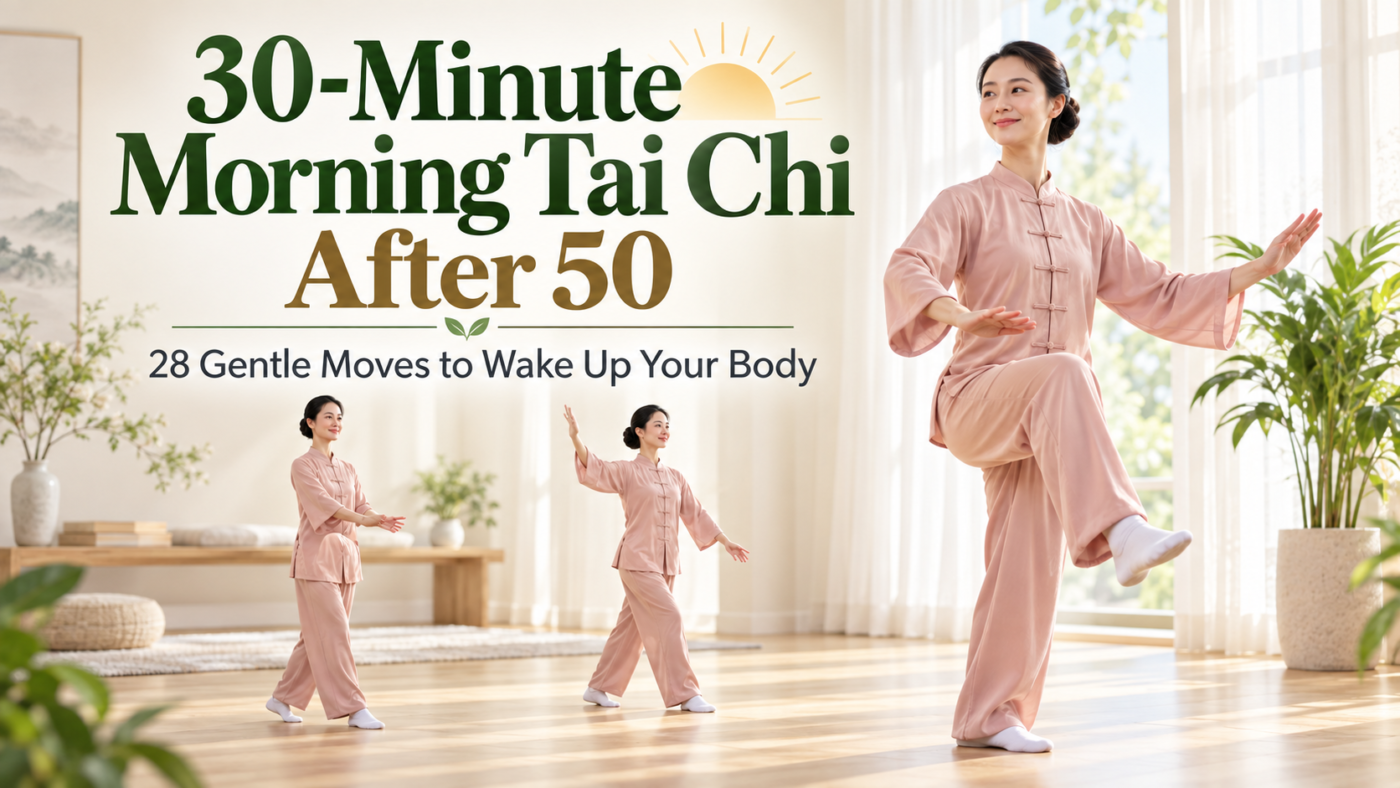
After 50, mornings can sometimes begin with stiff joints, tight hips, heavy legs, or a general feeling that the body needs more time to get moving. A gentle morning movement routine can help ease that transition.
This 30-minute Tai Chi-inspired workout combines controlled stepping, weight shifting, arm movements, gentle knee bends, balance work, and full-body mobility. Instead of pushing the body through high-impact exercise first thing in the morning, the routine gradually increases movement while encouraging coordination, stability, and comfortable range of motion.
Tai Chi is especially well suited to people who prefer slower, more controlled exercise. The goal is not to perform every movement perfectly or move as deeply as possible. The goal is to move consistently, breathe naturally, and finish the session feeling more mobile and energized than when you started.
Why Morning Tai Chi Can Be Helpful After 50
Tai Chi combines gentle physical movement with balance, coordination, controlled weight shifting, and body awareness. Regular practice can be a useful way to add more movement to the day without the repetitive impact associated with running or jumping.
For adults in midlife and beyond, a routine like this can help train several physical qualities at once.
The repeated stepping patterns challenge balance and coordination. Gentle knee bends and weight shifts activate the muscles of the legs and hips. Arm swings and overhead reaches encourage movement through the shoulders and upper back. Heel raises train the calves and ankles, while rotational movements introduce comfortable mobility through the trunk.
A continuous 30-minute session also adds meaningful physical activity to the day. Although no individual exercise can selectively remove abdominal fat, regular physical activity can increase overall energy expenditure and contribute to long-term weight and waist management when combined with appropriate nutrition, sleep, and other healthy habits.
The 28-Move Morning Tai Chi Routine
- Heel Tap Arm Swing
Stand tall and raise both arms overhead. Swing the arms downward as you extend one foot forward and lightly tap the heel on the floor.
Return to the starting position and alternate sides.
This simple opening movement gradually warms the shoulders, hips, and legs while introducing an easy stepping rhythm.
Keep the heel tap light rather than reaching aggressively forward.
- Turning Arm Raise
Turn gently toward one side while sweeping both arms upward. Lower the arms as you return to the center, then repeat toward the opposite side.
Allow the torso to rotate naturally without forcing the lower back.
The combination of rotation and reaching can help reduce the sensation of morning stiffness through the waist, shoulders, and upper back.
- Side Step Elbow Lift
Step to one side while lifting both elbows toward chest height. Bring the feet back together as you lower the arms, then repeat in the opposite direction.
Keep the knees soft.
Side stepping trains lateral movement, an important pattern that is often neglected in everyday walking.
- Back Curl Elbow Pull
Bend one knee and bring the heel gently toward the back of the body while pulling both elbows backward.
Return the foot to the floor, bring the arms forward, and alternate sides.
This movement activates the legs while adding a larger upper-body action that keeps the entire body moving.
- Hip Sway Arm Swing
Stand comfortably and begin shifting the hips from side to side.
Allow one arm to rise as the opposite arm lowers, letting the movement remain relaxed and rhythmic.
The exercise introduces gentle motion through the hips, waist, and shoulders without demanding deep twisting.
- Elbow Raise Heel Lift
Rise slowly onto the balls of the feet while lifting the elbows outward.
Lower the heels and move into a comfortable shallow knee bend.
Alternate between the heel raise and knee bend in a controlled rhythm.
This combination challenges ankle control, calf strength, leg strength, and coordination.
- Forward Step Arm Swing
Step one foot forward and bend the front knee slightly while swinging both arms upward.
Push gently through the feet to return to the starting position, then alternate legs.
Keep the step short enough that you remain stable throughout the movement.
- Knee Lift Side Pull
Lift one knee while bringing both arms toward the same side of the body.
Lower the foot and arms, then repeat on the opposite side.
Knee lifts challenge single-leg stability and coordination. If necessary, perform the movement beside a wall or sturdy chair for additional support.
- Knee Bend Arm Raise
Stand with the feet comfortably apart.
Bend the knees slightly as the body lowers, then raise both arms overhead as you return toward standing.
Think of this as a controlled mini squat rather than a deep squat.
The movement activates the thighs and hips while adding full-body motion.
- Overhead Knee Bend
Raise both arms overhead and maintain a comfortable upright posture.
Shift gently from side to side while bending one knee at a time.
Avoid locking the elbows or forcing the arms backward. The movement should feel long and open rather than strained.
- Step Back Clap
Step one foot diagonally behind the body while raising the arms overhead.
Bring the hands together gently above the head, return to the center, and repeat on the opposite side.
The diagonal stepping pattern introduces another direction of movement and challenges lower-body control.
- Side Toe Reach
Raise the arms overhead and lengthen through the body.
Shift gently toward one side while lifting the corresponding foot and reaching toward the toes only as far as comfortably possible.
Return upright and alternate sides.
Flexibility varies greatly from person to person, so touching the toes is not required.
- Reach and Squat
Reach both arms upward while standing tall.
Bend the knees and sweep the arms downward as you lower into a shallow squat.
Rise smoothly and repeat.
Keep the knees aligned with the direction of the feet and use a comfortable depth.
- Knee Pat Reach
Lift one knee while bringing the opposite hand across the body toward it.
Lower the leg and switch sides.
This cross-body pattern combines balance, coordination, trunk movement, and alternating knee lifts.
There is no need to force the hand and knee to make contact.
- Arm Swing Twist
Stand with the feet slightly wider than hip-width apart and keep the knees relaxed.
Turn gently from side to side while allowing the arms to swing naturally with the movement.
Rather than twisting aggressively, allow the movement to originate smoothly through the hips and torso.
- Forward Step Arm Reach
Step one foot forward while reaching the same-side arm overhead.
Place the opposite hand near the other shoulder, return to the starting position, and alternate sides.
This combination trains stepping, reaching, and controlled weight transfer at the same time.
- Turning Cross Arm Open
Turn toward one side and step one foot forward while bringing both arms across the front of the body.
Draw the elbows backward, bring the arms forward again, and then open them outward.
Return to the center before repeating on the opposite side.
This is one of the more coordinated movements in the routine, so move slowly until the pattern feels natural.
- Knee Lift Hand Drop
Hold both hands in front of the chest.
Lift one knee while lowering both hands toward it. Return to the starting position and alternate legs.
Keep the spine tall rather than bending excessively forward.
- Heel Raise Arm Swing
Lift both heels while swinging the arms upward.
Lower the heels as the arms return downward.
Repeat in a steady, controlled rhythm.
Heel raises strengthen the calves and challenge ankle stability, both of which contribute to confident walking.
- Cross-Arm Side Shift
Cross the arms comfortably in front of the chest.
Shift your body weight toward one side while gently bending the supporting knee, then move across to the opposite side.
Keep the movement smooth and avoid dropping deeply into either hip.
This exercise emphasizes controlled weight transfer and lateral stability.
- Toe Raise Arm Open
Sweep both arms upward while rising onto the toes.
Lower the heels slowly while opening the arms outward to the sides.
Rather than dropping the heels suddenly, control the descent.
The slower lowering phase increases the challenge to the calves and ankles.
- Alternating Side Stretch
Place the hands lightly on the thighs.
Bend one knee while extending the opposite leg to the side. Shift gradually across and repeat in the opposite direction.
Keep the hips back slightly and avoid forcing the stretch.
The movement can help open the inner thighs and hips after the more active portion of the routine.
- Reach and Bend
Reach both arms overhead and lengthen through the entire body.
Bend the knees and lower the body while sweeping the arms downward and across the torso.
Rise again and repeat.
Use a comfortable knee bend rather than trying to squat as low as possible.
- Knee Lift Arm Swing
Lift one knee as both arms swing toward the same side.
Lower the leg with control and repeat on the opposite side.
Maintain an upright posture and slow the movement if balance becomes difficult.
- Arm Circle Open
Circle both arms upward from below until they reach overhead.
Continue the motion by opening the arms widely to the sides.
Keep the shoulders relaxed and avoid forcing the arms beyond a comfortable range.
This is a useful transition toward the gentler final portion of the session.
- Back Kick Shoulder Reach
Bend one leg behind you while reaching the opposite hand toward the lifted foot.
Allow the other arm to move backward near the shoulder, then return to standing and alternate sides.
This exercise requires more balance than many of the earlier movements.
If reaching the foot causes instability, simply bend the knee behind you without attempting to touch it.
- Wide Squat Side Stretch
Stand with the feet comfortably wide and bend the knees slightly.
Extend both arms outward.
Lean gently toward one side while bringing the opposite arm overhead, return to the center, and repeat on the other side.
This combines a mild lower-body hold with movement through the side of the torso.
- Step Forward Arm Circle
Interlace the hands comfortably.
Step one foot forward while sweeping the hands in a large circle overhead.
Return to the center and switch sides.
Move slowly and allow the breathing to settle.
This final movement provides a gentle transition from active exercise toward relaxation.
How Hard Should the Routine Feel?
Morning Tai Chi should generally feel controlled rather than exhausting.
You should be able to breathe comfortably and maintain good movement quality throughout the session. A smaller, well-controlled movement is usually preferable to a larger movement that compromises balance or causes discomfort.
Beginners can shorten the routine, reduce the depth of the knee bends, decrease the height of the knee lifts, or pause whenever necessary.
People who already exercise regularly can gradually increase their range of motion and maintain a more continuous rhythm.
Can This Routine Burn Belly Fat?
It is important to separate a useful exercise routine from exaggerated fitness claims.
Knee lifts, trunk rotations, side bends, and arm swings do not selectively burn fat from the abdomen. The body does not choose where to remove stored fat simply because nearby muscles are moving.
What this routine can do is contribute to overall physical activity and energy expenditure.
When practiced consistently as part of a lifestyle that also includes appropriate nutrition, adequate sleep, aerobic activity, and strength training, regular movement can support long-term body-weight and waist management.
The more realistic goal is therefore not “burn belly fat with one Tai Chi move,” but to build a sustainable daily movement habit.
Why Balance Training Becomes Increasingly Important
Several exercises in this routine require temporary single-leg support, controlled weight transfer, heel raising, diagonal stepping, or coordinated changes of direction.
These movements challenge the sensory and muscular systems involved in balance.
Balance training becomes especially valuable as we age because maintaining confidence while stepping, turning, reaching, and changing direction is important for everyday independence.
However, balance exercises should always be matched to your current ability.
If you feel unstable, practice next to a wall, countertop, railing, or sturdy chair.
How Often Should You Practice?
You do not need to perform all 28 exercises every day to benefit from movement.
Some people may enjoy the complete routine several times per week, while others may prefer a shorter 10- or 15-minute version on busy mornings.
Consistency matters more than trying to make every session difficult.
A well-rounded weekly exercise program should also include activities that develop cardiovascular fitness and muscle strength rather than relying on Tai Chi alone.
Safety Tips
Move within a pain-free and comfortable range.
Keep a stable chair, wall, or countertop nearby if balance is uncertain.
Avoid deep knee bends if they cause pain.
Perform smaller steps if you feel unstable.
Wear supportive footwear or practice on a secure, non-slip surface.
Do not force twisting, stretching, or toe-touching movements.
Stop immediately if you experience chest pain, severe shortness of breath, faintness, sudden weakness, or unusual dizziness.
People with significant joint problems, balance disorders, recent surgery, cardiovascular disease, neurological conditions, or other medical concerns should discuss an appropriate exercise program with a qualified healthcare professional.
Final Thoughts
A productive morning workout does not have to be fast, exhausting, or complicated.
This 28-move Tai Chi-inspired routine uses simple stepping, reaching, bending, balancing, and weight-shifting patterns to gradually bring the body into motion.
For adults over 50, that combination can make morning exercise feel more approachable while helping develop mobility, balance, coordination, and lower-body control.
Start with the range of movement your body comfortably allows today.
Move slowly.
Breathe naturally.
Stay consistent.
A gentle routine that you can repeat week after week is far more valuable than an intense workout you quickly abandon.
FAQ
Is 30 minutes of Tai Chi enough exercise?
Thirty minutes of Tai Chi can make a useful contribution to daily physical activity, but a complete fitness program should also include appropriate aerobic activity and muscle-strengthening exercise.
Is Tai Chi suitable for people over 50?
Tai Chi can often be adapted for different ages and fitness levels. Movements can be made smaller, slower, or supported with a chair or wall when necessary.
Can Tai Chi reduce belly fat?
Tai Chi cannot selectively remove abdominal fat. Regular practice can contribute to overall physical activity and energy expenditure, while long-term fat loss depends on broader factors including total activity, diet, sleep, and energy balance.
Can beginners perform this routine?
Yes. Beginners can reduce the movement range, perform shallower knee bends, lower the height of knee lifts, use external support for balance, and take additional rest periods.
Should I practice Tai Chi in the morning or evening?
Both can work. Morning practice may help establish a consistent movement habit and gently loosen the body after sleep, while evening practice may suit people who prefer exercising later in the day.
Medical Disclaimer
This article is for educational and informational purposes only and is not medical advice. Exercise needs and limitations vary between individuals. Consult a qualified healthcare professional if you have a medical condition, recent injury or surgery, significant balance problems, or concerns about beginning a new exercise program.
This article is for general education and does not replace individualized care from a qualified health professional. Seek appropriate advice for persistent, severe, or concerning symptoms.
Read the full medical disclaimer