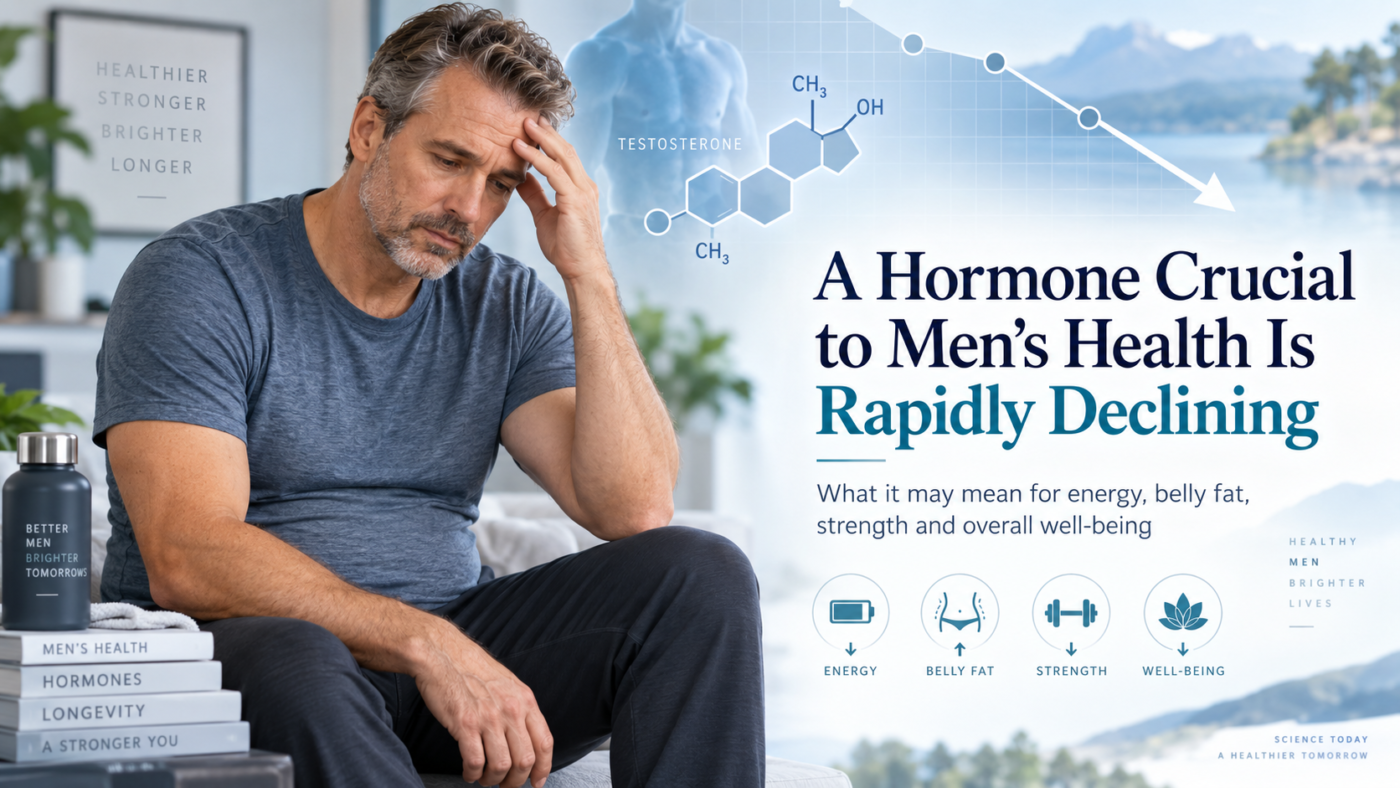
Feeling exhausted despite doing nothing particularly strenuous? Gaining weight around the waist? Losing strength, motivation or sexual interest?
Many middle-aged men blame these changes entirely on getting older or working too hard. But in some cases, declining testosterone may be part of the picture.
A 2026 meta-analysis presented at the annual meeting of the European Society of Human Reproduction and Embryology examined six long-term studies involving approximately 118,593 men from Israel, the United States, Brazil, Finland and Denmark.
The researchers estimated that average total testosterone levels declined by about 54% between 1972 and 2019, with the downward trend appearing to accelerate after 2000. The findings have raised new questions about male metabolic, reproductive and overall health.
However, testosterone decline is complex. Rising obesity and diabetes rates may explain a substantial portion of the trend, while researchers are also investigating environmental exposures, endocrine-disrupting chemicals and other lifestyle factors. The study does not prove that one single modern exposure is responsible.
Why Testosterone Matters Beyond Sex
Testosterone is the principal androgen in men, but its role extends far beyond sexual function.
It contributes to:
- sexual desire
- sperm production
- muscle maintenance
- bone density
- red blood cell production
- fat distribution
- energy and motivation
- aspects of mood and cognitive function
Levels naturally vary throughout life and generally decline with age.
That does not mean every tired or overweight man has testosterone deficiency.
Fatigue, low mood, weight gain and reduced sexual function can also be caused by sleep disorders, depression, thyroid disease, diabetes, medication effects, cardiovascular disease and many other conditions.
This is why symptoms and blood testing both matter.
7 Possible Signs of Low Testosterone
Low testosterone can present differently from one man to another.
Some of the more characteristic symptoms include:
1. Reduced Sexual Desire
A sustained decline in libido can be one of the more recognizable symptoms of androgen deficiency.
2. Fewer Morning Erections
Morning erections are influenced by several factors, but a noticeable long-term reduction may accompany lower testosterone levels.
3. Persistent Fatigue
Men with testosterone deficiency may describe reduced energy, motivation or physical stamina.
Fatigue by itself, however, is extremely nonspecific.
4. Loss of Muscle Strength
Testosterone supports muscle protein synthesis.
When levels are genuinely deficient, maintaining muscle mass and strength may become more difficult.
5. Increasing Abdominal Fat
Low testosterone and abdominal obesity often occur together.
The relationship can run in both directions.
6. Lower Mood or Motivation
Some men experience irritability, reduced motivation or depressive symptoms.
These symptoms should never automatically be attributed to hormones because mental health conditions can produce very similar changes.
7. Reduced Bone Density
Long-standing testosterone deficiency can contribute to bone loss and increased fracture risk.
What May Be Driving Testosterone Down?
There is no single explanation.
Several factors can affect testosterone production and regulation.
1. Abdominal Obesity
Excess body fat is one of the most important potentially reversible factors associated with lower testosterone.
Fat tissue contains an enzyme called aromatase, which converts androgens into estrogens.
More importantly, obesity can disrupt the hypothalamic-pituitary-gonadal axis that regulates testosterone production.
This can create a reinforcing cycle:
Excess abdominal fat contributes to lower testosterone.
Lower testosterone may make it harder to maintain muscle mass and favorable body composition.
That can make further weight gain easier.
This does not mean testosterone is simply being “turned into estrogen” at an uncontrolled rate, but excess adiposity clearly has important endocrine effects.
2. Poor Sleep
Testosterone follows a daily rhythm.
Levels are generally highest in the morning and are closely connected to healthy sleep.
Chronic sleep deprivation, irregular schedules and disorders such as obstructive sleep apnea can disrupt hormonal regulation.
For many middle-aged men, improving sleep is one of the most overlooked components of hormonal health.
3. Chronic Stress
Long-term psychological and physical stress activates the hypothalamic-pituitary-adrenal axis and raises cortisol.
Persistently elevated stress signaling can interfere with reproductive hormone regulation.
This does not mean every stressful week lowers testosterone dramatically, but chronic stress combined with poor sleep, inactivity and weight gain can create an unfavorable hormonal environment.
4. Physical Inactivity
Sedentary behavior contributes to:
- weight gain
- insulin resistance
- reduced muscle mass
- poorer cardiovascular fitness
All of these can indirectly affect hormonal health.
Regular resistance training is particularly valuable because it helps preserve muscle and improve metabolic health.
5. Metabolic Disease
Obesity, insulin resistance and type 2 diabetes are strongly associated with lower testosterone.
This relationship is often bidirectional rather than purely cause-and-effect in one direction.
The 2026 testosterone analysis specifically highlighted rising obesity and diabetes as important possible contributors to the population-level decline.
6. Environmental Endocrine Disruptors
Researchers are also investigating chemicals capable of interfering with hormonal signaling.
These include certain:
- bisphenols
- phthalates
- pesticides
- industrial chemicals
Some laboratory and observational studies suggest that endocrine-disrupting chemicals may influence male reproductive health.
But it would be an overstatement to claim that these exposures have already been proven to explain the reported 54% testosterone decline.
The current evidence suggests a possible contribution, not a single established cause.
7. Certain Medications and Medical Conditions
Testosterone can also be reduced by conditions or treatments including:
- pituitary disorders
- testicular disease
- severe obesity
- chronic illness
- opioid use
- some glucocorticoids
- chemotherapy
- certain genetic conditions
This is why unexplained low testosterone warrants medical evaluation rather than self-treatment.
The Testosterone–Belly Fat Cycle
One of the most important relationships for middle-aged men is the connection between testosterone and abdominal fat.
Excess visceral fat can contribute to:
- insulin resistance
- inflammation
- altered sex-hormone metabolism
- impaired reproductive hormone signaling
At the same time, clinically low testosterone can contribute to reduced lean body mass and unfavorable fat distribution.
This creates what can feel like a vicious cycle:
More belly fat → poorer metabolic health → lower testosterone → harder muscle maintenance → easier fat accumulation.
The encouraging part is that lifestyle changes that reduce excess body fat can often improve testosterone in men whose low levels are related to obesity and metabolic dysfunction.
Can Losing Weight Increase Testosterone?
For overweight and obese men, meaningful fat loss can improve testosterone levels.
The goal should not be crash dieting.
A sustainable approach includes:
- gradual calorie control
- higher-quality food choices
- adequate protein
- resistance exercise
- consistent sleep
- reduced alcohol intake
- treatment of metabolic disease when present
Waist circumference can be especially useful to track because abdominal fat is metabolically active.
The Best Exercise for Testosterone Health
There is no workout that permanently “boosts testosterone” in the way many supplements claim.
Exercise is still extremely valuable.
Prioritize Resistance Training
Examples include:
- squats
- rows
- presses
- deadlift variations
- lunges
- resistance machines
- bodyweight strength exercises
Resistance training helps preserve muscle, improve insulin sensitivity and support healthy body composition.
Add Aerobic Exercise
Walking, cycling, swimming and other aerobic activities support cardiovascular and metabolic health.
A combination of strength training and moderate aerobic activity is generally more useful than relying on one type alone.
Foods and Nutrients That Matter
Testosterone production depends on overall nutritional adequacy.
Important dietary principles include:
Adequate Protein
Protein supports muscle maintenance and recovery.
Healthy Dietary Fats
Extremely low-fat diets may not be ideal for hormonal health.
Useful sources include:
- olive oil
- nuts
- seeds
- avocado
- eggs
- fatty fish
Zinc
Zinc is involved in testosterone physiology.
However, taking extra zinc does not reliably raise testosterone when someone is already zinc sufficient.
Vitamin D
Vitamin D deficiency is common and may coexist with lower testosterone, but supplementation should primarily correct deficiency rather than be treated as a testosterone drug.
The principle is simple:
Correct deficiencies.
Do not assume more is always better.
Be Careful With “Testosterone Boosters”
This is especially important.
Many products marketed online as testosterone boosters contain:
- poorly studied herbal combinations
- undisclosed ingredients
- hormone-like compounds
- excessive doses
- contaminated or mislabeled substances
A supplement should not be assumed safe simply because it is described as “natural.”
Men with persistent symptoms should be tested rather than guessing.
Testosterone Replacement Is Not a Casual Anti-Aging Treatment
Prescription testosterone can be appropriate for carefully selected men with confirmed hypogonadism.
But it is not the same as taking a general vitality supplement.
Exogenous testosterone can suppress the brain signals that stimulate the testes.
As a result, testosterone treatment can substantially reduce sperm production and may impair fertility. This concern has also been highlighted by reproductive-health specialists discussing the recent population-level testosterone findings.
Men who want future fertility should tell their doctor before starting testosterone therapy.
Treatment also requires individualized assessment and monitoring.
How Is Low Testosterone Actually Diagnosed?
This is where many online discussions go wrong.
A diagnosis should not be based on symptoms alone.
Clinical guidance generally requires:
- symptoms or signs compatible with testosterone deficiency
- unequivocally and consistently low testosterone measurements
- repeat testing on separate mornings
Testing is usually performed in the morning because testosterone follows a circadian rhythm.
If the first level is low, clinicians generally confirm it with another morning measurement before diagnosing hypogonadism. Some guidelines use approximately 300 ng/dL as an important diagnostic reference point, but interpretation depends on the laboratory, symptoms and clinical circumstances.
Additional testing may include:
- luteinizing hormone
- follicle-stimulating hormone
- prolactin
- sex hormone-binding globulin
- free testosterone in selected situations
- thyroid or metabolic testing
The goal is not simply to identify a low number.
It is to understand why it is low.
When Should a Man Get Tested?
Consider discussing testosterone testing with a healthcare professional when several persistent symptoms occur together, particularly:
- reduced libido
- erectile changes
- fewer spontaneous or morning erections
- unexplained loss of muscle
- persistent fatigue
- reduced body hair
- infertility
- low bone density
- unexplained anemia
Fatigue and belly fat alone are usually not enough to diagnose testosterone deficiency.
Four Lifestyle Priorities That May Help
For men with mild reductions related to obesity, inactivity, poor sleep or metabolic health, lifestyle improvement can sometimes make a meaningful difference.
1. Reduce Excess Abdominal Fat
Aim for sustainable weight loss rather than aggressive dieting.
Improving waist circumference often improves overall metabolic health.
2. Strength Train Regularly
Build or preserve muscle with progressive resistance exercise several times per week.
3. Improve Sleep
Prioritize a consistent sleep schedule and address symptoms of sleep apnea such as:
- loud snoring
- gasping during sleep
- morning headaches
- excessive daytime sleepiness
4. Manage Chronic Stress
Regular exercise, outdoor activity, social connection, relaxation practices and adequate recovery can all help reduce chronic stress burden.
What About Testosterone in Women?
Women also produce testosterone, although circulating levels are much lower than in men.
Androgen abnormalities can occur in women as well.
Higher androgen levels are commonly seen in conditions such as polycystic ovary syndrome and may be associated with:
- acne
- increased facial or body hair
- irregular periods
- ovulatory problems
- metabolic abnormalities
Low sexual desire and fatigue in women are much more complicated and should not automatically be blamed on low testosterone.
Hormonal symptoms deserve individualized medical evaluation.
The Bottom Line
The possibility that average male testosterone levels have declined substantially over recent decades deserves serious scientific attention.
A 2026 meta-analysis involving more than 118,000 men estimated a 54% decline in total testosterone from 1972 to 2019, but the reasons remain uncertain and are probably multifactorial. 卫报
For individual men, the more practical message is not to panic over population statistics.
Pay attention to persistent changes in:
- sexual function
- muscle strength
- abdominal fat
- energy
- mood
- fertility
Then address the foundations first:
healthy body weight, resistance exercise, sufficient sleep, metabolic health and appropriate medical testing.
And most importantly:
Do not diagnose yourself from symptoms alone and do not start testosterone or hormone-like products without proper evaluation.
FAQ
Does testosterone naturally decline with age?
Yes. Testosterone generally declines gradually with age, although the rate varies substantially between individuals.
Does belly fat lower testosterone?
Excess abdominal fat is strongly associated with lower testosterone and altered reproductive hormone regulation. Weight loss can improve testosterone in many overweight or obese men.
Can exercise increase testosterone?
Exercise supports healthy testosterone indirectly through improved muscle mass, insulin sensitivity, cardiovascular fitness and body composition. Resistance training is particularly useful.
Can poor sleep lower testosterone?
Yes. Chronic inadequate sleep and sleep disorders can interfere with normal testosterone rhythms.
Should every man over 40 have testosterone tested?
Routine screening of all asymptomatic men is generally not recommended. Testing is more appropriate when compatible symptoms or clinical risk factors are present.
Is testosterone replacement safe?
It can be appropriate for properly diagnosed hypogonadism under medical supervision. It is not risk-free and can suppress sperm production, which is especially important for men concerned about fertility.
Can supplements naturally raise testosterone?
Correcting genuine deficiencies in nutrients such as vitamin D or zinc may help overall health, but most commercial testosterone boosters have not been shown to produce large, reliable increases in testosterone.
Medical Disclaimer
This article is for educational purposes only and is not medical advice. Symptoms associated with low testosterone can have many causes. Diagnosis requires medical assessment and appropriate laboratory testing. Do not begin testosterone therapy, anabolic steroids or hormone-related supplements without guidance from a qualified healthcare professional.
This article is for general education and does not replace individualized care from a qualified health professional. Seek appropriate advice for persistent, severe, or concerning symptoms.
Read the full medical disclaimer