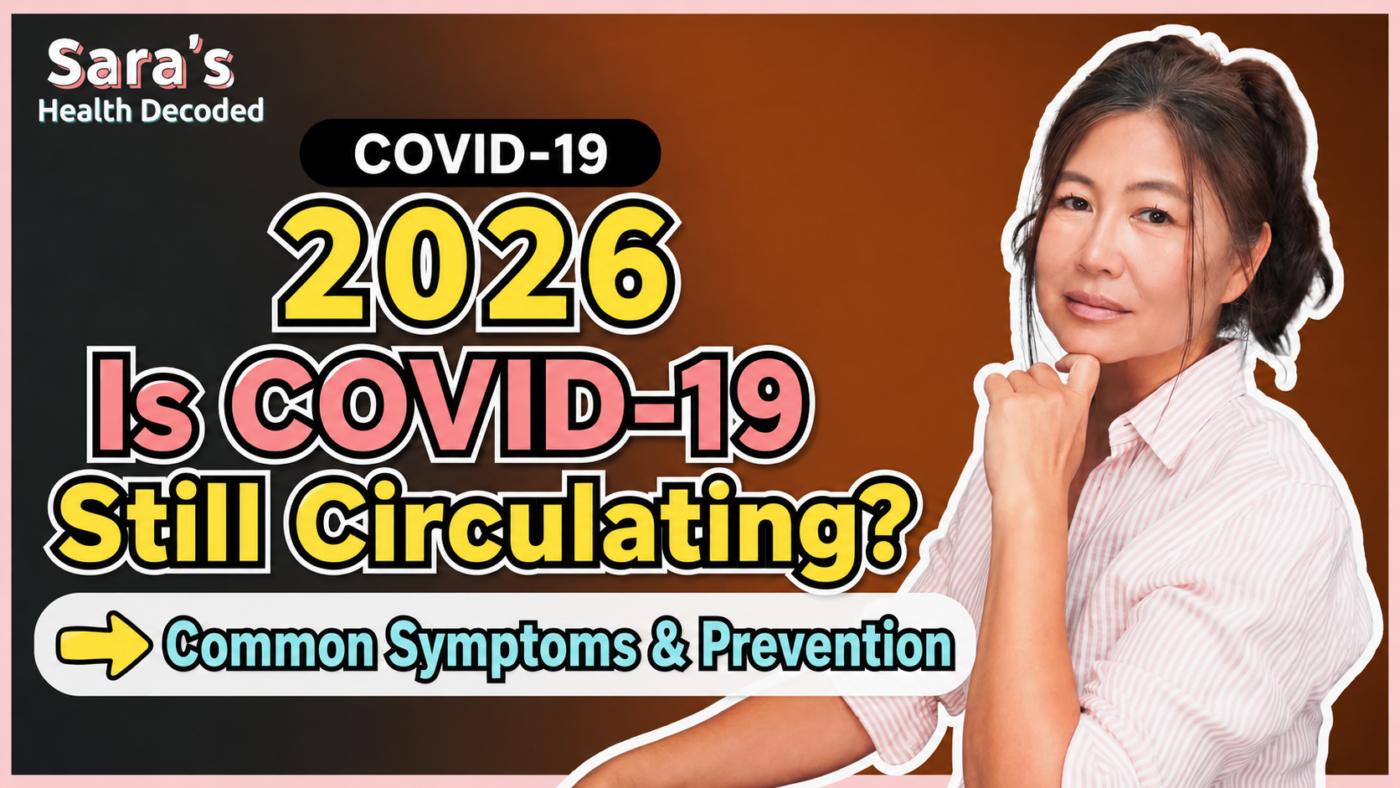
COVID-19 and influenza can feel remarkably similar.
Both may cause fever, chills, cough, sore throat, headache, fatigue, body aches, congestion, and sometimes gastrointestinal symptoms.
That similarity creates an obvious question whenever respiratory illness starts:
Is this COVID-19 or the flu?
Unfortunately, symptoms alone usually cannot answer that question with confidence.
Influenza and COVID-19 are caused by different viruses, follow somewhat different epidemiological patterns, and have different antiviral treatments. Yet their symptoms overlap so much that testing may be necessary when knowing the specific infection would change treatment or precautions.
Understanding the differences is still useful.
The key is knowing which differences are meaningful—and which popular claims are too unreliable to use for self-diagnosis.
COVID-19 and Flu Are Different Infections
Influenza is caused primarily by influenza A and B viruses.
COVID-19 is caused by SARS-CoV-2, a coronavirus that has continued to evolve since it first emerged.
Both are respiratory infections capable of causing illnesses ranging from mild symptoms to severe disease.
Both can also cause complications, especially among older adults and people with underlying medical conditions.
But they are not interchangeable diseases.
They differ in viral biology, immunity, epidemiology, available treatments, and some complications.
The Biggest Rule: Symptoms Alone Cannot Reliably Tell Them Apart
People often look for one symptom that will reveal the answer.
A sudden fever must mean flu.
An extremely sore throat must mean COVID-19.
Loss of smell must mean COVID-19.
Diarrhea must mean COVID-19.
Unfortunately, none of these rules is reliable enough to diagnose an individual infection.
Both COVID-19 and influenza may cause:
Fever or chills.
Cough.
Sore throat.
Runny or stuffy nose.
Headache.
Fatigue.
Muscle or body aches.
Shortness of breath.
And sometimes vomiting or diarrhea.
Changes in taste or smell have historically been more strongly associated with COVID-19, but they are no longer present in every case and cannot be used as a definitive diagnostic test.
If knowing whether you have COVID-19 or influenza matters for treatment, work, vulnerable household members, or medical decision-making, testing is more useful than symptom guessing.
How Influenza Usually Behaves Seasonally
Influenza has a relatively recognizable seasonal pattern in many temperate regions.
Although influenza viruses can be detected throughout the year, larger outbreaks usually occur during colder months.
In Taiwan, influenza activity can occur year-round, but larger epidemics generally become more common in autumn and winter, with activity often increasing around November and peaking between approximately December and March.
Several factors contribute.
Cooler and drier environmental conditions may favor viral stability and transmission.
People spend more time indoors.
Schools are in session.
Indoor ventilation may decrease.
Seasonal changes in human behavior and immunity also matter.
However, influenza should never be considered impossible in summer.
COVID-19 Has Been Less Predictably Seasonal
SARS-CoV-2 has produced waves at different times of the year.
Winter increases remain common in many locations, but summer waves have also occurred.
That does not mean COVID-19 has a simple “summer and winter season.”
Its transmission pattern is influenced by several interacting factors.
These include:
The emergence of new variants.
Population immunity.
Previous infections.
Vaccination.
Waning protection against infection.
Travel.
Indoor gatherings.
Air conditioning.
Ventilation.
School and workplace behavior.
Regional climate.
And changes in public behavior.
For this reason, COVID-19 activity can increase outside the traditional influenza season.
Variants Matter
SARS-CoV-2 continues to evolve.
New viral lineages can acquire changes that affect how efficiently they spread or how well they evade some existing immune protection.
This helps explain why people can become infected more than once.
However, it would be too simplistic to say that a completely new immune-escaping variant appears on a fixed six- or eight-month schedule.
Viral evolution is not a calendar.
Some lineages disappear.
Others spread internationally.
Population immunity changes continuously.
And the timing of waves varies between countries.
Immunity Also Changes Over Time
Protection after vaccination or infection is not static.
Antibody concentrations against infection can decline over time, particularly against newly emerging variants.
But antibodies are only one part of immunity.
The immune system also develops memory B cells and T-cell responses that contribute to protection, especially against severe disease.
Therefore, it is inaccurate to imagine that immunity simply “expires” every four to six months and creates exactly two vulnerable windows every year.
Protection exists on a continuum.
It depends on:
Age.
Immune status.
Previous infections.
Vaccination history.
Variant characteristics.
Time since exposure or vaccination.
And individual biology.
How COVID-19 and Flu Spread
Both influenza and COVID-19 spread primarily through respiratory particles released when infected people breathe, talk, cough, sing, or sneeze.
Risk increases when people spend prolonged periods together in enclosed or poorly ventilated spaces.
Close-range exposure can be particularly important.
Transmission from contaminated surfaces is possible for respiratory viruses, but respiratory exposure is generally the more important concern.
That is why improving indoor air quality and ventilation can be valuable.
During periods of elevated respiratory-virus activity, other useful strategies may include:
Staying home when acutely ill.
Testing when appropriate.
Using a well-fitting mask in higher-risk situations.
Improving ventilation.
Avoiding close contact with vulnerable people while infectious.
And keeping recommended vaccinations up to date.
Why SARS-CoV-2 Receives So Much Attention Beyond the Airways
SARS-CoV-2 enters susceptible cells partly through interactions involving the ACE2 receptor and other cellular factors.
ACE2 is expressed in multiple tissues.
COVID-19 therefore cannot be understood only as a disease of the nose and throat.
Severe infection can involve inflammatory, cardiovascular, neurological, renal, gastrointestinal, and thrombotic complications.
However, describing every COVID-19 infection as a “systemic vascular inflammatory disease” would also be too broad.
Most people with current infections develop an acute respiratory illness and recover without multi-organ disease.
Severe systemic complications occur in a minority of patients, with risk influenced by age, immunity, underlying disease, and other factors.
What Flu Often Feels Like
Influenza is famous for its abrupt onset.
A person may feel relatively normal in the morning and significantly ill only hours later.
Typical symptoms can include:
Sudden fever or chills.
Prominent muscle aches.
Headache.
Marked fatigue.
Dry cough.
Sore throat.
Weakness.
Runny or congested nose.
The feeling of being “hit by a truck” is a common description.
But not every case follows this classic pattern.
Some people with flu never develop a high fever.
Older adults and immunocompromised people may have less dramatic symptoms.
Children may experience gastrointestinal symptoms.
What COVID-19 Often Feels Like
Current COVID-19 infections can produce many different symptom combinations.
Possible symptoms include:
Sore throat.
Cough.
Congestion.
Runny nose.
Fever.
Chills.
Headache.
Fatigue.
Muscle aches.
Shortness of breath.
Nausea.
Vomiting.
Diarrhea.
Changes in taste or smell.
Some people experience only mild upper-respiratory symptoms.
Others develop more significant systemic illness.
The exact symptom profile can vary with the circulating variant and the person’s existing immunity.
Does a Severe Sore Throat Mean COVID-19?
No.
A very painful sore throat can occur with COVID-19.
But it can also occur with influenza, other respiratory viruses, or bacterial infections such as group A streptococcal pharyngitis.
Likewise, having a mild sore throat does not rule out COVID-19.
Symptoms can guide testing decisions.
They should not replace testing.
Can Fever Patterns Tell You the Difference?
Not reliably.
Influenza often causes abrupt fever.
COVID-19 can cause fever as well.
But the idea that influenza always causes a short high fever while COVID-19 always produces slowly increasing or repeated “double-peak” fever is not reliable enough for diagnosis.
People respond differently to infections.
A fever may:
Rise quickly.
Rise gradually.
Disappear.
Return.
Remain mild.
Or never occur.
A fever that improves and then returns can sometimes indicate progression or a secondary complication and deserves attention, regardless of whether the original infection was influenza or COVID-19.
Gastrointestinal Symptoms
COVID-19 can cause nausea, vomiting, abdominal discomfort, or diarrhea.
Influenza can also produce gastrointestinal symptoms, particularly in children.
Therefore, diarrhea does not automatically identify COVID-19.
Persistent vomiting or diarrhea also creates an additional concern: dehydration.
People who cannot maintain adequate fluid intake should seek medical advice.
Loss of Taste or Smell
Loss or alteration of smell became one of the most recognizable features of early COVID-19.
It remains possible.
But it is no longer present in every infection.
Congestion from many respiratory illnesses can also temporarily change smell and taste.
A sudden unexplained loss of smell without significant congestion may raise suspicion for COVID-19, but it is not a substitute for testing.
Long COVID Is an Important Difference
Some people experience symptoms lasting weeks, months, or longer after SARS-CoV-2 infection.
This is commonly referred to as Long COVID or post-COVID condition.
Possible symptoms can include:
Persistent fatigue.
Shortness of breath.
Difficulty concentrating.
Post-exertional symptom worsening.
Sleep problems.
Headache.
Changes in smell or taste.
Palpitations.
Dizziness.
And other symptoms.
Long COVID is one reason preventing severe disease and repeated infection remains clinically important.
Influenza can also produce prolonged recovery and post-viral complications, but Long COVID has developed into a distinct and important area of medicine and research.
COVID-19 and Blood Pressure
COVID-19 can affect the cardiovascular system, particularly during more severe infection.
Studies have also examined associations between SARS-CoV-2 infection and subsequent cardiovascular conditions, including blood-pressure abnormalities.
However, the mechanism is much more complicated than saying SARS-CoV-2 simply “uses up ACE2,” leaving angiotensin molecules trapped inside the body.
ACE2 is part of the renin–angiotensin system, which helps regulate vascular function and other biological processes.
SARS-CoV-2 interactions with ACE2 are scientifically important, but cardiovascular complications of COVID-19 involve multiple mechanisms, including inflammation, endothelial dysfunction, autonomic changes, thrombosis, underlying disease, medications, and physiological stress.
Should You Monitor Blood Pressure During COVID-19?
People who already have hypertension should generally continue monitoring it according to their usual care plan.
Do not independently double, stop, or reduce blood-pressure medication because of COVID-19.
Illness, dehydration, fever, reduced food intake, medications, and stress can all temporarily change blood pressure.
If readings become unusually high or low, contact your healthcare professional.
Emergency evaluation may be necessary for extremely abnormal readings accompanied by symptoms such as chest pain, neurological symptoms, severe shortness of breath, fainting, or severe headache.
What Should You Do When Respiratory Symptoms Begin?
Start with practical steps.
Rest.
Stay appropriately hydrated.
Avoid spreading the infection to others.
Consider testing for COVID-19 and influenza when available and clinically relevant.
Monitor symptoms.
And determine whether you have risk factors for severe disease.
Risk factors can include older age, certain chronic diseases, immune suppression, and other medical conditions.
The reason early identification matters is that effective antiviral treatment exists for both COVID-19 and influenza.
Timing matters.
COVID-19 Antiviral Treatment
People at higher risk of developing severe COVID-19 should contact a healthcare professional promptly after symptoms begin.
Depending on individual circumstances, available outpatient antiviral treatments may include medications such as nirmatrelvir/ritonavir or other approved options.
These treatments work best when started early.
Waiting until symptoms become severe can mean missing the treatment window.
People taking other medications should have potential drug interactions reviewed before using certain antivirals.
Influenza Also Has Antiviral Treatment
Influenza can also be treated with antiviral medications.
Treatment is particularly important for people with severe illness, hospitalized patients, and individuals at increased risk of influenza complications.
Influenza antivirals generally work best when started early, although treatment may still be useful later in severe or high-risk cases.
This is another reason distinguishing COVID-19 from flu through testing can matter.
Should You Avoid Fever Medicine So Your Body Can Fight the Virus?
This is one of the most important claims from the original material that needs correction.
Fever is part of the immune response.
But that does not mean taking an appropriate fever-reducing medicine automatically prevents your immune system from clearing COVID-19 or causes Long COVID.
Common fever and pain medicines can be used when medically appropriate to improve comfort.
The goal is not necessarily to normalize every mild temperature elevation.
It is to treat the patient, not simply the thermometer.
Someone with a mild fever who feels reasonably comfortable may not need medication immediately.
Someone with significant headache, body pain, dehydration risk, poor sleep, or substantial discomfort may reasonably use appropriate medication according to the label or medical advice.
People with kidney disease, liver disease, gastrointestinal bleeding risk, medication interactions, pregnancy, or other medical conditions need individualized advice.
Fever Does Not Mean “The Virus Cannot Survive Above 35°C”
Human body temperature normally exceeds 35°C.
SARS-CoV-2 clearly replicates in humans at normal physiological temperatures.
Therefore, claims that viral replication suddenly collapses above 35°C are misleading.
Fever is part of immune biology, but it is not a simple thermostat that kills the virus.
What About Corticosteroids?
Corticosteroids require an important distinction.
They can save lives in severe or critical COVID-19, particularly when patients require oxygen because excessive inflammatory responses contribute to severe disease.
But systemic corticosteroids are generally not recommended specifically for treating uncomplicated, non-severe COVID-19 in people who do not need oxygen.
That does not mean corticosteroids are always dangerous during infection.
A person using steroids for another medical indication should not stop prescribed therapy without medical guidance.
Treatment depends on context.
Antibiotics Do Not Treat COVID-19 or Influenza
COVID-19 and influenza are viral illnesses.
Antibiotics kill or inhibit bacteria.
They do not treat SARS-CoV-2 or influenza viruses.
A healthcare professional may prescribe antibiotics if a bacterial infection is suspected or confirmed in addition to the viral illness.
This may include certain cases of bacterial pneumonia or another bacterial complication.
Antibiotics should not be used merely because someone has COVID-19.
Do You Need Probiotics After Antibiotics?
Antibiotics can alter the intestinal microbiome.
Certain probiotic preparations may reduce the risk of antibiotic-associated diarrhea in some populations.
But probiotics should not be described as simply replacing all the “good bacteria killed by antibiotics.”
The microbiome contains hundreds of interacting species and usually cannot be reconstructed by swallowing a handful of probiotic strains.
For most people, recovery also involves time, normal eating, dietary diversity, and fiber-rich foods.
Quercetin Is Not a Proven COVID-19 Treatment
Quercetin is a plant flavonoid found naturally in foods including onions, apples, berries, tea, and various vegetables.
Laboratory research has identified antioxidant, anti-inflammatory, and antiviral properties.
That is interesting scientifically.
But laboratory activity does not automatically translate into effective treatment in humans.
Clinical evidence for quercetin in COVID-19 remains limited.
It should not be described as occupying ACE2 receptors and preventing SARS-CoV-2 from entering cells in people.
That mechanism has not been established as an effective clinical treatment.
What About Curcumin?
Curcumin, a compound found in turmeric, has also been studied for anti-inflammatory and biological effects.
Some small studies have investigated it in COVID-19.
However, evidence is not strong enough to recommend curcumin as a replacement for established COVID-19 treatment.
It can be part of a normal diet.
Supplement doses are a separate issue and may interact with medications or cause adverse effects in some people.
Fish Oil Does Not Block SARS-CoV-2 From ACE2
Omega-3 fatty acids from fish have established roles in nutrition and have been studied extensively in cardiovascular and inflammatory biology.
But fish oil should not be marketed as a substance that sits on the ACE2 receptor and physically blocks SARS-CoV-2 infection.
That is not an established COVID-19 therapy.
Fish can remain an excellent component of a balanced diet.
That is different from using fish oil as an antiviral drug.
What About Lungwort?
Traditional herbal products such as lungwort have long histories of use in respiratory remedies.
Historical use, however, is not the same as proven clinical efficacy against COVID-19.
There is insufficient high-quality evidence to recommend lungwort as a treatment that clears SARS-CoV-2, prevents secondary infection, or removes dead immune cells from the respiratory tract.
People using herbal products should remember that herbs can also cause allergy, toxicity, contamination, or medication interactions.
“Natural” does not automatically mean effective or risk-free.
Mucus and Congestion: What Actually Helps?
For uncomplicated respiratory infections, supportive measures may include:
Adequate fluids.
Rest.
Humidified air when appropriate.
Warm beverages.
Saline nasal irrigation or spray when suitable.
Honey for cough in adults and children over one year of age.
Appropriate over-the-counter medications when safe.
For significant breathing problems, wheezing, persistent chest symptoms, or worsening illness, seek medical evaluation rather than relying on mucus-thinning supplements.
Peppermint or Aloe Gel Does Not Treat Fever
Applying a cool cloth may feel soothing during fever.
Aloe gel or menthol-containing products can also create a cooling sensation on the skin.
But feeling cool is not the same as lowering dangerous core body temperature or treating the viral infection.
Essential oils may also irritate skin, eyes, and airways.
Do not use concentrated essential oils around the nose or mouth as a substitute for medical care.
Bone Broth During Illness
Bone broth can be a comforting food during respiratory illness.
It may provide:
Fluid.
Sodium.
Small amounts of minerals.
Protein-derived amino acids and peptides.
Calories depending on the recipe.
This can be useful when appetite is reduced.
But bone broth should not be described as containing “hydrolyzed amino acids that require no digestion” or as directly manufacturing immune cells.
Proteins and peptides still undergo digestion and absorption.
Bone broth is food.
It is not an antiviral treatment.
Nutrition During COVID-19 or Flu
During an acute respiratory infection, complicated supplement protocols are usually less important than the basics.
Prioritize:
Adequate fluids.
Enough calories.
Adequate protein.
Fruits and vegetables as tolerated.
Simple meals when appetite is poor.
Regular medication when medically necessary.
Sleep.
Rest.
People who are vomiting, experiencing significant diarrhea, or unable to drink should pay particular attention to dehydration.
Supplements Cannot Replace Antivirals
This principle deserves emphasis.
If you are at high risk of severe COVID-19 and qualify for antiviral therapy, do not delay treatment while trying quercetin, curcumin, fish oil, probiotics, herbal products, bone broth, vitamins, or other supplements.
The treatment window is limited.
Likewise, high-risk influenza patients may benefit from prompt antiviral treatment.
Nutrition can support recovery.
It cannot replace evidence-based antiviral medicine.
Vaccination Still Matters
Vaccination does not guarantee that a person will never become infected.
Respiratory viruses evolve and immune protection against infection can decrease over time.
However, vaccination remains an important tool for reducing the risk of severe disease and complications.
Recommendations change as vaccines and viral strains evolve.
Follow current guidance for your age, medical history, and region.
Cleaner Indoor Air Matters More Than Many People Realize
Because both COVID-19 and influenza spread through respiratory particles, indoor-air strategies can reduce exposure.
Useful approaches include:
Opening windows when practical.
Using ventilation systems effectively.
Avoiding crowded poorly ventilated spaces during major outbreaks when possible.
Using appropriate air filtration.
Spending more time outdoors when circumstances allow.
And wearing a well-fitting mask when additional protection is appropriate.
Respiratory-virus prevention is not limited to disinfecting surfaces.
When Should You Seek Urgent Medical Care?
Seek urgent or emergency medical evaluation for concerning symptoms such as:
Difficulty breathing.
Persistent chest pain or pressure.
New confusion.
Inability to stay awake.
Blue, gray, or unusually pale lips or skin.
Severe dehydration.
Fainting.
Severe weakness.
Sudden neurological symptoms.
Or another symptom that feels severe or rapidly worsening.
People at increased risk for complications should contact a healthcare professional earlier rather than waiting for severe symptoms.
If Fever Returns After Improving
A fever that improves and then returns deserves attention.
It does not prove that you have COVID-19 rather than influenza.
Both infections can fluctuate.
A returning fever can also occur with a complication or secondary bacterial infection.
Seek medical advice when fever returns with worsening cough, difficulty breathing, chest pain, marked weakness, dehydration, or other concerning symptoms.
A Practical COVID-19 vs. Flu Checklist
If respiratory symptoms begin, use this sequence rather than trying to diagnose yourself from one symptom.
First, consider your exposure.
Has COVID-19 or influenza been circulating among family members, coworkers, classmates, or your local community?
Second, look at the entire symptom pattern.
Do not rely on one symptom.
Third, test when knowing the cause could affect treatment or precautions.
Fourth, identify your risk level.
Older adults and people with certain chronic conditions may benefit from early treatment.
Fifth, contact a healthcare professional quickly if you are high risk.
Do not wait several days to see whether supplements work.
Sixth, monitor symptoms.
Seek medical attention for deterioration.
COVID-19 vs. Flu at a Glance
| Feature | COVID-19 | Influenza |
|---|---|---|
| Cause | SARS-CoV-2 | Influenza viruses |
| Can occur year-round? | Yes | Yes |
| Strong seasonal pattern | Variable waves | Usually stronger fall/winter pattern |
| Fever | Possible | Possible, often abrupt |
| Cough | Common | Common |
| Sore throat | Common | Common |
| Muscle aches | Common | Common |
| Headache | Common | Common |
| Fatigue | Common | Common |
| Runny/stuffy nose | Common | Common |
| Vomiting/diarrhea | Possible | Possible, especially in children |
| Taste/smell changes | Possible and relatively more characteristic | Less characteristic |
| Can symptoms alone diagnose it? | No | No |
| Antiviral treatment available | Yes | Yes |
| Long-term post-viral condition | Long COVID recognized | Prolonged post-viral symptoms can also occur |
| Best way to distinguish | Testing | Testing |
The Bottom Line
COVID-19 and influenza are different viral illnesses.
But they overlap far more than social-media symptom charts suggest.
A sudden fever does not automatically mean flu.
A severe sore throat does not automatically mean COVID-19.
A second fever does not prove SARS-CoV-2 has “invaded ACE2 again.”
And gastrointestinal symptoms do not definitively distinguish the two.
Testing is more reliable than guessing.
If you develop a mild respiratory illness and have no major risk factors, rest, hydration, symptom management, and monitoring may be sufficient.
If you are at increased risk for severe disease, early medical evaluation matters because effective antiviral treatment may need to begin within the first several days.
And if symptoms become severe, seek medical care.
Supportive nutrition, healthy food, hydration, sleep, and appropriate supplements may complement recovery.
They should never replace diagnosis or proven treatment.
When respiratory illness strikes, the most useful strategy is not to choose between “natural medicine” and “conventional medicine.”
It is to use the safest and best-supported tools available for the situation.
Frequently Asked Questions
Can I tell COVID-19 from flu by symptoms?
Not reliably. COVID-19 and influenza share many symptoms, including fever, cough, sore throat, fatigue, headache, congestion, and muscle aches. Testing is the best way to distinguish them when diagnosis matters.
Does COVID-19 occur in summer?
Yes. COVID-19 activity can increase at different times of the year, including summer. Influenza has a stronger traditional autumn and winter seasonal pattern in many regions, although influenza can also occur year-round.
Does flu always start with a high fever?
No. Influenza often begins suddenly and may cause a high fever and prominent body aches, but not every patient develops this classic pattern.
Does COVID-19 always cause a severe sore throat?
No. Some variants and patients have prominent sore throat, while others have mild or no throat symptoms.
Is loss of smell still a COVID-19 symptom?
It can be, but it is not present in every modern COVID-19 infection and should not be used alone for diagnosis.
Should I avoid fever medicine when I have COVID-19?
Not necessarily. Appropriate fever and pain medication can be used for symptom relief when safe for the individual. Having a fever does not mean you must deliberately remain uncomfortable so the immune system can function.
Does ibuprofen make COVID-19 worse?
Current medical guidance does not support routinely avoiding appropriate NSAID use solely because someone has COVID-19. Individual medical conditions and medication risks still matter.
Should mild COVID-19 be treated with steroids?
Systemic corticosteroids are generally not recommended specifically for uncomplicated non-severe COVID-19 in people who do not require oxygen. They are important treatments for severe or critical COVID-19 in appropriate clinical settings.
Can antibiotics treat COVID-19?
No. Antibiotics do not treat SARS-CoV-2. They may be prescribed if a healthcare professional suspects an additional bacterial infection.
Can quercetin prevent SARS-CoV-2 from entering cells?
Quercetin has interesting laboratory properties, but there is insufficient clinical evidence to claim that quercetin supplementation prevents COVID-19 by blocking ACE2 receptors.
Can fish oil treat COVID-19?
Fish and omega-3 fatty acids can be part of a healthy diet, but fish oil is not an established antiviral treatment for COVID-19.
Is bone broth useful when I am sick?
Bone broth may provide fluids, sodium, calories, and protein-derived nutrients and can be a comfortable food during illness. It is not a proven antiviral treatment or immune-cell therapy.
When should I ask about COVID-19 antiviral treatment?
If you test positive or strongly suspect COVID-19 and have risk factors for severe disease, contact a healthcare professional as soon as possible. Some antiviral treatments need to begin within the first several days after symptoms start.
Can I have flu and COVID-19 at the same time?
Yes. Coinfection is possible, although it is not the most common situation.
When should I go to the emergency department?
Seek urgent care for difficulty breathing, persistent chest pain or pressure, confusion, inability to stay awake, severe dehydration, fainting, blue or gray discoloration, or other severe or rapidly worsening symptoms.
Medical Disclaimer
This article is intended for general educational purposes and does not provide individualized diagnosis or medical treatment. COVID-19 and influenza can cause serious illness, particularly in older adults and people with certain underlying health conditions. Treatment recommendations depend on age, health history, medications, pregnancy status, kidney and liver function, severity of illness, and current local medical guidance. Seek professional medical care for severe, worsening, persistent, or concerning symptoms.
This article is for general education and does not replace individualized care from a qualified health professional. Seek appropriate advice for persistent, severe, or concerning symptoms.
Read the full medical disclaimer