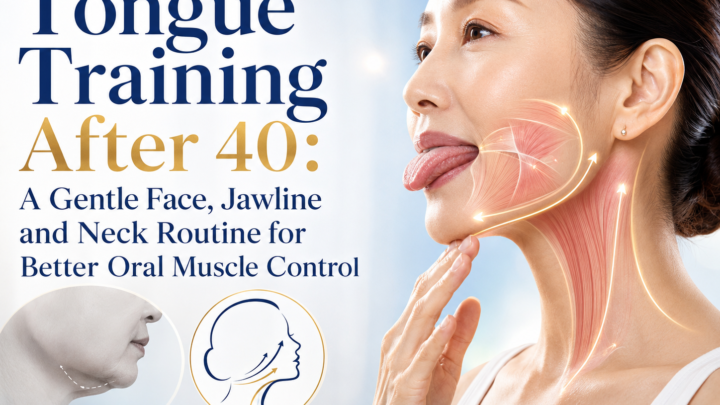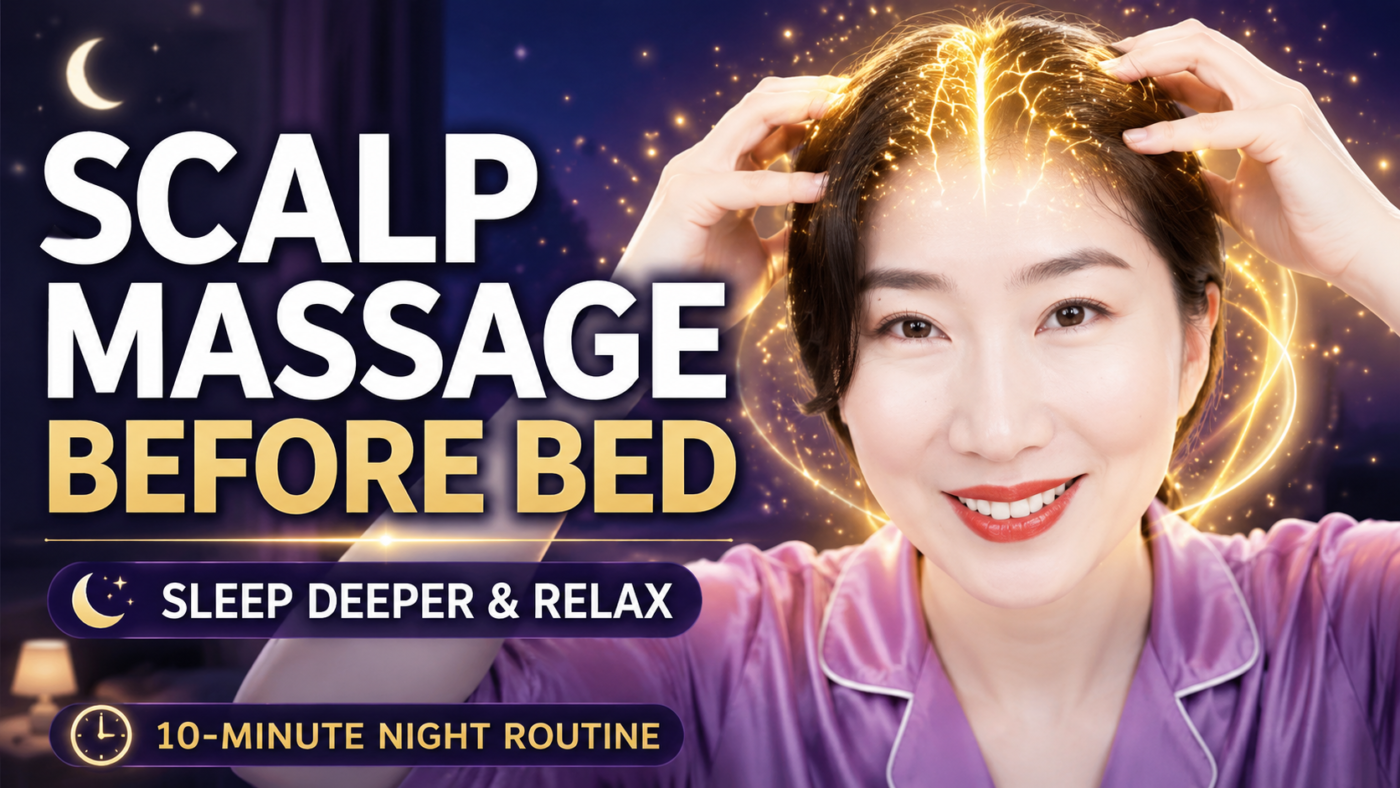
If your mind still feels busy when your head hits the pillow, a short bedtime scalp massage may help you transition from a stressful day into a calmer evening.
Scalp massage is not a treatment for insomnia, dementia or neurological disease. But gentle touch, slow breathing and a relaxing nighttime ritual may help reduce perceived tension, ease jaw and scalp tightness, and create conditions that make it easier to wind down before sleep.
This simple 10-minute bedtime routine combines gentle massage around the jaw, ears, temples and scalp with slow breathing.
It may be especially useful for people who spend long hours looking at screens, carry tension in the jaw and shoulders, or simply want a more relaxing pre-sleep routine.
Why Sleep Matters for Brain Health
Sleep is not simply a period of inactivity.
During sleep, the brain goes through important processes related to:
- Memory consolidation
- Emotional regulation
- Hormonal balance
- Tissue repair
- Immune function
- Metabolic regulation
Research has also shown that cerebrospinal fluid dynamics change during sleep and may contribute to the brain’s normal waste-clearance processes.
However, it would be inaccurate to claim that scalp massage directly increases cerebrospinal fluid flow or prevents dementia.
The more evidence-based message is simple:
Healthy sleep supports healthy brain function.
And anything safe that helps you relax before bed may support better sleep habits.
Can Scalp Massage Help You Sleep Better?
Possibly.
Massage can help some people feel calmer and less physically tense.
A relaxing scalp massage may:
- Reduce perceived stress
- Ease muscle tension
- Create a calming bedtime ritual
- Reduce jaw clenching awareness
- Encourage slower breathing
- Help shift attention away from screens and daily worries
That does not mean massage “switches off” the nervous system or guarantees deep sleep.
But it can be a useful behavioral cue that signals:
The day is ending. It is time to rest.
10-Minute Bedtime Scalp Massage Routine
Use light to moderate pressure.
Nothing should hurt.
You can perform the routine seated at a table, on a sofa or on the edge of your bed.
1. Relax the Jaw
Place your fingertips along the muscles around your jaw.
Massage slowly in small circles.
Let your teeth separate slightly.
Avoid clenching.
Take a slow breath in through your nose.
Exhale gently.
Continue for about 30 seconds.
Why This May Help
The jaw muscles can become tense during periods of stress, concentration or unconscious clenching.
Reducing jaw tension may make the entire face feel more relaxed.
2. Massage in Front of the Ears
Place your fingertips just in front of the ears.
Make small, slow circles.
Avoid pressing directly into the ear canal.
Continue for 20–30 seconds.
This area includes structures associated with the jaw joint and surrounding muscles.
Gentle massage may feel soothing if you tend to hold tension there.
3. Massage Around the Ears
Move your fingers above and behind the ears.
Massage slowly.
Then gently rub the base of the ears.
Keep your breathing slow.
There is no need to press hard.
4. Gentle Ear Mobilization
Hold the outer ear lightly between your fingers.
Move it slightly upward and downward.
Then gently release.
Do not pull aggressively.
The goal is relaxation, not stretching the tissue forcefully.
5. Temple Massage
Place two or three fingers on your temples.
Make small circular motions.
Use very light pressure.
Breathe slowly.
Try this for about 30 seconds.
For many people, temple massage feels especially relaxing after prolonged screen use or concentration.
6. Relieve Eye-Area Tension
Close your eyes.
Place your fingertips gently around the outer eyebrow and temple area.
Do not press directly on the eyeballs.
Massage lightly.
Slow breathing is more important than pressure.
If your eyes feel dry or irritated, avoid rubbing them.
7. Base-of-Skull Massage
Place your fingertips where the back of your skull meets the neck.
Apply gentle upward pressure.
You can slowly move your head a small amount if comfortable.
This area often feels tight after long periods of computer or phone use.
Do not force your neck into extension.
8. Scalp Mobilization
Place all fingertips on your scalp.
Instead of sliding across the hair, gently move the scalp itself.
Press lightly.
Move in small circles.
Work from the sides toward the top of the head.
Then move toward the back.
Continue for about 1–2 minutes.
9. Crown Massage
Use your fingertips or soft knuckles on the crown of your head.
Massage in slow circles.
Pressure should remain comfortable.
There is no evidence that stronger pressure produces better results.
10. Final Relaxation Hold
Open your fingers and place both hands gently over the sides of your head.
Close your eyes.
Take five slow breaths.
Try:
Inhale for 4 seconds.
Exhale for 6 seconds.
Allow your shoulders to drop.
Relax your jaw.
Let your tongue rest comfortably.
Then remove your hands slowly.
Can Scalp Massage Improve Hair Growth?
This is another area where claims are often exaggerated.
Scalp massage does not have strong evidence showing that it can reliably reverse hair loss.
A small amount of research suggests that regular scalp massage may influence scalp tissue and hair thickness in some people, but evidence remains limited.
More importantly, hair thinning can be related to:
- Genetics
- Hormonal changes
- Nutritional deficiencies
- Thyroid disorders
- Stress
- Medications
- Autoimmune disease
- Aging
Persistent or sudden hair loss should be evaluated by a healthcare professional.
Still, massage can be a pleasant part of a general scalp-care routine.
Does Better Scalp Circulation Mean Better Hair?
Healthy blood flow is necessary for living tissue, but the idea that simply “boosting scalp circulation” automatically produces thicker hair is too simplistic.
Hair follicles are influenced by many biological factors.
Massage should therefore be considered:
relaxation and scalp care
rather than a guaranteed hair-growth treatment.
Can Scalp Massage Prevent Dementia?
No.
There is currently no good evidence that scalp massage prevents dementia.
However, maintaining healthy sleep habits is associated with broader brain health.
Important brain-health habits include:
- Regular physical activity
- Blood pressure control
- Healthy sleep
- Avoiding smoking
- Managing diabetes
- Social engagement
- Cognitive activity
- Treating hearing loss
- Balanced nutrition
Scalp massage can be a relaxing addition to a healthy lifestyle, but it should not be presented as dementia prevention.
Why Bedtime Routines Matter
The nervous system responds to patterns.
A repeated sequence such as:
dim lights → put away phone → wash face → scalp massage → slow breathing → bed
can become a consistent cue for sleep.
This is sometimes more valuable than the massage itself.
The ritual helps your brain associate certain behaviors with bedtime.
Try Reducing Screen Exposure Too
If you want to improve sleep quality, combine this massage with basic sleep-hygiene habits.
About 30–60 minutes before bed:
- Reduce bright screens
- Dim room lighting
- Avoid stimulating news or work
- Keep the bedroom cool
- Avoid large late meals
- Limit caffeine later in the day
- Maintain a consistent bedtime
These changes have substantially stronger evidence for sleep quality than massage alone.
What If You Have Insomnia?
If you regularly:
- Need more than 30 minutes to fall asleep
- Wake repeatedly throughout the night
- Wake too early
- Feel exhausted despite adequate time in bed
- Snore loudly or stop breathing during sleep
a healthcare professional should evaluate the problem.
Chronic insomnia often responds well to CBT-I, or cognitive behavioral therapy for insomnia, which is considered a first-line treatment.
Who Should Avoid Scalp Massage?
Use caution if you have:
- Recent scalp surgery
- Open wounds
- Active scalp infection
- Severe dermatitis
- Recent head injury
- Severe headache of unknown cause
- Significant neck injury
Stop if massage causes pain, dizziness, nausea or worsening symptoms.
How Often Can You Do This Routine?
For most healthy adults, gentle scalp massage can be performed regularly.
A practical schedule is:
5–10 minutes before bed, several nights per week.
You do not need to perform every step every night.
Even 2–3 minutes can become a useful relaxation ritual.
The Bottom Line
A bedtime scalp massage cannot “rejuvenate the brain” in a literal medical sense.
It cannot prevent dementia.
And it is not a proven treatment for hair loss.
But it may offer something simpler and still valuable:
a calm, low-risk way to reduce tension, slow your breathing and prepare your body for sleep.
Combined with good sleep habits, regular exercise and stress management, it can become part of a healthy nighttime routine.
This article is for general education and does not replace individualized care from a qualified health professional. Seek appropriate advice for persistent, severe, or concerning symptoms.
Read the full medical disclaimer