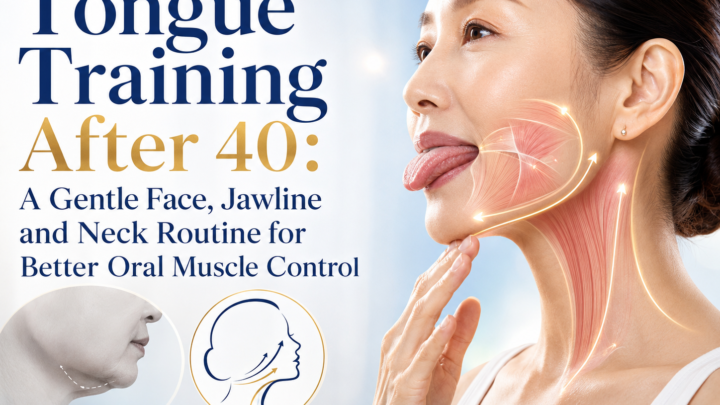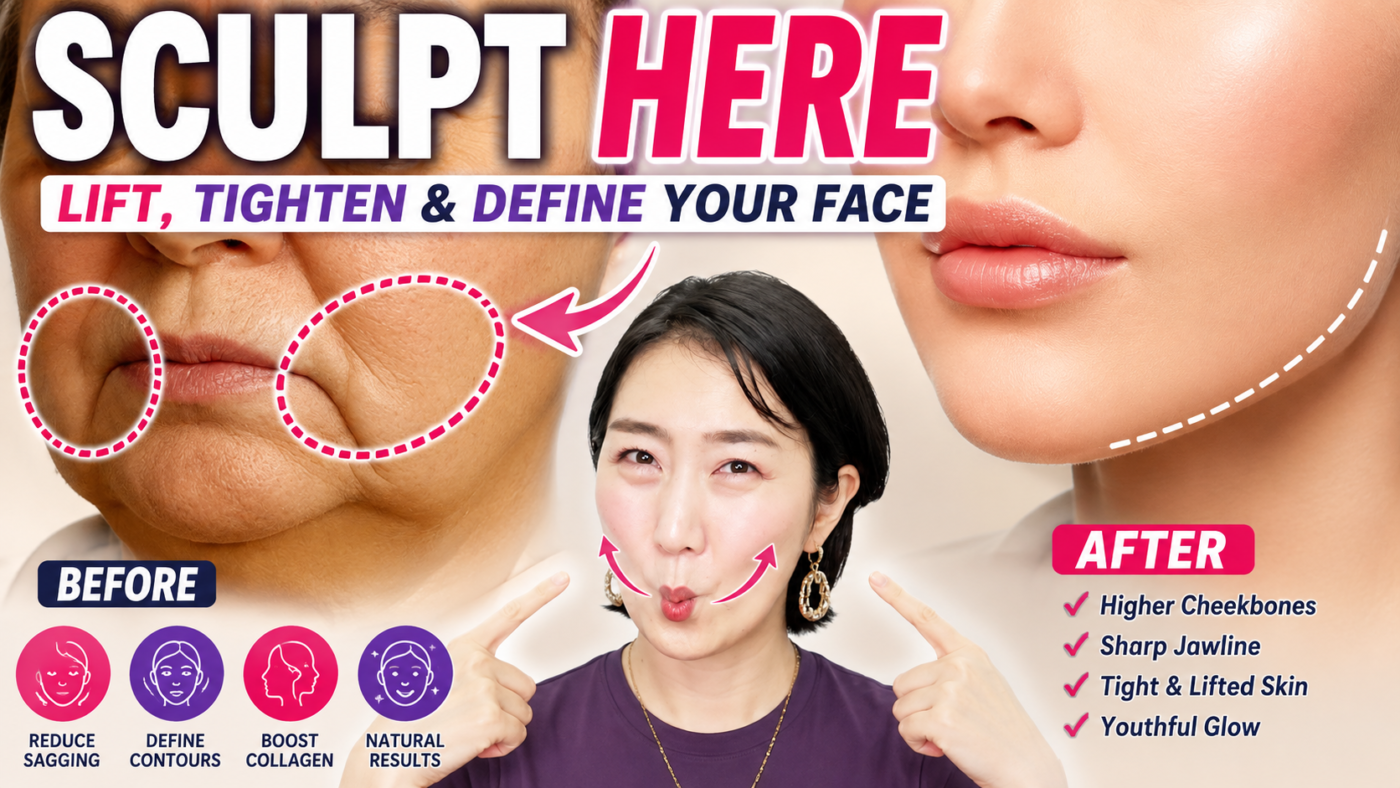
Cheek and jaw exercises have become popular among people who want a more defined lower face without fillers or surgery. Some routines go beyond ordinary facial massage and use the tongue, lips, cheeks, jaw and muscles inside the mouth to create resistance and improve awareness of how the lower face moves.
These techniques may help some people feel more control over their facial muscles, reduce jaw tension, improve oral-motor awareness and temporarily change the way the cheeks and jawline look. But claims that they can permanently move facial fat upward, erase nasolabial folds, reverse aging by decades or dramatically reshape the face are not supported by strong evidence.
The most useful way to think about these exercises is as a form of gentle facial and oral-motor training—not as a nonsurgical facelift.
What Is Intraoral Facial Training?
Intraoral facial training involves activating muscles from inside the mouth rather than only moving the skin from the outside.
The tongue, lips and cheeks all work together during speaking, chewing, swallowing and facial expression. Exercises that create light suction inside the mouth or move the tongue against the cheeks can increase awareness of these muscles.
The idea is not to “pull fat upward” with suction. Instead, the goal is controlled activation of the muscles involved in oral function.
Why the Cheeks Can Look Softer With Age
Cheek appearance changes for several reasons.
Normal aging affects skin elasticity, collagen, facial fat compartments, connective tissue and underlying bone structure. Genetics, sun exposure, weight changes, sleep, hydration and facial expression also matter.
A softer lower face or more noticeable nasolabial folds are therefore not caused simply by “lazy cheek muscles.”
Muscle activity can influence expression and facial tone, but it is only one part of a much larger anatomical picture.
1. Gentle Cheek Suction Exercise
One of the most common intraoral exercises involves gently drawing the cheeks inward.
Start by sitting upright and relaxing your jaw.
Lightly suck the inside of both cheeks inward, creating a mild hollowing effect. Hold for a few seconds, then release.
Do not create extreme suction.
The goal is not to make the cheeks hurt or bruise. A gentle contraction is enough.
Repeat five to ten times.
This can activate the cheek and lip muscles, but there is no good evidence that it permanently removes cheek fat.
2. Side-of-Mouth Suction
You can also focus on one side at a time.
Gently draw the inner cheek inward near one corner of the mouth. Hold briefly and release.
Repeat on the opposite side.
This may help improve control of the orbicularis oris and buccinator regions involved in lip closure and cheek tension.
Again, think control—not force.
3. Tongue Press Against the Cheek
Place your tongue against the inside of one cheek and press gently outward.
Hold for three to five seconds.
Relax.
Repeat on the other side.
This creates mild resistance through the cheek from inside the mouth.
The tongue is a complex muscular organ involved in speaking and swallowing, so movements like this can be useful for oral-motor awareness. However, they should not be promoted as a way to rebuild facial structure.
4. Controlled Lip Closure
Bring your lips together gently without clenching your jaw.
Hold the seal for a few seconds.
Then relax completely.
You can repeat this movement several times while keeping your forehead and eyes relaxed.
This trains lip control and awareness, but aggressive pursing is unnecessary.
If the exercise causes jaw fatigue or pain, stop.
5. Massage Under the Cheekbones
Using clean hands, place your fingertips underneath the cheekbones.
Apply light pressure and make small circular movements.
Keep the jaw relaxed.
This may help reduce a sensation of muscular tension around the cheeks and jaw.
Do not press hard enough to cause sharp pain.
Massage can temporarily alter local blood flow and how tissues feel, but it does not permanently reposition facial fat or cheekbones.
6. Relax the Temporalis
The temporalis is a chewing muscle located at the side of the head near the temples.
People who clench or grind their teeth may develop tension in this area.
Place your fingertips over the temples and make slow circular movements.
Keep your teeth slightly apart.
Breathe slowly.
This can be soothing, especially if stress contributes to jaw tension.
Persistent jaw pain, clicking, locking or headaches should be assessed professionally.
7. Gentle Jaw Mobility
Open your mouth slowly and comfortably.
Close it.
Then move the jaw slightly from side to side within a pain-free range.
The movement should remain small and controlled.
Do not force the jaw to click or stretch aggressively.
These movements can help improve awareness of jaw motion, but they should not be used to “break adhesions” or aggressively manipulate facial ligaments.
Can These Exercises Improve the Jawline?
They may temporarily change how the lower face looks.
For example, a more relaxed jaw, improved posture or reduced puffiness can make the jawline appear somewhat more defined.
Muscle activation can also change facial expression.
But the structure of the jawline is strongly influenced by bone, fat distribution and skin laxity. Facial exercises do not reliably alter those components in a dramatic or permanent way.
Can Cheek Exercises Reduce Nasolabial Folds?
Nasolabial folds are normal anatomical creases running from the sides of the nose toward the corners of the mouth.
They become more noticeable because of changes in skin, fat distribution, facial movement and deeper structural support.
Gentle massage or exercise may temporarily soften the appearance of the area by changing expression, hydration or muscle tension.
However, there is no strong evidence that cheek suction exercises permanently erase established folds.
What About Swallowing?
The tongue, cheeks and lips all participate in swallowing.
Specific oral-motor exercises can be useful in speech therapy or swallowing rehabilitation when prescribed for a defined medical reason.
That is very different from claiming that a cosmetic cheek exercise will automatically improve swallowing or extend lifespan.
People with choking, coughing during meals, unexplained weight loss, food sticking, recurrent pneumonia or difficulty swallowing should seek professional medical assessment.
Can Intraoral Pressure Improve Breathing?
Normal oral and tongue function can influence aspects of airway mechanics, but this area is complex.
A cheek-suction beauty exercise should not be presented as a treatment for sleep apnea, breathing disorders or airway problems.
If you snore heavily, stop breathing during sleep, wake gasping or experience persistent daytime sleepiness, seek appropriate evaluation.
Does This “Activate One-Third of the Muscles in the Skull”?
No reliable anatomical evidence supports this claim.
The head and neck contain many muscles involved in facial expression, chewing, eye movement, swallowing, speech and neck control.
A single cheek-suction exercise does not simultaneously activate a defined one-third of all cranial muscles.
It is more accurate to say that these movements recruit several muscles involved in the mouth, cheeks and jaw.
Can Facial Exercise Trigger “Happy Brain Chemicals”?
Any enjoyable movement or relaxation practice may influence mood, especially when combined with slow breathing and stress reduction.
But claims that a specific cheek exercise directly triggers a unique anti-aging neurochemical response are not established.
It is perfectly reasonable to enjoy the routine because it feels relaxing.
That benefit does not need a dramatic biological explanation.
A Simple 5-Minute Cheek and Jaw Routine
Minute 1: Relax the jaw and perform gentle cheek suction.
Minute 2: Alternate tongue presses into the left and right cheeks.
Minute 3: Practice controlled lip closure and relaxed smiling.
Minute 4: Massage the temples and underneath the cheekbones.
Minute 5: Perform slow, pain-free jaw opening and side-to-side movement.
Finish by relaxing your face completely.
If the muscles feel fatigued, stop.
More intensity is not better.
What You Should Avoid
Do not use painful pressure inside or outside the mouth.
Do not aggressively pinch, crush or scrape facial tissue.
Do not continue if an exercise causes dizziness, jaw pain, headache, numbness, tooth pain or unusual facial weakness.
Avoid these exercises immediately after oral surgery, facial surgery, fillers, dental procedures or other treatments unless a qualified professional has cleared you to do them.
Who Should Be Careful?
People with temporomandibular joint disorders, facial nerve problems, oral pain, recent dental work, swallowing difficulties, neurological conditions or recent cosmetic procedures should use extra caution.
Sudden facial weakness or drooping is not a cosmetic issue and requires prompt medical evaluation.
The Bottom Line
Cheek and jaw exercises can be a simple way to explore facial muscle control, tongue movement, jaw relaxation and oral-motor awareness.
They may temporarily make your face feel firmer, more active or less tense.
What they cannot reliably do is lift facial fat, permanently erase nasolabial folds, rebuild cheekbones or reverse aging by decades.
Use them as a gentle self-care practice.
Keep the pressure light.
Avoid pain.
And judge success by comfort, control and consistency—not dramatic transformation claims.
Frequently Asked Questions
Can cheek exercises make my face look slimmer?
They may temporarily change facial expression or muscle tone, but they do not reliably remove facial fat.
Can sucking in the cheeks sharpen cheekbones?
The movement can temporarily emphasize the cheek contour, but it does not permanently reshape bone or fat distribution.
Can tongue exercises lift the face?
Tongue exercises may improve oral-motor awareness, but strong evidence that they significantly lift sagging facial tissues is lacking.
Can facial exercises improve swallowing?
Specific exercises can be useful in swallowing therapy, but they should be prescribed for a diagnosed swallowing problem. Cosmetic face exercises are not a substitute for clinical assessment.
How often can I do these exercises?
A gentle five-minute routine several times per week is reasonable for many people if it causes no pain or fatigue.
Medical Disclaimer:This article is for general educational purposes only and is not medical, dental, speech-therapy or swallowing advice. Facial weakness, persistent jaw pain, difficulty swallowing, oral pain or sudden changes in facial movement require professional evaluation. Stop any exercise that causes pain or unusual symptoms.
This article is for general education and does not replace individualized care from a qualified health professional. Seek appropriate advice for persistent, severe, or concerning symptoms.
Read the full medical disclaimer