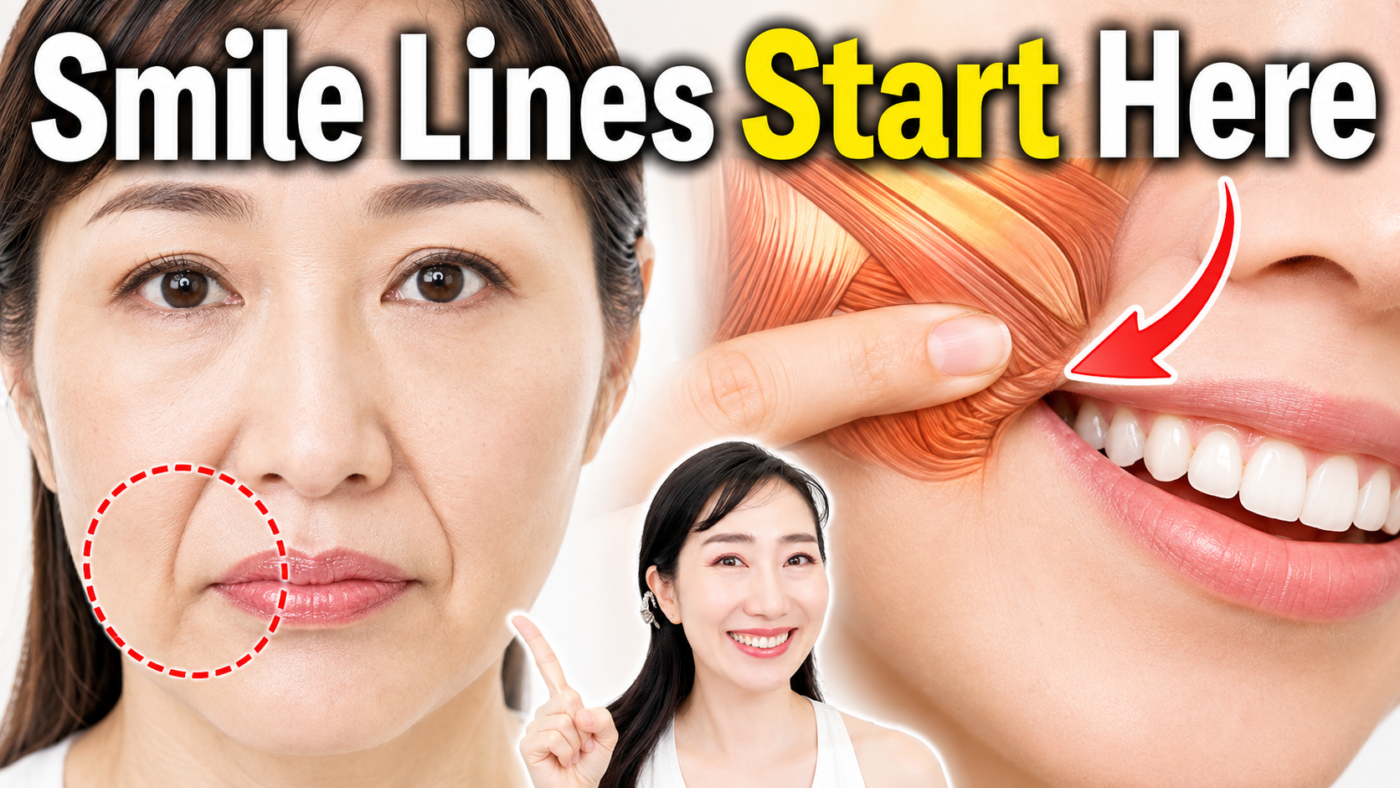
Nasolabial folds are the lines that run from the sides of the nose toward the corners of the mouth. They are a completely normal part of facial anatomy, but they often become more noticeable with age because the face changes in several layers at once. Skin gradually loses collagen and elasticity, facial fat pads shift, bone structure changes, and repeated expressions deepen natural creases. Tight jaw and cheek muscles may also affect how the lower face feels and moves. This is why a gentle nasolabial fold massage may make the face feel softer or temporarily look less tense, but it should not be presented as a way to permanently erase smile lines or reverse aging.
Many facial massage routines focus only on the skin. A more sensible approach considers the cheeks, jaw, temples, neck and shoulders together. These regions work as part of the same movement system, and tension in one area can influence how the rest of the face feels.
What Causes Nasolabial Folds?
Nasolabial folds are not caused by one single muscle.
They become more visible through a combination of factors, including age-related collagen loss, reduced skin elasticity, changes in facial fat distribution, bone remodeling, repeated facial movement, genetics, sun exposure and lifestyle factors.
This matters because no single massage point can permanently “erase” them.
A massage routine may temporarily improve softness, circulation and facial comfort, but it cannot rebuild lost bone volume or restore deep facial fat pads.
Why the Cheek Area Matters
The cheek contains several muscles involved in smiling and facial expression.
These include the zygomaticus muscles, levator muscles and buccinator.
When the face is tense, people may clench the jaw, hold the mouth rigidly or overuse certain expression muscles.
That can make the middle and lower face feel tight.
Gentle cheek massage may help reduce this sensation of tension and make facial movement feel more natural.
Can Facial Massage Really Soften Smile Lines?
Temporarily, it may.
Massage can increase local blood flow and reduce muscular tension. The skin may also look slightly more plump immediately afterward because of warmth, hydration and temporary tissue changes.
That does not mean the underlying fold has been permanently removed.
Think of massage as a relaxation and appearance-support technique rather than a structural anti-aging treatment.
Nasolabial Fold Massage Should Not Be Painful
Some online routines encourage deep pressure because they claim that pain means “congestion” is being released.
That is not a reliable medical explanation.
Pain can simply mean that the tissue is being pressed too aggressively.
Facial tissues contain sensitive nerves, blood vessels, salivary structures and delicate soft tissue.
More pressure is not necessarily more effective.
Use moderate or light pressure.
Sharp pain is a reason to stop.
Step 1: Relax the Shoulders First
Before touching the face, relax the shoulders.
Sit comfortably.
Place one hand over the opposite shoulder.
Gently tilt your head away until you feel a mild stretch along the side of the neck.
Breathe slowly for 20 to 30 seconds.
Switch sides.
This does not “lift” the face directly, but reducing upper-body tension can make facial massage more comfortable.
Step 2: Gentle Trapezius Release
Place your fingers over the upper trapezius between the neck and shoulder.
Gently squeeze and release.
Avoid digging deeply.
Continue for about 20 seconds on each side.
People who spend long periods at a computer often hold significant tension here.
Step 3: Neck Mobility
Turn your head slowly from side to side.
Keep the movement easy.
Do not force the neck into end-range rotation.
Repeat 5 to 8 times.
This is simply a preparation exercise before facial work.
Step 4: Ear Massage
Use your fingertips to gently massage the outer ear.
Move from the upper ear toward the earlobe.
You can also gently pull the ear outward.
Continue for 20 to 30 seconds.
Ear massage can feel relaxing, but claims that it directly “detoxifies” the face or resets the nervous system should be treated cautiously.
Step 5: Massage Beside the Nose
Place one fingertip beside the nose where the nasolabial fold begins.
Use very small circular movements.
Do not press aggressively.
Massage for 10 to 15 seconds.
Then move slightly downward along the fold.
Repeat gently.
This can help soften local muscular tension.
Step 6: Cheek Release
Place two or three fingertips over the fleshy part of the cheek.
Move the skin and tissue gently in small circles.
Work outward toward the cheekbone.
Keep the jaw relaxed.
Breathe slowly.
Continue for 20 to 30 seconds per side.
Step 7: Cheekbone Lift Massage
Place your thumbs or fingertips underneath the cheekbone.
Apply gentle upward pressure.
Hold for two or three seconds.
Release.
Repeat several times.
Do not try to physically force the cheek tissue into a new permanent position.
The purpose is relaxation and mobility.
Step 8: Side-of-Nose Massage
Place the pads of your fingers beside the nose.
Massage slowly upward and outward.
This area contains several small facial muscles.
Keep pressure light.
Avoid pressing directly into the nostril or causing pain.
Step 9: Gentle Jaw Movement
Place your fingertips on the cheek near the jaw.
Slowly open and close your mouth.
Keep the movement small.
Do not force the jaw sideways.
This can help you notice whether one side feels more restricted.
If clicking, locking or pain is significant, stop and consider professional evaluation for temporomandibular joint problems.
Step 10: Buccinator Awareness
The buccinator is a cheek muscle involved in keeping food between the teeth and helping control the cheeks.
A simple way to activate it is to gently draw the cheeks inward.
Hold for two seconds.
Release.
Repeat 5 to 8 times.
Avoid strong suction.
There is no evidence that aggressive cheek sucking permanently sculpts the face.
Step 11: Smile Activation
Make a gentle smile.
Focus on lifting the corners of the mouth rather than clenching the jaw.
Hold for three seconds.
Relax completely.
Repeat 5 times.
The goal is controlled facial movement, not maximum effort.
Can Cheek Exercises Build a More Lifted Appearance?
Possibly to a limited degree.
Facial muscles can respond to repeated movement just like other muscles.
However, research on facial exercise for visible rejuvenation is still limited, and results are usually modest.
Changes in aging skin are influenced by much more than muscle strength.
Can Facial Massage Increase Collagen?
Massage may affect local circulation and tissue mechanics, but claims that a few minutes of massage immediately “activate collagen” in a clinically meaningful way are overstated.
Collagen remodeling occurs gradually.
The strongest evidence-based ways to protect collagen remain sun protection, avoiding smoking, adequate nutrition and appropriate skin care.
Retinoids and certain dermatologic procedures have far stronger evidence for collagen-related skin changes than manual massage.
What About “Toxins” in the Face?
Facial massage is often described as “draining toxins.”
That wording is misleading.
Your lymphatic system helps move fluid, proteins and immune-related material through the body.
Gentle massage may temporarily influence superficial fluid movement, but there is no pile of mysterious toxins trapped in the nasolabial fold that must be physically squeezed out.
Can Massage Improve Puffiness?
Sometimes.
Gentle facial massage may temporarily reduce mild puffiness caused by superficial fluid retention.
The effect is usually temporary.
Persistent facial swelling should not be treated only with massage.
It may require medical evaluation.
Do Smile Lines Mean the Face Is Sagging?
Not necessarily.
Nasolabial folds exist even in young faces.
They become deeper with aging, facial anatomy and repeated movement.
The presence of a fold does not automatically mean the face is unhealthy or structurally “collapsing.”
A Simple 8-Minute Nasolabial Fold Massage Routine
Minute 1
Relax the shoulders and stretch the side of the neck.
Minute 2
Massage the upper trapezius gently.
Minute 3
Massage the ears and jaw area.
Minute 4
Use small circles beside the nose.
Minute 5
Massage the cheek outward toward the cheekbone.
Minute 6
Use gentle upward pressure beneath the cheekbone.
Minute 7
Perform small jaw opening and closing movements.
Minute 8
Finish with a relaxed smile and slow breathing.
How Often Can You Do It?
A gentle routine can be done several times per week.
Daily massage may also be reasonable if the pressure is light and the skin remains comfortable.
More is not automatically better.
If your skin becomes red, sore or irritated, reduce frequency.
Should You Use Oil or Cream?
A small amount of facial oil, moisturizer or massage cream can reduce friction.
Choose a product that does not irritate your skin.
Avoid fragranced products if you are sensitive.
Do not use massage oil inside the mouth.
About Intraoral or Gum Massage
Some routines involve placing a finger inside the mouth and pressing deeply around the gums or inner cheek.
This carries more risk than external massage.
The mouth contains delicate tissue, bacteria, salivary ducts and structures that can be irritated.
If you experiment with intraoral massage, wash your hands thoroughly, keep pressure extremely light and stop if you experience bleeding, gum pain, dental pain or unusual swelling.
People with active dental disease, gum infection, recent oral surgery, cold sores or unexplained mouth lesions should avoid it unless cleared by a dental professional.
What Results Should You Realistically Expect?
After a gentle session, you may notice a warmer face, reduced jaw tension, softer facial expression, temporary improvement in puffiness or a slightly smoother appearance.
Do not expect permanent removal of deep folds from massage alone.
Long-term facial appearance depends on skin quality, sun exposure, genetics, volume changes and overall aging.
When Smile Lines Need No Treatment at All
Smile lines are normal.
They are part of expressive facial movement.
There is no medical need to remove them.
If you choose massage, it should be because it feels relaxing or helps facial comfort, not because natural facial lines are a problem that must be fixed.
When to Stop Facial Massage
Stop if you experience sharp pain, bruising, numbness, persistent swelling, jaw locking, dental pain, gum bleeding, skin irritation or worsening symptoms.
If you have recent cosmetic injections, facial surgery or dental procedures, ask your clinician when massage is safe again.
The Bottom Line
Nasolabial fold massage may temporarily soften facial tension and make the cheeks feel more relaxed.
It may also improve the immediate appearance of the skin by increasing warmth and reducing mild puffiness.
But it does not permanently erase smile lines, rebuild lost facial volume or reverse aging.
The safest approach is gentle massage, realistic expectations and consistent skin care.
Use your hands to relax the face, not to fight it.
FAQ
Can nasolabial fold massage erase smile lines?
No. It may temporarily soften tension or puffiness, but it cannot permanently erase deep folds.
Does cheek massage lift the face?
It may temporarily make the face look more relaxed or less puffy, but it cannot permanently reposition facial tissues.
How often should I massage nasolabial folds?
Light massage can be done several times per week or daily if your skin tolerates it.
Should facial massage hurt?
No. Mild tenderness may occur, but sharp or intense pain is a reason to stop.
Can face massage increase collagen?
There is limited evidence that massage meaningfully increases collagen. Sun protection and evidence-based skin care are more reliable.
Can facial massage reduce puffiness?
It may temporarily help mild superficial fluid retention.
Is intraoral cheek massage safe?
It carries more risk than external massage and should be done very gently, with clean hands, and avoided if there is dental or gum disease.
Can facial exercises improve smile lines?
They may improve muscle awareness or expression control, but evidence for major wrinkle reduction is limited.
What is the best way to prevent deeper smile lines?
Daily sun protection, avoiding smoking, adequate sleep, nutrition and appropriate skin care have stronger evidence than massage alone.
Affiliate Disclosure
Some pages on Health, Beauty & Longevity may contain affiliate links. If you purchase through these links, we may earn a commission at no additional cost to you. Recommendations are based on relevance to the topic and are not a substitute for professional medical or skincare advice.
Medical Disclaimer
This content is for educational purposes only and is not medical advice. Facial massage should be gentle and should not cause sharp pain, bruising, gum injury or jaw problems. People with recent facial procedures, cosmetic injections, dental surgery, active skin infections or significant temporomandibular joint symptoms should consult an appropriate healthcare professional before beginning facial massage.
This article is for general education and does not replace individualized care from a qualified health professional. Seek appropriate advice for persistent, severe, or concerning symptoms.
Read the full medical disclaimer