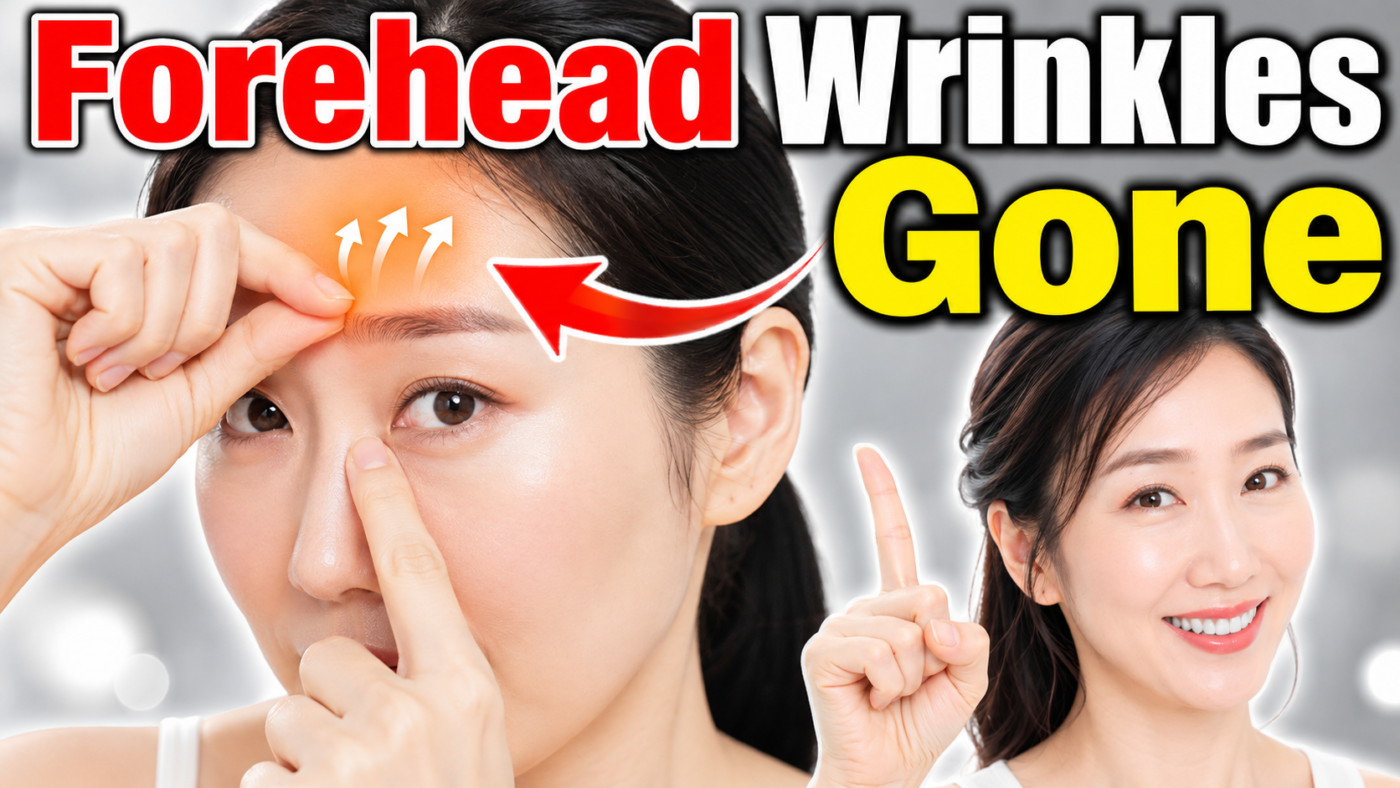
Forehead massage for wrinkles may help relax upper-face tension, reduce habitual frowning and temporarily soften the appearance of expression lines.Forehead lines, heavy-looking eyelids and tension around the eyes are common concerns after 40. Social media often promises dramatic results from facial massage, including claims that a few minutes of scalp or forehead work can outperform Botox, lift the eyelids, tighten under-eye skin or physically reverse facial aging.
Those claims are much stronger than the evidence supports.
However, gentle forehead massage and scalp release may still have worthwhile benefits. It can help relax tense facial muscles, increase awareness of habitual frowning, temporarily increase skin warmth and circulation, and make the upper face feel less tight.
The realistic goal is not to erase decades of aging in one session.
It is to reduce unnecessary tension, support comfortable facial movement and create a more relaxed appearance.
Why Forehead Wrinkles Form
Forehead wrinkles develop for several reasons.
Repeated facial expressions are one factor. Every time you raise your eyebrows, the frontalis muscle contracts and folds the skin.
Over many years, those temporary lines can gradually become more visible even when the face is at rest.
Other contributors include:
- Normal collagen and elastin decline
- Sun exposure
- Genetics
- Skin dryness
- Smoking
- Hormonal changes
- Age-related skin thinning
- Repeated facial movement
Forehead wrinkles are therefore not simply caused by a “stuck scalp.”
Scalp tension may affect how the area feels, but it is only one part of a much larger picture.
What Is the Frontalis Muscle?
The frontalis is the broad muscle covering much of the forehead.
Its main visible action is raising the eyebrows.
That is why forehead lines become especially obvious when you lift your brows.
The frontalis interacts with muscles around the eyebrows and eyes, which means facial expression is coordinated rather than controlled by one isolated muscle.
If you habitually raise your eyebrows to compensate for heavy eyelids or simply as part of your normal expression, you may notice stronger horizontal forehead lines.
Is the Forehead Connected to the Scalp?
Anatomically, yes.
The tissues of the forehead continue into the scalp through connective tissue and muscular structures.
That means movements of the scalp and forehead are not completely independent.
But this does not mean a stiff scalp literally glues forehead wrinkles into place.
Gentle scalp massage may make the region feel more mobile and relaxed, but it cannot permanently stretch aged skin back to a younger state.
Can Forehead Massage for Wrinkles Really Help?
Possibly only in a temporary or indirect way.
Massage may reduce muscular tension and increase superficial blood flow.
If the forehead is less tense afterward, expression lines can appear softer for a short time.
That is different from rebuilding collagen or permanently removing wrinkles.
Long-term wrinkle reduction has much stronger evidence behind interventions such as sun protection, topical retinoids and selected professional treatments.
Massage is better viewed as a relaxation and self-care technique.
Does Facial Massage Work Better Than Botox?
No.
Botulinum toxin and massage work through completely different mechanisms.
Botulinum toxin temporarily reduces nerve signals to selected muscles, which can decrease the muscular activity responsible for certain dynamic wrinkles.
Massage does not block those nerve signals.
It may relax the area temporarily, but it is not a noninvasive equivalent of Botox.
Claims that massage works “better than Botox” or produces a measurable permanent lift after one treatment are not supported by strong evidence.
Can Massage Lift the Eyelids?
Massage cannot reliably correct true eyelid drooping.
The appearance of the eyelids can change temporarily depending on swelling, muscle tension, eyebrow position and facial expression.
If you gently relax the forehead or brow region, the eyes may feel more open.
But persistent eyelid drooping can have structural, age-related, neurological or ophthalmological causes.
Sudden or one-sided drooping requires medical evaluation.
Why the Eye Area Can Feel Tight
People often tense the muscles around the eyes without realizing it.
Squinting, screen use, bright light, stress and concentration may contribute.
The muscles between the eyebrows can also become highly active during frowning.
Relaxing these areas can create a softer expression.
That is one of the most realistic benefits of an upper-face massage routine.
Start With a Gentle Scalp Check
Before massaging, place your fingertips on the scalp above the hairline.
Try gently moving the skin forward, backward and side to side.
Some regions may feel more mobile than others.
This variation is normal.
You do not need to force the scalp to move dramatically.
The exercise is simply an awareness check.
Step 1: Massage Above the Hairline
Place the pads of your fingers just above the hairline.
Use slow circular movements.
Move gradually across the front of the scalp.
Keep pressure comfortable.
Continue for approximately 30 to 60 seconds.
Avoid using your knuckles aggressively.
You should feel warmth or movement, not sharp pain.
Step 2: Gently Move the Scalp
Spread your fingertips across the scalp.
Rather than rubbing quickly over the hair, try moving the skin and soft tissue beneath your fingertips.
Shift gently from side to side.
Then move forward and backward.
Continue for approximately 30 seconds.
There is no need to pull your hair or pinch hard.
Step 3: Hairline Release
Place the fingertips of both hands close to the hairline.
Gently gather or move the scalp toward the center.
Release.
Repeat slowly.
The purpose is to create movement through superficial tissues, not to “lift the scalp off the skull.”
Use only enough pressure to feel comfortable.
Can Scalp Massage Help Hair Growth?
This is another area where online claims often become exaggerated.
Scalp massage may temporarily increase local circulation and can feel relaxing.
Some small studies have explored whether regular scalp massage could influence hair thickness, but evidence remains limited.
Hair loss has many causes, including genetics, hormones, nutritional deficiencies, autoimmune conditions and medical treatments.
Massage should not replace evaluation of significant or sudden hair loss.
Step 4: Relax the Brow Area
Place your fingertips lightly between the eyebrows.
Allow your forehead to relax.
Take a slow breath.
As you exhale, imagine the space between your eyebrows becoming wider.
You are not actually changing the distance between the bones.
You are simply reducing unnecessary contraction of muscles involved in frowning.
Repeat for several breaths.
Step 5: Gentle Brow Massage
A gentle forehead massage for wrinkles does not need to be painful or complicated.Using your fingertips, massage along the eyebrow area with light pressure.
Stay on the bony brow region.
Avoid forceful pressure directly into the eyeball.
Move from the inner brow toward the outer brow.
Repeat three to five times.
The skin around the eyes is delicate, so lighter pressure is better.
Step 6: Be Especially Careful Around the Eyelids
The original routine involves pressing beneath the eyebrows and attempting to lift the eyelids manually.
This needs caution.
The eyelids and surrounding tissues are delicate.
Avoid pressing deeply into the eye socket.
Do not press on the eyeball.
If you want to include the area, use extremely light contact along the brow bone rather than deep pressure.
Stop immediately if you experience pain, blurred vision, dizziness or visual disturbances.
Step 7: Relax the Muscles Between the Brows
Place one or two fingertips over the area between the eyebrows.
Make tiny circular movements.
Keep your eyebrows relaxed.
Do not repeatedly frown against resistance.
Continue for approximately 20 seconds.
Then release completely.
Notice how the forehead feels.
Step 8: Gentle Forehead Massage
Place the fingers flat against the forehead.
Slowly move upward from the eyebrows toward the hairline.
Use enough moisturizer or facial oil to avoid excessive friction if your skin is dry.
Repeat five to ten times.
Then move horizontally from the center of the forehead toward the temples.
Again, pressure should remain light.
Does Forehead Warmth Mean Circulation Has Improved?
Massage can increase local skin temperature and superficial blood flow temporarily.
That warmth is normal.
But it does not prove that the skin is rebuilding collagen or reversing aging.
Temporary circulation changes should not be confused with long-term structural changes in the skin.
Step 9: Controlled Brow Movement
Place your fingertips lightly above the eyebrows.
Raise your eyebrows gently.
Then relax them.
The goal is awareness rather than maximum muscular effort.
Repeat five to eight times.
If the movement creates deeper forehead lines, reduce the effort.
There is no clear evidence that repeatedly “training the forehead higher” permanently lifts the eyes.
Step 10: Finish With Facial Relaxation
Close your eyes gently.
Relax the forehead.
Allow the jaw to soften.
Let the tongue rest comfortably.
Take three slow breaths.
Try to avoid raising your eyebrows.
Then open your eyes naturally.
Many people notice that the upper face feels calmer even if the visual difference is subtle.
A Simple Five-Minute Upper-Face Routine
Try this sequence:
1. Scalp massage — 60 seconds
Move the scalp gently rather than scratching.
2. Hairline release — 30 seconds
Use fingertips and comfortable pressure.
3. Brow massage — 30 seconds per side
Stay along the brow bone.
4. Between-the-brows relaxation — 30 seconds
Breathe and soften.
5. Forehead gliding massage — 60 seconds
Use upward and outward movements.
6. Quiet facial relaxation — 60 seconds
Let the forehead and jaw rest.
A short routine is enough.
More pressure does not mean better results.
Why Pain Is Not Necessary
The original routine repeatedly suggests that intense pain means the tissues are waking up or that circulation is poor.
That is not a reliable rule.
Pain can mean excessive pressure, sensitive nerves, irritated tissues or an existing condition.
Massage should not make you cry.
It should not make your skull feel like it is “buzzing.”
If an area hurts significantly, reduce pressure or stop.
Can Forehead Massage Stimulate Collagen?
The evidence is not strong enough to claim that ordinary self-massage meaningfully stimulates collagen production to the point of reversing wrinkles.
Collagen remodeling is a complex biological process.
Certain professional treatments can stimulate collagen under controlled conditions, but gentle home massage should not be marketed as equivalent.
Massage may support relaxation and temporary skin appearance.
That is a more defensible benefit.
Can It Tighten Under-Eye Skin?
Massage cannot permanently tighten loose under-eye skin.
Temporary puffiness may change after gentle movement or facial massage, which can alter appearance.
But under-eye aging also involves skin thinning, fat redistribution, bone changes and genetics.
Aggressive rubbing around the eyes can irritate the delicate skin.
Use particularly light pressure in this area.
What About Puffiness?
Mild morning puffiness may improve temporarily with gentle facial movement.
Sleep position, sodium intake, allergies, hormones and hydration can all contribute.
Persistent swelling deserves more attention.
Sudden swelling around one eye, especially with pain, redness or vision changes, should be evaluated medically.
How to Protect the Forehead From Premature Aging
If your primary goal is fewer wrinkles, daily habits matter more than massage alone.
The most important include:
- Use broad-spectrum sunscreen
- Avoid smoking
- Protect skin from excessive UV exposure
- Maintain good sleep habits
- Use moisturizer when needed
- Consider evidence-based skincare
- Manage habitual squinting when possible
These habits address some of the major drivers of skin aging.
Retinoids and Forehead Wrinkles
Topical retinoids have significantly stronger evidence for improving signs of photoaging than facial massage.
They can support skin-cell turnover and collagen-related processes over time.
However, they can also cause irritation and are not appropriate for everyone.
Pregnant people or those trying to become pregnant should discuss retinoid use with a qualified clinician.
The Role of Sunscreen
No forehead routine can compensate for repeated unprotected ultraviolet exposure.
UV radiation contributes significantly to collagen degradation, uneven pigmentation and premature skin aging.
A broad-spectrum sunscreen with appropriate SPF is one of the highest-value anti-aging measures available.
It is less dramatic than a viral massage technique but considerably more evidence-based.
Can Facial Exercises Make Wrinkles Worse?
Potentially, if they involve repeated exaggerated expressions.
Dynamic wrinkles form partly because of repeated skin folding over active muscles.
That does not mean you should stop expressing emotion.
But repeatedly making extreme facial expressions in the hope of eliminating wrinkles may be counterproductive.
Gentle control and relaxation are preferable to aggressive repetitions.
When Forehead or Eye Symptoms Need Medical Attention
Do not assume every change is cosmetic.
Seek professional evaluation for:
- Sudden eyelid drooping
- One-sided facial weakness
- New vision problems
- Severe headache with neurological symptoms
- Persistent eye pain
- Significant swelling
- New numbness
- Facial paralysis
- Rapidly changing skin lesions
These symptoms require medical assessment rather than massage.
Facial Wellness After 40
Aging does not mean your face has failed.
Skin changes.
Muscles change.
Fat compartments change.
Bone changes.
Expression changes.
That is normal biology.
The goal of facial self-care should not be to pretend time has stopped.
Instead, focus on protecting skin, reducing unnecessary tension and maintaining healthy habits.
If scalp or forehead massage helps you relax, keep it gentle and enjoy it.
If your eyes feel less strained afterward, that can be worthwhile.
If your forehead temporarily looks softer, enjoy that too.
But do not judge the routine by whether it produces a millimeter of “lift.”
Your face does not need to become younger to benefit from care.
The best way to use forehead massage for wrinkles is as a gentle self-care practice, not as a substitute for evidence-based skin care.
FAQ
Can forehead massage remove wrinkles?
Massage may temporarily soften the appearance of some expression lines by relaxing muscular tension and changing superficial circulation, but it does not permanently erase wrinkles.
Does scalp massage help forehead wrinkles?
Scalp massage may help the forehead feel less tense and can support relaxation, but strong evidence that it permanently reduces forehead wrinkles is lacking.
Can forehead massage lift droopy eyelids?
Massage cannot reliably correct true eyelid drooping. If eyelid drooping is new, severe or one-sided, seek medical evaluation.
How often can I massage my forehead?
A few minutes of gentle massage can be performed as tolerated. Avoid excessive friction or pressure.
Should forehead massage hurt?
No. Significant pain is not evidence that massage is working. Reduce pressure or stop if the area becomes painful.
Can facial massage increase collagen?
Ordinary self-massage has not been proven to stimulate enough collagen to produce dramatic anti-aging effects.
Can massage reduce under-eye puffiness?
Gentle massage may temporarily change superficial fluid distribution and reduce mild puffiness in some people, but it does not permanently tighten under-eye skin.
Is scalp tightness a sign of poor circulation?
Not necessarily. Scalp mobility varies between individuals. Significant pain, hair loss or scalp symptoms should not automatically be blamed on circulation.
Is massage a substitute for Botox?
No. Massage and botulinum toxin work differently and should not be considered equivalent treatments.
Medical Disclaimer
This article is for educational and informational purposes only and is not medical advice. Avoid aggressive pressure around the eyes, temples or forehead. Never press directly on the eyeball. Stop if you experience pain, dizziness, blurred vision, numbness or worsening symptoms. Seek medical care for sudden eyelid drooping, facial weakness, new vision changes, severe headaches or other concerning neurological symptoms.
This article is for general education and does not replace individualized care from a qualified health professional. Seek appropriate advice for persistent, severe, or concerning symptoms.
Read the full medical disclaimer