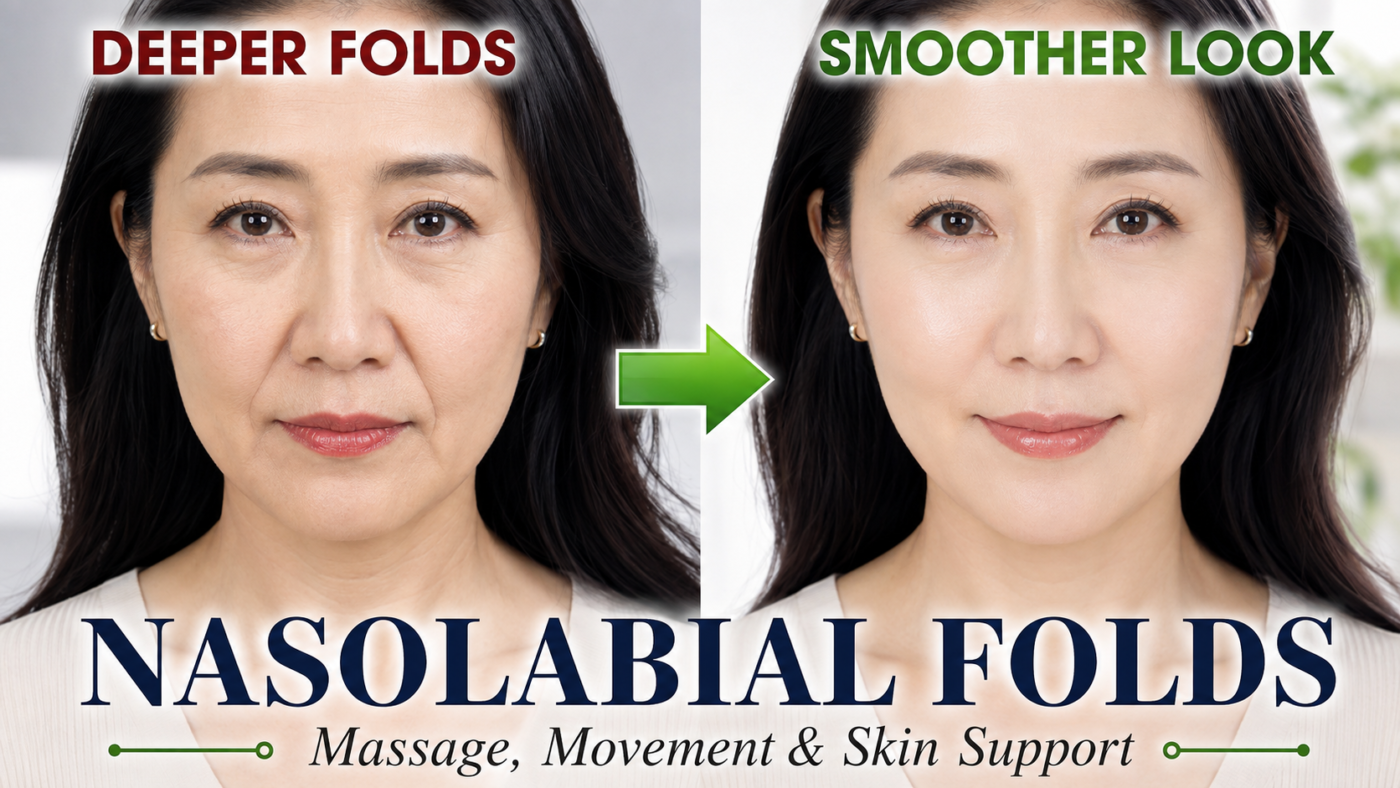
Nasolabial folds are the lines that extend from the sides of the nose toward the corners of the mouth. Almost everyone has them, and they are a normal part of facial anatomy rather than a defect that needs to be “fixed.” However, these folds can become more noticeable with age, changes in facial volume, repeated expressions and changes in skin structure.
Online facial exercise routines often suggest that deep nasolabial folds are primarily caused by tight or inactive cheek muscles, blocked circulation or poor lymphatic drainage. These ideas contain a small amount of physiological truth, but facial aging is considerably more complex.
Understanding what actually changes beneath the skin can help you separate useful self-care practices from unrealistic promises.
Why Nasolabial Folds Become Deeper
The face does not age as a flat sheet of skin. Multiple layers change simultaneously.
Skin gradually produces less collagen and elastin. These structural proteins help maintain firmness and resilience. As their levels and organization change with age, skin becomes less able to recover from repeated folding.
Facial fat also changes. Some fat compartments lose volume while others shift downward. This redistribution can make the transition between the cheek and mouth area more pronounced.
Underlying bone changes contribute as well. The facial skeleton is not completely static throughout adulthood. Age-related remodeling around the cheeks, jaw and eye sockets can subtly change the support available to the overlying tissues.
Repeated facial movement matters too. Smiling, speaking and other expressions repeatedly fold the skin along predictable anatomical lines. Over decades, these dynamic lines may gradually become visible even when the face is relaxed.
Genetics, sun exposure, smoking, significant weight changes and overall skin quality can influence how quickly these changes become visible.
This is why simply rubbing the fold itself rarely changes the underlying structure responsible for it.
Are the Cheeks Important?
Yes, but not in the simplistic sense sometimes suggested online.
The cheek contains several muscles involved in smiling and facial expression, including the zygomatic muscles and the levator labii superioris. These muscles help elevate parts of the upper lip and cheek during expression.
Muscle tone and movement influence facial appearance, but there is limited evidence that strengthening one specific facial muscle can permanently reposition aging facial tissues or eliminate nasolabial folds.
Facial exercises may change muscle awareness and possibly muscle thickness in some individuals. A small amount of research has suggested that structured facial exercise programs may modestly influence perceived facial fullness, but the evidence remains limited and far less established than treatments commonly used in dermatology.
Claims that a few minutes of cheek exercises can permanently “lift” the face should therefore be treated cautiously.
What Facial Massage Can Do
Facial massage may still have useful benefits.
Gentle massage can temporarily increase local blood flow and create a feeling of warmth. It may also help relax muscles that feel tense, especially around the jaw, temples and forehead.
Massage may temporarily reduce mild facial puffiness by encouraging movement of superficial fluid. This can make the contours of the face look slightly sharper for a short period.
The effect is usually temporary.
Massage does not rebuild lost facial bone, replace depleted fat compartments or restore collagen that has declined with age.
That distinction is important. A face may look fresher immediately after massage because swelling has decreased or the skin has become temporarily flushed, but this is different from reversing structural aging.
Does “Improving Circulation” Reduce Wrinkles?
Circulation is essential for healthy tissue, but the common claim that wrinkles primarily develop because circulation is “blocked” is not supported by modern dermatology.
Normal facial tissues are continuously supplied with blood.
Wrinkle formation is much more strongly associated with collagen changes, ultraviolet exposure, repeated mechanical folding, genetics, smoking and age-related structural changes.
Improving circulation through gentle massage may make the skin look temporarily brighter, but it should not be described as a proven method for rebuilding the deeper structures responsible for nasolabial folds.
What About Lymphatic Drainage?
The lymphatic system helps return excess fluid from tissues back into circulation.
Gentle lymphatic-style massage may temporarily reduce swelling in some people. This can be useful when the face appears puffy after poor sleep, a high-sodium meal, alcohol or other temporary causes of fluid retention.
However, normal facial puffiness does not usually mean that “toxins” are trapped in the face.
The liver, kidneys, lungs, gastrointestinal system and lymphatic system continuously process and eliminate metabolic waste. Facial massage does not need to “detox” the face.
Persistent or unexplained facial swelling deserves medical evaluation rather than increasingly aggressive massage.
A Safer Facial Massage Routine
If you enjoy facial massage, keep the technique gentle.
Apply a moisturizer or facial oil if appropriate for your skin so your fingers glide rather than drag across the surface. Use light to moderate pressure across the cheeks and avoid aggressively pinching or scraping delicate skin.
Around the eyes, pressure should be especially gentle.
Massage can also extend to the jaw, temples and scalp if those areas feel tense. Many people clench their jaw during periods of stress, and reducing that tension may make the entire face feel more relaxed.
More pressure is not necessarily more effective.
Bruising, persistent redness, pain or numbness are signs that the technique is too aggressive.
Can Neck and Shoulder Mobility Affect Facial Appearance?
Neck and shoulder exercises can improve posture, mobility and muscular comfort. That can indirectly influence how someone carries their head and how the face appears in photographs or mirrors.
However, stretching the shoulders does not physically “lift” the facial tissues.
The benefit is better understood as postural.
A forward-head posture can change the visual relationship between the jaw, neck and face. Strengthening the upper back, improving neck mobility and sitting more upright may therefore improve overall appearance without actually reversing facial aging.
This is still valuable.
Good posture supports breathing, mobility and musculoskeletal health even when cosmetic changes are modest.
Facial Exercise and Muscle Activation
If you want to experiment with facial exercises, use moderate effort.
You might gently smile while focusing on raising the cheeks, hold briefly and then completely relax. The goal should be controlled movement rather than extreme facial contortions.
Repeatedly pulling the skin as hard as possible is unnecessary.
There is also an important theoretical concern: because repeated facial expression contributes to dynamic wrinkles, extremely repetitive or forceful facial exercises are not automatically beneficial.
Research has not yet established the ideal frequency, intensity or long-term effects of most “face yoga” routines.
Treat facial exercise as a wellness practice rather than a proven facelift.
What Actually Helps Prevent Premature Facial Aging?
Several strategies have much stronger evidence.
Daily sun protection is among the most important. Ultraviolet radiation accelerates collagen breakdown, pigmentation changes and premature skin aging.
A broad-spectrum sunscreen, protective clothing and avoiding excessive ultraviolet exposure can make a substantial long-term difference.
Smoking should also be avoided. Tobacco exposure accelerates skin aging and collagen degradation.
Adequate dietary protein, fruits, vegetables and overall nutritional sufficiency support normal skin maintenance, although no single food can erase facial folds.
Sleep matters as well. Poor sleep may make the face look more tired and swollen, even though it is not the primary cause of permanent nasolabial folds.
For people interested in clinically established cosmetic treatments, a board-certified dermatologist or appropriately qualified medical professional can discuss options such as topical retinoids, resurfacing procedures, energy-based treatments, fillers or other interventions depending on individual anatomy and goals.
Do Not Try to Eliminate Every Line
There is another issue worth considering.
Nasolabial folds are part of a functioning human face.
A completely expressionless face is neither realistic nor necessarily desirable. Smiling, laughing and communicating naturally create movement around the cheeks and mouth.
Healthy aging does not require trying to eliminate every visible sign of age.
A more realistic goal is maintaining healthy skin, comfortable facial muscles, good posture and an appearance that still feels expressive and recognizably yours.
Facial massage can be part of that routine if it feels relaxing.
It simply should not be sold as something it cannot reliably deliver.
FAQ
Can facial massage remove nasolabial folds?
Facial massage may temporarily reduce puffiness and improve the appearance of the face, but there is no strong evidence that massage permanently removes established nasolabial folds.
Can cheek exercises lift the face?
Facial exercises may influence muscle activation and possibly facial fullness, but research is limited. They should not be considered equivalent to a surgical or medical facelift.
Why do my smile lines suddenly look deeper?
Temporary dehydration, facial swelling, weight changes, lighting and fatigue can alter their appearance. Gradual deepening is commonly related to aging of the skin, fat compartments and underlying facial structures.
Does poor circulation cause nasolabial folds?
There is no good evidence that normal nasolabial folds result from “blocked circulation.” Structural aging, genetics, facial movement and sun exposure are more important factors.
Can lymphatic massage make my face look slimmer?
It may temporarily reduce mild fluid-related puffiness, which can make facial contours look sharper. It does not permanently remove facial fat.
Should facial massage hurt?
No. Mild pressure may feel stimulating, but significant pain, bruising, numbness or prolonged redness suggests excessive pressure.
How often can I massage my face?
A short, gentle routine can generally be performed regularly if your skin tolerates it. People with active inflammatory skin conditions, recent cosmetic procedures or medical conditions affecting the face should seek professional guidance first.
What is the most effective way to slow visible facial aging?
Consistent sun protection, avoiding smoking, appropriate skin care, healthy nutrition and professional dermatologic treatment when needed have substantially stronger evidence than aggressive facial massage.
Medical Disclaimer
This article is for educational purposes only and does not provide medical diagnosis or treatment. Facial massage and exercise should not be used to evaluate or treat unexplained swelling, facial weakness, numbness, persistent pain or sudden changes in facial appearance. Stop any exercise that causes pain or neurological symptoms and consult a qualified healthcare professional when appropriate.
This article is for general education and does not replace individualized care from a qualified health professional. Seek appropriate advice for persistent, severe, or concerning symptoms.
Read the full medical disclaimer