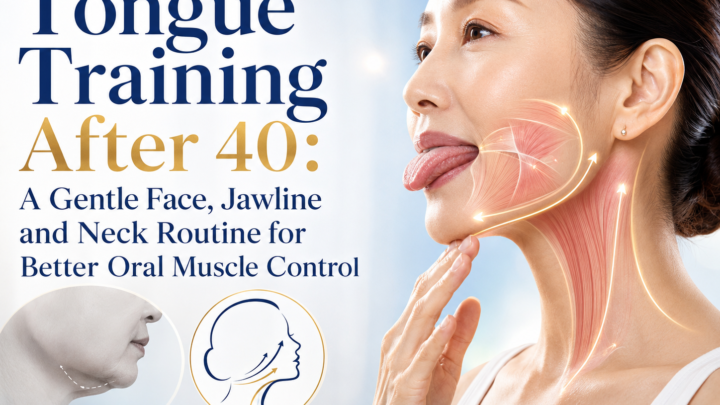
The idea of “slow aging” can easily become associated with expensive creams, supplements, beauty devices, or complicated routines. Yet many traditional East Asian wellness practices take a much broader view. Instead of focusing only on wrinkles, they emphasize daily nourishment, moderation, body awareness, movement, rest, skin protection, and a concept often described in Chinese as yangsheng, or “nourishing life.”
Healthy aging does not mean stopping the biological aging process. Genetics inevitably influence how our skin, muscles, metabolism, and other tissues change over time. But lifestyle and environmental factors also matter. Sun exposure, smoking, diet, physical activity, sleep, and other behaviors can influence aspects of premature aging and long-term health. Dermatologists, for example, consider ultraviolet exposure one of the major preventable contributors to premature skin aging.
Some traditional practices have stronger scientific support than others. The most useful approach is therefore not to treat every traditional belief as proven medicine, but to combine cultural wisdom with modern evidence.
1. Build Your Diet Around Minimally Processed Foods
One of the simplest slow-aging habits is also one of the most practical: make minimally processed foods the foundation of most meals.
Vegetables, fruit, legumes, whole grains, nuts, seeds, eggs, fish and other nutrient-dense foods can supply fiber, protein, healthy fats, vitamins, minerals and plant compounds without requiring an elaborate diet.
This does not mean that soy sauce, seasoning, packaged foods or restaurant meals are inherently unhealthy. The goal is not dietary perfection. It is simply to avoid allowing ultra-processed foods to become the foundation of the diet.
There is meaningful evidence supporting this distinction. In a controlled NIH study, participants consuming an ultra-processed diet ate about 500 more calories per day and gained weight compared with when those same participants consumed a minimally processed diet, despite the meals being designed to have similar presented amounts of calories, sugar, sodium, fiber and macronutrients.
Simple preparation can help. Steamed vegetables, soups, lightly cooked greens, whole grains, fish, tofu, eggs and fruit do not need large amounts of sauce or sugar to be enjoyable.
The objective is not to eat “clean” in an obsessive sense. It is to make nutritious foods easy enough to eat consistently for decades.
That long-term consistency matters far more than an occasional indulgence.
2. Eat Slowly and Stop When You Feel Comfortably Satisfied
A familiar Japanese expression is hara hachi bu, commonly interpreted as eating until you are around 80% full. Similar ideas of moderation exist throughout East Asian food culture.
The exact number should not be treated as a medical rule. Nobody needs to calculate whether their stomach is precisely 80% full.
The useful principle is simpler: avoid routinely eating until you feel uncomfortably stuffed.
Slowing down can help.
A systematic review and meta-analysis found that slower eating was associated with lower energy intake compared with faster eating, although the effect on hunger was less consistent.
Mindful eating may also be useful. A 2026 systematic review and meta-analysis found that mindfulness and mindful-eating interventions reduced food intake in controlled studies, although the researchers noted that stronger real-world research is still needed.
Try eating without scrolling through your phone or watching something during at least one meal each day. Notice the aroma, texture and taste of your food. Chew normally, put your utensils down occasionally, and notice when hunger begins turning into comfortable satisfaction.
You do not have to turn every meal into a meditation exercise.
Simply giving your brain enough time to notice that you are eating can be a useful habit.
3. Keep Your Anti-Aging Skincare Simpler Than You Think
Modern skincare marketing can make healthy skin appear incredibly complicated.
Serums for hydration, brightening, exfoliation, pigmentation, peptides, vitamin C, niacinamide, retinoids, eye creams, facial oils and numerous additional products can easily turn a routine into eight or ten different steps.
More products do not automatically mean healthier skin.
The American Academy of Dermatology specifically warns that using several anti-aging products at the same time can irritate the skin. Dermatologists consider moisturizer and sunscreen two of the most useful foundations of an anti-aging skincare routine.
For many people, a basic morning routine can therefore be remarkably simple:
Gentle cleansing → moisturizer if needed → broad-spectrum SPF 30+ sunscreen.
Sun protection deserves particular attention. The American Academy of Dermatology recommends broad-spectrum, water-resistant SPF 30 or higher and notes that sun protection helps reduce premature aging as well as skin-cancer risk.
Do not forget the neck and other exposed areas.
And sunscreen should generally be applied according to the product directions rather than casually mixing a small amount into another moisturizer, which can make it difficult to know whether adequate protection has been applied. A moisturizer that is already formulated and labeled with adequate SPF is a different matter.
Eye cream is optional rather than universally essential. The skin around the eyes is delicate, but there is no general scientific rule that eye creams work because their “particles are smaller.” A well-formulated moisturizer that does not irritate the eye area may be perfectly adequate for some people.
The best skincare routine is often the one your skin tolerates well enough for you to follow consistently.
4. Treat Facial Gua Sha as Gentle Massage — Not “Detoxification”
Facial gua sha has become one of the most visible exports of traditional Chinese beauty culture.
It can also be practiced using the fingers or knuckles instead of a specialized stone tool.
The important distinction is between what facial massage may realistically do and some of the exaggerated claims surrounding it.
Gentle facial massage may temporarily improve circulation, promote relaxation and reduce the appearance of puffiness associated with fluid accumulation. Cleveland Clinic notes that facial lymphatic drainage massage may help reduce puffiness, while recent scientific reviews of gua sha and other mechanical facial techniques conclude that stronger claims about significant structural rejuvenation remain inadequately proven.
So rather than saying that massage “clears toxins” or empties a facial “rubbish bin,” a more accurate description is that gentle massage may help move superficial fluid and temporarily reduce puffiness.
If you want to try it, apply enough moisturizer or facial oil to reduce friction and use light, comfortable pressure.
More pressure is not better.
Bruising, significant pain or persistent redness is a sign to stop or reduce the pressure.
Be particularly gentle around the eyes, and avoid aggressively massaging irritated, broken or inflamed skin.
Traditional routines often direct strokes from the center of the face outward and then gently downward along the side of the neck. Whether you use a gua sha tool, your fingertips or your knuckles, comfort should always take priority over intensity.
Think of facial gua sha as a relaxing self-care ritual with possible temporary cosmetic benefits — not a medical detox treatment.
5. Use Yangsheng and Yin-Yang as Frameworks for Balance, Not Rigid Rules
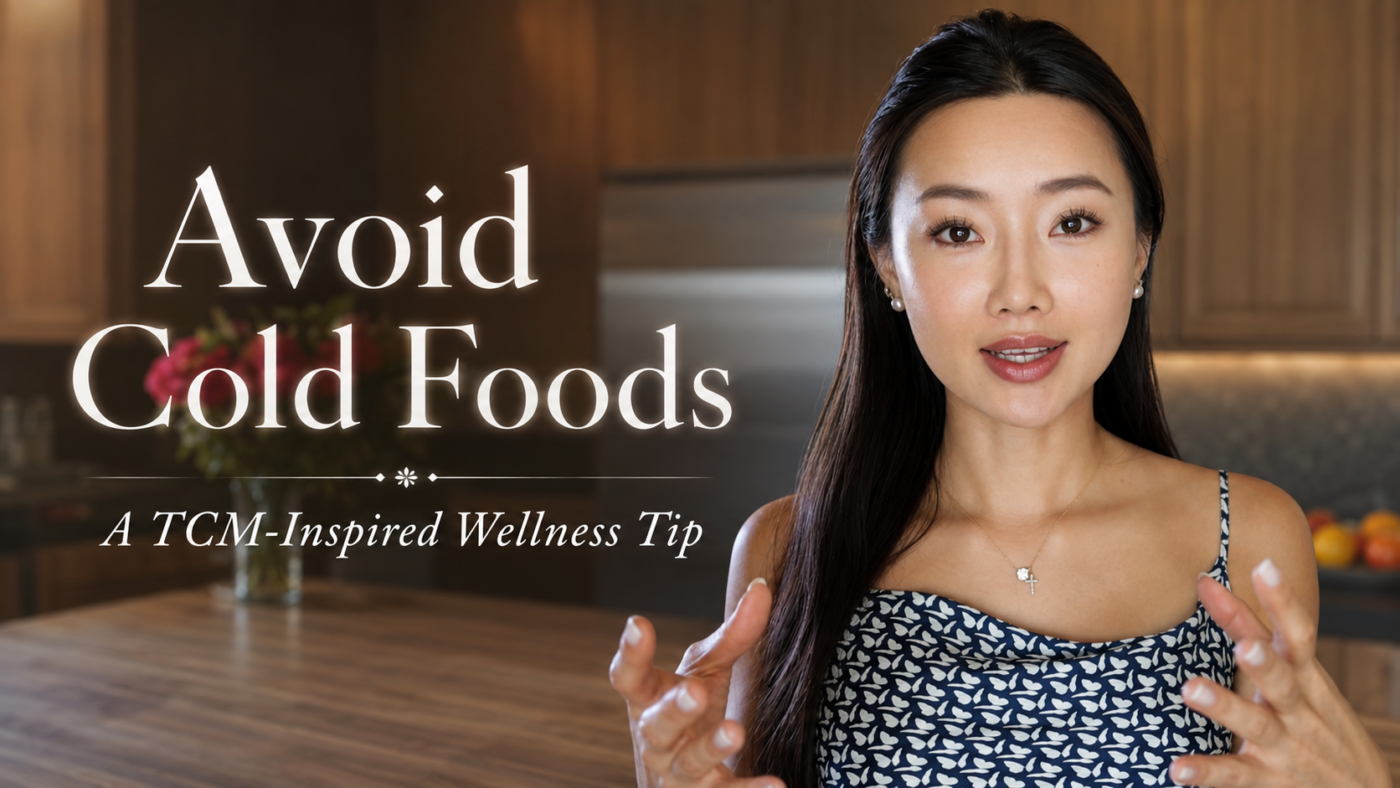
Traditional Chinese wellness philosophy frequently classifies foods as warming, cooling or neutral.
Watermelon, for example, is traditionally considered cooling, while ginger is generally considered warming.
These descriptions do not refer simply to whether the food is physically hot or cold. They belong to the traditional Chinese medicine framework of food properties and body constitution.
TCM may also describe individuals as having tendencies toward patterns traditionally characterized as “cold,” “hot” or other constitutional states.
These classifications should not be confused with laboratory-measured temperature or modern medical diagnoses.
A useful contemporary approach is to treat them as a traditional framework for observing how different foods, seasons and habits make you feel rather than as rigid biological rules.
For example, someone who notices that large amounts of raw food consistently cause digestive discomfort may prefer more cooked foods. Someone else may tolerate salads perfectly well.
There is no scientific requirement that everyone stop eating salads at night, nor has modern medicine established that cold foods universally “damage the spleen” or deplete a measurable form of yang energy.
The deeper principle of balance, however, remains valuable.
Avoid extremes.
Eat a diverse diet.
Adjust meals to appetite, activity, climate and individual tolerance.
And pay attention to persistent symptoms rather than forcing yourself to follow a food chart.
Traditional seasonal rituals can also be enjoyed without making medical claims. Warm foot baths on a cold evening, ginger-flavored drinks, soups during winter or lighter fruit-based meals during hot weather can be comforting parts of a wellness routine.
The experience itself may be worthwhile even when the traditional explanation has not been established by modern clinical research.
Hydration Still Matters — But There Is No Magic Number of Glasses
Water is essential for normal physiology, but “drink ten glasses every day” should not be presented as a universal anti-aging prescription.
Fluid needs vary according to body size, climate, physical activity, diet, pregnancy, medications and medical conditions.
Instead of forcing a specific number of glasses, most healthy adults can think in terms of maintaining adequate hydration throughout the day.
Water, unsweetened tea, soups and water-rich foods can all contribute.
More water is not automatically better. Extremely excessive water intake can also be dangerous.
Hydration should therefore be viewed as one part of a broader healthy lifestyle rather than a secret anti-aging treatment.
What Slow Aging Really Looks Like
Perhaps the most useful idea inherited from yangsheng is that caring for the body is a continuous process rather than something that begins when the first wrinkle appears.
Healthy aging is built through ordinary decisions repeated thousands of times:
Choose vegetables more often.
Eat slowly.
Stay physically active.
Sleep consistently.
Protect your skin from ultraviolet radiation.
Avoid smoking.
Use skincare that your skin tolerates.
Enjoy traditional wellness practices when they make you feel good, while remaining realistic about what they can and cannot accomplish.
The most sustainable slow-aging routine is not necessarily the most complicated one.
It is the one that supports your health, fits your body and lifestyle, and can realistically become part of your life for years.
That may be the most useful interpretation of yangsheng: not trying to defeat aging, but creating the conditions in which you can age as well as possible.
FAQ
Can facial gua sha really slow aging?
There is not currently strong evidence that facial gua sha permanently reverses wrinkles or changes facial structure. Gentle massage may temporarily improve circulation, relaxation and facial puffiness, but dramatic anti-aging claims remain unproven.
Does gua sha remove toxins from the face?
There is no good evidence that facial gua sha “detoxifies” the body. The liver, kidneys, lungs and other physiological systems perform the body’s major waste-processing functions. Facial massage may influence superficial fluid movement, but this is different from removing toxins.
Is eating until 80% full scientifically proven to extend life?
Not as a precise 80% rule. The traditional principle is better understood as avoiding habitual overeating. Research does suggest that slower eating can reduce energy intake, and mindful eating may improve awareness of eating behavior.
Are warming and cooling foods scientifically proven?
Warming, cooling and neutral foods are classifications within traditional Chinese medicine rather than categories established by modern nutritional science. They can be explored as part of traditional wellness culture, but they should not replace evidence-based medical or nutritional advice.
What is the most important anti-aging skincare habit?
Consistent sun protection is one of the most evidence-supported ways to reduce preventable premature skin aging. Dermatologists recommend broad-spectrum SPF 30 or higher alongside other sun-protection measures.
References
American Academy of Dermatology guidance identifies daily sun protection and moisturizer as key components of preventing premature skin aging.
A randomized controlled feeding study conducted by NIH researchers found greater calorie intake and weight gain during an ultra-processed diet compared with a minimally processed diet.
Recent reviews suggest possible short-term cosmetic benefits from facial massage and gua sha, while evidence for major or permanent facial rejuvenation remains limited.
Research on eating speed and mindful eating suggests potential benefits for regulating food intake, although effects vary and more real-world research is needed.
Medical Disclaimer
This article is for general educational purposes only and is not intended to diagnose, treat, cure, or prevent any disease. Traditional Chinese medicine concepts discussed here are presented for cultural and educational context and should not be interpreted as scientifically established medical diagnoses or treatments. If you have persistent digestive problems, unexplained swelling, skin disease, nutritional concerns, or another medical condition, consult a qualified healthcare professional.
This article is for general education and does not replace individualized care from a qualified health professional. Seek appropriate advice for persistent, severe, or concerning symptoms.
Read the full medical disclaimer