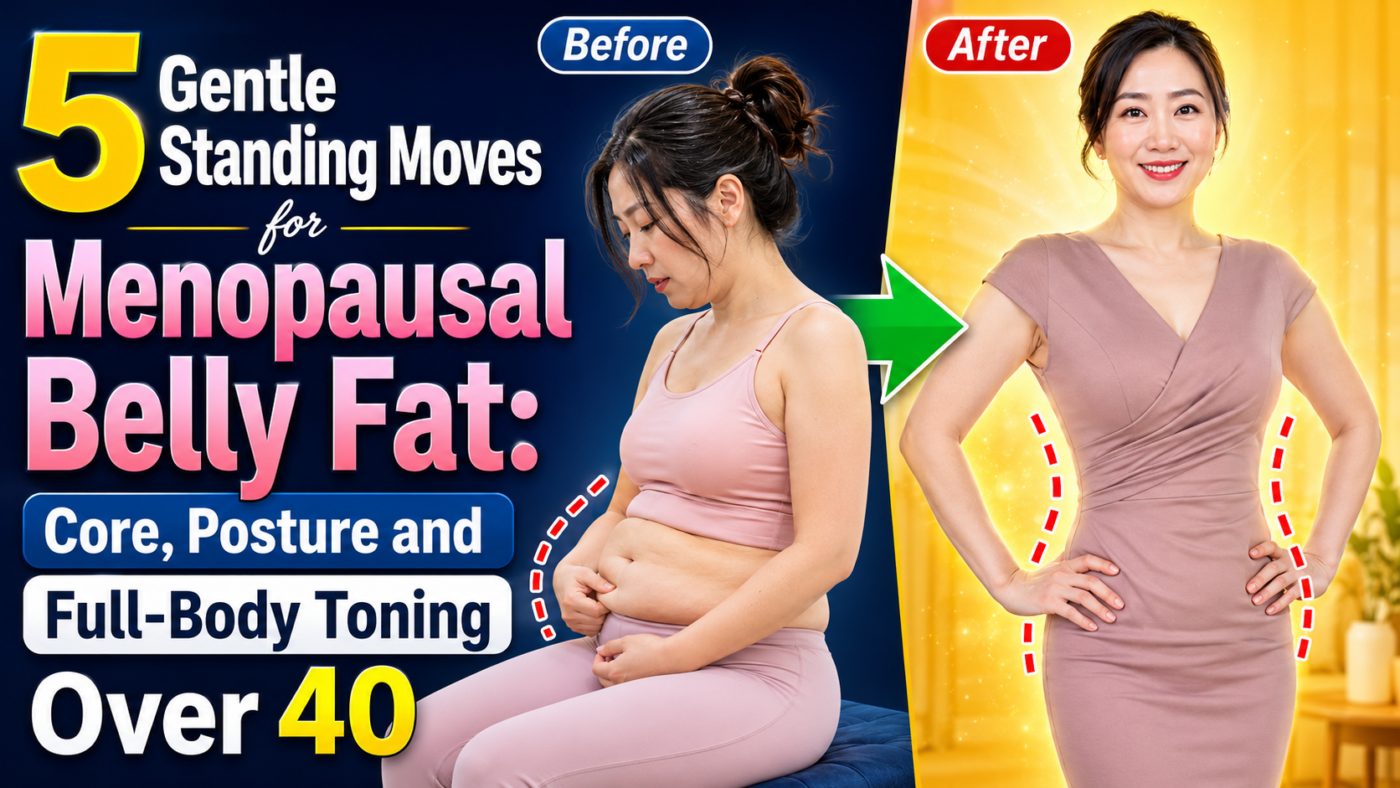
Why Standing Core Work Can Be Useful After 40
Many people think abdominal training has to mean crunches, sit ups or long planks.
It does not.
Your core works whenever your trunk resists movement, transfers force or stabilizes your body.
That means standing exercises can challenge the abdominal wall, back muscles and pelvis without requiring you to lie on the floor.
This can be especially convenient for people who dislike traditional ab workouts or who simply want a short routine they can perform almost anywhere.
The movements in this session combine rotation, bracing, pelvic control and overhead reaching.
They are simple.
But simple does not necessarily mean useless.
What the Core Actually Includes
The core is more than the visible abdominal muscles.
It includes several muscle groups around the trunk and pelvis.
These include the rectus abdominis, obliques, transverse abdominal muscles, spinal muscles, diaphragm and muscles that interact with the pelvic floor.
They work together rather than in complete isolation.
That is why breathing and trunk control matter.
A strong core does not mean keeping your stomach sucked in every minute of the day.
It means being able to create appropriate tension when needed and relax when you do not need it.
Start With Torso Rotations
Stand with your feet around shoulder width.
Keep the knees relaxed.
Allow your arms to swing gently from side to side.
Rotate through the torso comfortably.
Let the hips participate naturally.
Do not lock your pelvis in place.
Keep the movement smooth.
The original routine emphasizes keeping the feet completely still and the back perfectly straight.
That is not necessary for everyone.
A little natural movement through the hips can make rotation more comfortable.
Do not force the spine.
Why Rotation Matters
The trunk is designed to rotate.
Walking itself involves rotational movement between the upper and lower body.
Gentle standing rotations can help you practice this movement pattern.
They can also warm the shoulders and hips.
Rotation should not cause sharp pain.
If you have a history of significant back problems, use a smaller range.
Movement quality matters more than how far you twist.
Can Rotations Burn Belly Fat?
Not selectively.
Rotating the torso uses muscles.
It may raise your heart rate slightly when performed continuously.
But it does not directly melt fat from the waist.
Fat loss occurs through overall energy balance over time.
Exercise contributes.
Nutrition matters.
Total activity matters.
Genetics influence where fat is stored and lost.
Waist twisting does not give the body instructions to burn only abdominal fat.
Controlled Pelvic Rotation
Place your hands around your waist or hips.
Move the pelvis gently from side to side.
Keep the upper body reasonably quiet.
Do not force the movement.
This can help you become more aware of how the pelvis moves beneath the trunk.
You may feel the oblique muscles working lightly.
You may also simply notice increased coordination.
That is useful.
You do not need to describe it as waking up every muscle in the body.
Abdominal Bracing
Stand tall.
Place your hands around the waist.
Take a comfortable breath in.
As you exhale, gently tighten the abdominal wall.
Imagine preparing for someone to lightly tap your stomach.
Do not pull the belly inward as hard as possible.
Do not hold your breath.
Maintain enough tension to feel supported.
Then relax.
Repeat.
This is abdominal bracing.
It is a useful skill during lifting, exercise and other activities.
Squeezing Harder Is Not Always Better
The original routine encourages maximum contraction.
That is unnecessary.
Excessive bracing can interfere with breathing and create unnecessary tension.
Aim for moderate control.
You should still be able to breathe.
A good core contraction feels organized rather than frantic.
If your face, shoulders and neck are tightening at the same time, reduce the effort.
Pelvic Tilts
Place your hands on your hips.
Gently tilt the pelvis forward.
Then tilt it backward.
Keep the range small.
Do not exaggerate the lower back arch.
Do not force the pelvis under aggressively.
The goal is to understand pelvic movement.
This can be a useful coordination exercise.
It is not a way to manually reposition the sacrum or pelvis permanently.
Can Pelvic Tilts Prevent Back Pain?
No single movement can guarantee that.
Back pain has many causes.
Regular movement and strengthening can be useful parts of overall back health.
But pelvic tilts do not protect everyone from future pain.
Use them as movement practice, not a cure.
Pelvic Floor Awareness
The routine also asks you to squeeze the pelvic floor.
This needs careful explanation.
The pelvic floor is a group of muscles at the base of the pelvis.
These muscles contribute to bladder and bowel control and interact with breathing and core function.
A gentle pelvic floor contraction may be described as lifting the muscles you would use to stop urine or prevent passing gas.
However, you should not repeatedly stop urine flow during actual urination as a training method.
Pelvic Floor Exercises Are Not the Same for Everyone
Some people need stronger pelvic floor muscles.
Others have pelvic floor muscles that are already too tense.
That means constant squeezing is not appropriate for everyone.
People with pelvic pain, painful intercourse, urinary urgency or difficulty relaxing the pelvic floor may need a different approach.
Persistent urinary leakage or pelvic symptoms deserve individualized assessment.
A general fitness video cannot diagnose pelvic floor function.
Overhead Reach
Bring your hands together.
Raise your arms toward the ceiling.
Lengthen through the body comfortably.
Keep your ribs controlled.
Do not dramatically arch your lower back.
Continue breathing.
Feel the reach through the shoulders and sides of the torso.
Then lower the arms.
Repeat.
This creates a whole body stretch.
It may also challenge core control because you are maintaining trunk stability while the arms move overhead.
You Do Not Need to Pull the Spine Apart
The original wording suggests pulling the spine in both directions.
That is better treated as imagery than anatomy.
You are not literally lengthening the vertebrae apart.
Think of the cue as standing tall and reaching upward without collapsing.
That is enough.
Core Plus Overhead Reach
For the next version, gently brace the abdomen.
Raise the arms.
Exhale as you reach.
Maintain a comfortable posture.
Do not hold a maximum abdominal contraction.
The goal is coordination.
Breathe.
Reach.
Lower.
Relax.
This combination of arm movement and trunk control can be more demanding than it looks.
Does Overhead Reaching Improve Posture?
It can encourage temporary awareness of a taller position and shoulder movement.
But posture is not something permanently fixed by one stretch.
Human posture changes throughout the day.
The goal is movement variety rather than maintaining one ideal position constantly.
Final Standing Brace
Place your hands on your waist.
Exhale.
Create a moderate abdominal brace.
Optionally include a gentle pelvic floor contraction if that feels appropriate.
Hold briefly.
Then relax fully.
Repeat.
Notice the difference between tension and relaxation.
Learning to relax is just as important as learning to contract.
The body should not remain braced all day.
Can This Workout Flatten the Stomach?
It can strengthen and improve control of the muscles underneath the abdominal wall.
That may influence how you hold your torso.
However, it does not remove abdominal fat in one session.
A flatter looking stomach is influenced by fat distribution, posture, digestion, bloating, muscle and anatomy.
Exercise can contribute to long term changes.
It does not create an instant permanent transformation.
Can Core Training Shrink the Waist?
Core training can build muscle and improve trunk control.
It may change how the waist looks over time.
But it cannot selectively remove fat from the waist.
Some abdominal exercises can even increase muscle thickness in the trunk.
That is not bad.
Strength is useful.
If fat loss is the goal, overall lifestyle factors matter.
What About Losing 20 Pounds After 40?
Losing 20 pounds is possible for some people.
But it cannot be attributed to five standing movements alone.
Meaningful body weight change usually reflects a combination of calorie intake, total activity, resistance training, aerobic exercise, sleep, health status and individual physiology.
Testimonials do not tell us which factor caused the result.
Use success stories for motivation, not as proof of mechanism.
Does Metabolism Slow After 35?
Metabolism does not suddenly collapse at age 35.
Energy expenditure changes across the lifespan, but the story is more nuanced than viral fitness videos suggest.
Body composition, activity level, muscle mass and lifestyle can all influence energy needs.
Midlife weight gain often reflects several interacting factors rather than one broken metabolism.
That is good news.
It means lifestyle still matters.
Can Exercise Create a 24/7 Fat Burning Body?
No workout keeps the body in a dramatically elevated fat burning state around the clock.
Exercise can increase energy expenditure.
Resistance training helps maintain or build muscle.
Higher muscle mass contributes somewhat to resting energy expenditure.
But the effect is not a magical metabolic furnace.
Consistent training matters more than chasing exaggerated afterburn claims.
Brown Fat Claims
The original video says these exercises stimulate brown fat.
That claim is not well supported for this specific routine.
Brown adipose tissue contributes to heat production.
It can be activated by certain physiological conditions, including cold exposure.
There is not good evidence that simple waist twists or overhead reaches produce meaningful brown fat activation sufficient to explain weight loss.
You may feel warm because your muscles are working.
That is different.
Women Over 40
Standing core training can be particularly convenient in midlife.
It does not require getting onto the floor.
It combines mobility and muscular control.
And it can fit into a short daily movement break.
However, women over 40 also benefit from broader strength training.
Train the legs.
Train the back.
Train pushing and pulling movements.
Include aerobic activity.
Core work is only one part of a complete program.
Women Over 50
Women over 50 can perform standing core exercises too.
Use a stable stance.
Keep movements controlled.
Use a wall or chair if balance is uncertain.
Do not force spinal rotation.
Progress slowly.
A short standing routine can be a useful entry point into more comprehensive strength and mobility training.
Can Standing Core Exercises Help Balance?
Yes, especially when the body must stabilize while the arms or pelvis move.
Standing exercises challenge postural control.
That can be useful.
But if balance is a primary goal, include specific balance exercises as well.
Single leg standing and controlled stepping can complement core training.
How Often Should You Practice?
Two to four short sessions per week is a reasonable starting point for many people.
You can also use a few of these movements daily as part of a movement break.
Do not assume you need to train the abs hard every day.
Muscles need recovery when the workout is demanding.
Short gentle coordination practice is different from high intensity strength training.
A Simple Beginner Version
30 seconds gentle torso rotation
30 seconds pelvic movement
Three gentle abdominal braces
Three pelvic tilts
Three overhead reaches
Rest
Repeat once
That may be enough to begin.
A More Challenging Version
Increase the duration of torso rotation.
Slow down abdominal bracing.
Add controlled marching while maintaining core stability.
Add resistance bands.
Add loaded carries.
Add squats or lunges.
Progress gradually.
You do not need to make every movement extreme.
Combine Core Training With Walking
A strong weekly plan might include both standing core work and walking.
Walking supports aerobic fitness.
Core training supports trunk control.
Strength training adds a stronger muscle stimulus.
Together they create a more balanced program.
A Simple Weekly Plan
Monday
Standing core workout
Tuesday
Brisk walking
Wednesday
Full body strength
Thursday
Standing mobility and core
Friday
Walking
Saturday
Strength training
Sunday
Recovery
Adjust according to your ability and schedule.
A Better Way to Track Progress
Do not only track waist measurements.
Ask whether you can control your trunk better.
Can you rotate more comfortably?
Can you maintain balance more easily?
Can you lift objects with better control?
Can you perform exercises without holding your breath?
Can you walk or train longer?
Those are meaningful improvements.
Body measurements may change too, but function matters.
Frequently Asked Questions
Can standing ab exercises reduce belly fat?
No. They strengthen and train the core but do not selectively remove abdominal fat.
Are standing core workouts effective?
They can be effective for core coordination, muscular endurance and movement practice, especially for beginners.
Can pelvic floor exercises help urinary leakage?
They can help some people, but not all pelvic floor problems are caused by weakness. Individual assessment may be needed.
Should I squeeze my pelvic floor during every exercise?
No. The pelvic floor should also be able to relax. Constant squeezing is not appropriate for everyone.
Can standing twists slim the waist?
They cannot selectively remove waist fat. They can train trunk movement and muscle control.
Can this workout improve posture?
It may improve posture awareness and movement control, but no short routine permanently fixes posture.
Can it activate brown fat?
There is not good evidence that this type of standing routine meaningfully activates brown fat for weight loss.
Can it boost metabolism?
Exercise contributes to energy expenditure, but this routine does not create a special 24 hour fat burning state.
Is this suitable after 40?
Yes, for many healthy adults, provided the movements are comfortable and adapted to ability.
How often should I do it?
Two to four times per week is a reasonable starting point, depending on intensity and recovery.
Medical Disclaimer
This article is for general educational and informational purposes only and is not medical advice, diagnosis or treatment. Exercise suitability varies according to medical history, injuries, pelvic health, balance and physical ability. Stop any movement that causes sharp pain, dizziness, pelvic pain, unexpected weakness or worsening symptoms. Seek appropriate professional guidance for persistent urinary leakage, pelvic pressure, significant back pain or other concerning symptoms.
This article is for general education and does not replace individualized care from a qualified health professional. Seek appropriate advice for persistent, severe, or concerning symptoms.
Read the full medical disclaimer