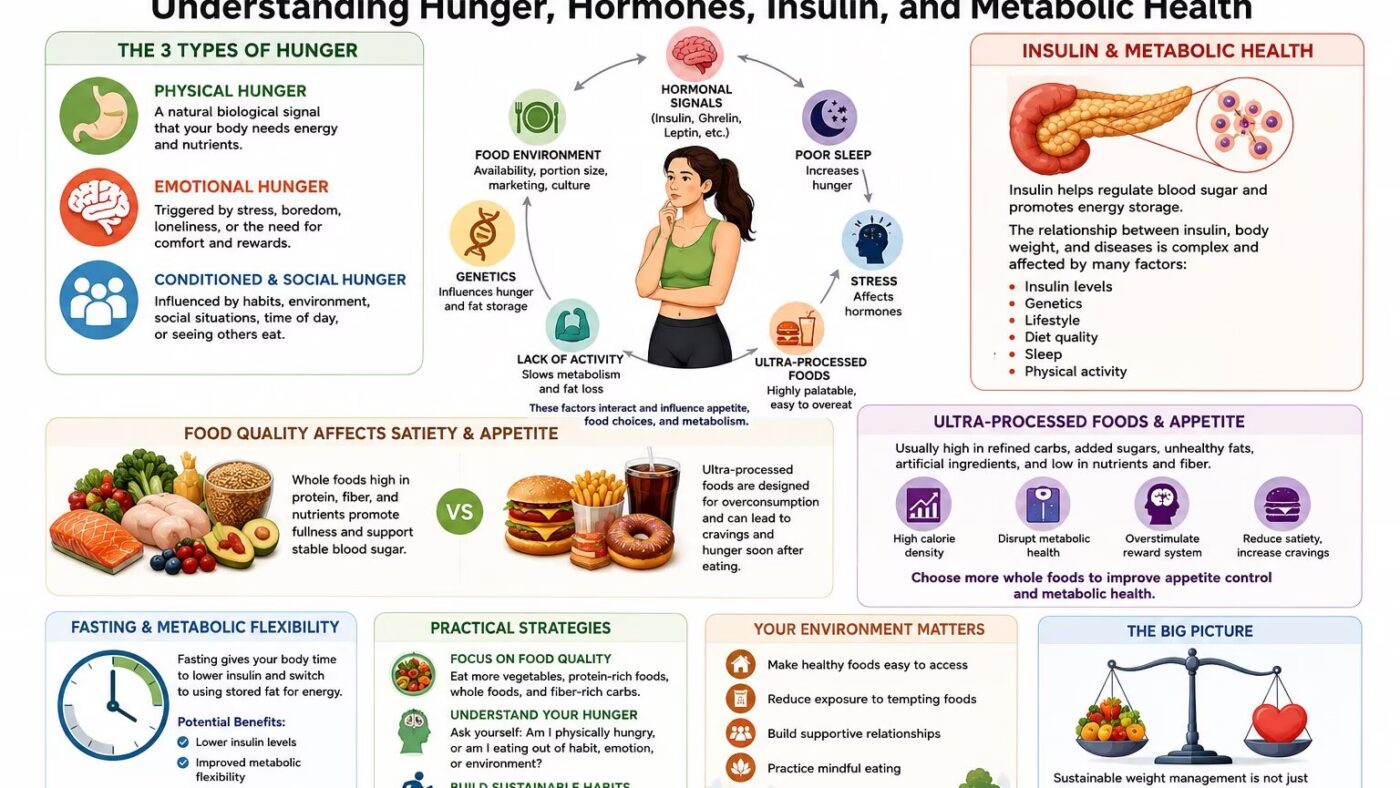
For decades, weight loss advice has focused mainly on one simple concept: eat fewer calories and burn more calories.
While energy balance remains an important factor in body weight regulation, modern metabolic research shows that human eating behavior is much more complex.
Hunger signals, hormones, sleep, stress, food quality, environment, and daily habits all influence how our bodies manage energy.
Understanding these factors may help explain why many people lose weight repeatedly but struggle to maintain those results.
Hunger Is More Powerful Than Willpower
Eating behavior is not controlled only by conscious choices.
The human body has complex biological systems that regulate hunger, fullness, and energy balance.
Different foods with the same calorie amount can create very different feelings of satisfaction.
A protein-rich meal with vegetables may help promote fullness, while highly processed foods containing refined carbohydrates and added sugars may leave people feeling hungry again soon after eating.
This is why many researchers emphasize improving hunger regulation rather than focusing only on calorie restriction.
The Three Types of Hunger
Physical Hunger
Physical hunger is the natural biological signal that the body needs energy and nutrients.
It develops gradually and is influenced by hormones, metabolism, and nutritional needs.
Emotional Hunger
Food is also connected with emotions.
Stress, boredom, loneliness, or the desire for comfort may increase cravings for highly rewarding foods.
Recognizing emotional eating patterns can help people develop healthier responses.
Conditioned and Social Hunger
Our environment strongly influences eating behavior.
Examples include:
Eating snacks while watching television
Eating because others around us are eating
Eating simply because it is a certain time of day
Over time, these patterns can become automatic habits.
Insulin and Metabolic Health
Insulin is an important hormone involved in blood sugar regulation and energy storage.
Scientific research shows that insulin plays a significant role in metabolism, although the relationship between insulin, body weight, and obesity involves many different factors.
Metabolic health is influenced by hormones, genetics, lifestyle, diet quality, sleep, and physical activity.
Why Calorie Counting Alone May Not Work for Everyone
Calorie awareness can be helpful, but strict calorie restriction is difficult for many people to maintain long term.
After weight loss, the body may adapt by changing hunger signals and energy expenditure.
A sustainable approach often focuses on:
Improving food quality
Eating enough protein and fiber
Reducing ultra processed foods
Creating consistent eating habits
Improving sleep and stress management
Ultra Processed Foods and Appetite
Ultra processed foods are designed to be convenient, highly palatable, and easy to consume.
Many contain combinations of refined carbohydrates, added sugars, unhealthy fats, and artificial ingredients.
Research suggests that diets high in ultra processed foods are associated with increased calorie intake and poorer metabolic health outcomes.
Choosing more minimally processed foods may support healthier appetite regulation.
Fasting and Metabolic Flexibility
Intermittent fasting has become a popular approach for improving metabolic health.
During periods without food intake, the body changes how it uses stored energy.
Some studies suggest fasting may influence:
Insulin levels
Metabolic flexibility
Eating patterns
However, fasting is not suitable for everyone.
People taking diabetes medications, blood pressure medications, pregnant individuals, or people with certain medical conditions should consult healthcare professionals before making significant dietary changes.
Your Environment Shapes Your Eating Habits
Weight management is not only an individual challenge.
Family habits, social situations, workplace environments, and food availability all influence eating behavior.
Creating a healthier environment may include:
Keeping nutritious foods easily available
Reducing constant exposure to snacks
Building supportive relationships
Practicing mindful eating
Practical Strategies for Better Metabolic Health
Focus on Food Quality
Choose more:
Vegetables
Protein-rich foods
Whole foods
Fiber-rich carbohydrates
Limit:
Sugary drinks
Highly processed snacks
Frequent mindless eating
Understand Your Hunger Signals
Before eating, ask yourself:
Am I physically hungry, or am I responding to a habit, emotion, or environment?
Create Sustainable Habits
The best health strategy is usually the one that can be maintained consistently over time.
Frequently Asked Questions
Can weight loss happen without counting calories?
Yes. Many people improve weight management by focusing on food quality, hunger regulation, and healthy lifestyle habits. However, overall energy balance remains an important part of body weight regulation.
Does fasting work for everyone?
No. Fasting may benefit some people but is not appropriate for everyone.
Is insulin the only cause of weight gain?
No. Weight regulation involves many factors including hormones, genetics, environment, sleep, stress, and lifestyle.
Are GLP-1 medications a permanent solution?
GLP-1 medications can be valuable medical treatments for some people, but they should be used with professional guidance and are not a replacement for healthy lifestyle habits.
Bottom Line
Weight management is not simply about willpower or eating less.
Modern metabolic science shows that hunger signals, hormones, food quality, environment, and behavior all interact.
Building healthy habits that support appetite regulation and metabolic health may provide a more sustainable approach for long-term wellness.
Affiliate Disclosure
This website may contain affiliate links. If you purchase through these links, we may earn a commission at no additional cost to you. Our editorial opinions remain independent.
Medical Disclaimer
This article is for educational purposes only and does not provide medical advice, diagnosis, or treatment. Always consult a qualified healthcare professional before making major changes to your diet, fasting routine, medications, or health plan.
This article is for general education and does not replace individualized care from a qualified health professional. Seek appropriate advice for persistent, severe, or concerning symptoms.
Read the full medical disclaimer