Third trimester pregnancy exercise can help many women maintain strength, mobility, cardiovascular fitness, and confidence as the body adapts to a growing baby.The third trimester can feel very different from the first two. As pregnancy progresses, your abdomen becomes larger, body weight increases, sleep can become more difficult, and everyday activities may require noticeably more effort.The third trimester can feel very different from the first two.
As pregnancy progresses, your abdomen becomes larger, body weight increases, sleep can become more difficult, and everyday activities may require noticeably more effort.
For some women, the final months also bring swollen feet, aching hips, lower-back discomfort, pelvic pressure, pubic bone pain, and a feeling that the body has suddenly become much heavier.
These changes can be frustrating, especially if you were active before pregnancy.
But pregnancy does not automatically mean that movement should stop.
For many women with uncomplicated pregnancies, appropriately modified exercise can remain an important part of staying mobile, maintaining strength, supporting cardiovascular fitness and feeling more physically capable.
The key is understanding what is normal, what can be modified, and what needs medical attention.
Why the Third Trimester Often Feels Harder
The third trimester generally begins around week 28.
By this stage, the uterus has expanded dramatically and the baby continues to grow rapidly.
That creates several physical changes at the same time.
Your center of mass shifts forward.
Your abdominal wall is under greater stretch.
The pelvic floor carries more load.
The heart and lungs work harder to support pregnancy.
Sleep may become more fragmented.
Movement can feel less efficient.
And simple daily activities may require more energy than before.
That means someone who felt relatively strong earlier in pregnancy may suddenly notice:
More fatigue
Shorter walking tolerance
Lower-back soreness
Hip discomfort
Pelvic pressure
Swollen ankles or feet
Reduced balance
Difficulty getting comfortable in bed
Pain when rolling over
A slower walking pace
These symptoms do not necessarily mean that something is wrong.
However, their severity matters.
Swollen Feet and Ankles During Pregnancy
Mild swelling in the feet and ankles is common later in pregnancy.
Pregnancy increases blood volume, and the growing uterus can also affect venous return from the lower body.
Gravity then encourages fluid to collect in the legs, ankles and feet, especially after prolonged sitting or standing.
This is why shoes may feel tighter and ankle bones may become less visible by the end of the day.
Some women describe their feet as looking noticeably puffy or “rounded.”
Can Exercise Reduce Pregnancy Swelling?
Movement may help some women feel less swollen.
Walking and repeated ankle movement activate the calf muscles, which help move blood back toward the heart.
Regularly changing position may also reduce the amount of time fluid pools in the lower legs.
Helpful strategies may include:
Short walks
Ankle pumps
Gentle calf raises
Changing position regularly
Avoiding very long periods of sitting
Avoiding very long periods of standing
Resting with the legs comfortably elevated
Staying adequately hydrated
However, exercise should not be described as a treatment for all pregnancy swelling.
Swelling during pregnancy has different causes.
When Pregnancy Swelling Needs Urgent Attention
Sudden or rapidly worsening swelling deserves more caution.
Seek medical assessment promptly if swelling is accompanied by symptoms such as:
Severe headache
Visual changes
Upper abdominal pain
Shortness of breath
Chest pain
Sudden swelling of the face or hands
Rapid unexplained swelling
High blood pressure
Feeling unusually unwell
One-sided leg swelling, redness or pain also requires medical evaluation because it may indicate a blood clot.
Do not assume every swollen leg simply needs more walking.
What Is Pubic Bone Pain During Pregnancy?
Many pregnant women describe pain around the pubic bone, groin, hips or pelvis.
This is often discussed under the broader term pregnancy-related pelvic girdle pain.
The discomfort may be felt:
At the front of the pelvis
Around the pubic symphysis
In the groin
Around the sacroiliac joints
Across the lower back
Into the hips or upper thighs
Some women notice pain when:
Walking
Climbing stairs
Standing on one leg
Getting in or out of a car
Turning over in bed
Getting out of bed
Putting on trousers
Separating the legs widely
This can become especially noticeable later in pregnancy.
Why Pelvic Girdle Pain Happens
It is too simplistic to say that pregnancy hormones make all of the joints “open” and the baby then pushes the pelvis apart.
Pregnancy-related pelvic girdle pain is more complex.
Possible contributors include:
Changes in body mechanics
Increased load through the pelvis
Altered muscle recruitment
Changes in movement patterns
Previous pelvic or back pain
Reduced strength or endurance
Individual joint sensitivity
Hormonal influences
Changes in posture and gait
The position and size of the baby may influence symptoms in some cases, but pelvic pain is not simply caused by the baby “falling downward.”
Does Pelvic Pain Mean You Should Stop Moving?
Not necessarily.
Complete inactivity can sometimes make stiffness, weakness and physical deconditioning worse.
For many women, the better approach is to adjust activity rather than eliminating it.
That might mean:
Walking shorter distances
Taking more frequent breaks
Reducing single-leg exercises
Using smaller ranges of motion
Avoiding painful wide-leg positions
Reducing heavy lifting
Using support when dressing
Rolling in bed with the knees relatively close together
Choosing exercises that do not aggravate symptoms
A pelvic health physiotherapist can be especially helpful when symptoms significantly interfere with walking, sleep or daily activities.
Exercise During the Third Trimester
For women with uncomplicated pregnancies and medical clearance to exercise, continuing physical activity can offer important benefits.
These may include support for:
Cardiovascular fitness
Muscular strength
Mobility
Energy
Blood glucose regulation
Mood
Sleep
Physical confidence
Preparation for the physical demands of parenthood
Exercise does not need to be intense to be useful.
The third trimester is usually a period for adapting training, not proving how fit you are.
Walking Can Be Enough to Make a Difference
Walking is one of the simplest forms of prenatal exercise.
It is accessible, requires little equipment, and can easily be adjusted according to energy levels.
If a long walk is uncomfortable, split it into shorter sessions.
Instead of 45 minutes at once, you might perform:
10 minutes in the morning
10 minutes in the afternoon
10 minutes in the evening
The accumulated activity still counts.
The goal is regular movement without provoking significant pain or exhaustion.
Strength Training Can Still Be Valuable
Pregnancy does not automatically mean resistance training must stop.
Women who have already been strength training may often continue with appropriate modifications.
Useful exercises may include:
Supported squats
Sit-to-stands
Rows
Light presses
Hip hinges
Glute exercises
Calf raises
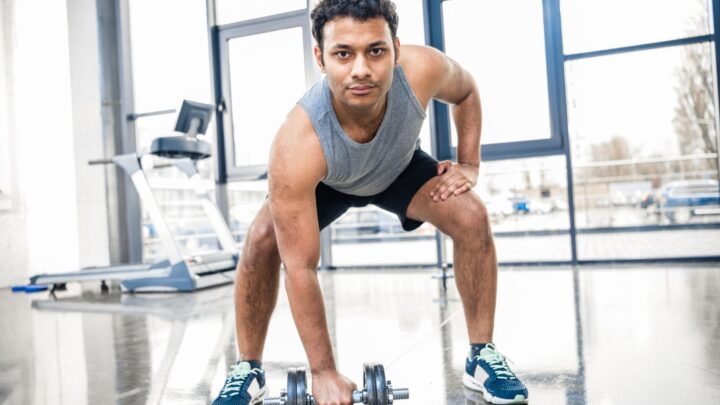
Light dumbbell exercises
Resistance-band movements
Supported split-stance exercises when comfortable
The exact weight matters less than control, comfort and effort.
A 4 kg or 6 kg dumbbell may be appropriate for one person and inappropriate for another.
There is no universal “safe pregnancy weight.”
Training should be individualized.
How Hard Should Third Trimester Exercise Feel?
Maximal effort is generally unnecessary.
A moderate intensity is usually more appropriate.
One simple method is the talk test.
During moderate exercise, you should generally still be able to speak in complete sentences, although you may be breathing more heavily.
Another option is perceived exertion.
On a scale from 0 to 10, many prenatal sessions may fall around 4 to 6.
You should feel that you are exercising without feeling out of control.
Why Heavy Training May Feel Different Later in Pregnancy
Even if you previously trained hard, the third trimester changes how the same exercise feels.
Several factors contribute:
Higher body weight
Altered balance
Changes in breathing
Increased abdominal pressure
More pelvic floor loading
Reduced sleep
Greater fatigue
Joint discomfort
A movement that felt easy before pregnancy may feel dramatically harder later.
That is not loss of discipline.
It is a normal reason to modify training.
Back Pain in the Third Trimester
Back discomfort is also common.
As the abdomen grows, body mechanics change and some muscles must work differently to support standing, walking and lifting.
Gentle movement may help many women feel better.
Useful approaches may include:
Walking
Hip mobility
Thoracic mobility
Gentle strengthening
Supported squats
Rows
Glute strengthening
Comfortable core exercises
Frequent changes in position
However, severe back pain, neurological symptoms, numbness, weakness, or pain associated with contractions or other concerning pregnancy symptoms needs medical assessment.
What About Core Training?
The core still matters during pregnancy.
But the purpose changes.
The goal is not to “flatten the stomach.”
Core training during pregnancy is more about:
Breathing
Trunk control
Managing pressure
Supporting movement
Maintaining strength
Preparing for postpartum recovery
Useful exercises may include:
Controlled breathing
Standing core work
Bird-dog variations
Supported carries
Anti-rotation exercises
Modified side planks
Other comfortable stability exercises
Exercises should be modified if they cause pain, significant abdominal doming, dizziness or excessive pelvic pressure.
Pregnancy Is Not the Time to Chase Weight Loss
Weight gain is expected during pregnancy.
The amount varies according to pre-pregnancy body size, pregnancy characteristics and medical circumstances.
Seeing a higher number on the scale does not automatically mean that you have “become fat.”
Pregnancy weight includes:
The baby
Placenta
Amniotic fluid
Increased blood volume
Additional body fluid
Uterine growth
Breast tissue
Maternal fat stores
Trying to aggressively lose weight during the third trimester is generally not an appropriate fitness goal.
Focus instead on nourishment, movement, strength and medical care.
Why the Body Can Look More Swollen Even Without Large Fat Gain
A person may notice fuller arms, thighs, hands, ankles and feet even if the change is not entirely body fat.
Fluid retention can contribute significantly.
That is why appearance alone cannot distinguish:
Fat gain
Fluid retention
Normal pregnancy tissue changes
Muscle changes
Body composition changes
It is more useful to focus on symptoms and health than appearance.
Rest Is Part of a Healthy Pregnancy
The original experience also highlights an important point: sometimes the body needs rest.
Pregnancy can already place significant demands on sleep, circulation, joints and energy.
Taking time off from formal exercise is not failure.
Rest may be appropriate during:
Illness
Travel
Periods of significant fatigue
Pain flares
Poor sleep
Medical complications
Recovery after a stressful period
The goal is not perfect consistency.
The goal is returning to appropriate movement when you are ready and when it is medically safe.
Exercise Should Make Pregnancy More Manageable, Not Harder
A good third trimester fitness routine should leave you feeling more capable, not destroyed.
After exercise, you may notice:
Less stiffness
Better circulation
Improved mood
Better mobility
More confidence
Improved muscle engagement
But you should not routinely finish exercise with:
Severe pelvic pain
Persistent contractions
Heavy vaginal bleeding
Dizziness
Chest pain
Severe shortness of breath
Calf pain
Loss of fluid
Marked weakness
If these occur, stop and seek appropriate medical advice.
A Simple Third Trimester Movement Plan
For someone already cleared for exercise, a basic week might look like this:
Monday
20 to 30 minutes of walking plus gentle mobility
Tuesday
Light full-body strength training
Wednesday
Short walk or rest
Thursday
Strength and mobility
Friday
Walking
Saturday
Gentle prenatal exercise or swimming if comfortable
Sunday
Rest or easy movement
This is only an example.
Pregnancy training should adapt to symptoms and energy from day to day.
Swimming Can Be Especially Comfortable
Swimming and water-based exercise can feel particularly good later in pregnancy.
The buoyancy of water reduces the amount of body weight being supported through the joints.
Some women find that it temporarily reduces feelings of heaviness and pelvic pressure.
Swimming may also provide gentle cardiovascular exercise without impact.
However, normal pool safety still applies, and anyone with pregnancy complications should follow their clinician’s recommendations.
What About Prenatal Massage?
Many pregnant women enjoy massage for relaxation and muscle discomfort.
Prenatal massage should be performed appropriately for pregnancy, with comfortable positioning and attention to individual medical circumstances.
Massage may help someone feel relaxed or temporarily reduce muscular tension.
It should not be described as a treatment that removes pregnancy swelling, realigns joints or fixes pelvic pain.
If swelling or pain is medically concerning, massage is not a substitute for evaluation.
Do Not Compare One Pregnancy With Another
A second pregnancy may feel completely different from a first pregnancy.
You may notice:
More fatigue
Different weight gain
More swelling
Different pelvic symptoms
Different exercise tolerance
Different sleep patterns
That does not necessarily mean the pregnancy is less healthy.
Every pregnancy creates a different combination of physical demands.
Even the same person can have very different experiences between pregnancies.
Frequently Asked Questions
Is swelling normal in the third trimester?
Mild swelling in the feet and ankles is common. Sudden or severe swelling, especially involving the hands or face or accompanied by headache, visual symptoms or upper abdominal pain, should be medically assessed.
Can walking reduce pregnancy swelling?
Walking and ankle movement may help circulation and reduce fluid pooling in some women, but they do not treat every cause of swelling.
Is pubic bone pain common in pregnancy?
Pregnancy-related pelvic girdle pain is relatively common and may affect the pubic region, hips, sacroiliac area or lower back.
Should I exercise with pelvic girdle pain?
Some movement is often possible, but exercises should be modified to avoid aggravating symptoms. Significant pain may benefit from evaluation by a pelvic health physiotherapist or other qualified clinician.
Can I lift weights in the third trimester?
Many women with uncomplicated pregnancies can continue appropriately modified resistance training. The correct load depends on prior training, symptoms, technique and medical circumstances.
Is 4 kg or 6 kg safe during pregnancy?
There is no universally safe dumbbell weight. A load that is comfortable for an experienced lifter may be too much for someone else. Use controlled effort and individual guidance.
Is swimming good during the third trimester?
Swimming can be a comfortable low-impact form of exercise for many pregnant women because water reduces weight-bearing stress.
Why do I feel much more tired late in pregnancy?
The cardiovascular, respiratory and musculoskeletal demands of pregnancy increase as the baby grows. Sleep disruption and carrying additional body mass can also contribute.
Can exercise prevent all pregnancy aches and pains?
No. Exercise may improve strength, mobility and comfort, but it cannot prevent every pregnancy-related symptom.
Final Thoughts
The third trimester is not a competition to see who can exercise the hardest.
It is a period of adaptation.
Your body is supporting a rapidly growing baby while simultaneously adjusting its cardiovascular system, muscles, joints, abdominal wall and pelvic floor.
Feeling heavier, slower or more tired does not mean your body is failing.
The goal of third trimester exercise is to help you remain as comfortable, strong and mobile as reasonably possible.
Walk when walking feels good.
Strength train at an appropriate level.
Rest when your body needs rest.
Modify movements when symptoms change.
And take new or severe symptoms seriously.
The best prenatal fitness plan is not the one that looks most impressive.
It is the one that supports both maternal health and pregnancy safely.
Medical Disclaimer
This article is for general educational purposes only and is not medical advice. Pregnancy exercise and symptom management should be individualized. Seek medical care for vaginal bleeding, loss of fluid, regular painful contractions, severe headache, visual disturbances, chest pain, fainting, severe shortness of breath, calf pain or swelling, sudden swelling of the hands or face, severe abdominal or pelvic pain, or other concerning symptoms. People with pregnancy complications or medical restrictions should follow the advice of their obstetric or maternity care team.
This article is for general education and does not replace individualized care from a qualified health professional. Seek appropriate advice for persistent, severe, or concerning symptoms.
Read the full medical disclaimer