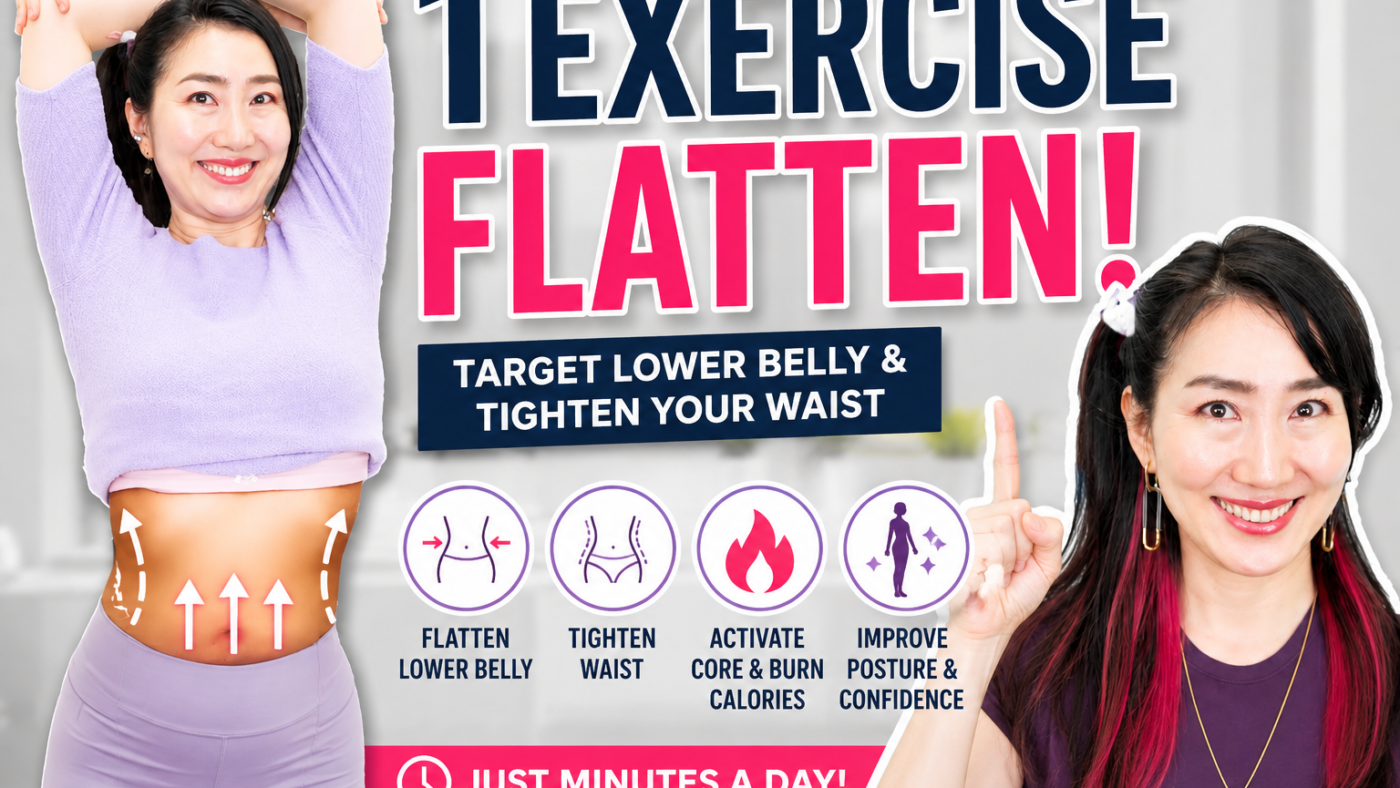
Standing ab exercises and belly massage are often promoted as quick ways to flatten the lower stomach, improve posture, and “wake up” the core. Some of those claims are exaggerated. Massage cannot physically lift internal organs into a new permanent position, melt abdominal fat, or send fat through the lymphatic system. But a routine that combines standing core activation, breathing, marching, shoulder movement, posture work, and gentle abdominal massage can still be useful.
The realistic benefits are simpler: improved body awareness, more core engagement, more movement, less muscular tension, and possible temporary relief from bloating or abdominal tightness. For people who sit for long periods or want an easy home routine, that can be worthwhile.
Why the Lower Belly Can Look More Prominent
A protruding lower abdomen is not always caused by fat alone. Posture, bloating, constipation, abdominal muscle control, pelvic position, and normal anatomy can all influence how the stomach looks.
For example, an exaggerated anterior pelvic tilt can make the lower abdomen appear more prominent. Likewise, abdominal bloating can change waist size significantly over the course of a day.
That does not mean the organs have “fallen” or that massage can simply push them upward.
The abdomen is supported by connective tissues, muscles, and internal structures that cannot be permanently repositioned through ordinary self-massage.
1. Start With Standing Core Activation
Stand with your feet about hip-width apart.
Keep your knees soft.
Lengthen through the spine and gently engage your abdominal muscles as though you were preparing for a light cough.
Do not suck your stomach inward as hard as possible.
The goal is controlled abdominal tension while continuing to breathe.
Hold for several seconds, relax, and repeat.
This teaches you how to activate your core while standing—something that can carry over into walking, lifting, and everyday posture.
2. Add Overhead Arm Raises
Once you are comfortable engaging your core, raise your arms gradually overhead.
Keep your ribs from flaring excessively.
Move only within a comfortable shoulder range.
Raising the arms changes the relationship between the rib cage, trunk, and pelvis and can make you more aware of core control.
It may also help improve shoulder mobility.
If your shoulders are stiff, keep the arms lower. There is no need to force them fully overhead.
3. March in Place
With your torso tall and abdominal muscles gently engaged, begin marching in place.
Lift one knee, then the other.
Keep the movement controlled.
Marching challenges the trunk because the body has to stabilize while each leg moves independently.
The hip flexors, including the iliopsoas muscles, contribute to lifting the legs. This does not “pull up belly fat,” but it does create a useful combination of hip movement and trunk stabilization.
Continue for 30 to 60 seconds.
4. Use Slow Exhalation to Improve Core Awareness
Breathing can make abdominal exercise more effective.
Inhale comfortably.
Then exhale slowly while gently tightening the abdominal wall.
You may notice the waist feels firmer as the abdominal muscles engage.
Do not repeatedly hold your breath for long periods.
A more useful pattern is:
Inhale.
Exhale slowly.
Gently brace the abdomen.
Relax.
Repeat.
This approach can help people learn to coordinate breathing with core activation.
5. Practice Standing Reach and Lengthening
Stand tall with your abdomen gently engaged.
Bring your hands together and reach upward.
Imagine lengthening through the spine rather than arching backward.
Hold for a few seconds.
Then relax.
This type of posture exercise may help you feel taller and more organized through the trunk.
A change in posture can also change how the abdomen appears, even without any change in body fat.
6. Add Gentle Side-to-Side Movement
Hold your elbows or bring your arms in front of your body.
Slowly shift or rotate side to side.
Keep the movement comfortable.
Avoid aggressive twisting.
This can mobilize the torso and give the abdominal and back muscles a different movement challenge.
For people who spend hours sitting still, simply restoring rotational movement can feel refreshing.
7. Finish With Gentle Belly Massage
After the standing movements, place your hands over your abdomen.
Use light, slow clockwise circles.
The pressure should feel comfortable.
Abdominal massage has been studied as a complementary strategy for constipation and may help some people feel less bloated or tense.
It should not be painful.
There is no need to press deeply enough to “move” the colon or internal organs.
Can Belly Massage Flatten the Stomach?
Temporarily, sometimes.
If your abdomen looks larger because of gas, constipation, or muscular tension, improving comfort or bowel regularity may reduce distension.
But massage does not remove abdominal fat.
It also does not permanently shrink the waist through lymphatic drainage.
Body-fat reduction requires broader changes in energy balance over time.
Can You “Lift” Internal Organs With Massage?
No ordinary belly massage can permanently lift internal organs.
Claims about manually lifting a “fallen colon” or repositioning the organs are not supported by good evidence.
You may feel different after massage because of changes in muscle tension, bowel movement, gas, or posture.
That is not the same as physically relocating internal anatomy.
Can Standing Ab Exercises Reduce Lower Belly Fat?
Not directly.
Core exercises strengthen and train the muscles of the trunk, but they do not selectively burn fat from the lower abdomen.
Fat loss occurs systemically.
A well-rounded strategy includes regular physical activity, resistance training, adequate sleep, nutrition, and sustainable energy balance.
Standing ab exercises can still contribute by increasing movement and helping you build stronger core control.
A Simple 10-Minute Standing Core Routine
Minute 1: Standing abdominal bracing.
Minute 2: Slow overhead arm raises.
Minute 3: Marching in place.
Minute 4: Exhale-and-brace breathing.
Minute 5: Overhead reach with core engagement.
Minute 6: Gentle side-to-side torso movement.
Minute 7: Repeat marching.
Minute 8: Standing shoulder and arm mobility.
Minute 9: Gentle belly massage.
Minute 10: Relaxed breathing.
Keep the routine comfortable and controlled.
What This Routine Can Realistically Improve
This type of routine may help with:
- core awareness
- posture
- shoulder and trunk mobility
- breaking up sedentary time
- gentle cardiovascular activity
- abdominal relaxation
- temporary bloating or constipation discomfort
Those are meaningful benefits even without dramatic promises.
What It Cannot Reliably Do
It cannot:
- permanently lift internal organs
- melt belly fat through massage
- drain fat through the lymphatic system
- guarantee a flat stomach in three weeks
- selectively remove lower belly fat
- activate brown fat enough to produce dramatic weight loss
Avoiding exaggerated claims makes the routine more useful, not less.
Who Should Be Careful?
Avoid deep abdominal pressure if you have severe abdominal pain, recent abdominal surgery, pregnancy complications, a known hernia, active gastrointestinal disease, or another condition in which abdominal pressure has been restricted.
Stop exercising if you experience dizziness, sharp pain, chest discomfort, unusual shortness of breath, or neurological symptoms.
Persistent abdominal swelling, severe constipation, vomiting, blood in the stool, unexplained weight loss, or significant changes in bowel habits should be professionally evaluated.
The Bottom Line
Standing ab exercises and belly massage can be a practical home routine for people who want to improve core awareness, posture, movement, and digestive comfort.
The routine will not physically lift your organs or melt belly fat through massage.
But it may help your body feel more organized, active, and comfortable.
For many people, that is a far better reason to keep practicing than chasing a promise of instant transformation.
Frequently Asked Questions
Can standing ab exercises flatten the lower belly?
They can strengthen and improve control of the abdominal muscles, which may improve posture and appearance. They do not selectively burn lower belly fat.
Can belly massage reduce bloating?
It may help some people feel less bloated, particularly when constipation or abdominal tension contributes to discomfort.
Does abdominal massage move internal organs upward?
No. Self-massage does not permanently reposition internal organs.
Can marching in place strengthen the core?
Yes. Marching requires the trunk to stabilize while the hips and legs move, making it a simple functional core exercise.
How often can I do this routine?
A gentle routine can be performed several times per week or even daily if it feels comfortable and does not cause pain.
Medical Disclaimer:This article is for educational and informational purposes only and is not medical advice. Abdominal symptoms can have many causes. Stop any exercise or massage that causes pain, dizziness or unusual symptoms, and seek professional medical advice for persistent or severe abdominal problems.
This article is for general education and does not replace individualized care from a qualified health professional. Seek appropriate advice for persistent, severe, or concerning symptoms.
Read the full medical disclaimer