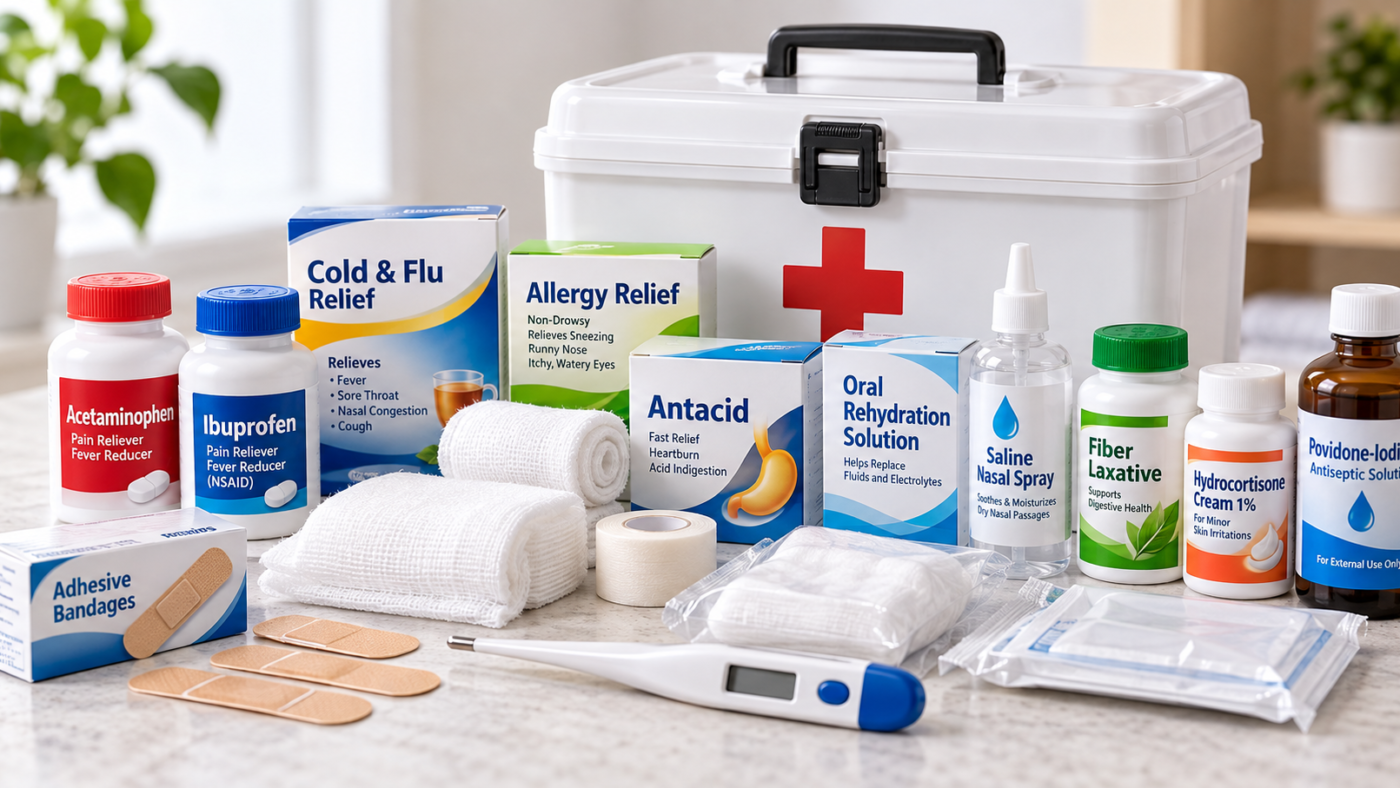
A well-organized home medicine cabinet can help families manage minor illnesses, relieve common symptoms, and respond more efficiently to everyday health concerns.
Headaches, mild fevers, seasonal allergies, occasional digestive discomfort, and small skin irritations are among the situations in which appropriate over-the-counter medicines may be useful.
However, stocking a home medicine cabinet does not mean collecting as many medications as possible.
Some medicines require professional diagnosis and supervision. Others can cause harmful interactions, accidental overdoses, or serious adverse effects when used incorrectly.
The most effective home medicine cabinet contains a limited selection of appropriate products, clearly labeled prescription medications for individual household members, and essential information about safe use.
This guide explains which categories of medicines may be useful at home, which medications should not be routinely stockpiled, and how to store and manage household medicines safely.
1. Why Every Family Needs a Carefully Organized Medicine Cabinet
Having appropriate medicines readily available can make it easier to manage certain minor health problems.
For example, a suitable pain reliever may help someone with an occasional headache, while an appropriately selected allergy medication may relieve mild seasonal allergy symptoms.
However, home treatment has limitations.
Symptoms such as severe abdominal pain, difficulty breathing, chest pain, sudden neurological changes, or significant deterioration in a person with a chronic illness should not be managed solely with medicines kept at home.
Infants, young children, older adults, pregnant individuals, and people taking multiple medications may require additional precautions.
A home medicine cabinet should support responsible self-care, not encourage self-diagnosis or unnecessary medication use.
Quality Matters More Than Quantity
A practical medicine cabinet usually needs only a small number of medicines selected for the household’s circumstances.
When choosing products, consider:
- The ages of household members
- Existing medical conditions
- Current prescription medications
- Known drug allergies
- Pregnancy or breastfeeding considerations
- Local medicine regulations
- Product expiration dates
- Safe storage requirements
A pharmacist can help identify which nonprescription products are appropriate and whether different medicines contain overlapping ingredients.
2. Pain Relievers and Fever Medicines
Pain and fever medicines are among the most commonly used products in home medicine cabinets.
They may help manage mild headaches, muscle discomfort, and fever associated with certain short-term illnesses.
However, different products have different risks.
Acetaminophen (Paracetamol)
Acetaminophen, also known as paracetamol, is commonly used to relieve pain and reduce fever.
It may be suitable for some people who cannot take certain nonsteroidal anti-inflammatory medicines.
However, excessive acetaminophen intake can cause serious liver injury.
Many combination cold-and-flu medicines already contain acetaminophen.
Taking a separate acetaminophen product together with one of these medicines may unintentionally exceed the recommended dose.
Read every product label carefully and seek professional advice when liver disease, heavy alcohol use, or other relevant risk factors are present.
Ibuprofen
Ibuprofen belongs to a group of medicines known as nonsteroidal anti-inflammatory drugs, or NSAIDs.
It can help relieve some types of pain and reduce fever.
However, ibuprofen may increase the risk of gastrointestinal bleeding, kidney problems, and other complications in susceptible individuals.
People with certain kidney diseases, peptic ulcers, cardiovascular conditions, or medication interactions should seek advice before use.
Ibuprofen and other NSAIDs also have important precautions during pregnancy.
Aspirin
Aspirin has several medical uses, but it is not necessary for every household to keep it as a general pain reliever.
It can increase bleeding risk and may interact with other medicines.
Children and teenagers should not routinely receive aspirin for viral illnesses because of the risk of Reye syndrome.
People taking aspirin for established cardiovascular indications should follow their prescribed treatment plan rather than starting or stopping it independently.
Choosing the Right Product
It is generally more useful to keep one appropriate pain or fever medicine than to collect several products with overlapping ingredients.
Medication selection should depend on the household’s individual health needs.
3. Cold and Flu Medicines: Symptom Relief, Not a Cure
Common colds are usually caused by viruses.
Over-the-counter medicines may relieve certain symptoms, but they do not eliminate the underlying viral infection.
Cold remedies vary considerably in their ingredients.
Some combination products contain pain relievers, decongestants, antihistamines, and cough suppressants in a single preparation.
This can increase the risk of accidental duplication or unwanted effects.
Nasal Saline Products
Saline nasal sprays or drops may help relieve nasal dryness or congestion.
They can be useful because they do not contain the same active decongestant medicines found in many cold products.
Follow age-appropriate product instructions and hygiene recommendations.
Nasal Decongestants
Certain decongestants may provide temporary relief from nasal congestion.
However, they may be unsuitable for people with some cardiovascular conditions, including uncontrolled hypertension.
Some medicated nasal sprays can also cause rebound congestion when used beyond their recommended duration.
Cough Medicines
Cough may result from viral infections, allergies, asthma, reflux, medications, and other conditions.
A cough suppressant is not appropriate for every type of cough.
Before choosing a medicine, consider the duration of symptoms, associated breathing problems, age, and underlying health conditions.
Persistent cough, coughing blood, chest pain, or breathing difficulty requires medical assessment.
Special Precautions for Children
Children are particularly vulnerable to dosing errors and adverse effects from combination cough-and-cold medicines.
The U.S. FDA does not recommend over-the-counter cough-and-cold products containing decongestants or antihistamines for children younger than two because of potentially serious adverse effects.
In the United States, many manufacturers label these products not to be used in children younger than four.
Parents should follow current product labeling and obtain pediatric advice when uncertain.
Adult medicines should never be given to children simply by reducing the adult dose.
4. Allergy Medicines
Seasonal allergies can cause sneezing, itchy eyes, a runny nose, and other uncomfortable symptoms.
Certain nonprescription antihistamines may help relieve mild allergic symptoms.
Less-Sedating Antihistamines
Products containing ingredients such as loratadine, fexofenadine, or cetirizine are commonly used for some allergic conditions.
These medicines differ in duration, dosing, age indications, and the likelihood of causing drowsiness.
Cetirizine, for example, can still cause sleepiness in some people.
A pharmacist can help determine whether a particular product is suitable.
Older Sedating Antihistamines
Some older antihistamines can cause significant drowsiness and anticholinergic effects.
These effects may be particularly concerning for older adults because of the potential for confusion, falls, constipation, and urinary difficulties.
They should not be routinely selected simply because they are familiar or inexpensive.
Severe Allergic Reactions
Ordinary antihistamines do not replace epinephrine for anaphylaxis.
Symptoms such as breathing difficulty, throat swelling, collapse, or rapidly worsening allergic reactions require immediate emergency care.
People with a diagnosed risk of anaphylaxis may need prescribed epinephrine auto-injectors and an individualized emergency plan.
5. Digestive Medicines: Choosing Products Carefully
Digestive symptoms are common, but their causes vary.
Heartburn, nausea, constipation, diarrhea, and abdominal discomfort should not automatically be treated with the same medicine.
Antacids and Heartburn Relief
Certain antacids or acid-reducing medicines may relieve occasional heartburn.
However, frequent heartburn may indicate gastroesophageal reflux disease or another condition requiring assessment.
Some antacids interact with prescription medications or are unsuitable for people with certain kidney conditions.
Persistent swallowing difficulties, unexplained weight loss, gastrointestinal bleeding, or severe pain require medical evaluation.
Constipation Medicines
Occasional constipation may respond to changes in dietary fiber, hydration, physical activity, or toileting habits.
Some people may benefit from an appropriately selected over-the-counter laxative.
Laxatives include several types, such as bulk-forming products and osmotic agents.
They differ in their effects, precautions, and suitability for children or older adults.
Regular use should be discussed with a healthcare professional when symptoms persist.
It is inaccurate to assume that every laxative inevitably causes permanent intestinal dependence, but unnecessary or inappropriate use can produce adverse effects.
Diarrhea and Oral Rehydration
Diarrhea may cause fluid and electrolyte losses.
Oral rehydration solution is an important product to consider for households, particularly those with young children or older adults.
Commercial oral rehydration products should be prepared according to their instructions.
Some antidiarrheal medicines may be suitable for selected adults, but they are not appropriate in every situation.
Bloody diarrhea, high fever, severe abdominal pain, significant dehydration, or persistent symptoms require medical attention.
Children with diarrhea may require pediatric guidance.
Medicines for Abdominal Pain
Unexplained abdominal pain should not routinely be treated with prescription antispasmodics or other potent medicines.
Symptoms may reflect conditions ranging from mild digestive discomfort to appendicitis, intestinal obstruction, or other emergencies.
Severe, persistent, or worsening abdominal pain requires prompt assessment.
6. Skin Care and Minor Wound Products
External-use products can help manage minor skin concerns.
However, ordinary skin care, wound cleaning, and disinfection of household surfaces are different activities.
Adhesive Bandages and Sterile Dressings
Bandages and dressings help protect small wounds.
Minor cuts and scrapes can often be cleaned with safe running water before applying an appropriate dressing.
Deep or heavily contaminated wounds may require professional assessment.
Petroleum Jelly
Plain petroleum jelly may be useful for protecting certain minor superficial wounds and maintaining a moist wound environment.
It should not be applied indiscriminately to infected or serious wounds without appropriate guidance.
Hydrocortisone Cream
Low-strength topical hydrocortisone may help relieve certain mild inflammatory or itchy skin conditions.
However, its use depends on the diagnosis, affected area, age, and product instructions.
It should not be routinely applied to suspected skin infections, open wounds, or sensitive areas without professional advice.
Insect Bite Relief
Cold compresses and appropriately selected topical products may help reduce discomfort from uncomplicated insect bites.
Signs of severe allergic reactions require emergency assessment.
Increasing redness, fever, severe swelling, or other symptoms of infection may require medical care.
7. Why Antibiotics Should Not Be Routine Household Stock
Older household medicine lists often included several antibiotics for self-treatment.
This practice is not recommended.
Antibiotics are designed to treat specific bacterial infections.
They do not treat common viral illnesses such as colds or influenza.
Choosing an antibiotic without an appropriate diagnosis can lead to ineffective treatment, adverse effects, allergic reactions, and antibiotic resistance.
Examples of antibiotics that should not be independently stockpiled for routine self-treatment include cephalexin, fluoroquinolones, and other prescription antibacterial medicines.
Never Save Leftover Antibiotics
Antibiotics prescribed for one infection may be inappropriate for a later illness.
Using leftover medicine may delay correct diagnosis and treatment.
Do not share antibiotics with household members.
When antibiotics are prescribed, follow the prescriber’s instructions and discuss any adverse effects or treatment concerns with a qualified healthcare professional.
8. Sedatives and Sleeping Pills Require Special Caution
Older home medicine recommendations sometimes suggested keeping sedative medicines such as diazepam or phenobarbital.
These medicines are not suitable as general household remedies for occasional sleeplessness or anxiety.
They may cause sedation, impaired coordination, respiratory depression, dependence, or dangerous interactions.
The risks can increase when combined with alcohol or other sedating medicines.
Older adults may be especially vulnerable to confusion, falls, and other adverse effects.
Prescription sedatives should be used only by the person for whom they were prescribed and according to their treatment plan.
Persistent insomnia requires appropriate assessment rather than routine self-medication with powerful sedatives.
9. Heat-Related Illness: Medicines Cannot Replace Cooling
Traditional household medicine lists sometimes included products promoted for preventing or treating heatstroke.
However, serious heat-related illness requires environmental and medical intervention rather than reliance on herbal remedies.
Preventing Heat Illness
Effective prevention includes appropriate hydration, access to cool spaces, avoiding excessive exertion during extreme heat, and following occupational or public health guidance.
Electrolyte replacement may be appropriate during prolonged heavy sweating, but it is not necessary for everyone.
Heatstroke Is a Medical Emergency
Heatstroke may cause confusion, collapse, seizures, or other serious neurological changes.
Call emergency services immediately if heatstroke is suspected.
Begin rapid cooling while emergency assistance is arranged.
Do not delay treatment to administer traditional herbal liquids, alcohol-containing preparations, or oral medications.
Do not give oral fluids to someone who is confused, unconscious, or unable to swallow safely.
10. External Disinfectants: Important Safety Distinctions
Products used to disinfect household surfaces should not automatically be applied to human skin.
Alcohol
Alcohol-based products can be useful for certain skin antisepsis purposes when formulated and labeled appropriately.
However, repeatedly pouring alcohol into an open wound can irritate tissue.
Povidone-Iodine
Povidone-iodine is used for certain antiseptic purposes.
Its suitability depends on the product formulation, application site, and individual circumstances.
Follow the label and seek guidance for complex wounds.
Potassium Permanganate
Concentrated potassium permanganate can cause chemical injury and should not be included as a routine self-treatment product in an ordinary family medicine cabinet.
Household Bleach
Household bleach is intended for suitable surface disinfection when used as directed.
It should never be applied directly to wounds or used as a medicinal product.
Bleach must not be mixed with ammonia, acids, or other incompatible cleaning chemicals because dangerous gases can form.
Outdated Colored Antiseptics
Historical products such as mercurochrome and certain colored antiseptic preparations are not necessary for a modern household medicine cabinet.
Safer and more appropriate wound-care options are generally available.
11. Medicines for Families With Children
Children need additional protection because their bodies respond differently to many medications.
Drug selection and dosing depend on age, weight, product formulation, and medical circumstances.
Do Not Guess Pediatric Doses
A child’s dose should never be estimated by simply dividing an adult tablet.
Use an appropriately labeled pediatric product and a suitable measuring device.
Oral syringes designed for medication measurement are generally more accurate than household spoons.
Avoid Duplicate Ingredients
Combination medicines can contain the same active ingredient as a separate fever or pain product.
Accidental double dosing is an important cause of medication-related harm.
Caregivers should check all labels carefully.
Store Medicines Securely
Keep medicines in child-resistant containers and preferably locked storage.
Child-resistant does not mean childproof.
Medicines should never be described to children as candy.
When to Seek Pediatric Care
Young infants with fever, children with breathing difficulty, dehydration, unusual drowsiness, severe pain, persistent vomiting, or rapidly worsening symptoms require prompt medical attention.
For infants younger than three months, a temperature of 38°C (100.4°F) or higher warrants immediate medical evaluation.
12. Medicines for Older Adults and People With Chronic Diseases
Older adults may be more sensitive to certain medications because of physiological changes, chronic conditions, and the use of multiple prescription drugs.
Medication interactions are a major concern.
Pain Relievers
Some NSAIDs can increase gastrointestinal bleeding, kidney injury, and cardiovascular risks.
Medication selection should account for existing conditions and current prescriptions.
Antihistamines
Older sedating antihistamines may increase confusion, urinary retention, and fall risk.
Constipation Products
Certain laxatives or magnesium-containing products may be unsuitable for people with impaired kidney function.
Cold Medicines
Some decongestants may raise blood pressure or interact with cardiovascular medicines.
Medication Review
Older adults and people managing multiple chronic conditions may benefit from periodic medication reviews with a pharmacist or healthcare professional.
Prescription medicines should be kept clearly identified and separated from general household products.
13. A Practical Home Medicine Cabinet Checklist
The following categories offer a starting point for a household medicine review.
Basic Nonprescription Medicines
- An appropriate pain or fever reliever
- Saline nasal spray or drops
- A suitable allergy medication, if needed
- Oral rehydration solution
- An occasional heartburn remedy, when appropriate
- A suitable constipation product, if needed
- A limited selection of appropriate topical skin treatments
Not every household needs every category.
Basic Wound-Care Supplies
- Sterile gauze
- Adhesive bandages
- Non-adherent dressings
- Medical tape
- Disposable gloves
- Sterile saline
- A digital thermometer
Personalized Medical Supplies
- Prescribed inhalers
- Prescribed epinephrine auto-injectors
- Diabetes monitoring supplies
- Individually prescribed emergency medicines
- A current medication and allergy list
These items should be included only where medically appropriate.
Items Not Recommended for Routine Self-Treatment
- Leftover antibiotics
- Prescription sedatives
- Unprescribed injectable medicines
- Strong chemical disinfectants for wound application
- Unnecessary duplicate cold medicines
- Unverified detoxification products
- Expired medicines
- Medications with missing labels or unknown ingredients
14. How to Organize and Store Medicines Safely
Proper storage reduces the risk of accidental ingestion, medication errors, and product deterioration.
Keep Medicines in Original Containers
Original packaging contains essential information about active ingredients, strength, expiration dates, warnings, and storage requirements.
Avoid moving different medicines into unlabeled containers.
Follow Temperature and Storage Instructions
Many medicines should be stored in a cool, dry location.
Excessive heat and humidity may reduce product stability.
Some medications require refrigeration, while others should not be refrigerated.
Always follow the product-specific instructions.
Prevent Access by Children and Pets
Store medicines securely and out of sight and reach.
A locked cabinet can provide additional protection.
Check Expiration Dates
Review the contents periodically.
Do not use expired medicines or products showing signs of damage or deterioration.
Dispose of Unwanted Medicines Properly
Authorized medicine take-back programs are generally preferred for disposing of expired or unused medications.
If no take-back option is available, follow the relevant local regulations and product-specific disposal instructions.
Do not routinely flush medicines into household plumbing unless official guidance specifically instructs you to do so.
15. When Home Medication Is Not Enough
Some symptoms should never be treated solely with over-the-counter medicines.
Seek emergency medical care for severe chest pain, difficulty breathing, sudden weakness or speech changes, loss of consciousness, severe allergic reactions, uncontrolled bleeding, seizures, or suspected poisoning.
Severe abdominal pain, persistent high fever, significant dehydration, rapidly worsening symptoms, or sudden changes in chronic medical conditions also require prompt medical assessment.
Home medicines are intended for appropriate self-care, not for delaying necessary treatment.
Frequently Asked Questions
What medicines should every household keep?
There is no single mandatory list. Many households may benefit from an appropriate pain reliever, saline nasal product, oral rehydration solution, and selected allergy or digestive medicines according to individual needs.
Should families keep antibiotics at home?
Antibiotics should not be routinely stockpiled for unsupervised use. They should be prescribed and taken for appropriate medical indications.
Is it necessary to keep several cold medicines?
Usually not. Multiple combination products may contain overlapping ingredients and increase the risk of accidental overdose.
Are herbal medicines always safer than conventional medicines?
No. Herbal products can contain pharmacologically active ingredients and may cause adverse effects or interact with prescription medications.
Can children take adult medicines at reduced doses?
Not unless a qualified healthcare professional specifically instructs this. Pediatric dosing must account for age, weight, formulation, and the medicine involved.
Should older adults use ordinary over-the-counter pain relievers?
Some products may be appropriate, but medication selection should consider kidney function, gastrointestinal bleeding risk, cardiovascular conditions, and other medicines.
How often should a home medicine cabinet be checked?
A review every six months, or whenever medications change, is a practical approach.
Where should medicines be stored?
Most should be kept in their original packaging in a secure location that meets the product’s temperature and humidity requirements.
Conclusion
A useful home medicine cabinet is built around safety, simplicity, and individual needs.
Appropriate over-the-counter medicines can help relieve selected minor symptoms, while essential wound-care supplies support everyday household preparedness.
However, more medicines do not necessarily mean better protection.
Unnecessary antibiotics, strong sedatives, duplicate combination products, and hazardous chemicals can introduce avoidable risks.
Families should select medicines carefully, read product labels, prevent accidental access by children, and review their supplies regularly.
For people with chronic medical conditions, personalized treatment plans and pharmacist guidance are particularly valuable.
The purpose of keeping medicines at home is to support responsible self-care—not to replace professional diagnosis or emergency medical treatment.
References and Further Reading
- U.S. Food and Drug Administration. The Over-the-Counter Drug Facts Label.
https://www.fda.gov/drugs/understanding-over-counter-medicines/over-counter-drug-facts-label - Centers for Disease Control and Prevention. Healthy Habits: Antibiotic Do’s and Don’ts.
https://www.cdc.gov/antibiotic-use/about/ - U.S. Food and Drug Administration. Should You Give Kids Medicine for Coughs and Colds?
https://www.fda.gov/consumers/consumer-updates/should-you-give-kids-medicine-coughs-and-colds - U.S. Food and Drug Administration. Safe Use of Over-the-Counter Medicines in Children.
https://www.fda.gov/drugs/understanding-over-counter-medicines/safe-use-over-counter-otc-medicines-children - U.S. Food and Drug Administration. Disposal of Unused Medicines: What You Should Know.
https://www.fda.gov/drugs/safe-disposal-medicines/disposal-unused-medicines-what-you-should-know - MedlinePlus. Medicines.
https://medlineplus.gov/medicines.html
Editorial Note: Medication availability, prescription requirements, and approved indications vary across countries. Readers should follow applicable local regulations and product-specific instructions.
Educational content only. Not medical advice.
This article is for general education and does not replace individualized care from a qualified health professional. Seek appropriate advice for persistent, severe, or concerning symptoms.
Read the full medical disclaimer

