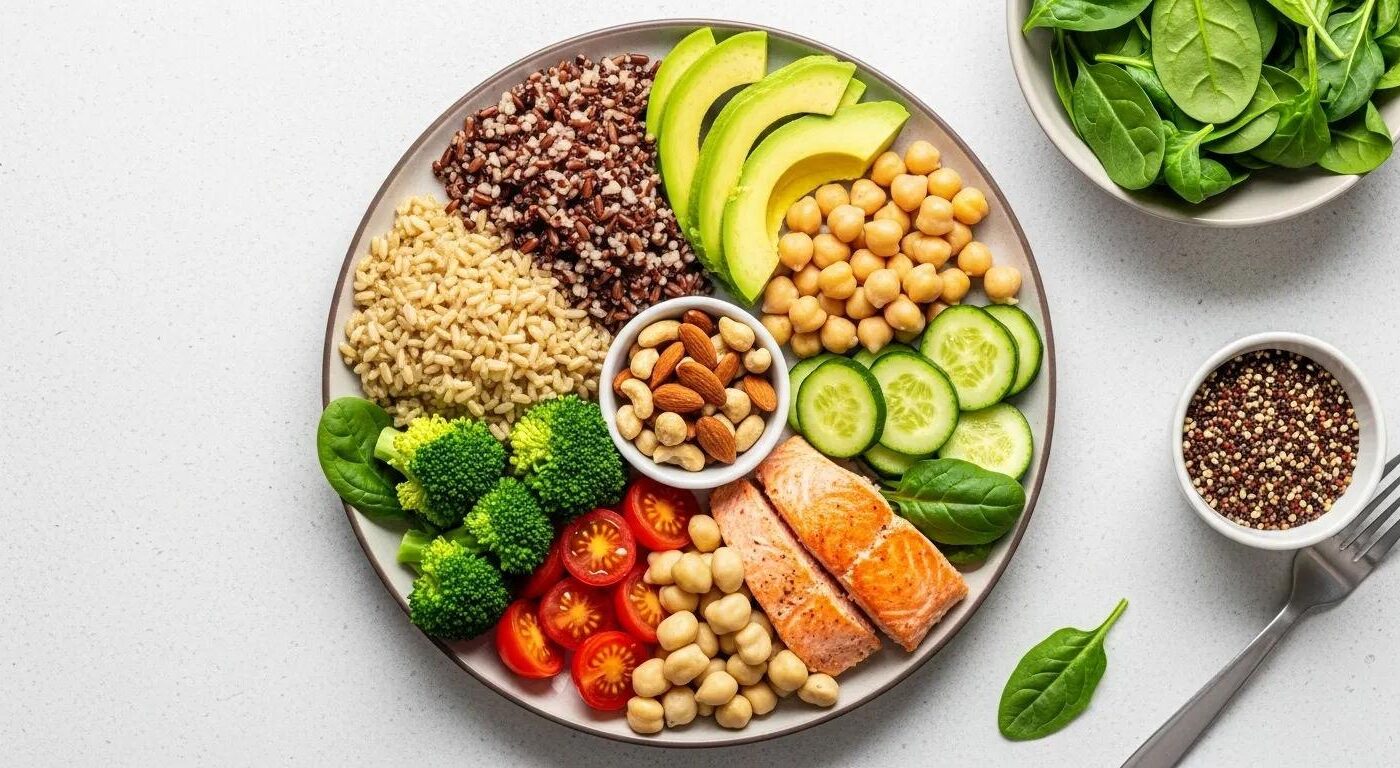
An evidence-based guide to food groups, portion sizes, caffeine, and everyday nutrition—without restrictive dieting or complicated food rules.
Healthy eating is not about giving up delicious food, counting every calorie, or following the latest diet trend. It is about understanding what your body needs and building eating habits that support energy, metabolic health, and long-term well-being.
For decades, nutrition experts have used visual guides to explain how different food groups contribute to a balanced diet. One of the most recognizable examples was the traditional Food Guide Pyramid, which encouraged people to eat more grains, fruits, and vegetables while limiting fats and sweets.
Although nutrition guidance has evolved considerably, the fundamental question remains the same: What should we eat, and how much do we actually need?
The answer involves more than following a pyramid or measuring portions. Food quality, dietary variety, individual nutritional needs, hydration, and sustainable daily habits all play important roles.
A well-designed eating pattern should provide the nutrients your body needs without unnecessarily restricting the pleasure of eating.
1. Why a Balanced Diet Matters More Than Any Single Superfood
Every day, the body requires a continuous supply of energy and essential nutrients to maintain normal physiological functions.
Carbohydrates, fats, and proteins provide energy or the building blocks needed for normal growth, maintenance, and repair. Vitamins and minerals support processes such as immune function, oxygen transport, nerve signaling, bone maintenance, and energy metabolism.
Water is equally essential for circulation, temperature regulation, digestion, and the removal of metabolic waste.
No single food can provide all these nutrients in ideal proportions.
This is why dietary diversity matters.
A diet dominated by refined carbohydrates may provide sufficient calories while supplying inadequate fiber or certain micronutrients. An eating pattern that excludes entire food groups without suitable replacements can also increase the risk of nutritional gaps.
Conversely, eating a wide variety of vegetables, fruits, whole grains, legumes, nuts, and appropriate protein sources can make it easier to meet nutritional requirements.
The World Health Organization identifies four core principles of healthy eating: adequacy, balance, moderation, and diversity. These principles offer a more flexible foundation than rigid food rules.
A balanced diet is therefore not defined by a single perfect meal.
It is established through consistent choices made across days, weeks, and years.
2. From the Food Guide Pyramid to Modern Nutrition Guidance
The original USDA Food Guide Pyramid, introduced in 1992, organized foods into groups according to recommended daily servings.
Grains formed the broad foundation, followed by vegetables and fruits. Dairy products and protein-rich foods occupied smaller sections, while fats, oils, and sweets appeared near the top.
The traditional recommendations included:
| Food group | Historical daily recommendation |
|---|---|
| Bread, cereal, rice, and pasta | 6–11 servings |
| Vegetables | 3–5 servings |
| Fruits | 2–4 servings |
| Meat, poultry, fish, beans, eggs, and nuts | 2–3 servings |
| Milk, yogurt, and cheese | 2–3 servings |
| Fats, oils, and sweets | Use sparingly |
These figures are important for understanding the history of nutrition education, but they should not be treated as universally applicable modern prescriptions.
One limitation was that the pyramid could appear to place foods with very different nutritional qualities into the same category.
Whole-grain oats and highly refined bread, for example, are both grain products, yet they differ in fiber content and overall nutritional value.
Similarly, fats cannot all be evaluated as a single category.
Unsaturated fats from olive oil, nuts, seeds, and fish play useful roles in a healthy diet, while industrial trans fats should be avoided.
A Simpler Way to Visualize a Healthy Meal
Later USDA nutrition education adopted the MyPlate model, emphasizing the composition of an everyday meal rather than a pyramid of daily servings.
The familiar MyPlate approach encourages variety across five food groups: vegetables, fruits, grains, protein foods, and dairy or fortified soy alternatives.
Its practical recommendations include filling approximately half the plate with fruits and vegetables and making at least half of grain choices whole grains.
The broader lesson remains useful regardless of which visual dietary guide is used: build meals around nutrient-dense foods, eat appropriate portions, and avoid letting highly processed foods displace more nutritious choices.
3. How to Build a Healthy Plate Without Counting Every Calorie
One of the easiest ways to improve diet quality is to look at the proportions of food on your plate.
For many healthy adults, a useful starting point is to include plenty of vegetables and fruits, a portion of whole grains or another nutritious carbohydrate source, and an appropriate serving of protein.
An Illustrative Balanced Plate
½
Vegetables and fruit
¼
Whole grains or starchy foods
¼
Protein-rich foods
Include healthy fats in appropriate amounts and obtain calcium-rich foods through meals or snacks. Fruit and vegetables can also be eaten separately.
These proportions are a flexible teaching tool, not an exact requirement for everyone.
An athlete, a pregnant woman, a growing teenager, and an older adult with a low appetite may have substantially different nutritional needs.
Nevertheless, the balanced-plate approach can make ordinary meal planning easier.
Instead of weighing every ingredient, begin by choosing vegetables, a nutritious carbohydrate source, and a protein-rich food.
Then adjust the quantity according to hunger, activity level, nutritional requirements, and health conditions.
4. Whole Grains: An Important Foundation for Sustained Energy
Carbohydrate-rich foods provide energy for daily activities, including physical work and exercise.
But carbohydrate quality matters.
Whole grains retain the bran, germ, and endosperm, supplying fiber and various micronutrients.
Common examples include oats, brown rice, whole wheat, barley, and millet.
Refined grains typically undergo processing that removes some of these natural components, often reducing fiber content.
Why Dietary Fiber Matters
Fiber supports normal bowel function and contributes to gastrointestinal health.
Certain types of fiber can also help regulate cholesterol and moderate the absorption of carbohydrates.
Fiber-rich foods often promote fullness, which may support appetite and weight management.
The WHO’s January 2026 healthy diet guidance recommends that people older than 10 aim for at least 25 grams of naturally occurring dietary fiber each day, while younger children have age-adjusted targets.
A practical way to increase fiber intake is to replace some refined grain products with whole-grain alternatives.
For example, choose oatmeal rather than a sugar-heavy breakfast cereal, select whole-wheat bread more frequently, or combine brown rice with white rice.
However, whole grains are not the only valuable carbohydrate sources.
Beans, lentils, vegetables, fruits, and other plant foods can also supply fiber and important nutrients.
People with certain gastrointestinal conditions may need to adjust fiber intake according to their tolerance and medical advice.
5. Fruits and Vegetables: The Nutritional Foundation Many Diets Are Missing
Fruits and vegetables provide an impressive range of nutrients, including vitamin C, folate, potassium, dietary fiber, and numerous naturally occurring plant compounds.
Their health benefits are not attributable to one ingredient alone.
Rather, they reflect the combined nutritional characteristics of a diverse group of foods.
Different colors and varieties often provide different nutrients.
Dark leafy greens may supply folate and vitamin K. Orange vegetables such as carrots contain carotenoids. Citrus fruits are known for vitamin C, while berries provide fiber and a variety of polyphenols.
How Much Should You Eat?
According to the WHO’s 2026 guidance, people older than 10 years should aim for at least 400 grams of fruits and vegetables per day.
The recommended minimum is lower for younger children: at least 250 grams for ages 2–5 and 350 grams for ages 6–9.
For adults, 400 grams might be achieved through a combination such as:
- A serving of fruit at breakfast.
- Vegetables with lunch.
- A piece of whole fruit as a snack.
- A generous portion of vegetables with dinner.
These are illustrative choices rather than exact prescribed serving sizes.
Fresh produce is valuable, but frozen or canned options can also contribute to a healthy diet, particularly when they contain no added sugar or excessive sodium.
Is Fruit Juice Equivalent to Whole Fruit?
Not entirely.
Whole fruit provides fiber and requires chewing, which can contribute to fullness.
Juice may deliver a substantial amount of naturally occurring free sugars without the same amount of fiber.
For this reason, whole fruit is generally preferable to using fruit juice as the main way to meet fruit intake goals.
Variety and consistency matter more than purchasing expensive or exotic produce.
An affordable combination of seasonal vegetables and common fruits can provide excellent nutritional value.
6. Protein: Essential for Muscles, Recovery, and Healthy Aging
Protein is essential for maintaining and repairing body tissues.
It provides amino acids used to build and maintain muscles, enzymes, hormones, immune proteins, and other important structures.
Protein needs vary depending on age, body size, physical activity, health status, and life stage.
Older adults may benefit from particular attention to adequate protein intake because aging is often accompanied by a gradual loss of skeletal muscle mass and strength.
However, eating more protein does not automatically produce more muscle.
Resistance exercise, sufficient overall energy intake, adequate recovery, and appropriate protein consumption work together to support muscle maintenance and development.
Choosing Better Protein Sources
A healthy eating pattern can include:
- Fish and seafood.
- Eggs and poultry.
- Beans, lentils, and chickpeas.
- Tofu, tempeh, and other soy foods.
- Nuts and seeds.
- Dairy products or appropriate fortified alternatives.
- Lean, unprocessed meat in suitable amounts.
Plant proteins can provide fiber and other beneficial nutrients.
Fish supplies high-quality protein, and certain varieties contain omega-3 fatty acids.
Legumes are particularly useful because they contribute both protein and fiber.
For individuals who eat meat, choosing less processed products and varying protein sources can improve overall dietary quality.
The 2025–2030 Dietary Guidelines for Americans, released in January 2026, emphasize nutrient-dense foods, including protein foods, vegetables, fruits, healthy fats, dairy, and whole grains, while encouraging a reduction in highly processed foods.
There is no need to rely on a single protein source. Variety helps provide a broader range of nutrients.
7. Dairy, Calcium, and Vitamin D: Supporting Strong Bones
Bone health depends on more than calcium alone.
Calcium is a major structural component of bones and teeth. Vitamin D supports calcium absorption, while protein, physical activity, hormones, and other nutrients contribute to maintaining healthy bones.
Milk, yogurt, and cheese can provide calcium and protein.
For people who avoid dairy, suitable options may include calcium-fortified soy beverages, calcium-set tofu, and other calcium-rich foods.
However, not every plant-based milk alternative has the same nutritional composition.
Almond, oat, rice, and soy drinks can differ substantially in protein content, calcium fortification, vitamin D, and added sugar.
Reading nutrition labels is important.
How Much Calcium Do You Need?
Calcium requirements depend on age and individual circumstances.
For example, commonly used U.S. dietary reference values recommend approximately 1,000 milligrams daily for most adults aged 19–50, while women aged 51 and older and adults aged 71 and older generally have a recommended intake of 1,200 milligrams daily.
These amounts refer to total daily calcium intake from food and, when appropriate, supplements.
They do not mean everyone needs a calcium supplement.
High-dose supplementation without medical indication can create unnecessary risks.
People with kidney disease, a history of kidney stones, or conditions affecting calcium metabolism should seek individualized guidance.
Food-first approaches are often preferable when dietary requirements can be met through ordinary meals.
8. Healthy Fats: Why Eating Less Fat Is Not Always Better
Traditional dietary pyramids sometimes encouraged people to use fats and oils sparingly.
While excessive calorie intake remains an important concern, modern nutrition science recognizes that dietary fat is essential.
Fat provides energy, supports cell membranes, helps the body absorb fat-soluble vitamins, and supplies essential fatty acids.
The type of fat consumed is especially important.
Unsaturated fats are commonly found in olive oil, canola oil, nuts, seeds, avocados, and fish.
Saturated fats are found in varying amounts in butter, fatty meats, certain dairy foods, coconut oil, and palm oil.
Industrial trans fats are particularly undesirable because of their adverse effects on cardiovascular health.
The WHO recommends limiting saturated fat to less than 10% of total energy intake and trans fat to less than 1%, while favoring unsaturated fat sources.
The goal is not to remove fat from the diet.
It is to choose appropriate fat sources and quantities within a balanced eating pattern.
A salad containing vegetables, chickpeas, and a moderate amount of olive oil, for example, can be more nutritionally complete than a salad consisting of vegetables alone.
Healthy eating depends on nutritional balance, not the elimination of an essential macronutrient.
9. Caffeine and Energy: Does Coffee Really Dehydrate You?
Many people rely on coffee, tea, or energy drinks to feel more alert.
Caffeine stimulates the central nervous system, primarily by blocking the activity of adenosine receptors involved in sleepiness.
This can temporarily reduce perceived fatigue and improve alertness.
However, caffeine does not replace sleep, and its stimulating effects should not be confused with replenishing the body’s energy reserves.
Does Caffeine Cause Dehydration?
A common misconception is that drinking coffee or tea inevitably causes dehydration.
Caffeine can have a mild diuretic effect, particularly at higher doses or in people who are not accustomed to consuming it.
However, the liquid in ordinary caffeinated beverages generally offsets this effect.
Moderate coffee and tea consumption can therefore contribute to daily fluid intake.
It is also incorrect to assume that caffeine routinely causes blood pressure to fall because of dehydration.
Caffeine may temporarily increase blood pressure in some individuals, and responses vary according to individual sensitivity and habitual intake.
How Much Caffeine Is Too Much?
The U.S. Food and Drug Administration has cited 400 milligrams of caffeine per day as an amount not generally associated with dangerous or negative effects for most healthy adults.
This is not a universal safe limit for everyone.
Pregnancy, certain medications, underlying medical conditions, and sensitivity to caffeine can require lower intake.
Caffeine content also varies considerably between beverages.
| Beverage | Approximate caffeine per serving |
|---|---|
| Brewed coffee, 8 fl oz | 80–100 mg |
| Black tea, 8 fl oz | 30–50 mg |
| Green tea, 8 fl oz | 20–45 mg |
| Regular cola, 12 fl oz | 30–40 mg |
| Energy drinks | Highly variable; check label |
These are approximate examples, not fixed values. Brewing strength, formulation, and serving size can substantially change caffeine content.
Excessive caffeine may cause insomnia, anxiety, palpitations, restlessness, or gastrointestinal discomfort.
Consuming it late in the day may interfere with sleep, particularly for sensitive individuals.
A useful principle is to enjoy coffee or tea if well tolerated, while avoiding dependence on caffeine to compensate for chronic sleep deprivation.
10. Portion Sizes: Why One Serving Does Not Always Mean One Portion
One of the most confusing aspects of nutrition advice is the concept of a serving.
A serving is a standardized quantity used in dietary guidance or nutrition labeling.
A portion is the amount someone actually chooses to eat.
These are not necessarily the same.
A restaurant may serve considerably more pasta than the amount listed as one serving in a dietary reference.
A breakfast bowl may contain two or more servings of cereal.
A packaged snack may appear to be a single portion even when the label lists multiple servings.
Understanding Common Food Measurements
The following examples illustrate approximate reference quantities commonly used in nutrition education. They are not personalized daily allowances.
| Food | Example reference quantity |
|---|---|
| Cooked rice or pasta | ½ cup |
| Cooked vegetables | ½ cup |
| Raw leafy vegetables | 1 cup |
| Whole fruit | 1 medium piece |
| Milk or yogurt | 1 cup |
| Natural cheese | About 1½ oz (42 g) |
| Cooked beans | ½ cup |
| Nuts | About 1 oz (28 g) |
Serving definitions can differ across nutrition systems, food groups, and labeling standards.
For example, a half-cup of cooked beans may count differently depending on whether it is being used as a vegetable or a protein-food equivalent.
Likewise, a serving size on a Nutrition Facts label is not necessarily a recommended amount to eat.
It is a reference quantity for interpreting the product’s nutrient content.
Understanding this distinction helps prevent one of the most common dietary mistakes: assuming that an advertised serving is automatically the ideal personal portion.
Do You Need to Weigh Every Meal?
Not necessarily.
Food scales and measuring cups can be useful for learning portion sizes, especially when someone is following a specific nutrition plan.
However, many people can improve their diet using consistent meal patterns, appropriate food combinations, and awareness of hunger and fullness.
The goal is to develop practical judgment, not lifelong dependence on measuring tools.
11. Why Nutritional Needs Differ Across Age and Life Stages
General dietary advice provides useful guidance, but individual requirements are not identical.
A physically active young adult may need considerably more calories than an older adult who spends much of the day sitting.
Pregnancy increases the need for certain nutrients, while childhood and adolescence require adequate nutrition for growth.
Older adults may face challenges involving appetite, muscle loss, bone health, and nutrient absorption.
Children and Teenagers
Growing bodies require sufficient energy, protein, vitamins, and minerals.
Restrictive diets that unnecessarily eliminate major food groups may compromise nutritional adequacy.
Healthy eating should encourage variety and appropriate portions rather than rigid calorie limits.
Pregnant and Breastfeeding Women
Nutritional requirements change during pregnancy and breastfeeding.
Folate, iron, iodine, choline, and other nutrients deserve particular attention.
Food safety and caffeine intake are also important considerations.
Dietary supplements may be appropriate, but their selection should follow professional guidance.
Older Adults
Aging can be accompanied by changes in appetite, energy needs, muscle mass, and bone density.
Maintaining sufficient protein intake, engaging in appropriate resistance exercise, and meeting calcium and vitamin D requirements can support healthy aging.
Some older adults may need fewer calories but still require substantial amounts of essential micronutrients.
This makes nutrient density especially important.
People With Chronic Medical Conditions
Individuals with diabetes, chronic kidney disease, gastrointestinal disorders, food allergies, or other medical conditions may need dietary adjustments.
For example, certain kidney conditions require individualized management of protein, potassium, phosphorus, or sodium.
A registered dietitian or qualified healthcare professional can help translate general nutritional principles into a suitable personal plan.
12. Dietary Supplements: Helpful in Some Cases, Harmful in Others
The popularity of nutritional supplements can create the impression that more vitamins and minerals always produce better health.
That is not how human nutrition works.
Nutrients often have a range of intake within which they support normal physiological functions.
Inadequate intake may lead to deficiency, while excessive intake of certain nutrients can cause adverse effects.
High doses of preformed vitamin A, for example, can be toxic.
Excessive vitamin D supplementation can cause harmful elevations in blood calcium.
Large doses of some minerals may interfere with the absorption or metabolism of others.
Supplements can also interact with prescription medications.
They may be appropriate when a deficiency is diagnosed, when dietary intake is insufficient, or when a specific life stage or medical condition creates additional requirements.
However, routine use of multiple high-dose products is not a substitute for a nutritious diet.
Before beginning supplements—especially during pregnancy or when taking regular medication—professional advice is sensible.
13. How to Turn Nutrition Knowledge Into Everyday Meals
Healthy eating becomes easier when recommendations are translated into ordinary food choices.
A nutritious diet does not require expensive ingredients, imported superfoods, or complicated recipes.
Familiar, affordable foods can form the foundation of excellent nutrition.
A Balanced Breakfast
Consider oatmeal topped with berries and nuts, accompanied by plain yogurt.
This combination provides carbohydrates, fiber, protein, and fat.
Another option is whole-grain toast with eggs, vegetables, and fruit.
A Nutritious Lunch
A lunch might include brown rice, grilled fish, and a generous portion of vegetables.
Alternatively, a lentil and vegetable bowl with whole-grain bread can provide protein, fiber, and various micronutrients.
A Satisfying Dinner
A balanced dinner could feature tofu or chicken, cooked vegetables, and an appropriate portion of rice or potatoes.
The exact amounts should reflect personal energy requirements and appetite.
Better Snack Choices
Snacks can contribute useful nutrients when selected thoughtfully.
Whole fruit, unsweetened yogurt, nuts, hummus, and vegetables are examples.
Not everyone needs snacks between meals. Their usefulness depends on total food intake, meal timing, activity, and individual preferences.
Remember Hydration
Water should be a regular part of daily life.
Unsweetened tea, coffee in suitable amounts, and other beverages can also contribute to fluid intake.
However, frequently choosing sugar-sweetened drinks can add substantial calories without improving overall nutritional quality.
The most sustainable plan is one that fits your schedule, culture, food preferences, and budget.
14. Seven Practical Habits for a Healthier Diet
Improving nutrition rarely requires a complete lifestyle transformation overnight.
Small adjustments can produce meaningful improvements when maintained consistently.
1. Include vegetables in more meals. Add vegetables to lunch and dinner instead of relying on an occasional salad.
2. Choose whole grains more frequently. Replace some refined grain foods with oatmeal, brown rice, whole-wheat bread, or other minimally processed alternatives.
3. Eat whole fruits regularly. Use fruit as a convenient snack or part of breakfast.
4. Vary your protein sources. Include beans, lentils, fish, eggs, soy foods, poultry, or other nutritious choices according to your dietary preferences.
5. Choose healthier fats. Favor appropriate amounts of unsaturated fats and reduce frequent reliance on foods high in industrial trans fats.
6. Be mindful of drinks. Water and unsweetened beverages can help reduce unnecessary added sugar intake.
7. Pay attention to consistency, not perfection. A balanced eating pattern allows flexibility, enjoyment, and cultural food traditions.
The objective is not to judge every meal as either good or bad.
It is to establish a pattern that provides adequate nutrition and can realistically be maintained.
15. Frequently Asked Questions About the Healthy Eating Pyramid
Is the Food Guide Pyramid Still Recommended?
The original 1992 USDA Food Guide Pyramid is a historical nutrition education model, not the current U.S. dietary recommendation.
MyPlate later offered an alternative visual approach. In January 2026, the United States introduced the 2025–2030 Dietary Guidelines for Americans, accompanied by a new food pyramid emphasizing nutrient-dense foods. Readers should distinguish these different generations of guidance rather than assume they recommend identical serving patterns.
How Many Servings of Fruits and Vegetables Should I Eat?
The WHO recommends at least 400 grams of fruits and vegetables per day for people older than 10, with lower age-specific amounts for younger children. The exact number of servings depends on serving definitions and food choices.
Are Carbohydrates Bad for Your Health?
No. Carbohydrates are an important energy source. The amount, quality, and overall dietary context matter. Whole grains, legumes, vegetables, and fruits are generally preferable to diets dominated by refined carbohydrates and added sugars.
Is Coffee Dehydrating?
Moderate coffee consumption does not generally cause dehydration in healthy adults. Caffeinated beverages can contribute to daily fluid intake, although excessive caffeine may cause undesirable effects.
Should Everyone Take Multivitamins?
No. Supplements may be beneficial for individuals with specific nutritional needs or deficiencies, but they are not universally required. Their benefits and risks depend on personal circumstances.
Can a Healthy Diet Improve Daily Energy Levels?
Adequate calorie intake, balanced meals, sufficient nutrients, hydration, and regular eating patterns can help support normal energy levels. However, persistent fatigue may have medical or sleep-related causes that require evaluation.
Conclusion: A Healthy Diet Is a Pattern, Not a Pyramid
The traditional food pyramid helped generations of people think about nutrition in a more organized way.
Modern dietary science has refined that message.
Today, healthy eating is less about following fixed serving numbers and more about choosing an appropriate variety of nutrient-dense foods in quantities suited to individual needs.
Whole grains, vegetables, fruits, legumes, protein-rich foods, and healthy fats all have valuable roles.
Water supports normal hydration, while caffeine can be enjoyed in moderation by many adults without automatically causing dehydration.
The most important lesson is that nutrition should support everyday life rather than become a source of unnecessary restriction.
A healthy meal can be flavorful. A balanced diet can accommodate personal preferences. Nutritious food does not have to be expensive or complicated.
The foundation of lasting health is not a perfect pyramid or a temporary diet. It is a consistent pattern of nourishing choices that you can enjoy and maintain over time.
Scientific References
- World Health Organization. (2026). Healthy Diet: Evidence-Based Nutrition Recommendations.
- U.S. Department of Agriculture and U.S. Department of Health and Human Services. (2026). Dietary Guidelines for Americans, 2025–2030.
- U.S. Department of Agriculture. MyPlate: Nutrition Education and Food Group Guidance.
- U.S. Food and Drug Administration. Spilling the Beans: How Much Caffeine Is Too Much?.
- Mayo Clinic. (2025). Caffeine: Is It Dehydrating or Not?
FAQ
What is the healthy eating pyramid?
The healthy eating pyramid is a visual approach to understanding a balanced diet. Modern versions emphasize dietary variety, nutrient-dense foods, appropriate portions, and sustainable eating habits.
Is the old food pyramid still recommended?
The original USDA Food Guide Pyramid is a historical model. U.S. dietary guidance has changed over time, including the MyPlate approach and the 2025–2030 Dietary Guidelines for Americans.
What should a balanced plate contain?
A practical approach is to include plenty of vegetables and fruits, a portion of whole grains or other
How many fruits and vegetables should I eat daily?
The World Health Organization recommends at least 400 grams of fruits and vegetables per day for people older than 10, with age-adjusted targets for younger children.
Does coffee cause dehydration?
Moderate consumption of coffee and tea generally contributes to hydration. However, high caffeine intake may cause unwanted effects such as sleep disruption or palpitations.
Do I need nutritional supplements with a balanced diet?
Not necessarily. Supplements may be appropriate for specific deficiencies or life stages, but they should not replace a nutritious eating pattern.
Educational content only. Not medical advice. This article is intended for general educational purposes and does not replace professional medical or nutritional advice.
This article is for general education and does not replace individualized care from a qualified health professional. Seek appropriate advice for persistent, severe, or concerning symptoms.
Read the full medical disclaimer

