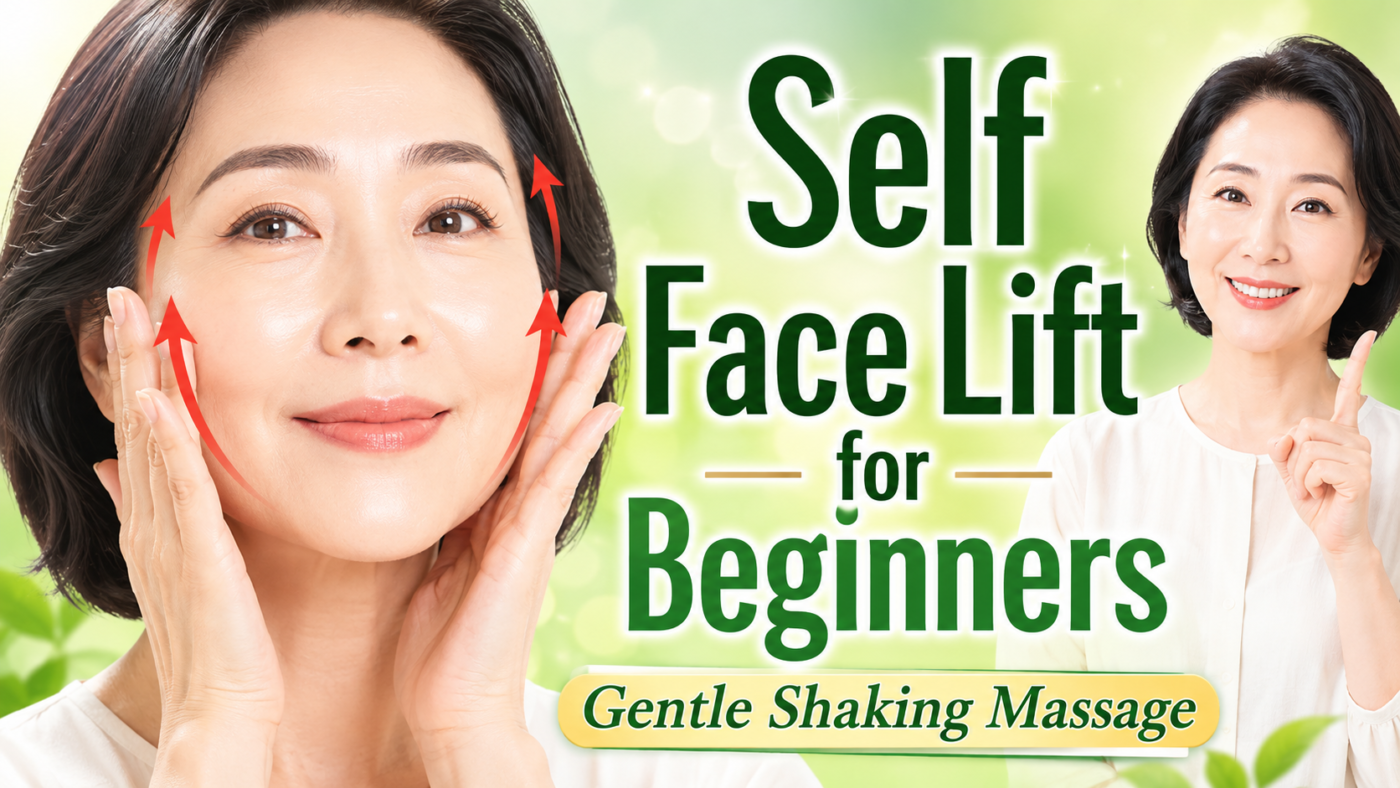
Gentle face massage after 40 can feel relaxing, soothing, and surprisingly refreshing.
Many people notice that their face looks slightly different after a massage session.
The eyes may appear more open.
The cheeks may look less puffy.
The skin may appear brighter.
The jawline may seem a little more defined.
This has led to increasingly popular claims that gentle shaking, fingertip massage, and facial exercises can “lift” the face, erase sagging, and smooth wrinkles.
There is some truth behind the temporary changes people notice.
But the long-term reality is more limited.
Gentle facial massage may temporarily influence:
- Blood flow
- Muscle tension
- Surface puffiness
- Skin appearance
- Relaxation
Facial exercises may also increase awareness and control of certain facial muscles.
However, these techniques cannot permanently reposition facial tissues, reverse collagen loss, or eliminate deep wrinkles.
That does not make them useless.
It simply means we should understand what they realistically can and cannot do.
Why the Face Changes After 40
The face naturally changes with age.
Several processes contribute:
- Collagen declines
- Elastin changes
- Skin becomes thinner
- Fat pads shift
- Bone structure gradually changes
- Muscle tone changes
- Sun exposure accumulates
- Hormonal changes affect skin quality
For many people, these changes become more noticeable during their 40s and 50s.
You may begin to see:
- Fine lines
- Crow’s feet
- Nasolabial folds
- Under-eye hollowing
- Puffiness
- Sagging
- Uneven texture
These changes are normal.
They are not simply the result of “stiff facial muscles.”
Can Stress Affect the Way Your Face Looks?
Yes, indirectly.
Stress can influence:
- Facial tension
- Jaw clenching
- Sleep
- Inflammation
- Skin sensitivity
- Expression patterns
A person who frequently frowns, clenches the jaw, or tightens the brow may feel more tension around the face.
Gentle massage and slow breathing can help relax these patterns.
That may make the face look more rested.
But “stress shrinking the skin” is not an accurate physiological description.
Can Gentle Face Massage Improve Circulation?
Temporarily, yes.
Touch and massage can increase local blood flow.
This may create:
- Warmth
- Mild redness
- A healthy-looking glow
These effects usually fade over time.
They do not mean that facial tissues have been permanently rejuvenated.
Can Face Massage Reduce Puffiness?
Sometimes.
Very gentle massage may temporarily move superficial fluid and reduce the appearance of mild puffiness.
This is especially noticeable around:
- The cheeks
- Jawline
- Under-eye area
But persistent swelling can have other causes, including allergies, sinus issues, sleep problems, medications, or medical conditions.
Massage should not be used to explain or treat unexplained swelling.
Can Shaking Massage Lift the Face?
Not permanently.
A gentle shaking technique may reduce muscle tension and create a temporary change in facial expression or soft-tissue position.
That can make the face look slightly more lifted for a short time.
But it cannot permanently reposition:
- Skin
- Ligaments
- Fat pads
- Bone
Structural facial aging requires more than manual manipulation.
What About Fascia?
Fascia is connective tissue found throughout the body.
It surrounds and connects muscles, nerves, vessels, and other tissues.
Facial fascia is real.
But the idea that wrinkles or sagging are mainly caused by “stuck fascia” that can be released by shaking is too simplistic.
Massage may affect how tissues feel.
It may reduce perceived tightness.
But it is not proven to reverse age-related facial changes by “unsticking” fascia.
Does Massaging the Ears Lift the Face?
There is no strong evidence that ear massage mechanically lifts facial tissues.
Massage around the ears may still feel pleasant because the area contains many sensory nerves and muscles nearby.
Gentle ear massage may help with relaxation.
But it should not be presented as a direct facelift technique.
Is Ear Massage Safe?
Usually, if done gently.
Avoid:
- Strong pulling
- Painful twisting
- Aggressive pressure
- Massage over infection or inflammation
If the ear or surrounding area is painful or swollen, stop.
Can Temple Massage Help?
Yes, for relaxation.
The temporalis muscle can become tense in people who:
- Clench their jaw
- Grind their teeth
- Experience stress
- Hold facial tension
Gentle circular massage around the temples may feel soothing.
Do not press hard.
What About Under-Eye Massage?
This area requires the most caution.
The skin around the eyes is thin.
Use extremely light pressure.
Do not:
- Press on the eyeball
- Rub aggressively
- Pull the eyelid
- Use sharp nails
- Massage irritated skin
If you feel pain, burning, or blurred vision, stop immediately.
Can Under-Eye Massage Remove Bags?
Not permanently.
Mild puffiness may temporarily improve.
But under-eye bags may also be caused by:
- Fat-pad changes
- Genetics
- Skin laxity
- Fluid retention
- Allergies
Massage cannot reverse structural bags.
Can Facial Exercises Tighten Skin?
Facial exercises can train facial muscles.
Some small studies suggest they may alter facial appearance modestly over time.
But evidence is still limited.
Facial exercise should not be presented as a replacement for:
- Sunscreen
- Retinoids
- Professional dermatologic treatment
- Healthy lifestyle habits
And aggressive repetitive expressions may potentially accentuate dynamic lines in some people.
Can Squinting Train the Under-Eye Muscles?
It can activate facial muscles.
But repeated strong squinting is not necessarily desirable.
The orbicularis oculi already works frequently during blinking and facial expression.
A safer approach is gentle controlled movement rather than intense repetitive squinting.
Can Eyelid Shaking Stimulate Tear Production?
This claim should be treated cautiously.
The lacrimal glands are not something you should try to “stimulate” by pressing or shaking the eyelids.
If your eyes are dry, better options include:
- Blinking regularly
- Taking screen breaks
- Using artificial tears if appropriate
- Seeing an eye-care professional if symptoms persist
Do not massage the eyeballs.
Does Yawning Mean Skin Renewal Has Started?
No.
Yawning may occur when you feel relaxed, tired, or physiologically ready to change arousal state.
It is not a sign that skin renewal has been activated.
Skin renewal happens continuously as part of normal biology.
Can Face Massage Erase Wrinkles?
No.
Massage may make fine lines look temporarily softer by:
- Improving hydration
- Reducing tension
- Increasing surface blood flow
- Changing expression
But deep wrinkles involve changes in:
- Collagen
- Elastin
- Repeated expression
- Sun damage
- Facial structure
Massage cannot permanently erase them.
Can Facial Exercises Prevent Sagging?
There is not enough evidence to say they can prevent age-related sagging.
Sagging involves many deeper structural changes.
However, gentle facial movement may improve awareness and muscle control.
That can be a reasonable goal.
Why Self-Compassion May Still Matter
The emotional theme in the original video is actually useful.
Many people examine their face only to criticize:
- Wrinkles
- Sagging
- Puffiness
- Asymmetry
That can make skincare feel like punishment.
A gentler approach may help people care for their skin more consistently.
Treating your face with patience is not a facelift treatment.
But it can improve the way you relate to your appearance.
That matters too.
A Gentle Face Massage Routine After 40
The following routine keeps the relaxing parts of the original method while avoiding overly aggressive eye and tissue manipulation.
Step 1: Shoulder Rolls
Sit or stand tall.
Roll the shoulders slowly backward.
Repeat 8–10 times.
Then reverse direction.
This helps reduce upper-body tension before touching the face.
Step 2: Gentle Ear Massage
Hold the outer ear gently.
Make small circular movements around the ear base.
Keep the pressure light.
Continue for 20–30 seconds.
Step 3: Temple Circles
Place fingertips on the temples.
Make small circles.
Breathe slowly.
Continue for 20–30 seconds.
Step 4: Scalp Relaxation
Place fingertips on the scalp.
Move the skin gently without scratching.
Work around the sides and top of the head.
Continue for 30 seconds.
Step 5: Cheek Press and Release
Place fingertips lightly on the cheeks.
Press very gently.
Release.
Do not pinch or pull.
Repeat 8–10 times.
Step 6: Gentle Under-Eye Tapping
Use the ring fingers.
Tap lightly along the orbital bone beneath the eyes.
Stay away from the eyeball and lash line.
Continue for 15–20 seconds.
Step 7: Brow Relaxation
Place fingertips over the brows.
Use gentle circular movements.
Do not pull strongly upward.
Continue for 20–30 seconds.
Step 8: Side-of-Nose Massage
Place fingertips beside the nose.
Make very small circles.
Do not press hard.
Continue for 15–20 seconds.
Step 9: Jaw Relaxation
Place fingertips over the jaw muscles.
Make gentle circles.
This can be especially soothing if you clench your teeth.
Continue for 30 seconds.
Step 10: Facial Expression Practice
Relax the forehead.
Gently smile.
Then release.
Try opening the eyes comfortably without raising the eyebrows dramatically.
Repeat several times.
The goal is control, not extreme stretching.
Step 11: Gentle Cheek Lift
Smile softly.
Notice the cheek muscles lifting.
Hold for 2–3 seconds.
Relax.
Repeat 5 times.
Step 12: Finish With Palms
Place clean palms lightly over the cheeks.
Take three slow breaths.
Finish without rubbing.
How Often Should You Do Face Massage?
Two to three gentle sessions per week is enough for most people.
More is not automatically better.
If your skin becomes:
- Red
- Tender
- Irritated
- Dry
reduce frequency.
Should Face Massage Hurt?
No.
Pain is not evidence that fascia is releasing.
Facial massage should feel:
- Gentle
- Warm
- Relaxing
- Comfortable
Not painful.
What Products Should You Use?
If you massage the skin, some slip can reduce friction.
Good options include:
- Lightweight moisturizer
- Facial oil if tolerated
- Gentle cream
Avoid anything that stings.
People with acne-prone or sensitive skin should choose non-irritating products.
When Should You Avoid Facial Massage?
Avoid massage if you have:
- Active skin infection
- Open wounds
- Severe acne inflammation
- Rosacea flare
- Sunburn
- Recent facial procedure
- Recent filler or Botox unless your clinician approves it
Follow post-procedure instructions carefully.
Can Facial Massage Replace Retinol?
No.
Retinoids have much stronger evidence for improving photoaging and fine lines.
Massage is optional.
A stronger anti-aging foundation includes:
- Daily sunscreen
- Appropriate retinoid use
- Moisturizer
- Gentle cleansing
- Healthy sleep
- Avoiding smoking
Can It Replace Cosmetic Procedures?
No.
Massage cannot produce the same structural effects as:
- Neuromodulators
- Fillers
- Lasers
- Radiofrequency
- Surgery
People should not be told that massage is “equally effective without side effects.”
These are completely different interventions.
Why Gentle Touch Is Better Than Aggressive Manipulation
Facial skin is delicate.
Aggressive rubbing can lead to:
- Irritation
- Redness
- Broken capillaries
- Inflammation
- Worsening of sensitive skin
Gentle pressure is enough.
What Can Change Immediately?
After one session, you may notice:
- Less tension
- More warmth
- Temporary reduction in puffiness
- Brighter appearance
- Slightly more open-looking eyes
These short-term changes are plausible.
They should not be confused with permanent anti-aging effects.
What Really Helps Skin Look Firmer After 40?
The most evidence-based strategies include:
Sunscreen
Daily UV protection is one of the most important anti-aging habits.
Retinoids
They can support collagen and improve fine lines over time.
Moisturizer
Hydration can make fine lines look softer.
Protein and Nutrition
Skin health depends on adequate nutrition.
Sleep
Poor sleep can worsen the appearance of fatigue.
Exercise
Regular physical activity supports overall health and circulation.
Avoid Smoking
Smoking accelerates skin aging.
The Bottom Line
Gentle face massage after 40 can be a relaxing and enjoyable self-care practice.
It may help you:
- Reduce facial tension
- Temporarily reduce mild puffiness
- Increase surface warmth
- Become more aware of facial expressions
- Feel more comfortable in your skin
But gentle shaking cannot permanently lift sagging skin.
Massage cannot erase deep wrinkles.
And facial exercises cannot completely reverse structural aging.
The best approach is to treat massage as a complementary practice.
Use it for relaxation and comfort.
Pair it with evidence-based skincare.
And most importantly, treat your face with more kindness than criticism.
Frequently Asked Questions
Can gentle face massage lift sagging skin?
It may temporarily change tension and puffiness, but it cannot permanently lift structural sagging.
Can shaking massage erase wrinkles?
No. It may temporarily soften the appearance of some lines, but deep wrinkles cannot be erased by shaking.
Does ear massage lift the face?
There is no strong evidence that ear massage mechanically lifts facial tissues.
Can under-eye massage remove bags?
It may reduce mild puffiness temporarily, but it cannot remove structural under-eye bags.
Is facial fascia real?
Yes, but age-related sagging is not simply caused by “stuck fascia.”
Can massage improve blood flow?
Yes, temporarily.
Can facial exercise tighten skin?
Evidence is limited. It may improve muscle control but cannot reverse deeper skin aging.
Should face massage hurt?
No. Painful pressure is unnecessary and may irritate the skin.
Can eyelid massage improve dry eyes?
Do not massage the eyeballs or aggressively press the eyelids. Persistent dry-eye symptoms should be evaluated by an eye-care professional.
How often should I massage my face?
Two to three gentle sessions per week is a reasonable starting point.
Medical Disclaimer:
This article is for educational and informational purposes only and is not medical advice. Avoid aggressive facial or eye-area massage. Stop if you experience pain, swelling, vision changes, persistent redness or significant irritation. People with active skin disease, recent facial procedures, eye conditions or unexplained facial swelling should consult a qualified healthcare professional.
This article is for general education and does not replace individualized care from a qualified health professional. Seek appropriate advice for persistent, severe, or concerning symptoms.
Read the full medical disclaimer