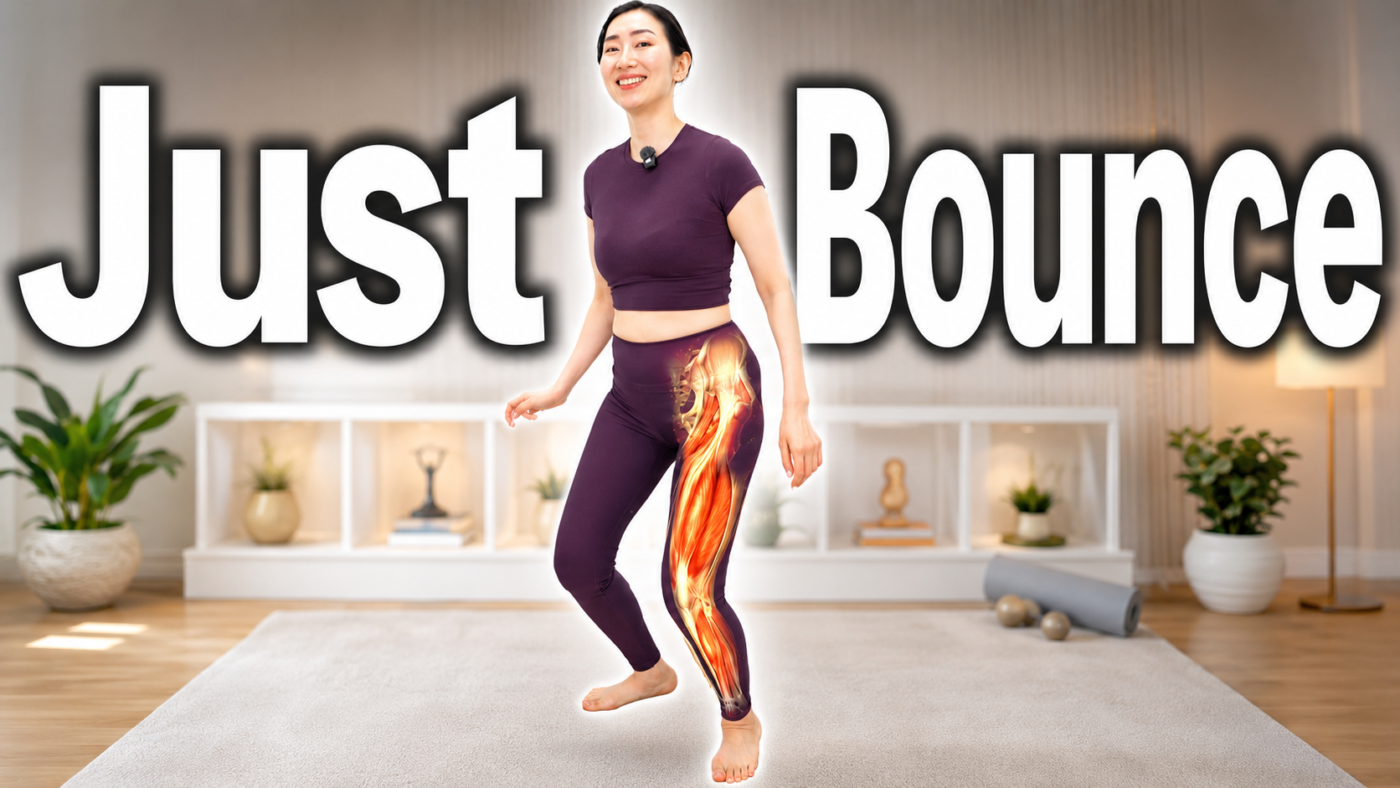
Gentle bouncing exercise is a simple form of rhythmic movement that can gently engage the legs and core while encouraging whole-body movement. For many people, it may be an accessible way to support mobility, circulation, relaxation and everyday physical activity without requiring complicated equipment.Sometimes the most useful movement does not look like a workout at all. You stand with your feet comfortably apart, soften your knees, relax your shoulders and begin to bounce gently. There is no heavy equipment, no complicated choreography and no need to push yourself to exhaustion. Yet after a few minutes, many people notice that their body feels warmer, looser and more awake.
Gentle bouncing is not a miracle anti-aging treatment, and it cannot “detox” the body or reverse aging. What it can do is encourage regular movement, reduce prolonged stiffness and provide a low-intensity way to reconnect with your body. For people who spend much of the day sitting, working at a computer or remaining in the same posture for long periods, that alone can be valuable.
Why Your Body May Feel Better When You Start Moving
The human body is designed for frequent movement. Long periods of sitting can leave the hips, back, shoulders and neck feeling stiff simply because the same tissues and joints have remained in relatively fixed positions for hours.
Gentle rhythmic movement changes that pattern. As you bend and straighten the knees slightly, shift your body weight and allow the arms and shoulders to move freely, muscles repeatedly contract and relax. Blood flow to active tissues increases, joints move through small ranges of motion and the body receives a steady stream of sensory information about balance and position.
This is one reason even a short movement break can make you feel noticeably different.
The benefit does not require extreme intensity. A five-minute period of comfortable movement may sometimes be more realistic—and more sustainable—than waiting for the perfect opportunity to complete a demanding workout.
Gentle Movement and Circulation
Muscle contractions help move blood through the body. The calf muscles in particular play an important role in assisting venous return from the lower legs when you walk, rise onto your toes or shift your weight.
A gentle bounce involves repeated movement through the ankles, calves, knees and hips. This does not “flush toxins” in the way some wellness claims suggest, but it does provide muscular activity after periods of inactivity.A gentle bouncing exercise does not need to be intense.
This gentle bouncing exercise can be modified to match your balance and mobility level.
Stop the gentle bouncing exercise if you experience pain, dizziness or unusual shortness of breath.
The lymphatic system also depends partly on body movement and muscle contraction because it does not have a central pump comparable to the heart. Everyday activities such as walking, breathing and changing position contribute to normal lymph movement.
That does not mean bouncing can treat lymphedema or other lymphatic disorders. Persistent swelling should always be medically evaluated rather than treated with exercise alone.
Why Relaxation Is Different From Simply Sitting Still
Many people assume that sitting on a sofa or scrolling through a phone automatically means they are resting. Physically, however, you may still be holding tension in the jaw, shoulders, hands or abdomen.
Mental stimulation may also continue even when your body is stationary.
A slow movement practice can create a different type of break. Instead of trying to achieve something, you focus on sensations: your feet contacting the ground, your knees softening, your shoulders becoming heavier and your breathing becoming easier.
For some people, this kind of mindful movement can feel calming because attention shifts away from constant thinking and back toward the body.
You do not need to describe this as “releasing stored energy” for the effect to be meaningful. Sometimes simply moving, breathing and reducing unnecessary muscular tension is enough to change how you feel.
The Nervous System Loves Variety
Your brain constantly receives information from muscles, joints, skin, eyes and the inner ear to determine where your body is in space.
Standing still provides one pattern of sensory information. Walking provides another. Gentle bouncing, swaying and shifting weight introduce additional movement challenges without necessarily requiring high physical effort.
That sensory variety can help you feel more alert and coordinated.
This is also why simple activities such as walking outdoors, tai chi, qigong, dancing and mobility exercises can feel surprisingly refreshing. They combine movement, balance, rhythm and attention.
For healthy aging, maintaining the ability to move comfortably in many different ways is generally more useful than becoming exceptionally good at only one exercise.
What About Fascia?
Fascia is connective tissue that surrounds and connects muscles and other structures throughout the body. It responds to movement and mechanical loading, but claims that a few minutes of shaking will instantly “reorganize” or “realign” fascia go beyond what current evidence can support.
A more reasonable explanation is that gentle movement changes muscle tension, joint position and sensory input. Those changes may make the body feel less rigid.
That feeling is real even when the biological explanation is less dramatic than social-media language suggests.
A Simple Gentle Bouncing Practice
If you want to experiment with this type of movement, start conservatively.
Stand near a wall, countertop or sturdy chair if balance is a concern. Place your feet approximately hip- to shoulder-width apart. Keep the knees soft rather than locked.
Begin by shifting your weight gently from side to side. Once that feels comfortable, allow the knees and ankles to bend slightly so the body moves up and down in a small rhythmic motion.
Your feet do not need to leave the floor.
Let your shoulders relax and allow the arms to swing naturally. Keep your breathing comfortable. There is no need to breathe in a special pattern or force deep breaths.
Try 30 to 60 seconds at first, rest and notice how your body responds. If it feels good, repeat several times.
You can gradually turn the movement into light heel raises, gentle stepping, arm swings or easy side-to-side swaying.
The goal is not to bounce as high as possible. The goal is comfortable movement.
Why “More Intense” Is Not Always Better
Strength training, aerobic exercise and progressive overload are extremely valuable for long-term health. Adults generally benefit from maintaining cardiovascular fitness, muscular strength, balance and mobility.
But every movement session does not need to be difficult.
If you are tired, stiff or returning to exercise after inactivity, gentle movement can serve as an entry point. It can also function as a warm-up, recovery activity or movement break during the workday.
This is particularly important because exercise habits are built through consistency. A movement practice you are willing to repeat is often more useful than an extreme routine you abandon after a week.
Can Gentle Bouncing Make You Younger?
No exercise can literally return your cells to a younger age in a few minutes.
However, regular physical activity is strongly connected with many aspects of healthy aging. Staying active helps preserve mobility, muscle function, cardiovascular fitness, balance and independence.
Movement can also influence mood, sleep and overall quality of life.
So rather than viewing gentle bouncing as an anti-aging hack, think of it as one small way to interrupt sedentary behavior and add more movement to the day.
That is less dramatic, but much more useful.
When You Should Be Careful
Gentle bouncing is not appropriate for everyone. Stop if you experience pain, dizziness, chest discomfort, unusual shortness of breath or a feeling that you may lose your balance.
People with significant balance problems, recent surgery or injury, severe joint pain, unstable cardiovascular conditions or other medical concerns should discuss new exercise routines with an appropriate healthcare professional.
Pregnancy and pelvic-floor conditions may also require individualized exercise guidance.
Movement should feel supportive, not punishing.
The Bigger Lesson: Your Body Needs Both Effort and Recovery
There is an interesting idea in traditional Eastern philosophy that can be translated into modern wellness without treating it as medical fact: life contains both activity and restoration.
You need strength, effort and challenge. You also need sleep, recovery, quiet and periods when the body is not being pushed.
Modern life often emphasizes the first half of that equation.
A gentle movement practice can be a reminder that health is not always created by doing more. Sometimes it comes from moving differently—softening the knees, releasing unnecessary tension, breathing normally and allowing your body to experience movement without competition.
You do not need a complicated routine.
Stand up. Move gently. Notice what feels stiff. Allow your shoulders to relax. Let your arms swing. Walk for a few minutes afterward if you can.
Then continue with your day.
The real value is not discovering a secret anti-aging exercise. It is remembering that your body was built to move frequently, in many different ways, throughout your life.
This article is for general education and does not replace individualized care from a qualified health professional. Seek appropriate advice for persistent, severe, or concerning symptoms.
Read the full medical disclaimer