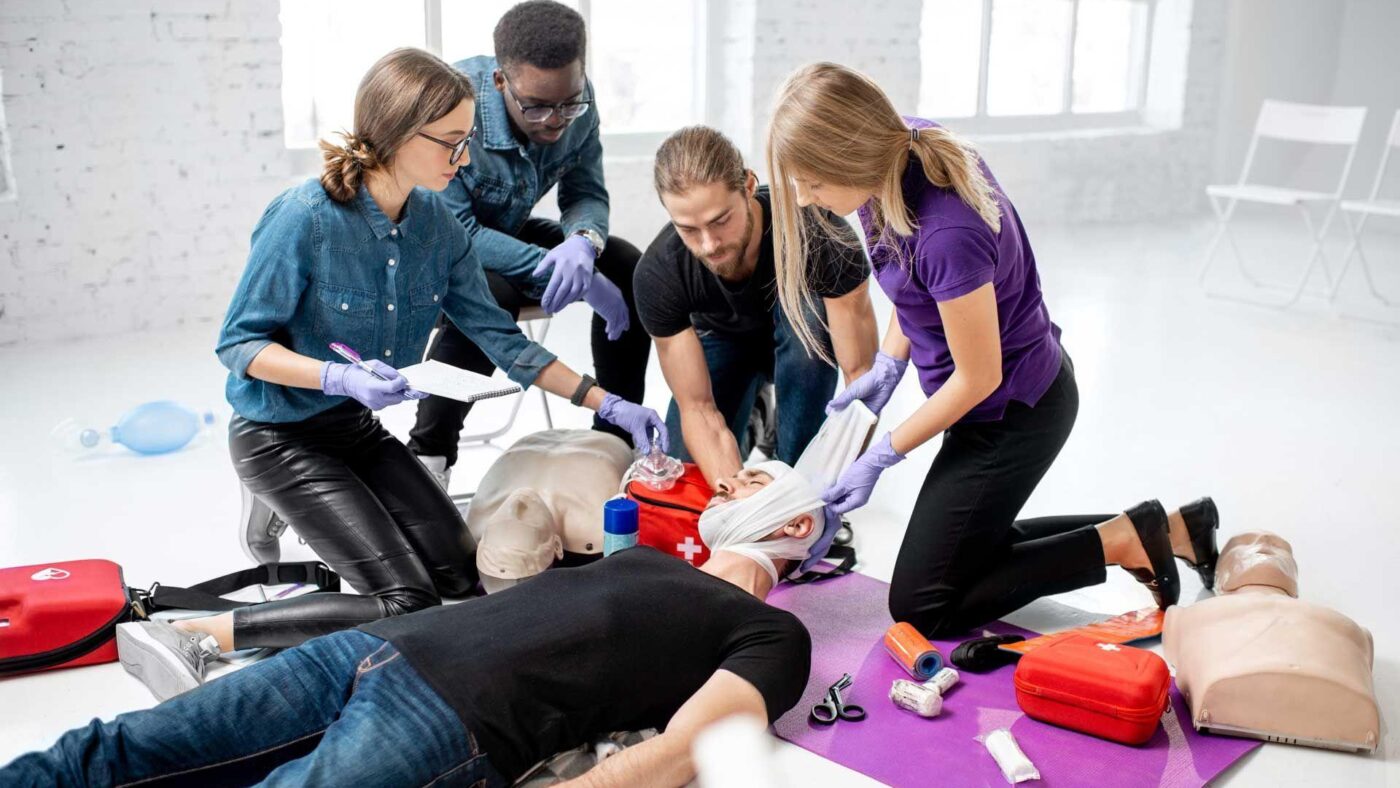
A reliable first aid guide can help you respond more confidently to injuries and medical emergencies before professional help arrives. From severe bleeding and burns to heatstroke, poisoning, drowning, fractures, electrical injuries, and animal bites, knowing the right steps can prevent further harm and potentially save lives. This evidence-based guide explains 10 common emergency situations, essential first-aid actions, dangerous mistakes to avoid, and when to call emergency medical services.Learn evidence-based first aid for cuts, puncture wounds, sprains, heatstroke, poisoning, burns, drowning, fractures, electrical injuries, and animal bites—with practical emergency response steps and clear guidance on when to seek professional help.
Emergencies can happen anywhere: at home, at work, on the road, during outdoor activities, or while enjoying time with family.
A kitchen accident can cause a deep cut. High temperatures can lead to a life-threatening heatstroke. Accidental poisoning may occur after exposure to medications, cleaning products, pesticides, or dangerous gases. A swimming accident can become critical within minutes.
In these situations, knowing what to do—and what not to do—can make an important difference.
First aid is the immediate assistance provided to someone experiencing an injury or sudden illness before professional medical care becomes available.
Its purpose is to preserve life, prevent further harm, and support recovery.
However, first aid is not the same as medical treatment. Some emergencies require advanced procedures, prescription medicines, specialized equipment, or hospital monitoring.
Traditional first-aid recommendations have also changed considerably as medical evidence has improved.
Practices once considered helpful, such as deliberately inducing vomiting after poisoning, cutting open snakebite wounds, attempting to drain water from someone who has drowned, or applying ice directly to burns, may cause additional harm.
This guide explains safer approaches based on contemporary emergency-care principles and guidance from organizations including the American Heart Association, American Red Cross, Centers for Disease Control and Prevention, and National Health Service.
First Things First: The Five Principles of Emergency Response
Before treating an injury or sudden illness, follow a basic emergency response sequence.
1. Check the scene for danger
Do not enter an environment that exposes you to serious harm.
Potential hazards include live electrical wires, traffic, toxic gases, chemicals, fire, unstable structures, and deep or fast-moving water.
A rescuer who becomes injured may increase the number of people requiring assistance.
2. Check the person’s responsiveness and breathing
Speak loudly and gently tap the person’s shoulder when appropriate.
Look for normal breathing.
An unresponsive person who is not breathing normally, or who is only gasping, may be in cardiac arrest.
3. Contact emergency medical services
Call the local emergency number when someone has life-threatening symptoms, including unconsciousness, severe bleeding, severe breathing difficulties, or suspected cardiac arrest.
If another person is available, ask them to call for help and retrieve an automated external defibrillator (AED).
4. Provide appropriate first aid
Control life-threatening bleeding, start cardiopulmonary resuscitation when indicated, or provide other immediate care based on the situation.
Use emergency dispatcher instructions when available.
5. Continue monitoring until help arrives
Watch for changes in breathing, responsiveness, bleeding, and general condition.
Avoid unnecessary movement, especially when a serious spinal injury is possible.
These principles are consistent with the American Heart Association and American Red Cross guidelines for first aid.
cpr.heart.org
1. Cuts, Puncture Wounds, Bruises, and Sprains
Traumatic injuries range from minor skin abrasions to deep wounds involving blood vessels, nerves, tendons, muscles, or internal organs.
A wound’s appearance does not always reveal its severity.
Small punctures, for example, can cause deep tissue injury despite limited surface bleeding.
How to treat a minor cut
For a small, superficial wound:
- Wash your hands before touching the injury when possible.
- Apply firm, direct pressure with clean gauze or cloth if bleeding is present.
- Rinse the wound with clean running water.
- Gently clean the surrounding skin with mild soap.
- Cover the wound with a sterile dressing or suitable adhesive bandage.
- Change the dressing when it becomes wet or dirty, and monitor for infection.
Avoid repeatedly applying rubbing alcohol, concentrated iodine, or hydrogen peroxide directly into the wound. These products can irritate tissues and may interfere with normal healing.
For minor uncomplicated cuts, a thin layer of plain petroleum jelly may help maintain a moist healing environment.
What if bleeding is severe?
Severe external bleeding can become life-threatening.
Apply firm, continuous direct pressure with a clean dressing or cloth.
Call emergency medical services.
If life-threatening bleeding from an arm or leg cannot be controlled with direct pressure, a properly applied commercial tourniquet may be necessary. This is best performed by someone trained in its use, with dispatcher guidance when possible.
Do not remove a deeply embedded object. Instead, avoid putting pressure directly on the object, stabilize it if feasible, and seek emergency care.
Puncture wounds
Puncture wounds can result from nails, needles, splinters, animal teeth, or other sharp objects.
They may introduce bacteria deep into tissues.
Do not intentionally squeeze the wound to force out blood.
Do not cut the skin open or probe deeply with household tools.
Minor superficial foreign material may sometimes be removed safely, but deeply embedded objects should be assessed by a healthcare professional.
Medical evaluation is particularly important for deep puncture wounds, contaminated wounds, punctures through footwear, and injuries involving the hands, feet, joints, or sensitive structures.
Tetanus prevention
Clostridium tetani spores can enter the body through wounds, particularly contaminated or puncture injuries.
Tetanus prevention depends on wound characteristics and vaccination history.
A clinician may recommend a tetanus booster and, in selected circumstances, tetanus immune globulin.
Routine antibiotics do not replace appropriate tetanus prevention.
Bruises and sprains
A bruise develops when small blood vessels are damaged beneath the skin.
A sprain occurs when a ligament is stretched or torn, frequently affecting the ankle, knee, or wrist.
For a suspected mild sprain, reduce painful activity, protect the joint, apply a cold pack wrapped in cloth for short periods, and elevate the affected area when practical.
Supportive compression may help some injuries, provided it does not impair circulation.
Seek assessment when there is substantial swelling, deformity, inability to bear weight, numbness, or suspicion of fracture.
2. Heat-Related Illness: Heat Cramps, Heat Exhaustion, and Heatstroke
Heat-related illnesses occur when heat exposure, physical exertion, and impaired heat dissipation place excessive strain on the body.
Risk increases during hot weather, especially with high humidity, strenuous activity, inadequate acclimatization, and certain medical conditions or medications.
Heat-related illness exists along a spectrum, but heatstroke is a medical emergency that can rapidly cause organ damage or death.
Heat cramps
Heat cramps may involve painful involuntary muscle contractions during or after activity in hot conditions.
Move to a cooler environment and stop strenuous activity.
If the person is fully alert and able to swallow, fluids and electrolytes may be appropriate.
Severe, persistent, or unusual symptoms require further evaluation.
Heat exhaustion
Heat exhaustion can cause heavy sweating, weakness, dizziness, headache, nausea, thirst, and fatigue.
Recommended initial measures include moving the person to a cool location, removing excess clothing, and actively cooling the skin.
An alert person who can swallow safely may drink cool fluids.
If symptoms are severe, worsen, or do not improve promptly, seek medical care.
Heatstroke: Recognize the danger
Heatstroke involves severe overheating with central nervous system dysfunction.
Warning signs can include confusion, unusual behavior, slurred speech, collapse, seizures, or loss of consciousness.
Body temperature may be markedly elevated.
Importantly, someone experiencing heatstroke may still be sweating. Dry skin is not required for the diagnosis.
What to do for suspected heatstroke
Heatstroke requires immediate emergency care.
- Call emergency medical services immediately.
- Move the person away from the heat.
- Remove excess clothing.
- Begin rapid active cooling without waiting for an ambulance.
- If feasible and safe, use cold-water immersion while continuously supporting and monitoring the person. Otherwise, wet the skin, fan vigorously, and apply cold packs to major body areas.
- Do not give anything by mouth if the person is confused, drowsy, unconscious, or unable to swallow safely.
The CDC emphasizes rapid cooling, including cold-water or ice-water immersion when feasible, as a critical first-aid measure for heatstroke.
Do not delay cooling to attempt acupuncture, pressure-point stimulation, or other unproven remedies.
Medications used to reduce fever are not appropriate substitutes for rapid physical cooling in heatstroke.
Preventing heat-related illness
Plan outdoor work and exercise around environmental conditions.
Take regular breaks in shaded or cooled environments, drink appropriate amounts of fluid, and gradually adapt to exertion in hot weather.
Employers should provide heat-safety procedures, access to cooling, and appropriate work-rest arrangements.
Older adults, young children, people with certain chronic conditions, and those taking medications that affect heat tolerance may need additional precautions.
3. Poisoning: Safe First Aid for Toxic Substances
Poisoning occurs when a substance causes harmful effects after being swallowed, inhaled, injected, or absorbed through the skin or eyes.
Potential sources include medications, household chemicals, pesticides, alcohol, industrial products, and toxic gases.
Some poisonings cause symptoms immediately, while others may not produce obvious symptoms until later.
What to do when poisoning is suspected
Call a poison control service or emergency medical service according to the severity of the situation.
In the United States, Poison Control can be reached at 1-800-222-1222. In other countries, use the appropriate local poison information or emergency service.
If possible, identify the substance, amount, and approximate time of exposure.
Keep the container or product label available for professional assessment.
What not to do
Do not deliberately induce vomiting.
Do not give salt water, oils, herbal preparations, charcoal, or other home remedies without poison-specialist instructions.
Do not attempt stomach pumping or gastric lavage at home.
Do not try to neutralize a swallowed acid with an alkali, or vice versa.
These measures can cause aspiration, additional chemical injury, or delays in proper treatment.
Poison Control specifically advises against making someone vomit after swallowing a poisonous substance.
Chemical exposure to the skin or eyes
For many skin exposures, remove contaminated clothing and rinse affected skin with running water.
If a chemical enters an eye, begin gentle irrigation immediately with clean, room-temperature water and contact poison control or emergency services.
Some chemicals require specialized procedures. Follow substance-specific emergency guidance if available.
Inhaled poisoning
If someone inhales a potentially toxic substance, do not enter the contaminated environment without appropriate protection.
Move to fresh air only when it is safe to do so.
Contact emergency services, particularly when the person develops breathing difficulties, confusion, chest discomfort, or loss of consciousness.
Carbon monoxide poisoning
Carbon monoxide is a colorless, odorless gas produced by incomplete combustion.
Potential sources include malfunctioning heating equipment, generators, fuel-burning appliances, and vehicles operating in enclosed or poorly ventilated spaces.
Symptoms may include headache, dizziness, nausea, weakness, confusion, and loss of consciousness.
Several people developing similar symptoms in the same environment should raise concern for a shared exposure.
If carbon monoxide exposure is suspected, leave the area immediately without delaying to locate the source, call emergency services, and do not re-enter until the environment has been declared safe.
A normal reading on a conventional fingertip pulse oximeter does not reliably exclude carbon monoxide poisoning.
Sedative and sleeping medication overdose
Excessive use of sedatives, sleeping medicines, opioids, or combinations of central nervous system depressants may impair consciousness and breathing.
An overdose may cause severe drowsiness, slow or abnormal breathing, and unresponsiveness.
Call emergency services immediately when someone cannot be awakened or is breathing abnormally.
If opioid exposure is suspected, administer naloxone if available and appropriate, following product instructions. Naloxone does not reverse all sedative overdoses.
If the person is not breathing normally, begin CPR as directed by emergency responders.
Never give coffee or other drinks to an unconscious or severely drowsy person.
Pesticide poisoning
Organophosphate pesticides may interfere with normal nerve signaling.
Severe exposures can cause excessive salivation, sweating, vomiting, diarrhea, muscle twitching, weakness, breathing difficulties, seizures, or unconsciousness.
Rescuers must avoid becoming contaminated themselves.
Remove the affected person from further exposure when safe, remove contaminated clothing with appropriate protective measures, and wash exposed skin.
Do not induce vomiting after pesticide ingestion.
Atropine and certain oxime medications may be used in hospital treatment for particular poisonings, but their administration requires professional clinical judgment.
Poison Control emphasizes decontamination, emergency assessment, and appropriate specialist treatment for organophosphate exposure.
Alcohol poisoning
Severe alcohol intoxication can impair breathing, consciousness, temperature regulation, and airway protection.
Call emergency services if a person is unconscious, cannot be awakened, has abnormal breathing, experiences seizures, or shows other severe symptoms.
Do not attempt to sober someone up with coffee, cold showers, forced exercise, or induced vomiting.
If an unconscious person is breathing normally and there is no suspected spinal injury, place them on their side in a recovery position and monitor breathing.
If breathing is absent or abnormal, begin CPR.
Food poisoning
Foodborne illness commonly causes diarrhea, abdominal cramps, nausea, vomiting, and sometimes fever.
Causes include bacteria, viruses, parasites, and toxins.
Many uncomplicated illnesses improve with supportive care.
For mild cases, focus on maintaining hydration, preferably with an oral rehydration solution when diarrhea or vomiting causes significant fluid loss.
Seek medical assessment for bloody diarrhea, inability to retain fluids, dehydration, high fever, or persistent symptoms.
The CDC advises medical attention for severe symptoms such as bloody diarrhea, prolonged diarrhea, high fever, and dehydration.
Botulism: An especially dangerous form of foodborne poisoning
Botulism is caused by a toxin that interferes with nerve function.
Symptoms can include double vision, drooping eyelids, difficulty speaking or swallowing, progressive muscle weakness, and breathing problems.
Suspected botulism is a medical emergency. Hospital treatment may involve antitoxin and respiratory support.
CDC
Routine antibiotics are not appropriate for every case of food poisoning, and stomach lavage is not a standard home treatment.
4. Burns and Scalds: How to Cool, Cover, and Protect Injured Skin
Burns can result from flames, hot surfaces, electricity, chemicals, or radiation.
Scalds are caused by hot liquids or steam.
The severity of a burn depends on its depth, size, location, cause, and the person’s age and medical condition.
Understanding burn severity
Superficial burns affect the outermost layer of skin. They typically cause redness, pain, and tenderness.
Partial-thickness burns extend more deeply into the skin and may cause blistering, swelling, and substantial pain.
Full-thickness burns damage the full thickness of the skin and may appear pale, leathery, brown, or charred. They may be less painful in the center because nerve endings have been damaged.
Burn depth cannot always be determined reliably by appearance alone.
Immediate first aid for a thermal burn
Cool the burn under cool running water for 20 minutes.
- Move away from the heat source and stop the burning process.
- Cool the injured area with cool running water for 20 minutes as soon as possible.
- Carefully remove nearby jewelry or loose clothing before swelling develops, but never pull off material stuck to burned skin.
- Cover the cooled burn loosely with a suitable clean, non-adherent covering.
- Keep the rest of the person warm and seek further care according to the burn’s severity.
Do not apply ice directly to the burn.
Do not use butter, toothpaste, cooking oil, or unverified herbal preparations.
Do not puncture blisters or cut away damaged skin at home.
NHS guidance recommends prompt cooling, protection of injured skin, and professional assessment for serious burns.
When does a burn require emergency care?
Emergency assessment is important for large or deep burns, burns involving the face or airway, serious electrical or chemical injuries, and burns associated with breathing problems or significant trauma.
Burns involving the hands, feet, genitals, or major joints may require specialist evaluation, even when the affected area is relatively small.
A person exposed to smoke in an enclosed fire may have inhalation injury despite limited visible skin burns.
Chemical and electrical burns
Chemical burns require attention to scene safety and substance-specific decontamination.
Electrical burns may involve extensive internal injury even when the skin appears only mildly affected.
Both situations deserve a particularly cautious approach.
5. Drowning: Safe Rescue, Rescue Breathing, and CPR
Drowning is a process in which breathing becomes impaired because of submersion or immersion in liquid.
A drowning incident can result in death, injury, or survival without lasting injury.
The most immediate danger is insufficient oxygen.
Rescue safety comes first
Do not enter deep or dangerous water unless you are trained and can do so safely.
Whenever possible, use a reaching device, flotation aid, or other safe rescue method.
Call emergency services and seek assistance from lifeguards or trained rescuers.
What to do after removing someone from the water
Check responsiveness and normal breathing.
If the person is unresponsive and not breathing normally, begin resuscitation immediately.
Because drowning-related cardiac arrest generally results from lack of oxygen, rescue breaths are especially important.
Current American Heart Association and American Academy of Pediatrics guidance recommends CPR incorporating rescue breaths and chest compressions. Trained rescuers may begin with two rescue breaths followed by 30 chest compressions. Rescuers who cannot provide breaths should perform chest compressions until help arrives.
For adult CPR, chest compressions are generally performed at a rate of 100–120 per minute, with appropriate depth and full chest recoil.
Use an AED when available, following its prompts, without delaying CPR.
Never attempt to drain water from the lungs
Do not hold a drowning victim upside down, press on the abdomen to expel water, or carry the person over a shoulder while trying to drain the lungs.
These actions do not correct the underlying oxygen deprivation and can delay lifesaving care.
Do not perform prolonged attempts to clear fluid from the airway before beginning CPR.
If visible material obstructs the mouth, remove it only when this can be done safely and promptly.
What if the person is awake and breathing?
Someone who survives a drowning incident may still have respiratory injury.
Persistent coughing, unusual breathing, chest discomfort, confusion, or excessive drowsiness requires emergency evaluation.
Anyone who required rescue breathing or CPR after drowning should receive hospital assessment.
Not every brief immersion requires hospitalization, but concerning symptoms should never be dismissed.
6. Suspected Fractures: Protect the Injury and Avoid Further Damage
A fracture is a break or disruption in the continuity of a bone.
Fractures can occur after falls, road traffic collisions, sports injuries, or other trauma.
Some occur following relatively minor injuries when bone strength is reduced by an underlying condition.
Recognizing a possible fracture
Signs may include localized pain, swelling, bruising, deformity, tenderness, inability to use the affected limb, or difficulty bearing weight.
However, a person can sometimes move or bear weight despite a fracture.
The absence of obvious deformity does not rule one out.
Closed and open fractures
A closed fracture does not communicate with an open wound.
An open fracture involves a wound communicating with the fracture site and carries additional risks, including contamination and infection.
Exposed bone, severe bleeding, or substantial deformity requires urgent medical attention.
First aid for a suspected fracture
- Keep the injured body part as still as reasonably possible.
- Avoid unnecessary movement and support the limb in the position found.
- Apply a wrapped cold pack to a closed injury when appropriate.
- Cover any open wound with a clean dressing.
- Call emergency services for major trauma, severe bleeding, a visibly deformed limb with impaired circulation, or suspected head, neck, spinal, pelvic, or major upper-leg injury.
Do not push an exposed bone back into the wound.
Do not attempt to straighten or relocate a fractured limb yourself.
The American Red Cross recommends treating suspected bone injuries as possible fractures and avoiding unnecessary movement or straightening.
Red Cross
+1
What about splinting?
A properly applied splint may reduce movement and pain.
However, incorrect splinting can worsen injury or impair circulation.
Untrained bystanders should prioritize support, minimizing movement, and contacting emergency services, rather than forcing a limb into alignment.
Check for color, warmth, sensation, and movement beyond the injury without manipulating the fracture.
Fractures involving the spine
If a spinal injury is suspected, particularly after major trauma, avoid moving the person unless necessary to escape immediate danger, manage a life-threatening airway problem, or provide essential resuscitation.
Follow emergency dispatcher instructions.
7. Electrical Shock: Avoid Becoming the Second Victim
Electrical injuries occur when current passes through the body or when electrical arcs produce thermal injury.
The consequences vary according to current pathway, voltage, exposure duration, environmental conditions, and other factors.
Electrical exposure may cause burns, abnormal heart rhythms, muscle injury, falls, or cardiac arrest.
Visible skin findings may underestimate internal damage.
What to do after an electrical injury
Step 1: Do not touch the person while they remain in contact with electricity.
First disconnect the electrical supply when safe.
Step 2: Call emergency services.
For damaged high-voltage equipment or fallen power lines, keep away and wait for trained utility or emergency personnel. Do not attempt to move high-voltage cables.
Step 3: Approach only when the electrical hazard has been removed.
Check responsiveness and breathing.
Step 4: Begin CPR and use an AED when indicated.
If the person is unresponsive and not breathing normally, follow emergency dispatcher instructions and begin resuscitation.
Step 5: Arrange medical assessment.
Significant electrical exposure may cause heart rhythm disturbances or internal tissue injury.
The CDC advises rescuers not to touch someone who may still be in contact with an electrical source and to obtain medical assistance promptly.
CDC
Important mistakes to avoid
Do not assume the person is safe merely because they have no visible burns.
Do not rely on acupuncture, pressure-point stimulation, or painful stimulation to restore consciousness.
Do not attempt prolonged artificial respiration instead of following current CPR procedures.
8. Snakebites: Immobilization and Rapid Medical Care
Snakebites can cause local tissue injury, bleeding disturbances, muscle weakness, neurological symptoms, and other systemic complications.
The effects vary depending on snake species, venom composition, amount delivered, and individual circumstances.
Because it is often difficult to identify the species reliably, a suspected venomous snakebite should be treated as urgent.
Recommended first aid
- Move away from the snake without attempting to catch or kill it.
- Call emergency services and arrange prompt transport.
- Keep the person calm and minimize unnecessary movement.
- Immobilize the bitten limb as comfortably as possible.
- Remove rings, watches, or other tight objects before swelling develops.
- Cover the wound with a clean, dry dressing.
- Follow local poison-center or emergency guidance.
Dangerous practices to avoid
Do not cut or incise the bite.
Do not suck venom from the wound.
Do not use ordinary tourniquets to stop circulation.
Do not apply electricity, chemicals, herbal substances, or direct ice to the wound.
Do not encourage the person to run or walk long distances unnecessarily.
Pressure-immobilization techniques may be recommended for particular snake species and regions, but are not universally appropriate. Their use should follow local expert guidance and appropriate training.
The American Red Cross recommends prompt emergency assessment, reduced movement, wound protection, and avoidance of attempts to capture the snake.
Why hospital treatment matters
Some venomous snakebites require antivenom, monitoring, blood testing, respiratory support, or other specialized interventions.
Antivenom selection depends on the likely snake species and clinical presentation.
Unproven traditional medicines should not delay hospital care.
9. Animal Bites: Dogs, Cats, Rodents, and Rabies Prevention
Animal bites may damage skin, tendons, nerves, joints, and blood vessels.
They also introduce the risk of bacterial infection and, depending on the animal and geographic setting, rabies exposure.
First aid for dog and cat bites
If the person is bleeding heavily, apply direct pressure and obtain urgent assistance.
Otherwise, thoroughly wash the wound with soap and running water.
Cover it with a clean dressing.
Seek medical evaluation for puncture wounds, deep injuries, bites involving the hands or face, signs of infection, and possible rabies exposure.
Cat bites can be particularly concerning because their narrow puncture wounds may introduce bacteria into deeper tissues.
Rabies post-exposure prevention
Rabies is a viral infection that is usually fatal once clinical symptoms begin, but appropriate post-exposure prophylaxis is highly effective when given before disease develops.
If an animal bite or scratch may represent a rabies exposure, wash the wound thoroughly with soap and water for approximately 15 minutes and seek urgent medical advice.
Post-exposure treatment may include rabies vaccination and rabies immune globulin according to exposure risk and previous vaccination history.
The CDC emphasizes prompt wound cleansing and professional assessment after possible rabies exposure.
Do not apply strong acids, concentrated phenol, or other corrosive chemicals to bite wounds.
Do not use tight tourniquets as routine treatment.
Rat and other mammal bites
Rodent bites can cause bacterial infections and, in some circumstances, rat-bite fever.
They require appropriate wound care and medical assessment based on the nature of the injury.
Rabies risk varies by species, location, and circumstances and should be assessed using local public health guidance.
10. Bee Stings, Centipede Bites, Scorpion Stings, and Spider Bites
Many arthropod bites and stings produce localized pain, redness, itching, and swelling.
Most minor reactions improve with simple supportive care.
However, severe allergic reactions and certain venom exposures can be life-threatening.
Bee and wasp stings
Remove yourself from the area to avoid additional stings.
If a stinger remains in the skin, remove it promptly without unnecessarily squeezing the venom sac.
Wash the area with soap and water.
A wrapped cold pack may reduce pain and swelling.
Do not rely on vinegar, ammonia, or chemical neutralization methods.
Recognizing anaphylaxis
Anaphylaxis is a severe, potentially life-threatening allergic reaction.
Symptoms can include breathing difficulties, throat or tongue swelling, widespread hives, dizziness, collapse, or rapidly developing symptoms involving multiple body systems.
Call emergency services immediately.
If an epinephrine auto-injector is available for the person and its use is indicated, administer it promptly according to the device instructions.
Epinephrine is the first-line emergency treatment for anaphylaxis. Antihistamines are not an adequate substitute.
Centipede bites
Centipede bites commonly cause localized pain, redness, and swelling.
Clean the area and apply a wrapped cold pack for comfort.
Seek urgent care if severe systemic symptoms develop.
Do not apply corrosive chemicals, toxic mineral powders, or contaminated herbal mixtures.
Scorpion stings
Scorpion stings can range from localized pain to serious systemic poisoning.
Severe symptoms can include muscle movements, difficulty breathing, unusual eye movements, excessive secretions, or significant changes in heart rate.
Children may be particularly vulnerable to severe effects from certain species.
Seek emergency assessment for systemic symptoms, severe reactions, or concerning exposure in young children.
Spider bites
Most spider bites cause relatively limited local symptoms.
However, some species can produce severe pain, muscle cramps, systemic symptoms, or significant tissue injury.
Treatment depends on the species and clinical findings.
Do not attempt to cut open a suspected spider bite or extract venom by suction.
Seek professional evaluation for severe pain, spreading tissue injury, systemic symptoms, or uncertainty about a potentially dangerous species.
Emergency First Aid: What to Do and What to Avoid
| Emergency | Recommended immediate action | Dangerous mistake to avoid |
|---|---|---|
| Severe bleeding | Apply firm direct pressure; seek emergency help | Delaying bleeding control |
| Deep puncture wound | Protect the wound and obtain assessment | Cutting or squeezing the wound |
| Suspected heatstroke | Call emergency services and cool rapidly | Delaying cooling for medications or alternative remedies |
| Suspected poisoning | Contact poison specialists and prevent further exposure | Inducing vomiting or attempting home gastric lavage |
| Thermal burn | Cool under running water for 20 minutes | Applying ice, butter, or toothpaste |
| Drowning-related cardiac arrest | Provide CPR, including rescue breaths if able | Trying to drain water from the lungs |
| Suspected fracture | Support and immobilize in the position found | Forcing the bone into alignment |
| Electrical injury | Disconnect power safely before contact | Touching the person while electricity remains active |
| Snakebite | Minimize movement and seek emergency care | Cutting, suction, or ordinary tourniquets |
| Animal bite | Wash thoroughly and assess rabies and infection risks | Using corrosive chemicals on the wound |
| Severe allergic reaction | Call emergency services and use indicated epinephrine | Relying on antihistamines alone |
Build a Practical Home First-Aid Kit
A well-organized first-aid kit can make it easier to respond promptly to common injuries.
Useful supplies include sterile gauze, adhesive dressings, bandages, disposable gloves, clean wound dressings, a digital thermometer, blunt-tip scissors, and a suitable cold pack.
A commercial tourniquet may be appropriate in settings where training and serious bleeding risks justify it.
People prescribed epinephrine auto-injectors or other emergency medications should keep them accessible according to their healthcare professional’s instructions.
First-aid kits should be checked periodically for damaged packaging, missing items, or expired products.
First-aid knowledge requires practice
Reading about first aid is useful, but hands-on training provides skills that written instructions cannot fully convey.
Consider completing a recognized first-aid and CPR course, particularly if you care for children, older adults, or people with significant health conditions.
Practical training may include recognizing cardiac arrest, performing effective chest compressions, delivering rescue breaths, using an AED, and managing life-threatening bleeding.
Frequently Asked Questions
What is the first thing to do in a medical emergency?
Check scene safety, assess the person’s responsiveness and breathing, and activate emergency medical services when necessary. Provide appropriate first aid while waiting for professional assistance.
Should I make someone vomit after poisoning?
No. Deliberately inducing vomiting can cause additional harm. Contact a poison control service for substance-specific advice.
How long should I cool a burn?
For a thermal burn, cool the affected area under cool running water for approximately 20 minutes as soon as possible. Avoid direct ice and protect the person from becoming excessively cold.
What should I do if someone stops breathing after drowning?
Call emergency services and begin CPR immediately. Rescue breaths are particularly important in drowning-related cardiac arrest. Follow current CPR guidance and dispatcher instructions.
Can I straighten a broken bone before taking someone to hospital?
No. Do not attempt to force a suspected fracture into alignment. Support the injured area in the position found and seek appropriate medical assistance.
Should I use a tourniquet after a snakebite?
Ordinary tourniquets are not recommended for snakebite first aid. Immobilize the affected limb and seek urgent medical care. Specialized pressure-immobilization methods should only be used when recommended by local guidelines.
Does every dog bite require rabies vaccination?
Not necessarily. The need for rabies post-exposure prophylaxis depends on the animal, exposure circumstances, geographic risk, and public health assessment. Potential rabies exposures require prompt professional evaluation.
Can traditional remedies replace emergency treatment?
No. Herbal applications, acupuncture, pressure-point stimulation, or other traditional interventions should never delay proven emergency measures such as CPR, bleeding control, cooling for heatstroke, antivenom treatment, or indicated epinephrine.
Final Thoughts: Good First Aid Begins With Safe Decisions
Emergency first aid is not about performing the greatest number of interventions.
It is about recognizing danger, protecting the rescuer and injured person, taking the most effective immediate action, and seeking appropriate professional assistance.
In many situations, a few well-chosen actions are more useful than complicated procedures.
Firm pressure can help control bleeding.
Rapid cooling can be lifesaving in heatstroke.
Prompt CPR can support survival after cardiac arrest.
Thorough wound washing and timely vaccination assessment can help prevent rabies following a dangerous exposure.
Equally important is avoiding outdated or harmful practices.
The most reliable first-aid approach combines simple evidence-based actions, attention to personal safety, and timely access to emergency medical care.
References and Further Reading
- American Heart Association and American Red Cross — 2024 Guidelines for First Aid.Evidence-basedrecommendationsforemergencyfirstaid,includingbleeding,injuries,andacuteillness.
- CDC — Heat-Related Illnesses.Symptomsandimmediatemanagementofheatexhaustionandheatstroke.
- Poison Control — First Aid for Poisonings.Appropriateresponsestoswallowed,inhaled,skin,andeyeexposures.
- NHS — Burns and Scalds.Guidanceonburncooling,covering,andassessment.
- American Heart Association — 2024 Drowning Resuscitation Guidance.Recommendationsemphasizingrescuebreathingandchestcompressions.
- American Red Cross — Fractures.Firstaidforbrokenbonesandsuspectedfractures.
- CDC — Electrical Hazards.Electricalsafetyandimmediateresponse.
- American Red Cross — Venomous Snakebites.Saferesponsetosuspectedvenomoussnakebites.
- CDC — Rabies Post-Exposure Prophylaxis Guidance.Woundcareandpreventionafterpotentialrabiesexposure.
- CDC — Food Poisoning Symptoms.Recognitionoffoodborneillnessandseriouswarningsigns.
- CDC — Symptoms of Botulism.Recognitionofapotentiallylife-threateningtoxin-mediatedillness.
Author: Eastern Wellness Research Team
Editorial Note: This article replaces outdated first-aid practices with contemporary evidence-based recommendations. Emergency procedures and recommendations may vary according to patient age, circumstances, rescuer training, and local emergency protocols. Before publication, the article should undergo qualified medical review because it addresses potentially life-threatening emergencies.
Medical Disclaimer: Educational content only. Not medical advice. This article provides general first-aid education and does not replace practical training, emergency medical services, or individualized healthcare. In an emergency, call your local emergency number immediately. Follow instructions from qualified emergency dispatchers and healthcare professionals.
For jianghuuniverse.com, this article is best positioned as a comprehensive First Aid & Emergency Preparedness guide within Health Guides. Individual articles about burns, poisoning, heatstroke, drowning, bleeding control, and animal bites can later link back to this guide, creating a medically responsible health-information resource.
Frequently Asked Questions
What are the basic steps of first aid?
First, check the scene for danger. Assess the person’s responsiveness and normal breathing, contact emergency medical services when needed, and provide appropriate first aid while waiting for professional help.
What should I do if someone is bleeding heavily?
Apply firm, direct pressure using a clean dressing or cloth and call emergency services. Severe bleeding from a limb may require a properly applied commercial tourniquet when indicated.
How should I treat a burn at home?
For a minor thermal burn, cool the affected area under cool running water for approximately 20 minutes. Avoid ice, butter, toothpaste, and breaking blisters. Seek medical care for serious burns.
What should I do if someone has heatstroke?
Call emergency services and begin rapid active cooling immediately. Cold-water immersion is highly effective when feasible and safe. Do not give oral fluids to someone who is confused or unconscious.
Should I induce vomiting after poisoning?
No. Inducing vomiting can cause additional harm. Contact a poison control service or emergency medical professional for appropriate advice.
How do I perform CPR after drowning?
If the person is unresponsive and not breathing normally, call emergency services and begin CPR. Rescue breaths are particularly important after drowning. Follow current CPR guidance and emergency dispatcher instructions.
What should I avoid after a snakebite?
Do not cut the wound, suck out venom, apply ordinary tourniquets, or use ice or unproven remedies. Minimize movement and seek emergency medical care.
What should I keep in a home first-aid kit?
Useful supplies include sterile gauze, adhesive bandages, clean dressings, disposable gloves, bandages, scissors, a thermometer, and other items appropriate to household needs and first-aid training.
This article is for general education and does not replace individualized care from a qualified health professional. Seek appropriate advice for persistent, severe, or concerning symptoms.
Read the full medical disclaimer

