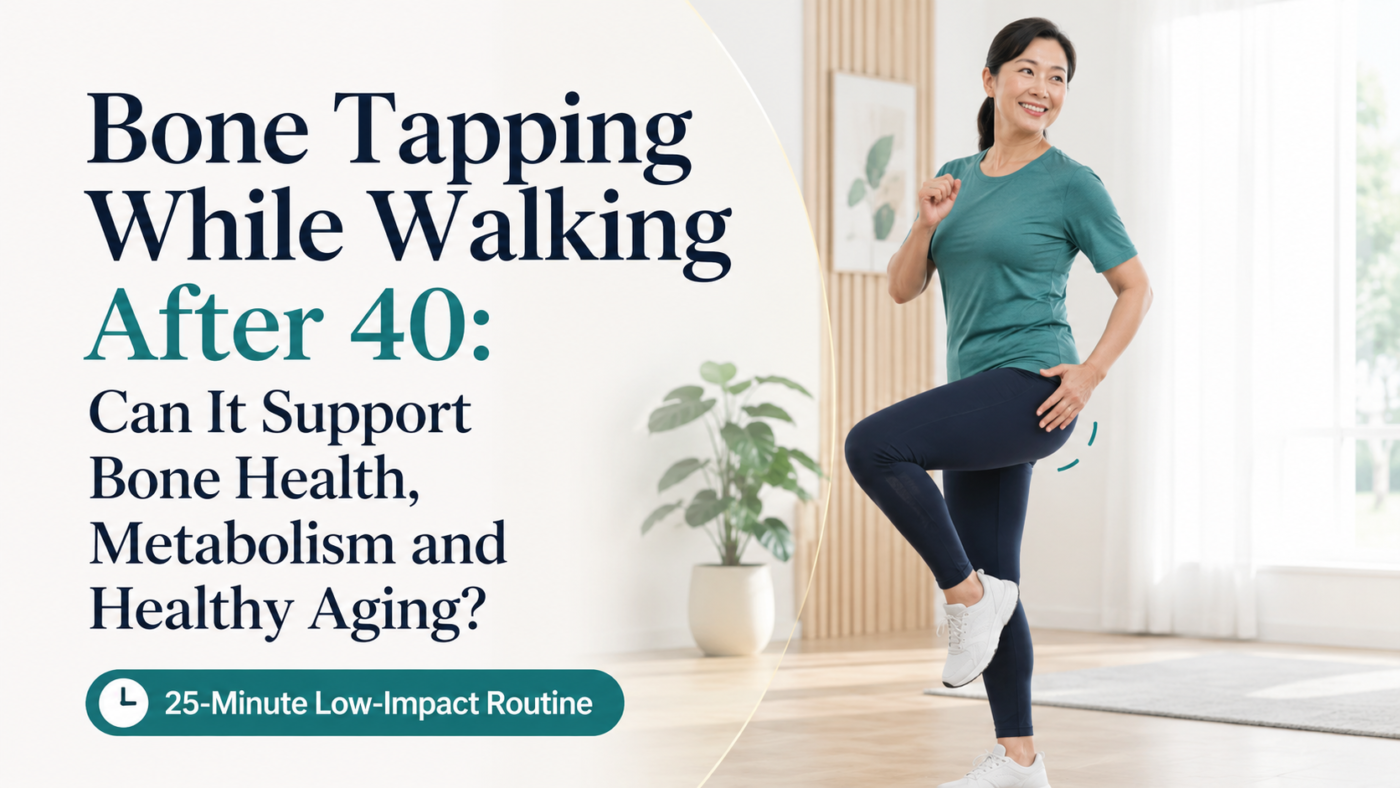
Bone tapping while walking has become a popular low-impact exercise idea for adults over 40. The routine combines walking with rhythmic tapping of the thighs, hips, shoulders, and other areas of the body. While some online claims about hormones and rapid fat burning are exaggerated, the combination of walking, coordination, gentle movement, and sensory stimulation may still offer practical benefits for an active lifestyle.Walking is one of the simplest ways to become more active after 40, but a growing style of walking workout adds something unusual: rhythmic tapping of the thighs, hips, shoulders, chest, and other areas of the body while continuing to step.
Supporters sometimes call this “bone tapping” and claim that tapping the skeleton releases rejuvenating hormones, dramatically accelerates fat burning, activates brown fat, strengthens immunity, improves hair growth, and even makes the body biologically younger.
Those promises sound impressive. The scientific reality is more nuanced.
Bones are biologically active tissues, and researchers increasingly recognize that the skeleton participates in communication with muscles and other organs. One molecule receiving particular attention is osteocalcin, a protein produced primarily by bone-forming cells. Research suggests that osteocalcin may participate in bone remodeling, glucose regulation, energy metabolism, and responses to exercise.
That does not mean, however, that lightly tapping your bones automatically produces a surge of osteocalcin or causes your body to burn significantly more fat.
The strongest reason to try this style of workout is much simpler: it gets you moving.
When performed comfortably, a walking-and-tapping routine can combine aerobic activity, weight-bearing movement, coordination, range-of-motion work, postural awareness, and gentle sensory stimulation in one accessible session.
What Is Osteocalcin?
Osteocalcin is produced largely by osteoblasts, the cells involved in forming bone. For many years, it was viewed mainly as a marker of bone formation. More recent research suggests that certain forms of osteocalcin may also behave like signaling molecules involved in metabolism.
Animal experiments have produced intriguing findings connecting osteocalcin with glucose metabolism, muscle function, exercise capacity, and other physiological systems. Human studies have also found associations between osteocalcin levels, metabolic health, and exercise.
But there are important unanswered questions.
Researchers are still investigating exactly how osteocalcin functions as a hormone in humans, which forms of osteocalcin are biologically most important, and how different types and intensities of exercise affect its concentration.
Exercise itself may influence osteocalcin, but the response appears to depend on factors such as exercise intensity, training status, duration, age, and study methodology.
There is currently no good evidence showing that simply tapping the pelvis, knees, ribs, sternum, skull, or other bones during walking produces a clinically meaningful osteocalcin response.
So it is reasonable to say that osteocalcin is an interesting connection between the skeleton and metabolism. It is not reasonable to promise that bone tapping creates a second fat-burning system.
Can Walking Help Your Bones?
Yes—and this part is much better established.
Walking is a weight-bearing activity. Every step produces mechanical forces through the feet, legs, hips, and skeleton.
The National Institute of Arthritis and Musculoskeletal and Skin Diseases also identifies walking as a weight-bearing activity that can support bone health.
Regular weight-bearing exercise can help maintain musculoskeletal health, and physical activity becomes increasingly important as we age because both bone strength and muscle mass tend to decline over time.
Brisk walking can also improve cardiovascular fitness, mobility, endurance, and daily energy expenditure. Combining walking with resistance training and balance exercises provides an even more complete program for healthy aging.
People over 40 should therefore view walking as part of a broader longevity strategy rather than simply a method for burning calories.
The goal is not only to weigh less. It is to preserve the physical capacity that allows you to remain active later in life.
Does Bone Tapping Burn More Fat?
This is where some online claims become misleading.
Moving your arms while walking can increase overall movement, and a more energetic walking routine may use slightly more energy than strolling slowly with relaxed arms. But there is no established evidence showing that tapping bones produces a separate fat-burning effect powerful enough to meaningfully accelerate weight loss.
Fat loss is influenced by total energy balance over time, physical activity, nutrition, sleep, muscle mass, hormones, medications, genetics, and many other factors.
A 20- to 30-minute walking workout may certainly contribute to weight management when practiced consistently. Its benefit comes mainly from movement and energy expenditure—not from magically switching on a bone hormone.
That distinction matters because an enjoyable exercise routine does not need an extraordinary biological explanation to be worthwhile.
What About Brown Fat?
Brown adipose tissue, commonly called brown fat, is a specialized type of fat involved in heat production. Unlike white fat, which primarily stores energy, brown fat contains large numbers of mitochondria and can use energy to generate heat.
This has made brown fat an exciting target in metabolism and obesity research.
It is sometimes claimed that reaching, moving the shoulder blades, or exercising the upper back “activates sleeping brown fat” and causes the body to burn fat dozens of times faster.
Current research does not support such a precise claim.
Exercise clearly improves metabolic health through numerous pathways, but whether exercise consistently increases brown fat activity in humans is still being investigated. Age, environmental temperature, body composition, fitness level, and other factors may influence the response.
Therefore, shoulder-blade movements are worth doing because they move the upper body and recruit muscles—not because they have been proven to create “70 times faster” fat burning.
The Real Benefits of a Walking-and-Tapping Workout
Strip away the exaggerated hormone promises and the routine still has plenty to offer.
First, walking raises physical activity levels. Depending on pace and fitness level, it can provide light to moderate aerobic exercise.
Second, rhythmic arm movements encourage greater whole-body participation. Reaching forward, opening the arms, moving the shoulders, and coordinating them with steps may improve coordination and mobility.
Third, gentle tapping provides sensory input. Some people find rhythmic self-tapping pleasant or relaxing and say it makes repetitive exercise more engaging.
Fourth, changing step patterns—including forward steps, side steps, heel contacts, and controlled weight shifts—can challenge coordination more than straightforward walking.
Finally, an enjoyable routine may improve adherence. The exercise program you actually continue doing is usually more useful than the theoretically perfect program you abandon after three days.
A Gentle 25-Minute Walking-and-Tapping Routine
You do not need to reproduce every movement exactly. Think of the following routine as a framework.
Minutes 0–3: Comfortable Walking
Begin walking in place or around a safe open area.
Keep your chest comfortably upright, shoulders relaxed, and arms loose.
Start slowly and gradually allow your breathing and heart rate to increase.
You should still be able to speak in short sentences.
Minutes 3–6: Thigh and Hip Tapping
Continue stepping while lightly tapping the muscular areas around your outer thighs and hips with open hands.
The emphasis should be on gentle rhythm rather than force.
Avoid hitting painful joints or areas that bruise easily.
Minutes 6–9: Heel Steps and Side Steps
Add controlled heel contacts followed by easy side-to-side stepping.
There is no need to stamp your heels forcefully.
Normal weight-bearing through walking already provides skeletal loading. Hard impacts are unnecessary and could be inappropriate for people with osteoporosis, arthritis, foot problems, or balance difficulties.
Minutes 9–12: Shoulders and Upper Back
Continue walking while gently tapping the muscular portions of the shoulders.
Then stop tapping and begin moving your arms.
Reach forward, draw the arms back, and gently open your chest.
These movements can make the workout feel more dynamic while mobilizing the shoulders and upper back.
Minutes 12–15: Hip and Glute Movement
Continue stepping while lightly tapping the gluteal muscles or outer hip area.
Then remove the tapping and exaggerate your arm swing slightly.
Keep the movements smooth.
Minutes 15–18: Posture and Core Awareness
Place your hands around your hips or lower abdomen and concentrate on standing tall.
Avoid aggressively sucking in your stomach.
Instead, imagine gently lengthening through the crown of the head while keeping the ribs stacked comfortably above the pelvis.
Breathe normally.
Minutes 18–21: Arm Reaches
Continue stepping while reaching the arms forward and bringing them back.
You can alternate between reaching, opening the arms, and gentle shoulder-blade movements.
These movements engage more muscle than passive walking and may slightly increase exercise intensity.
Minutes 21–23: Easy Full-Body Movement
Reduce the intensity.
Allow your arms to swing naturally and continue stepping.
Use this period to notice your breathing, posture, and level of fatigue.
Minutes 23–25: Cool Down
Slow your walking pace.
Allow your breathing to return gradually toward normal.
You may place your hands lightly over the lower abdomen and take several slow, relaxed breaths.
Finish feeling refreshed rather than exhausted.
Should You Tap Your Head, Neck, Ribs, or Sternum?
Extra caution is appropriate.
Claims that tapping the skull will rejuvenate hair, tapping the ribs will activate internal organs, or tapping the sternum will boost immunity are not supported by strong clinical evidence.
There is therefore no need to strike these areas to obtain the benefits of the workout.
If you enjoy gentle tapping, concentrate primarily on larger muscular areas such as the thighs, hips, glutes, and shoulders.
Never strike the head, neck, spine, sternum, ribs, knees, or other vulnerable areas forcefully.
The purpose is movement—not impact.
How Hard Should You Exercise?
For many adults, a useful target during moderate exercise is an intensity at which breathing becomes faster but conversation remains possible.
Beginners may need only 10 minutes.
Others may comfortably complete 20 to 30 minutes.
The routine can also be broken into shorter sessions throughout the day.
Consistency matters more than trying to make every workout intense.
Health authorities generally recommend that adults accumulate roughly 150 to 300 minutes of moderate aerobic activity each week, together with muscle-strengthening exercise on at least two days.
Walking can contribute substantially toward that target.
For healthy aging, however, do not rely on walking alone.
Strength training becomes particularly important after 40 because preserving muscle supports mobility, metabolic health, bone health, balance, and independence.
Can This Workout Make You “20 Years Younger”?
No exercise can literally reverse your chronological age by 20 years.
But regular physical activity can help preserve many characteristics we associate with feeling younger: better endurance, greater mobility, stronger muscles, improved balance, better cardiovascular fitness, and greater confidence in movement.
That is a more meaningful goal than chasing an anti-aging hormone spike.
Healthy aging is largely about maintaining function.
Being able to walk briskly, climb stairs, carry groceries, rise from a chair, travel comfortably, and continue participating in the activities you enjoy can make an enormous difference to quality of life.
Can You Use It for Weight Loss?
Yes, as part of a broader strategy.
Walking increases energy expenditure, and regular activity can support weight management. But a single 25-minute session will not produce dramatic fat loss regardless of how much tapping is included.
For long-term body-composition improvement, combine regular walking with resistance training, sufficient dietary protein, a nutritious eating pattern, adequate sleep, and sustainable calorie control when weight loss is appropriate.
Do not judge success only by the scale.
Improved stamina, walking speed, waist measurement, strength, blood pressure, glucose control, and ability to perform everyday activities may all be valuable indicators of progress.
Who Should Be Careful?
Gentle walking is accessible to many people, but tapping and more dynamic movements are not appropriate for everyone.
Speak with a healthcare professional or physical therapist before beginning if you have osteoporosis, recent fractures, severe arthritis, significant balance problems, unexplained dizziness, cardiovascular symptoms, recent surgery, or another condition that limits exercise.
People taking anticoagulant or antiplatelet medications or those who bruise easily should be particularly cautious about repeated tapping.
Stop exercising if you experience chest pain, faintness, unusual shortness of breath, sudden severe pain, or other concerning symptoms.
Exercise should challenge you appropriately—not hurt you.
The Bottom Line
The most interesting idea behind bone-tapping workouts is scientifically real: bone is not merely a passive framework. It is metabolically active tissue, and molecules produced by bone, including osteocalcin, are being investigated for possible roles throughout the body.
Where the evidence becomes shaky is the leap from that fascinating biology to the claim that lightly tapping bones releases enough osteocalcin to dramatically accelerate fat burning.
That has not been demonstrated.
Similarly, there is no good evidence that tapping your sternum boosts immunity, tapping your skull revitalizes hair, tapping your ribs activates internal organs, or shoulder movements make brown fat burn calories 70 times faster.
Fortunately, you do not need any of those promises to make the workout worthwhile.
Walking, moving your arms, shifting your weight, practicing coordination, improving posture, and staying physically active are already powerful habits for healthy aging.
So enjoy the tapping if it makes movement more engaging.
Just remember what is doing most of the work:
You are.
Every step adds physical activity. Every workout builds consistency. And over months and years, consistency—not a magical hormone shortcut—is what can make the greatest difference to your health, mobility, body composition, and quality of life after 40.
FAQ
Does tapping your bones release osteocalcin?
Osteocalcin is produced by bone and may respond to certain forms of exercise, but there is currently insufficient evidence that gentle external tapping causes a meaningful increase in osteocalcin in humans.
Does osteocalcin burn fat?
Osteocalcin is being studied for its roles in energy and glucose metabolism, but it should not be described as a clinically proven “fat-burning hormone.” Its metabolic functions in humans remain an active area of research.
Can bone tapping help you lose weight?
Tapping itself has not been shown to cause substantial weight loss. Walking and whole-body movement increase energy expenditure and can support weight management when practiced consistently alongside appropriate nutrition and other healthy habits.
Does walking strengthen bones?
Weight-bearing activities such as walking help support musculoskeletal health. For a more complete bone-health program, walking is best combined with resistance training and, when appropriate, balance exercises.
Can exercise activate brown fat?
Brown fat participates in thermogenesis, but the relationship between exercise and brown-fat activation in humans is complex and remains under investigation. Claims that a particular movement produces dramatically faster fat burning are not established.
Is tapping the chest good for immunity?
There is not enough clinical evidence to conclude that tapping the sternum meaningfully strengthens the immune system. Gentle rhythmic movement may feel relaxing, but it should not be presented as an immune treatment.
Is this routine suitable for people over 40?
For many healthy adults, gentle walking and coordinated arm movements are appropriate. People with osteoporosis, cardiovascular disease, balance problems, recent injuries, chronic medical conditions, or significant joint problems should discuss exercise choices with a qualified healthcare professional.
Medical Disclaimer
This article is for educational and informational purposes only and is not intended to diagnose, treat, cure, or prevent any disease. It does not replace individualized medical advice from a physician, physical therapist, or other qualified healthcare professional. Exercise tolerance and safety vary between individuals. Stop exercising and seek appropriate medical care if you develop concerning symptoms.
Evidence Base
This article was prepared using current research and public-health guidance concerning osteocalcin, bone metabolism, brown adipose tissue, exercise, weight-bearing activity, and physical activity recommendations, including research indexed by PubMed and guidance from the World Health Organization and the U.S. National Institutes of Health.
This article is for general education and does not replace individualized care from a qualified health professional. Seek appropriate advice for persistent, severe, or concerning symptoms.
Read the full medical disclaimer