Sleep problems have become increasingly common in modern life. Stress, irregular schedules, excessive screen time, and busy routines can all make it harder for the body and mind to settle down at night.
Many people try different ways to fall asleep, from counting sheep to relying on sleep aids. While medication may be appropriate in certain situations under professional guidance, long-term dependence on sleep medication is not the only approach people explore. Traditional wellness practices often focus on helping the body relax naturally through gentle techniques.
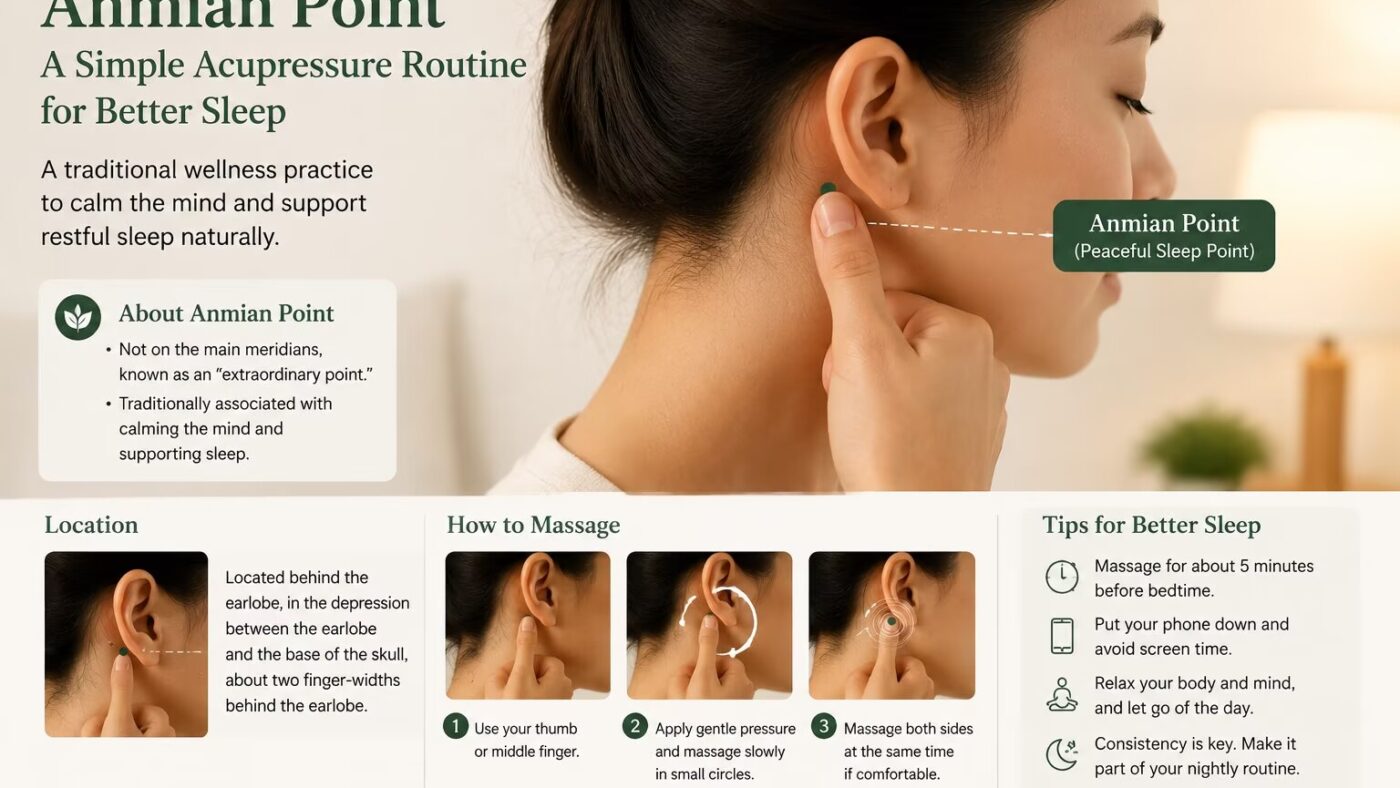
One commonly discussed method in traditional Chinese wellness is acupressure — using gentle pressure on specific areas of the body to encourage relaxation. A point often referred to in traditional practices as the “Anmian” point (commonly translated as “Peaceful Sleep”) is traditionally associated with calming the mind and supporting restful sleep.
This area is not considered one of the main points along the traditional meridian system, which is why it is often described as an “extraordinary point” in traditional Chinese medicine.
The location is relatively easy to find. It is located behind the earlobe, in the area between the base of the skull and the ear, where a small natural depression can be felt. When gently pressed, some people may experience a mild feeling of soreness or fullness, which is often used as a guide for locating the area.
To practice gentle acupressure, use the thumb or middle finger to apply light pressure on both sides of the point. The movement should be slow and comfortable, allowing the muscles around the neck and head to relax gradually.
A simple routine is to massage the area for around five minutes before bedtime. The purpose is not to force sleep, but to create a calming transition from daytime activity into a more relaxed state.
One important part of a healthy bedtime routine is reducing stimulation before sleep. After practicing relaxation techniques, it is helpful to put away phones and avoid activities that keep the brain active. Continuous scrolling, bright screens, and stimulating content can make it harder for the body to enter a restful state.
Traditional practices such as acupressure can be viewed as part of a broader approach to sleep wellness, alongside consistent sleep schedules, a comfortable sleep environment, regular physical activity, and stress management.
If occasional difficulty falling asleep occurs, gentle relaxation techniques like this may provide a simple way to wind down before bed. However, persistent insomnia, frequent nighttime waking, or sleep problems affecting daily life should be discussed with a qualified healthcare professional.
A good night’s sleep is built through daily habits. Small moments of relaxation before bedtime may become an important part of caring for long-term health and wellbeing.
This article is for general education and does not replace individualized care from a qualified health professional. Seek appropriate advice for persistent, severe, or concerning symptoms.
Read the full medical disclaimer