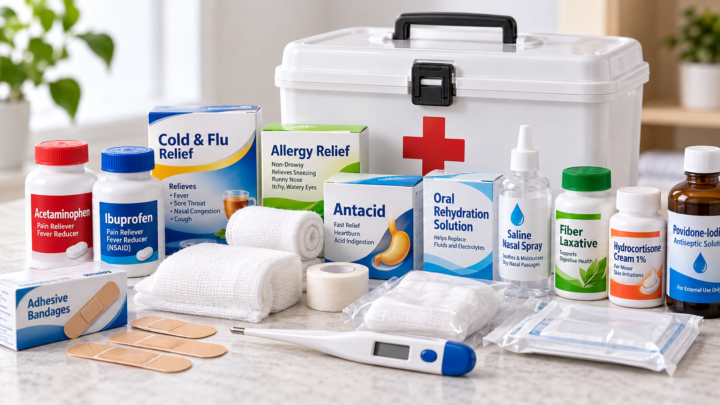
Medicines play an important role in preventing, controlling, and treating many health conditions. However, their benefits depend not only on selecting the appropriate medicine but also on using it correctly and ensuring that the product remains suitable for use.
Improper storage, expired medications, damaged packaging, confusing drug labels, and overlooked medical warnings can all increase the risk of medication-related harm.
In many households, medicines are kept for months or years. Tablets may remain in bathroom cabinets, eye drops may be stored after opening, and bottles of liquid medicine may be forgotten until someone becomes ill.
A medicine that looks normal is not necessarily safe or effective. Conversely, some harmless variations in appearance may be expected for a particular product.
The safest approach is to follow the manufacturer’s instructions, check expiration dates, understand medication warnings, and consult a pharmacist when product quality is uncertain.
This guide explains how to recognize potential medication deterioration, understand important warnings, and maintain a safer home medicine cabinet.
1. Why Medication Quality Matters
Medicines are manufactured to meet specific standards for strength, quality, purity, and, where required, sterility.
Their stability depends on several factors, including chemical composition, formulation, packaging, temperature, humidity, light exposure, and time.
Some medicines are particularly sensitive to moisture or heat.
Others require refrigeration or protection from light.
Improper storage can reduce effectiveness even before the printed expiration date.
For certain products, changes in chemical composition or microbial contamination can create additional safety concerns.
These risks may be especially important for medicines used to treat serious medical conditions.
Can You Tell Whether a Medicine Has Expired by Looking at It?
No.
Changes in color, texture, smell, or consistency can indicate that a medicine may be damaged or unsuitable for use.
However, the absence of visible changes does not establish that the product retains its original strength or safety.
The expiration date is based on stability information associated with the product and its labeled storage conditions.
Once that date has passed, the manufacturer no longer guarantees that the medicine will meet its intended specifications.
For ordinary household use, expired medicines should not be used.
If an essential prescription medicine is expired and no replacement is immediately available, contact a pharmacist or prescribing professional promptly rather than independently changing or abandoning treatment.
2. Warning Signs in Tablets
Tablets are among the most common medicine formulations stored at home.
They can be sensitive to humidity, excessive heat, or physical damage, depending on their composition and packaging.
Potential warning signs include:
- Unexpected discoloration
- Crumbling or unusual softness
- Swelling or changes in shape
- Unusual spots or visible mold
- Unexpected stickiness
- A new, unusual odor
- Damaged or moisture-exposed packaging
Some tablets naturally have a rough texture, coating, odor, or speckled appearance.
These characteristics are not necessarily evidence of deterioration when they are part of the original product.
The concern is an unexplained change from the medicine’s expected appearance.
Do not crush, split, or alter tablets unless the product instructions or a healthcare professional confirm that doing so is appropriate.
Some extended-release or enteric-coated products can become unsafe or ineffective when altered.
3. Capsules and Softgels: What to Check
Capsules may contain powders, granules, liquids, or other formulations.
Humidity and temperature can affect the capsule shell.
Potential signs of damage include unusual softening, brittleness, leakage, deformation, or capsules sticking together.
Softgels may leak or become misshapen if exposed to unsuitable conditions.
Do not assume that a leaking capsule remains safe because its contents look normal.
A damaged capsule may no longer protect the medicine as intended.
Keep capsules in their original packaging unless a pharmacist provides specific guidance.
Some products contain moisture-control materials that should remain in the container.
4. Powders, Granules, and Dissolvable Medicines
Powdered and granulated medicines may be sensitive to moisture.
Depending on the formulation, unexpected clumping, discoloration, wetness, or unusual odor can indicate a storage problem.
However, some powders normally contain larger granules or appear slightly clumped.
Compare the product with its labeled description when available.
Do not use medicines that have become wet or have visibly changed after exposure to moisture without professional confirmation that they remain suitable.
Single-dose sachets should remain sealed until use unless the manufacturer instructs otherwise.
Reconstituted medicines, such as certain antibiotic suspensions, may have a much shorter usable period than the unopened dry product.
Always follow the instructions provided when the medicine is mixed or dispensed.
5. Liquid Medicines and Syrups
Liquid medicines include syrups, solutions, and suspensions.
Different liquid formulations have different expected appearances.
Some are naturally clear, while others may be opaque, colored, or designed to form a sediment that disperses with shaking.
Therefore, it is incorrect to assume that every medicinal liquid must remain completely clear and free of sediment.
Possible Warning Signs
Unexpected cloudiness, color changes, visible mold, unusual odor, leakage, or particles not consistent with the product description may indicate a problem.
A broken safety seal is another reason for concern.
Do not taste an unfamiliar or suspicious medicine to determine whether it has spoiled.
Suspensions
Some suspensions are designed to be shaken before administration.
Follow the product instructions.
If the medicine fails to mix as expected, or shows unusual separation, consult a pharmacist before using it.
Refrigerated Liquid Medicines
Certain liquid medicines require refrigeration after preparation.
Others have specific room-temperature storage instructions.
Refrigeration is not automatically suitable for every medication.
The correct storage temperature and usable period should always come from the product label or pharmacist.
6. Eye Drops and Nasal Medicines: Special Attention to Contamination
Eye drops require particular care because the eye is vulnerable to infection and injury.
Medicines intended for use in the eyes must meet appropriate sterility requirements.
A bottle may become contaminated if the dropper tip touches fingers, the eye, eyelashes, or other surfaces.
Eye Drop Safety
Wash your hands before use.
Avoid touching the dropper tip to any surface.
Keep the cap clean and close it according to the instructions.
Do not share eye drops between people.
Do not use products that are expired, recalled, visibly contaminated, or otherwise unsuitable.
Follow any product-specific discard date after opening.
Some eye drops have shorter in-use periods than the unopened product’s printed expiration date.
When Eye Symptoms Require Medical Assessment
Eye pain, significant redness, discharge, light sensitivity, or changes in vision may indicate a condition requiring professional attention.
Stop using a product and seek appropriate advice if unexpected symptoms develop.
Severe eye pain or sudden changes in vision require urgent assessment.
Nasal Sprays and Drops
Nasal medicines also require clean handling and appropriate storage.
Do not share applicators.
Follow the labeled instructions, including any limits on how long medicated decongestant sprays may be used.
Avoid continuing a medicine indefinitely simply because some liquid remains in the container.
7. Creams, Ointments, and Suppositories
Topical medicines can change in consistency because of temperature, formulation instability, or contamination.
Possible warning signs include unexpected separation, discoloration, mold, leakage, or a significant change in smell or texture.
Some creams and ointments naturally differ in consistency with temperature.
However, marked or unexpected changes should be assessed before use.
Do not attempt to restore a deteriorated medicine by mixing in water, heating it, or adding other ingredients.
Suppositories
Some suppositories soften or melt when exposed to excessive heat.
Follow the labeled storage conditions.
Do not use a product that has melted, leaked, or become misshapen unless a pharmacist confirms that it remains suitable.
8. Injectable Medicines Should Not Be Evaluated at Home
Injectable medications require especially careful handling.
Many injectable products must meet strict sterility and particulate standards.
Changes in color, cloudiness, particles, or damaged containers may indicate a problem, but some products are naturally suspensions or have specific appearance requirements.
The correct judgment depends on the particular medicine.
Home users should not attempt to repair, filter, heat, or otherwise restore suspicious injectable medicines.
Certain products may have manufacturer-approved preparation procedures, but those instructions are product-specific.
Do not apply a general warming rule to injectable medicines with crystals or sediment.
For example, a formulation that develops visible crystals cannot be assumed safe for injection simply because warming makes the crystals disappear.
If an injectable medicine appears abnormal or has been stored incorrectly, consult the dispensing pharmacy or responsible healthcare team.
Do not use it until suitability has been confirmed.
9. Traditional Herbal Medicines and Supplements
Traditional herbal products may be supplied as pills, powders, granules, liquids, or dried materials.
Like conventional medicines, these products can deteriorate or become contaminated.
Visible mold, insect infestation, moisture damage, or unexpected odor are reasons not to use them.
However, the absence of visible deterioration does not guarantee product quality.
Herbal products may vary in composition and may contain substances that interact with prescription medicines.
Some products may also be contaminated or inaccurately labeled.
Purchase products from reputable sources and discuss potential interactions with a qualified healthcare professional.
Do not use traditional medicines as substitutes for effective treatment of serious health conditions.
10. Understanding Medication Warnings and Contraindications
Medication labels often contain several types of safety information.
These include general precautions, warnings about particular health conditions, instructions to avoid certain combinations, and formal contraindications.
The meaning depends on the medicine and the wording of its approved labeling.
Precautions
A precaution identifies a circumstance in which additional care, monitoring, or professional guidance may be necessary.
For example, a medicine may require caution in people with impaired kidney function or those taking other medications.
This does not necessarily mean the medicine is prohibited.
However, it also does not mean that someone should independently try the medicine and continue unless an obvious reaction occurs.
Some adverse effects develop gradually or may not produce immediate symptoms.
Warnings
A warning draws attention to an important potential risk.
Depending on the product, warnings may concern bleeding, liver injury, sedation, allergic reactions, interactions, or other adverse effects.
A warning may require avoiding the product, adjusting treatment, monitoring, or consulting a professional.
Read the specific instructions rather than relying only on the word “warning.”
Avoid Use
Labels may instruct certain people not to use a product.
For example, a medicine may be inappropriate during particular stages of pregnancy or for people with certain health conditions.
When the label says not to use a medicine under specified circumstances, do not disregard that instruction without appropriate professional guidance.
Contraindications
A contraindication identifies a situation in which a medication should not be used because the associated risk makes it unsuitable.
For example, a serious known allergy to an active ingredient may be a contraindication.
Some medications have other contraindications related to diseases, drug interactions, or specific patient characteristics.
Contraindications are not simply stronger versions of ordinary cautionary statements.
They are specific safety restrictions that must be respected.
Do These Terms Mean Exactly the Same Thing in Every Country?
No.
Drug labeling requirements and terminology differ across regulatory systems.
Chinese labels may use expressions commonly translated as “use with caution,” “avoid use,” and “prohibited use.”
English-language regulatory documents may instead distinguish between warnings, precautions, contraindications, and instructions for specific populations.
These categories do not always correspond perfectly across countries.
The safest approach is to read the specific medicine’s current labeling and seek professional guidance when an instruction is unclear.
11. Medication Interactions: A Risk That Cannot Be Seen
A medicine may look perfectly normal and still be unsafe for a particular person.
One reason is the possibility of drug interactions.
Medicines may interact with other prescription drugs, over-the-counter products, alcohol, or certain herbal supplements.
For example, combining products with sedating effects may increase drowsiness or impair coordination.
Some medicines can increase bleeding risk when combined with particular treatments.
Others may alter the effectiveness or concentration of another medication.
People taking several medicines, especially older adults, should consider periodic medication reviews with a pharmacist.
Do not assume that products are safe to combine simply because they can be purchased without a prescription.
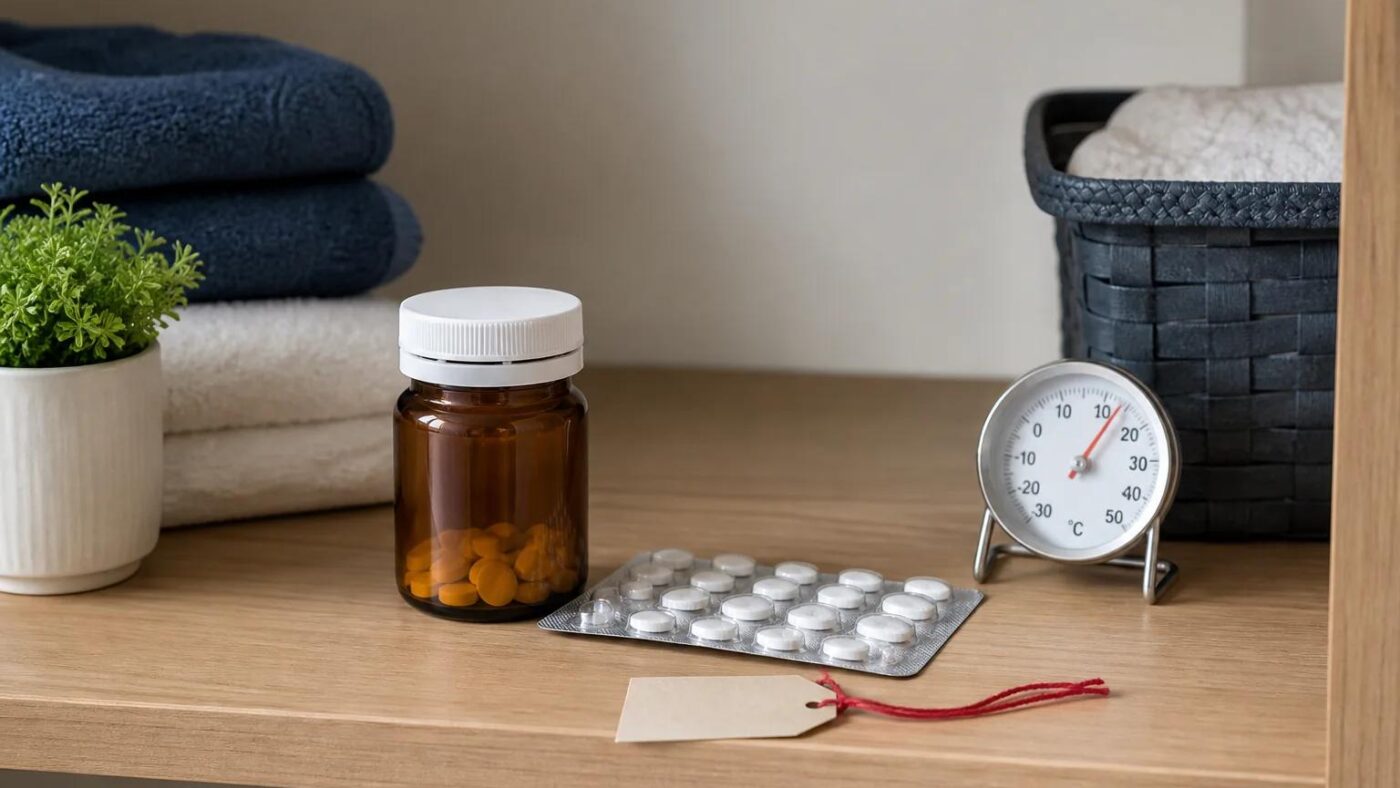
12. Safe Medication Storage at Home
Appropriate storage is essential for maintaining drug quality.
Follow the Product Label
Many medicines are designed to be stored at controlled room temperature.
Others require refrigeration or protection from light.
The correct conditions depend on the product.
Avoid Excessive Heat and Humidity
Bathrooms, windowsills, and locations near stoves or heaters may expose medicines to unsuitable temperatures or moisture.
A secure, cool, dry storage location is often preferable.
Keep Original Packaging
Original containers preserve important information such as the medicine’s name, strength, expiration date, batch details, and storage instructions.
Do not place different medicines into unmarked bottles.
Protect Children and Pets
Store medicines securely, preferably in locked storage where appropriate.
Child-resistant caps provide protection but are not completely childproof.
Record Opening Dates When Necessary
Some products have a limited in-use period after opening.
This is especially relevant to certain eye drops, liquids, and reconstituted medicines.
Write down the opening or preparation date when helpful, while following the official product instructions.
13. What to Do if a Medicine Has Been Stored Incorrectly
Accidental storage problems can occur.
Medicines may be left inside a hot vehicle, exposed to freezing temperatures, or forgotten in a humid environment.
If a medicine has been stored outside its recommended conditions:
- Do not assume that its appearance proves it is safe.
- Check the product’s specific storage instructions.
- Contact a pharmacist or the manufacturer for guidance.
- Avoid using the medicine if its quality cannot be established.
- Obtain a suitable replacement when necessary.
For essential prescription medicines, seek prompt professional advice to avoid interruption of important treatment.
Do not place a heat-damaged medicine in the refrigerator and assume that cooling will reverse deterioration.
14. How to Dispose of Expired or Damaged Medicines
Expired, recalled, damaged, or unnecessary medicines should be handled safely.
Medication take-back programs are generally the preferred disposal method where available.
Follow local regulations and the manufacturer’s instructions.
Do not routinely flush medicines down the toilet unless specific official guidance requires this.
Keep medicines secure while awaiting disposal.
For needles and other sharps, use appropriate sharps containers and follow local disposal requirements.
Do not place loose needles in ordinary household rubbish.
15. A Practical Home Medication Safety Checklist
A household medicine review should include the following questions:
- Is the medicine still within its expiration date?
- Does the product have a shorter discard date after opening?
- Has it been stored according to the label?
- Is its packaging intact?
- Does it show unexpected physical changes?
- Is the medicine appropriate for the intended person?
- Are there allergies or contraindications?
- Could it interact with other medicines or supplements?
- Is the intended dose and duration clearly understood?
- Is the product subject to a recall?
- Is professional advice needed before use?
If a medicine’s identity, quality, or suitability is uncertain, do not guess.
A pharmacist can often help resolve questions about storage, labeling, and medication use.
Frequently Asked Questions
Can medicine be safe if it looks normal but is expired?
An expired medicine may look unchanged, but its continued strength, quality, and safety are not guaranteed. Do not rely on appearance to decide whether to use it.
Are cloudy liquid medicines always spoiled?
No. Some suspensions are naturally cloudy or contain sediment that disperses with shaking. The expected appearance depends on the product.
Can I use tablets that have changed color?
Unexpected discoloration may indicate deterioration or another quality problem. Avoid using the product until a pharmacist has assessed the concern.
Should all eye drops be thrown away 30 days after opening?
Not necessarily. Discard periods vary by formulation, packaging, and manufacturer’s instructions. Follow the specific product label.
Can medicines be stored in the refrigerator for greater safety?
Not always. Some medicines require refrigeration, while others can be damaged by low temperatures or moisture. Follow product-specific storage instructions.
What is the difference between a precaution and a contraindication?
A precaution indicates a need for additional care or consideration. A contraindication identifies a situation in which a medicine should not be used.
Can I continue taking a medicine if I have not noticed any side effects?
Absence of immediate symptoms does not prove that a medicine is appropriate or safe. Follow its labeling and the advice of the prescribing or dispensing professional.
Can damaged injectable medicines be made usable by warming them?
Do not attempt to restore injectable medicines at home. Their suitability must be assessed using product-specific instructions and professional guidance.
Conclusion
Safe medication use begins before a tablet is swallowed or a cream is applied.
The medicine must be appropriate for the person, within its usable period, stored correctly, and taken according to reliable instructions.
Changes in color, smell, texture, or packaging can signal a possible quality problem, but visual inspection alone cannot confirm that a product remains safe and effective.
Medication warnings, precautions, and contraindications also require careful attention. They are not interchangeable labels or instructions to experiment with a medicine until side effects appear.
Families can reduce avoidable risks by keeping medications in their original packaging, checking expiration dates, following storage instructions, reviewing possible interactions, and consulting pharmacists when uncertain.
A safe home medicine cabinet is not defined by how many medicines it contains.
It is defined by how carefully those medicines are selected, stored, checked, and used.
References and Further Reading
- U.S. Food and Drug Administration. Don’t Be Tempted to Use Expired Medicines.
https://www.fda.gov/drugs/special-features/dont-be-tempted-use-expired-medicines - U.S. Food and Drug Administration. Expiration Dates — Questions and Answers.
https://www.fda.gov/drugs/pharmaceutical-quality-resources/expiration-dates-questions-and-answers - U.S. Food and Drug Administration. What You Should Know About Eye Drops.
https://www.fda.gov/drugs/buying-using-medicine-safely/what-you-should-know-about-eye-drops - U.S. Food and Drug Administration. The Over-the-Counter Drug Facts Label.
https://www.fda.gov/drugs/understanding-over-counter-medicines/over-counter-drug-facts-label - U.S. Food and Drug Administration. Disposal of Unused Medicines: What You Should Know.
https://www.fda.gov/drugs/safe-disposal-medicines/disposal-unused-medicines-what-you-should-know
Editorial Note: Medication labels and regulatory terms differ by jurisdiction. Always follow the current labeling for the specific product and consult a qualified healthcare professional when medication quality or suitability is uncertain.
Educational content only. Not medical advice.


Medicine Quality

Warning Labels

Safe Storage
This article is for general education and does not replace individualized care from a qualified health professional. Seek appropriate advice for persistent, severe, or concerning symptoms.
Read the full medical disclaimer